


Beyoğlu is one of Istanbul’s most atmospheric districts: the pedestrian rush of İstiklal Avenue, Taksim’s transport hub, side streets packed with meyhanes and rooftop bars, and quieter pockets like Cihangir and Cukurcuma. It is also where many visitors ask the same question before booking a hotel: is Beyoğlu actually safe to stay in, especially at night? The short answer in 2026 is that it is generally safe for ordinary, alert travelers, but it is also the part of Istanbul where you are most likely to encounter pickpockets, bar scams and the occasional pushy taxi driver. This guide walks through what that looks like in real life, and how to enjoy the area without unnecessary stress.
Get the latest updates straight to your inbox!
How Safe Is Beyoğlu Overall in 2026?
For most visitors, Beyoğlu feels like any busy European city center: energetic, sometimes chaotic, but not inherently dangerous. You will see families with children strolling İstiklal Avenue in the early evening, students heading to cheap kebab shops around Tophane and Karaköy, and office workers cutting through Taksim Square on their commute. Violent crime against tourists is rare according to recent city and university risk briefings; the main problems are petty theft, overcharging and various soft scams that rely on distraction or social pressure rather than force.
On a typical Friday night, for example, you might walk from Taksim Square down İstiklal, pass live music bars around Asmalımescit, then continue toward Galata Tower and feel mostly safe as long as you stay on the main, lit streets. You are more likely to come home annoyed about having paid too much for a taxi from Karaköy back up the hill, or noticing your wallet is suddenly missing after squeezing into a packed side‑street bar, than about any serious threat. Travelers who run into real problems usually report a combination of alcohol, very late hours and following strangers to unfamiliar venues as the triggers.
That said, Beyoğlu is a big, mixed district that also includes poorer and rougher pockets like parts of Tarlabaşı behind İstiklal and certain streets dropping toward Dolapdere. These areas are not war zones, and many people live ordinary lives there, but they feel different from polished hotel streets around Sıraselviler or the residential calm of Cihangir Square. As in any major city, knowing which micro‑areas feel comfortable for you, and at what time of night, is as important as any city‑wide safety statistic.
Local authorities and media still treat tourist safety in Beyoğlu as a priority. Taxi inspections in and around Taksim have increased in recent years, and there is a visible police presence on the square and the top section of İstiklal most evenings. This does not eliminate scams or petty crime, but it does mean that the environment is more about low‑level hustle than outright lawlessness.
Taksim Square at Night: What to Really Expect
Taksim Square is the symbolic heart of modern Istanbul and the main transport node on the European side. If you arrive from Istanbul Airport by the Havaist bus late at night, you will step out directly onto the square. Around 9 or 10 pm on a summer evening, you can expect street food carts selling roasted chestnuts and corn, teenagers taking selfies near the Republic Monument, and a constant flow of people between the metro entrances and İstiklal’s pedestrian start. It feels busy and bright rather than menacing.
After midnight, the energy shifts but does not instantly become unsafe. You will see groups heading out or coming back from bars in the side streets, late‑night kebab joints still open near the main bus stops, and taxis circling the square looking for fares. Solo travelers routinely walk across Taksim at 1 or 2 am without incident, especially on weekends. The main things to watch for are overly friendly strangers who insist on taking you for a drink, and opportunistic pickpockets around crowded bus stops or the entrances to night buses when everyone is distracted with luggage.
Concrete examples from recent traveler reports often involve what looks like harmless small talk around the square. A man might approach a solo visitor standing near the metro exit, ask where they are from, chat about football or music, and then suggest "a great local bar just five minutes away". Once there, the visitor discovers inflated prices, surprise companions and a bill several times what a normal evening would cost. The walk always seems to start on or near Taksim Square because it is where newcomers first appear, slightly disoriented and looking for somewhere to go.
If you are arriving late with luggage, the main practical concern is logistics rather than crime. Several streets directly off the square, especially narrow pedestrian alleys leading toward İstiklal or down toward Cihangir, are not drivable. Standard taxis and ride‑hailing cars will drop you as close as possible, and you may need to walk 3 to 7 minutes with your bags. For many travelers this is perfectly manageable, but if you are uneasy about walking alone after midnight, consider choosing accommodation on a street where cars can stop right out front, such as along Sıraselviler Caddesi or Cumhuriyet Caddesi.
İstiklal Avenue Crowds, Pickpockets and Protests
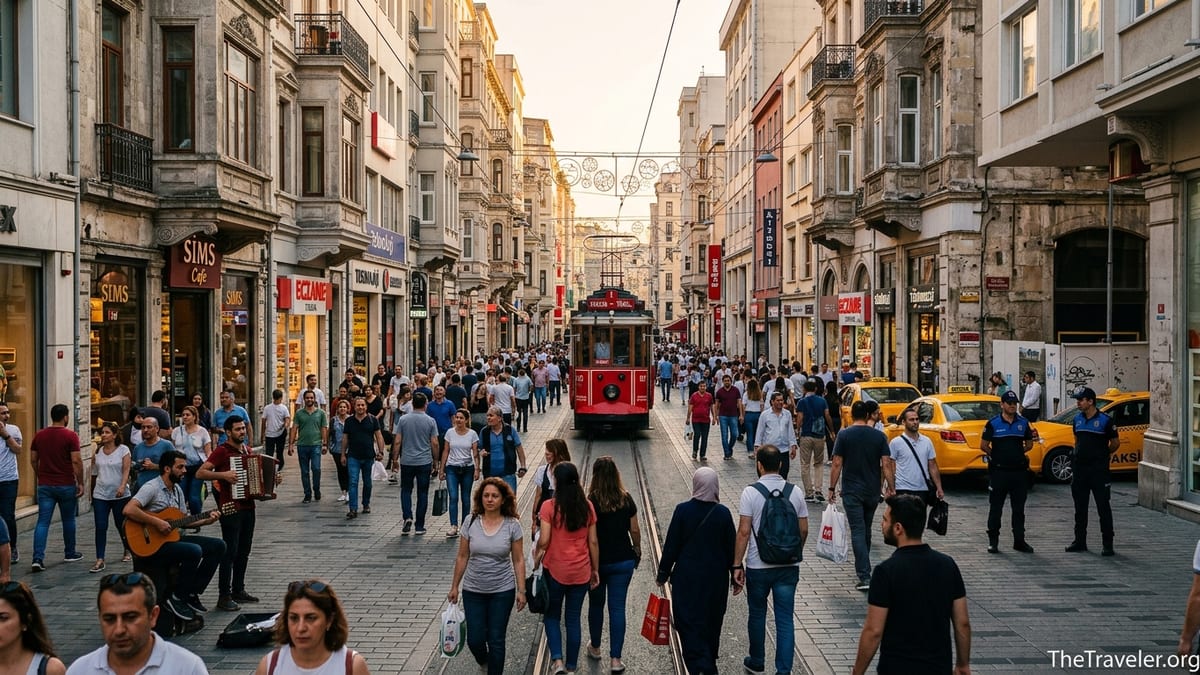
İstiklal Avenue is the main pedestrian spine of Beyoğlu, running from Taksim Square down to the historic tunnel near Galata. On a Saturday afternoon in high season it can be shoulder‑to‑shoulder crowded, especially near the top by large clothing chains and dessert shops. This density is what makes it fun for people‑watching and street photography, but it also creates classic conditions for pickpockets: lots of jostling, people pausing for musicians or street shows, and bags worn loosely on the back.
Common real‑world scenarios include a sudden commotion, such as a simit seller appearing to trip and spill his tray in front of you, or a spontaneous crowd gathering around a busker near the nostalgic tram rails. While everyone’s attention is pulled forward, an accomplice brushes past from behind and unzips a backpack or lifts a phone from a back pocket. Travelers sometimes only notice the loss half an hour later while trying to pay for ice cream at a popular chain near Galatasaray Square.
Another angle to be aware of on İstiklal is protests or political gatherings. Beyoğlu has seen several demonstrations over the last decade, some of which were met with a robust police presence. Although large incidents are not everyday occurrences, small marches or union gatherings still take place occasionally around Taksim and along İstiklal. You might spot lines of riot police vans, officers with shields parked side‑streets away, or groups chanting with banners. The safest response as a visitor is simple: observe briefly from a distance if you are curious, then move on via a side street. Do not linger in the middle of packed crowds, and avoid filming officers at close range.
In terms of everyday comfort, many visitors find that the character of İstiklal changes as you move along it. The upper half near Taksim is dominated by international brands and dessert chains, and can feel most hectic. Around Galatasaray and Çiçek Pasajı, side streets lead to meyhanes, small cocktail bars and live music venues. Further down, closer to Şişhane and the tunnel, things often feel a little more local and relaxed in the evenings. If the crowds near Taksim feel overwhelming, walking ten minutes down the avenue toward Galata Tower can already make a difference.
Nightlife Streets, Bar Scams and Solo Travelers
Beyoğlu’s nightlife is one of its big draws. Side streets like Nevizade, Asmalımescit, Mis Sokak and the lanes around Şehbender Sokak behind İstiklal are packed with meyhanes, live music bars and clubs. For most people these are lively but safe environments where the main risks are a hangover and an unexpectedly high tab. Problems arise when visitors step off the obvious restaurant strips and allow strangers to choose the venue.
The most notorious scheme affecting solo or small groups of male travelers is the "let’s have a drink" scam. The setup is usually the same: you are approached on or just off İstiklal by a friendly man, often in his twenties or thirties, who speaks decent English. After some small talk, he suggests showing you an "authentic" bar where locals go. Once seated in a dim upstairs or basement venue, two or three women join uninvited, waiters bring rounds of imported drinks without showing a menu, and at the end you are presented with a bill that can run into hundreds of euros. If you protest, staff may become intimidating, lock the door, or mention calling the police. Some victims end up paying most of what they are asked simply to avoid confrontation.
There are also more subtle versions: bars on side streets with no clear price list charging 400 or 500 lira for a basic beer, or adding mysterious "entertainment" or "service" fees to the bill. A visitor might go for a quick drink near Tünel, be told at the end that the small bowl of nuts was 150 lira and that there was a sitting charge on top. While these amounts are lower than the classic big‑bill scam, they still leave a sour taste and contribute to the perception of being targeted.
Solo travelers, especially solo women, often report that they feel broadly safe in mainstream Beyoğlu bars and cafes, as long as they apply the same boundaries they would at home. Sticking to venues recommended by your hotel front desk, clustered bar streets like Asmalımescit where there are many options side by side, or long‑established spots around Cihangir and Galata, greatly reduces the risk of trouble. Always ask to see a menu with prices before ordering cocktails or imported spirits, and if anything about a place feels off, trust your instincts and leave after settling the current bill.
One practical tip if you enjoy nightlife but prefer to minimize hassle is to base yourself in a quieter neighborhood like Cihangir or Galata and walk to a handful of pre‑researched places rather than bar‑hopping randomly along the rougher backstreets behind İstiklal at 2 am. The atmosphere two blocks away from the main drag can change quickly after midnight, and even if nothing happens, you may feel less relaxed.
Taxi Issues Around Beyoğlu and How to Avoid Them
Taxis are one of the most complained‑about aspects of visiting Istanbul, and Beyoğlu is one of the key stages where conflicts play out. The most common problems are drivers refusing short journeys, not turning on the meter, quoting a fixed price that is far above the metered fare, taking long routes, or playing tricks with cash and card readers in the rush around Taksim Square.
A real example shared by recent visitors involved a short ride ending near Taksim’s busy area. The driver quoted 400 lira for what should have been a significantly cheaper trip, then rushed the passenger to tap a card while claiming that another car was blocking traffic. In the confusion the passenger did not see the terminal clearly and later suspected they had been charged more than agreed. Others report being quoted 50 euros for a basic Taksim to Şişli or Taksim to Nişantaşı ride, several times the usual metered cost, or being told that the bridge or tunnel fee is extra when that is already minimal compared with the inflated fare.
Local authorities have started cracking down more aggressively on this behavior, with media reports of plain‑clothes officers posing as tourists and fining or suspending drivers who refuse to use the meter. However, enforcement is uneven and it is still wise to protect yourself. At a minimum, always insist on the meter being switched on before the car moves. If the driver refuses, get out and take another taxi. Many visitors also prefer app‑based options that provide an estimated fare up front and allow you to track the route on your phone.
A simple rule of thumb around Beyoğlu is that any taxi that seems overly eager near a big hotel door or directly on the edge of Taksim Square, especially in the small hours, deserves an extra moment of scrutiny. Walking 2 or 3 minutes to a slightly quieter main road such as Sıraselviler, Tarlabaşı or İnönü Caddesi before hailing can sometimes result in a more straightforward ride. Always keep small denominations of cash on hand to avoid drawn‑out arguments about change at the end of a journey.
Finally, treat offers of private drivers who approach you on the street, especially near İstiklal or Taksim, with caution. While some may be legitimate, others are simply unlicensed taxis looking to quote inflated flat rates. Using official yellow cabs, reputable transfer companies pre‑booked to and from the airport, or widely used ride apps is generally a safer and more transparent option.
Common Scams and How to Handle Them Calmly
Beyond taxis and bar bills, Beyoğlu shares many of Istanbul’s classic tourist scams, most of which rely on catching you when you are tired, jet‑lagged or trying to be polite. Knowing what they look like on the ground is often enough to avoid them without confrontation or paranoia.
One recurring pattern involves unsolicited help and sudden generosity. An older man might "accidentally" drop a shoe‑shine brush near you on a side street off İstiklal, hoping you pick it up so he can insist on shining your shoes "for free" and then demand payment. A young couple or two men might start a friendly conversation near Galata Tower, ask where you are from, and then invite you for rakı at their "favorite place" where the real scam is waiting. In another variation, someone may ask if you have dollars or euros in cash they can see, supposedly out of curiosity, setting up a later wallet trick.
There are also more subtle forms of overcharging in everyday businesses. Mini‑markets or souvenir shops along İstiklal may charge a multiple of normal prices for snacks or sunscreen if they sense you are in a hurry and unfamiliar with the currency. A visitor might pay 800 lira for a small imported lip balm or 500 lira for a travel‑size deodorant that would cost a fraction of that in a supermarket a few streets away toward Tophane. Some ATM issues have also been reported on and around Taksim Square, including machines that appear to malfunction while still recording card data, so using ATMs attached to major banks in well‑lit locations is advisable.
The best defense is a combination of polite firmness and low engagement. You do not need to explain yourself or feel rude for declining invitations or services you did not ask for. A simple "No thank you" and continuing to walk usually closes most approaches. If someone is unusually insistent about showing you a bar, a carpet shop or a special deal, assume there is a catch. When shopping, compare prices at two or three places before making larger purchases, and double‑check any bill where the total seems surprisingly high for simple items.
Importantly, not every conversation is a scam. Many Istanbulites are genuinely proud of their city and will chat with visitors, offer directions or restaurant tips, or share a brief tea. The challenge in Beyoğlu is volume: because there are so many visitors in a small area, the few bad actors can make you suspicious of everyone. Focusing on how the situation is structured – are you being rushed, is there transparency about prices, are you being moved to a second location – helps separate normal hospitality from setups that might end badly.
Where to Stay in Beyoğlu for a Calmer Trip
Choosing the right micro‑neighborhood within Beyoğlu makes a huge difference to how safe and relaxed you feel. Many first‑time visitors default to hotels immediately around Taksim Square because they recognize the name and see good transport connections. This can work well for people who plan late nights or need early‑morning airport buses, but it also means dealing with constant noise, traffic, and the highest concentration of touts and taxi issues.
For a calmer base, Cihangir is a favorite among repeat visitors. Just a 10 to 15 minute walk from Taksim Square or a short tram ride down to Karaköy, it has a residential, bohemian feel, with tree‑lined streets, cafes, small grocery shops and cats sunning themselves on parked cars. Staying on or near streets like Cihangir Caddesi or around Cihangir Mosque puts you within easy reach of İstiklal’s energy while giving you a quiet place to retreat at night. Many travelers feel comfortable walking home here at 11 pm after dinner, passing local families and dog walkers rather than club crowds.
Galata and the surrounding area near Şişhane metro station are another good compromise. Boutique hotels around Serdar‑ı Ekrem Street or close to Galata Tower offer atmosphere and walkability without the same level of late‑night noise as the top of İstiklal. You can stroll down to Karaköy’s waterfront cafes by day and take the short uphill walk back in the evening. The main caution here is to choose accommodation on streets that are not extremely steep or isolated if you have mobility concerns or dislike dark stair‑like lanes.
If you want to be close to Taksim’s connections but avoid the most intense streets, consider looking at addresses along Sıraselviler Caddesi, Gümüşsuyu, or Cumhuriyet Caddesi toward Harbiye. These areas still feel central and are within a 5 to 10 minute walk of the square, yet they tend to be more business‑oriented and calm at night. By contrast, many visitors prefer to avoid staying deep inside Tarlabaşı’s backstreets behind İstiklal unless they know the area well, as it can feel rougher and more confusing to navigate after dark.
When reading hotel reviews, look for recent comments on noise levels, hills, and how guests felt walking back at night. Phrases like "easy walk from metro even late" or "quiet side street but close to everything" are good signs. If many reviews mention aggressive bar touts right outside the door or frequent late‑night shouting, and you are a light sleeper or cautious traveler, it may be worth choosing a different spot in Beyoğlu.
Practical Safety Tips for Different Types of Travelers
Families staying in Beyoğlu often do best by structuring their days so that younger children are back at the hotel by around 9 or 10 pm, especially on weekends. It is entirely possible to walk with a stroller along the calmer stretches of İstiklal earlier in the evening, visit Galata Tower, or take the nostalgic tram as a treat. For bedtime, a hotel in Cihangir or near Şişhane is likely to be quieter than one facing directly onto Taksim Square or a nightlife alley in Asmalımescit.
Solo women commonly report feeling safe enough in Beyoğlu when using the same judgment they would apply in any large European city. This means opting for busy, well‑lit routes rather than empty backstreets, keeping valuables close to the body, and moderating alcohol intake if heading back alone late at night. Choosing cafes and bars on main streets where staff are used to international customers, such as around Tomtom, Cihangir or the more established parts of Karaköy, usually makes for a comfortable experience. If unwanted attention persists, stepping into a nearby shop or asking staff at your hotel or a restaurant to call a taxi can be effective.
Budget travelers and backpackers, who may stay in hostels closer to Taksim’s bustle, should be especially alert to offers that sound too generous: free drinks, unbelievably cheap bar crawls, or strangers promising "no tourist prices". In practice, a beer at a straightforward bar off İstiklal in 2026 will have a clear printed price, and a typical casual meal at a mid‑range meyhane around Asmalımescit will come with a written menu. If you are being asked to agree to anything without transparent pricing, it is safer to decline.
Older travelers or those with limited mobility might want to weigh the trade‑off between hills, crowds and transport. Staying near Taksim or along Cumhuriyet Caddesi provides the easiest access to the metro and airport buses, but comes with more traffic and noise. Staying lower down in Galata or Karaköy offers flatter walks to the waterfront and tram lines, but requires a steeper journey up to İstiklal if you go there often. In all cases, arranging a private transfer to and from the airport that drops you directly at your door can remove one of the more stressful logistics moments of a Beyoğlu stay.
The Takeaway
Beyoğlu in 2026 remains one of Istanbul’s most compelling areas to stay, especially for travelers who value walkability, nightlife and a sense of being in the middle of the city’s cultural life. For the vast majority of visitors who take basic urban precautions, the experience is rewarding rather than risky. The main safety issues are familiar from other major tourist hubs: pickpockets in dense crowds, pushy nightlife hustlers, taxi overcharging and occasional scams that target politeness and curiosity.
Understanding how these issues appear in real situations, and choosing your base within Beyoğlu with care, goes a long way toward avoiding trouble. Staying in calmer pockets like Cihangir, Galata or the quieter edges of Taksim, watching your belongings on İstiklal, declining unsolicited invitations, and being firm about taxi meters are usually enough to keep any problems minor and manageable. In return, you get early‑morning coffee on side streets with views over the Bosphorus, evening walks past historic consulates and churches, and easy access to both the historic peninsula and newer neighborhoods across the Golden Horn.
Ultimately, the question is not so much "Is Beyoğlu safe?" as "Is Beyoğlu the right fit for your style of travel?" If you enjoy lively, urban neighborhoods and can tolerate some hustle in exchange for character and convenience, staying in Beyoğlu can be one of the highlights of an Istanbul trip. If you prefer a quieter base and only brief forays into the chaos, choosing a calm corner of the district or staying elsewhere and visiting by day may suit you better. Either way, arriving informed and prepared will help you make the most of this complex, unforgettable part of the city.
FAQ
Q1: Is Beyoğlu safe to walk around at night?
In the main areas like Taksim Square, İstiklal Avenue, Cihangir and Galata, walking at night is generally safe for alert visitors, especially on well‑lit, busy streets. Problems are more likely on very quiet backstreets after midnight, so stick to main routes and avoid following strangers to unfamiliar venues.
Q2: Are there parts of Beyoğlu I should avoid?
Most visitors feel comfortable in and around Taksim, İstiklal, Cihangir, Galata and Karaköy. Some of the smaller streets in Tarlabaşı and the steeper lanes behind İstiklal can feel rougher and less comfortable after dark, particularly if you are alone. If a street looks very dark, deserted or makes you uneasy, choose a different route.
Q3: How bad are pickpockets on İstiklal Avenue?
Pickpocketing does occur, especially in dense crowds near Taksim and around popular shops and street performers. Keeping your phone and wallet in front pockets, wearing backpacks on your chest in heavy crowds, and avoiding leaving bags open or unattended greatly reduces your risk.
Q4: Are taxis in Beyoğlu safe?
Taxis are generally physically safe, but overcharging and refusal to use the meter are common annoyances. Always insist on the meter, be wary of very high fixed prices quoted from the start, and consider using reputable ride‑hailing apps or pre‑booked transfers for longer trips like airport runs.
Q5: Is Beyoğlu safe for solo female travelers?
Yes, many solo women stay in Beyoğlu without serious problems, especially in neighborhoods like Cihangir, Galata and the quieter parts of Taksim. Using busy, well‑lit routes, setting clear boundaries with strangers, and choosing reputable accommodation and bars helps keep the experience comfortable.
Q6: What should I do if someone invites me for a drink near Taksim or İstiklal?
Politely decline and continue on your way, especially if you have just met and they insist on a particular bar. This setup is commonly used for inflated bar‑bill scams. If you want to go out, pick a venue yourself or ask your hotel for recommendations instead.
Q7: Is it better to stay in Taksim or a quieter part of Beyoğlu?
Staying right by Taksim offers great transport connections and nightlife access but comes with noise and more hustling. Quieter areas like Cihangir, Galata or streets slightly away from the square provide a calmer atmosphere while still being within walking distance of the action.
Q8: How can I keep my money and passport safe in Beyoğlu?
Use a hotel safe for your passport and most of your cash, carry only what you need for the day, and keep cards and money in a front pocket or a small cross‑body bag worn in front. Avoid counting large amounts of cash in public and be cautious at ATMs, preferring machines attached to major banks.
Q9: Are protests in Taksim or on İstiklal a safety concern for tourists?
Occasional demonstrations do occur, and they come with a strong police presence. As a visitor, it is safest to avoid the center of any gathering, observe briefly from a distance if you wish, and then move away via side streets. There is usually no reason to be involved.
Q10: Is Beyoğlu a good base for first‑time visitors to Istanbul?
For many first‑timers who enjoy lively city neighborhoods, Beyoğlu is an excellent base, offering easy access to both historic sights and modern areas. Those who prefer very quiet evenings might choose a calmer corner of Beyoğlu or stay elsewhere and visit the district during the day.