


Choosing between Beyoğlu and Sultanahmet is one of the most important decisions you will make when planning a trip to Istanbul. Both areas are central and packed with hotels, yet they offer very different versions of the city: Sultanahmet is the postcard Old City of domes and cobbled lanes, while Beyoğlu is the lively, urban core of modern Istanbul with bars, boutiques and late-night street life. This guide compares the two in real, practical terms to help you decide where to base yourself, especially if it is your first time in Istanbul.
Get the latest updates straight to your inbox!
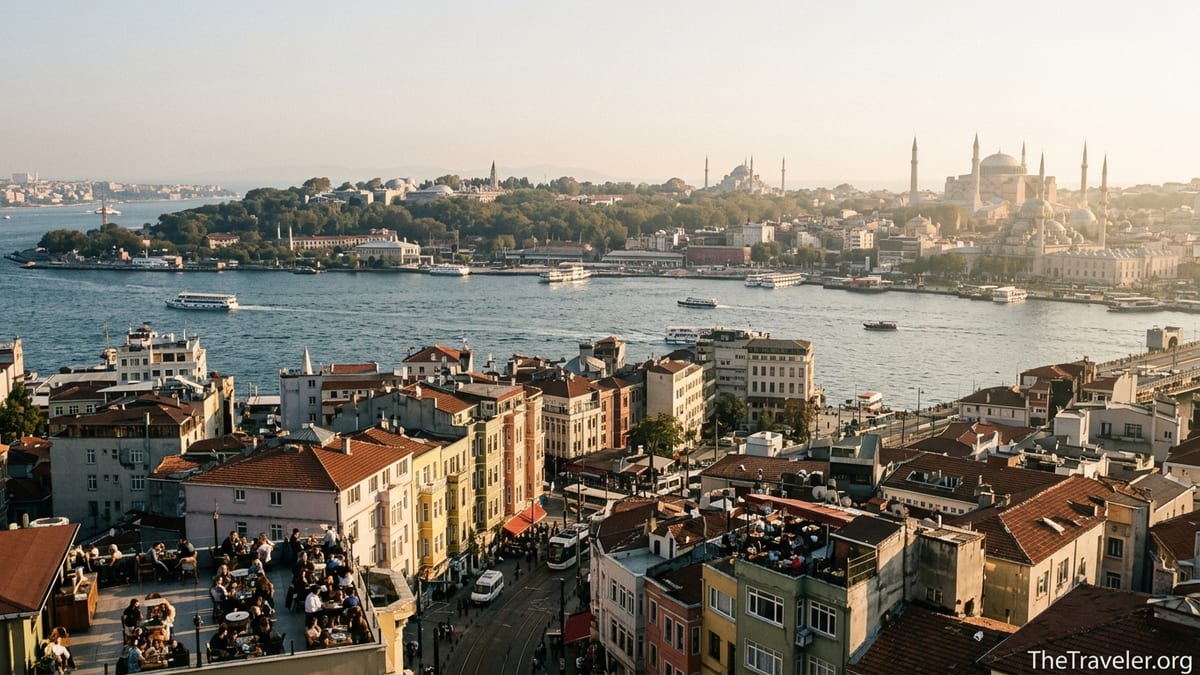
Overall vibe: living museum vs lived‑in city
Sultanahmet is the historic heart of Istanbul’s Old City. Stay here and you will likely wake up within a 10-minute walk of Hagia Sophia, the Blue Mosque, Topkapı Palace and the Basilica Cistern. Many streets are cobbled, traffic is restricted around major sights, and shopfronts are filled with carpet dealers, souvenir stands and Turkish delight shops. It feels atmospheric and almost theatrical, particularly in the early morning and at sunset when the call to prayer echoes between the mosques.
The trade-off is that Sultanahmet today exists primarily for visitors. Outside a few residential side streets, much of the area is geared to tourism: menus in five languages, set-price grills and tour agencies on every corner. After the day-trippers leave, parts of the neighborhood become quiet, with fewer locals around than in other central districts. Some travelers love this feeling of a “history bubble,” while others find it slightly artificial and prefer to sleep elsewhere once they have seen the monuments.
Beyoğlu, on the opposite side of the Golden Horn, is where Istanbul feels like a modern, lived-in metropolis. The district stretches from Karaköy on the waterfront up through the Galata and Pera areas to Taksim Square. Here you get dense apartment streets, small galleries, third‑wave coffee shops, meyhanes serving rakı and meze, rooftop cocktail bars and live-music venues. Istiklal Avenue, the main pedestrian spine, stays busy late into the evening, especially around weekends.
Because it is a large district, Beyoğlu contains different micro‑neighborhoods. Karaköy has a creative, café-and-cocktail feel close to the tram and ferries. Galata streets around the tower mix boutique hotels with quiet residential lanes. Pera and Cihangir attract younger travelers and digital nomads who want nightlife but also local markets and everyday shops. If you want to feel part of contemporary city life rather than a historic stage set, Beyoğlu usually wins.
Access to sights and walking routes
If your priority is to see the “big four” historic sights with minimal commuting, Sultanahmet is extremely convenient. Many hotels sit within a 5–10 minute walk of Hagia Sophia, the Blue Mosque, the Hippodrome and the entrance to Topkapı Palace. Travelers on tight itineraries sometimes manage to visit all four in a single, if exhausting, day simply by walking between them. The Grand Bazaar and Spice Bazaar are also a 15–20 minute walk or one or two tram stops away, which makes it easy to return to your room for a midday rest.
From Beyoğlu, you will usually combine walking with the tram or funicular to reach the Old City. A typical route from Galata or Karaköy is to walk downhill to the T1 tram line at Karaköy, then ride 10–15 minutes across the Galata Bridge and up to Sultanahmet station. From Pera or the upper end of Istiklal Avenue, most visitors take the historic Tünel funicular down to Karaköy in about 90 seconds, or use the modern funicular from Taksim to Kabataş and connect with the tram there. In practice, this means 20–30 minutes from hotel door to the Blue Mosque if you are staying in central Beyoğlu.
Walking itself is part of the experience in both districts, but the feel differs. Sultanahmet’s main tourist streets are compact and mostly flat, though some lanes have steep patches and uneven cobblestones. It is realistic for many visitors to spend an entire day on foot within a radius of 1–2 kilometers. In Beyoğlu the hills are steeper, especially around Galata and Cihangir, and pavements can be narrow. Distances between neighborhoods are longer: you might walk 25 minutes from Galata to Taksim without realizing how far you have gone, which many people enjoy as a way of “city hiking” between cafés and viewpoints.
For a first visit of three or four days, you will almost certainly travel between the two areas at least once per day. The question is whether you prefer to commute into the history zone from a more local-feeling base in Beyoğlu, or stay among the monuments and commute out in the evening for food and nightlife.
Transport, connectivity and getting around
Both districts benefit from Istanbul’s dense public transport network, but they connect in slightly different ways. Sultanahmet sits on the T1 tram line, which runs east-west through the Old City and continues to Eminönü, Karaköy and Kabataş. For first-time visitors, this line is the main artery: you can ride from your Sultanahmet hotel to the Galata Bridge in under 10 minutes, then connect to ferries for Üsküdar or Kadıköy on the Asian side, or continue by tram to Kabataş for the funicular up to Taksim Square.
Beyoğlu is better connected to the rest of the modern city through the metro and funicular system. The Şişhane and Taksim metro stations on the M2 line link directly to business and shopping districts such as Levent and Şişli. From Karaköy and Kabataş you have quick ferries across the Bosphorus toward Kadıköy and Üsküdar, which many travelers consider highlights of the city. The short Tünel funicular makes the steep climb from Karaköy to the Pera end of Istiklal Avenue, while the Taksim–Kabataş funicular shuttles between the square and the waterfront, integrating with the tram.
For airport transfers, both areas are practical but require at least one change on public transport. The new Istanbul Airport on the European side connects by metro to central stations where you transfer to the tram or another metro line. Many visitors, especially after a long-haul flight, choose to use pre-booked shuttles or taxis. In light traffic, a taxi ride from the airport to Sultanahmet might take around 40–50 minutes, and to Beyoğlu slightly less, but at peak times journeys can exceed an hour. Licensed yellow taxis are widely available in both districts, though Sultanahmet’s smaller streets mean some hotels are not directly accessible by car and require a short walk with luggage.
Day to day, using public transport is straightforward once you have an Istanbulkart, the rechargeable card used on trams, metros, buses and most ferries. Single rides are relatively inexpensive compared with many European capitals. Students and budget travelers often appreciate Beyoğlu’s stronger connections to far-flung neighborhoods, while short-stay visitors focused on classic sightseeing may value the simplicity of having the tram and main monuments right outside their door in Sultanahmet.
Hotel types, price levels and value for money
Sultanahmet’s hotel scene leans heavily toward small boutique hotels, guesthouses and a handful of landmark luxury properties. Many of the mid-range options are converted Ottoman-era buildings or older apartment houses with 15–30 rooms. In mid‑season, a simple but well-reviewed double room in a side street might cost somewhere in the region of 70–120 US dollars per night, sometimes including a rooftop breakfast terrace. On the high end, heritage properties with Hagia Sophia or Blue Mosque views can run into several hundred dollars per night, particularly in spring, early summer and around religious holidays.
Because competition is intense and demand is high, prices in Sultanahmet for comparable quality can feel slightly inflated compared with more residential areas. It is common to find very compact rooms, thin walls and older bathrooms in otherwise charming properties. The payoff is location: you step outside and are minutes from world-famous monuments. Travelers on very short trips, honeymooners seeking a classic postcard view or those with mobility challenges often judge the premium worthwhile.
Beyoğlu offers a broader range of accommodation styles and price points. Around Karaköy and Galata you will find stylish design hotels in the 100–180 US dollar range, many in restored bank or warehouse buildings with polished lobbies and small rooftop bars. Streets just back from Istiklal Avenue hold dozens of mid-range boutique hotels and apartment-style properties that can represent good value for groups or longer stays. Budget travelers have more hostel and simple pension options here than in Sultanahmet, particularly around Taksim and some backstreets of Pera.
Value for money in Beyoğlu often comes from having a slightly larger room, more modern facilities and easy access to dining and nightlife without needing a taxi. For example, a couple might book a mid-range hotel near Şişhane metro for roughly the same nightly price as a basic room in Sultanahmet, but gain a more spacious layout, new bathroom fittings and the ability to walk to multiple café-lined streets at night. One practical tip is to double-check how steep the walk is between your chosen Beyoğlu hotel and the nearest tram or metro stop, particularly if you will be returning uphill after full days of sightseeing.
Nightlife, food and evening atmosphere
When it comes to nightlife, Beyoğlu is clearly stronger. In Karaköy alone you can move in one evening from a traditional meyhane serving grilled fish and cold meze plates, to a craft cocktail bar in a converted bank building, to a casual waterfront café with views across to the Old City. Climb toward Pera and Cihangir and you will find small venues with live Turkish rock or jazz, intimate wine bars pouring local vintages from Thrace and Anatolia, and sidewalk tables filled with young locals chatting late into the night.
Istiklal Avenue and its side streets offer everything from simple beer halls to rooftop terraces with Bosphorus views popular for sunset drinks. Travelers in their 20s and 30s, solo visitors and those who like to go out after 10 p.m. often feel more comfortable basing in Beyoğlu, where returning to the hotel after midnight usually involves a short walk through busy, well-lit streets instead of a taxi ride back across the Golden Horn.
Sultanahmet, by contrast, is quiet in the evenings. There are restaurants, of course, but many are oriented toward tourists: mixed grills, testi kebab, pide and set menus with photos in the window. A few rooftop terraces offer memorable views of Hagia Sophia illuminated at night, and some hotels have cozy lounges or small bars. However, there are far fewer independent wine bars, craft cocktail spots or live-music venues than in Beyoğlu. Many visitors staying in Sultanahmet take the tram or a taxi to Beyoğlu or to the Asian-side districts of Kadıköy and Moda for a more local evening scene, then return to the Old City to sleep.
Food quality can be good in both areas, but pricing and authenticity vary. In Sultanahmet, restaurants directly overlooking main sights or on the busiest tourist streets often charge noticeably higher prices for basic dishes such as kebabs or seafood, and upselling can be common. More characterful, family-run places tend to hide on side streets further from the main square. In Beyoğlu, you will find everything from inexpensive döner stands and lokantas serving home-style stews, to contemporary bistros that would not look out of place in major European capitals. This breadth makes it easier for travelers to match meals to their budget on any given day.
Safety, noise and practical comfort
Both Sultanahmet and Beyoğlu are central, busy districts that most visitors experience as broadly safe, especially in the main hotel and tourist zones. Petty crime such as pickpocketing can occur anywhere crowded, particularly on trams, in bazaars and along major pedestrian streets like Istiklal Avenue. Basic city precautions apply: keep valuables secure, be cautious of unsolicited help and avoid overly insistent touts around major monuments or nightlife strips.
Sultanahmet’s challenge is less safety and more a combination of crowds by day and quietness by night. Around midday in peak season some streets near Hagia Sophia and the Blue Mosque can become extremely congested, which may feel overwhelming for small children or older travelers. After dark, once day-trippers leave and many shops close, the atmosphere in some corners becomes very calm, even deserted. Solo travelers, particularly women, often report feeling comfortable but prefer to choose hotels on well-lit streets close to the tram stops rather than deep in the back lanes.
In Beyoğlu, the main issue is often noise. Streets around Istiklal Avenue, Taksim and some parts of Cihangir can be loud until well after midnight, with music from bars, street performers and people walking home. Hotels on major streets sometimes install double glazing, but you should still check recent guest comments describing sound levels. Quieter options exist in side streets of Galata, Pera or around the upper edges of Cihangir, where you are within a 5–10 minute walk of nightlife but can still sleep with the window open.
Two other comfort factors to consider are hills and the call to prayer. Sultanahmet has several mosques close together, and morning prayer can be very early; if you are a light sleeper, look for hotels with good window soundproofing. In Beyoğlu, mosques are more spread out, but the neighborhood’s steep streets can be tiring after long days. If mobility is a concern, picking a hotel near a tram or metro station and checking the elevation on a map can make a noticeable difference to your stay.
Best choice for first‑time visitors
For a short first visit of two or three nights focused on classic sights, many travelers find Sultanahmet the most straightforward base. Being able to step out of your hotel and walk directly to Hagia Sophia, the Blue Mosque, the Hippodrome and the Grand Bazaar saves time and energy. This can be especially valuable if you are visiting with children, older relatives or anyone who prefers shorter days. You can still take the tram or a taxi one evening to Beyoğlu for dinner and drinks, gaining a taste of modern Istanbul without having to navigate new neighborhoods in the dark every night.
For slightly longer stays of four nights or more, or for travelers who value food and nightlife as much as monuments, Beyoğlu often delivers a more balanced experience. A common strategy is to base near Galata or Karaköy, which provides easy tram connections to Sultanahmet by day and a wide range of dining and bar options within walking distance at night. This suits couples, solo travelers and groups of friends who want to explore both the Old City and the Bosphorus and Asian-side districts without ending each day in a quiet, tourist-heavy enclave.
If your budget is tight, Beyoğlu may offer a small advantage, because you are more likely to find hostels and simple pensions at lower nightly rates, plus more local eateries at everyday prices. If your priority is a “once in a lifetime” romantic stay with mosque views and minimal logistics, Sultanahmet’s historic hotels justify their premium. Some visitors even choose to split their stay: two nights in Sultanahmet to focus on monuments, followed by two or three nights in Beyoğlu for a deeper dive into the city’s contemporary culture.
Ultimately, both areas work well for first-timers; the better choice depends more on your travel style. If you imagine early starts, museum visits and quiet nights, opt for Sultanahmet. If you picture late breakfasts, long walks, café-hopping and evenings out, Beyoğlu will likely feel closer to the Istanbul you have in mind.
The Takeaway
Choosing between Beyoğlu and Sultanahmet is less about right or wrong and more about which version of Istanbul you want on your doorstep. Sultanahmet gives you the open‑air museum: Byzantine churches, Ottoman mosques and palaces within a tight, walkable radius. It suits short trips, history-focused itineraries and travelers who enjoy strolling past monuments on the way to breakfast. The compromises are quieter evenings, more overtly touristy restaurants and a slightly more limited connection to the everyday life of the city.
Beyoğlu offers the lived-in, energetic Istanbul of cafés, bars, street music and late-night conversations. From Karaköy, Galata, Pera, Cihangir or Taksim you can ride trams, metro and ferries in almost any direction, spend days exploring both European and Asian shores, and return at night to a district that still feels awake when the Old City has gone to bed. The trade-offs are steeper hills, greater potential for late-night noise and a daily commute to the biggest historic sights.
For many first-time visitors, the ideal solution is simple: pick the district that matches your dominant priority, and plan at least one extended visit to the other. Stay in Sultanahmet if you want maximum convenience for world-famous landmarks, but schedule an evening in Beyoğlu to see how locals eat, drink and socialize. Or base in Beyoğlu, use the tram to “commute” into the past each morning, and return to your contemporary neighborhood at night. In either case, you will move between the two more easily than you might expect, and leave with a fuller picture of Istanbul’s layered character.
FAQ
Q1. Which area is better for a first-time visitor: Beyoğlu or Sultanahmet?
Sultanahmet is better if your main goal is to see the classic sights with minimal commuting, especially on a short trip. Beyoğlu is better if you have more time and want to balance monuments with food, nightlife and everyday city life.
Q2. Is Sultanahmet safe to walk around at night?
Yes, Sultanahmet is generally considered safe, and many visitors walk between hotels and the main square after dark. Streets can become very quiet once shops close, so some travelers prefer to choose hotels on well-lit routes close to tram stops.
Q3. Does Beyoğlu have easy access to Hagia Sophia and the Blue Mosque?
Yes. From central Beyoğlu areas such as Karaköy or Galata you can reach Sultanahmet in about 20–30 minutes using the T1 tram or a combination of funicular and tram. It is not as immediate as staying in Sultanahmet, but still convenient for most visitors.
Q4. Where are hotels cheaper, in Beyoğlu or Sultanahmet?
Prices vary by season and exact location, but you often get slightly better value for money in Beyoğlu, especially for hostels, simple pensions and modern mid-range hotels. Sultanahmet can be more expensive for comparable quality because of its proximity to major sights.
Q5. Which district is better for nightlife?
Beyoğlu is clearly stronger for nightlife, with many bars, meyhanes, live-music venues and rooftop terraces around Karaköy, Galata, Pera and Cihangir. Sultanahmet has some restaurants and a few hotel bars, but evenings are generally quiet and aimed more at dining than going out late.
Q6. Is Beyoğlu noisy at night?
Some parts of Beyoğlu, especially streets near Istiklal Avenue and Taksim, can be noisy until late due to bars and foot traffic. Quieter pockets exist in side streets of Galata, Pera and Cihangir, so checking recent guest comments about noise levels is important when choosing a hotel.
Q7. Which area is better if I am traveling with children?
For families focused on sightseeing and early nights, Sultanahmet is often more practical because you can walk to most attractions and return easily for rest. If your children are older and you plan to explore different neighborhoods, a quieter street in Beyoğlu with good transport links can also work well.
Q8. Can I split my stay between Sultanahmet and Beyoğlu?
Yes, many travelers split their stay, for example spending two nights in Sultanahmet for a history-focused start, then moving to Beyoğlu for two or three nights to enjoy food, nightlife and easier access to ferries and other districts. This approach gives you the strengths of both areas.
Q9. Which district is better connected to the airport?
Neither has a direct airport train at the doorstep, but both connect via metro, tram and taxis. Beyoğlu has slightly better links to the wider metro network, while Sultanahmet sits directly on the main tram line. In practice, many visitors use pre-booked shuttles or taxis to and from either district.
Q10. If I stay in one district, will I miss out on the other?
No. Public transport and taxis make it easy to move between Sultanahmet and Beyoğlu, and many visitors visit both areas daily. Staying in one simply determines what you see and feel when you step outside your hotel each morning and return at night.