


Karaköy sits right on the water where the Golden Horn meets the Bosphorus, and its ferry piers are one of the most enjoyable ways to move around Istanbul. From here you can glide across to Kadıköy and Üsküdar on the Asian side, ride commuter boats that double as sightseeing cruises, and connect easily with trams and the historic Tünel funicular. This guide walks you through the main routes, how to use your Istanbulkart, what to expect on board, and when a ferry beats the tram for both views and convenience.
Get the latest updates straight to your inbox!
Orientation: Karaköy Piers and Where The Ferries Go
Karaköy’s ferry piers line the waterfront on Rıhtım Avenue, just north of the Galata Bridge. From this compact stretch of quay, Şehir Hatları, Istanbul’s municipal ferry operator, runs boats to Kadıköy and Üsküdar across the Bosphorus as well as to several Golden Horn piers reaching up toward Eyüp. In practice, this means that if you are staying around Galata, Taksim, or the new Galataport cruise terminal, Karaköy is one of your most useful gateways to the Asian side.
The classic inner-city lines you are most likely to use are Karaköy–Kadıköy and Karaköy–Üsküdar. On many timetables, Karaköy is also part of a loop that reads Kadıköy–Karaköy–Eminönü, effectively turning the ferry into a floating tram between three major hubs. These routes run with commuter-style frequency at peak times, so for much of the day you can simply walk up, tap your card and board the next boat without carefully planning your departure.
Besides the core cross-strait services, Karaköy connects into longer Bosphorus and Golden Horn routes. For instance, you can sail up the Golden Horn toward Fener, Balat and Eyüp, or use Karaköy as a convenient transfer point if you are heading to a Bosphorus cruise departing from Eminönü or Kabataş. Even if your main goal is sightseeing rather than transport, basing yourself near Karaköy gives you fast access to multiple ferry experiences within a few minutes’ walk.
Just behind the piers you will find the Karaköy T1 tram stop and the lower station of the historic Tünel funicular, which runs up to Beyoğlu. This makes it easy to combine ferries with rail: you might, for example, ride the tram from Sultanahmet to Karaköy, then hop on a ferry to Kadıköy for dinner, without ever needing a taxi.
Key Routes: Karaköy to Kadıköy, Üsküdar and Beyond
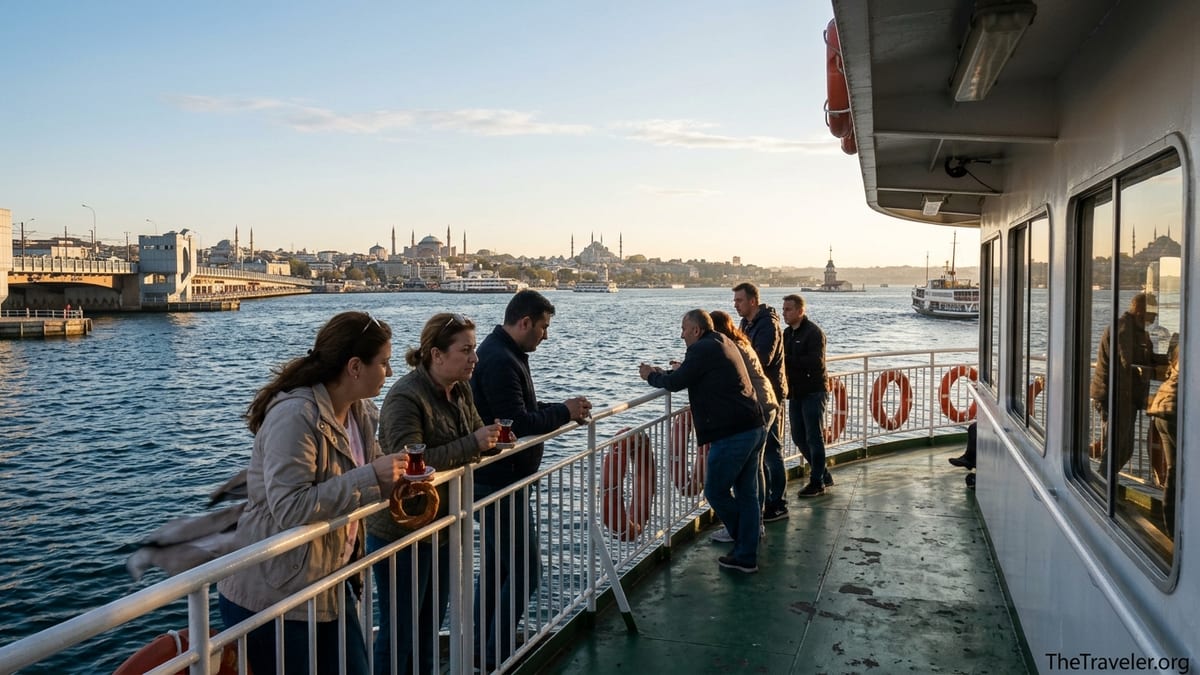
The workhorse line for many visitors is the ferry between Karaköy and Kadıköy. Sailings typically start early in the morning and continue into the late evening, with more frequent departures in rush hours. A typical crossing takes around 20 to 25 minutes, long enough to enjoy a tea from the on-board kiosk while you watch the silhouettes of Topkapı Palace, Hagia Sophia and the Blue Mosque slide by on the opposite shore. Morning commuters often stand along the rail with simit in hand, tossing crumbs to the ever-present seagulls.
Karaköy–Üsküdar ferries follow a similar pattern in terms of frequency and journey time. Approaching Üsküdar, you will have a close view of the Maiden’s Tower out in the water and the busy mosque-lined waterfront where locals converge for sunset. Many travelers use this line to connect with the Çamlıca and Kuzguncuk neighborhoods by bus or on foot, or simply to stroll the promenade and look back toward the historic peninsula. Because Üsküdar lies slightly north of Kadıköy, the approach also gives you a broader sweep of the Bosphorus proper.
On most days, you can arrive at Karaköy shortly before your preferred departure and catch a boat within a reasonable wait, especially on the Kadıköy loop. For example, in practice travelers regularly report not needing to consult the timetable at all during daytime hours between roughly 8:00 and 20:00, as there is usually another ferry along within 10 to 20 minutes on the busiest inner-city lines. Early mornings and late evenings may see gaps, so if you are catching a flight or connection, it is worth checking the exact schedule on the Şehir Hatları website or posted boards at the pier.
From Karaköy you can also connect to longer runs up the Bosphorus, though these typically start from Eminönü or Kabataş rather than Karaköy itself. A common pattern is to ride a short Karaköy–Üsküdar or Karaköy–Kadıköy hop as a warm-up, then later join a dedicated Bosphorus tour that sails further north to neighborhoods like Bebek, Rumeli Hisarı and Sarıyer. In other words, think of Karaköy’s ferries as your daily practical transport, and the longer Bosphorus routes as a half-day excursion layered on top.
Istanbulkart, Tickets and Paying For Your Ferry
The simplest way to pay for ferries from Karaköy is with an Istanbulkart, the city’s contactless transport card. Istanbulkart works on almost all public transport in Istanbul, including trams, metros, buses, funiculars and municipal ferries. You tap the card on the turnstile reader at the pier entrance and the fare is deducted automatically; no separate ferry ticket is needed. For short visits, you can also use limited-use paper cards or certain contactless bank cards, but Istanbulkart generally offers the best overall value and convenience.
You can buy an Istanbulkart at yellow vending machines often found around major tram and metro stops, including those near Karaköy and in hubs like Sultanahmet or Taksim. These machines typically accept Turkish lira banknotes and sometimes cards, but they do not always give change, so approach with small notes. A typical purchase sequence involves pressing the “Istanbulkart Purchase” option, inserting money to cover the card cost plus an initial balance, then collecting the plastic card from the dispenser. Street kiosks around Karaköy and Eminönü also often sell preloaded cards for a small additional fee.
Once you have the card, you top it up either at the same vending machines or via the official mobile app, which allows you to load credit using a bank card. As of mid 2026, ferry fares for inner-city routes such as Karaköy–Kadıköy sit in the moderate range compared with metro or tram journeys. The municipality reviews fares periodically, so it is best to think in approximate terms rather than rely on an exact figure in advance. As a visitor, loading enough credit for a few rides per day, including at least one ferry crossing, is typically sufficient; you can always add more credit if you find yourself sailing back and forth more often than planned.
If you do not have an Istanbulkart, many turnstiles now accept contactless bank cards or phones. This is convenient in a pinch, but charges can be slightly higher and transfer discounts less generous than with Istanbulkart. For a couple sharing one physical Istanbulkart, note that you can usually tap the same card multiple times in quick succession to pay for both passengers, although some transfer discounts only apply to the first tap. To keep things simple and avoid queuing delays at busy piers, consider each adult carrying their own card if you will be using public transport heavily.
Using Ferries as Sightseeing: Views, Seating and Sunset Crossings
Even if your only goal were sightseeing, riding the ferries from Karaköy would remain one of the best value experiences in Istanbul. From the open decks you can see the full drama of the city’s skyline: historic mosques on the old peninsula, Galata Tower rising above Beyoğlu, and a chain of waterfront palaces and mansions stretching up the Bosphorus. Commuters treat these boats as ordinary transport, but for visitors they are effectively low-cost cruises woven into daily life.
For the best views on a Karaköy–Kadıköy crossing, aim for the side of the boat facing the historic peninsula when you depart. That might mean choosing the starboard side depending on the specific vessel, so it is worth glancing across the water before boarding to imagine the route. On fine days, the open upper deck is ideal, but in winter or on windy evenings the enclosed lower saloon offers large windows and a more sheltered ride. Vendors on board typically sell tea, Turkish coffee, soft drinks and small snacks such as simit or packaged biscuits at reasonable local prices.
Sunset is an especially atmospheric time to depart from Karaköy. In summer, ferries leaving in the early evening will carry you across the Bosphorus just as the sky behind the mosques turns orange and pink. A common pattern for visitors is to leave Karaköy for Kadıköy in the hour before sunset, wander through Moda or the Kadıköy market for dinner, then sail back after dark with the European shore lit up. On the Üsküdar route, arriving shortly before sunset puts you on the Asian promenade as locals gather with tea glasses to watch the changing light over the old city.
Because these are working commuter boats, there is no need to reserve seats, and you can move around freely between decks once on board. On busy weekday rush hours, upper deck railings can become crowded as locals snap photos and chat, so if you want a front-row spot for photography, board a little earlier and walk straight up to the open deck. In quieter midday periods, you may have whole stretches of railing to yourself, with only the sound of engines, wind and gulls for company.
Ferry vs Tram and Metro: Which Should You Choose?
Between Karaköy and other key areas like Sultanahmet, Taksim and Kadıköy, you will often have a choice between water and rail. The T1 tram line, for example, connects Karaköy with Sultanahmet and Eminönü in a matter of minutes, while the M2 metro and the Tünel funicular offer a fast route up the hill to Taksim. Ferries, on the other hand, are the main surface link to Kadıköy and Üsküdar. Deciding between them is less about absolute speed and more about your priorities for comfort, scenery and crowd levels.
In peak rush hours on weekdays, trams and metros can become crowded enough that you may find yourself standing in close quarters. Ferries also fill up, particularly on the Kadıköy loop, but the open decks and greater sense of space often make them feel less intense. If you have luggage or simply prefer fresh air, choosing a ferry from Karaköy to Kadıköy, then connecting by metro or bus on the Asian side, can be a more pleasant door-to-door experience than staying entirely underground.
In terms of timing, a direct tram ride from Sultanahmet to Karaköy is usually quicker than walking to Eminönü and catching a ferry. However, for crossings to the Asian side, ferries are naturally the most direct option. To illustrate, consider a trip from Karaköy to Kadıköy in the early afternoon: the ferry takes around 20 to 25 minutes on the water, while a rail-based route would involve taking the tram or funicular to a Marmaray station, changing lines and passing through deep tunnels. In practice, by the time you factor in transfers and escalators, the ferry is often similar in total duration while far more relaxing.
Weather can influence the decision. On a cold and rainy winter evening, you may prefer the protection and frequency of metro and tram routes, using the ferry only when necessary. Conversely, on a clear spring or autumn day, it makes sense to plan your movements so that at least one leg of your journey includes a ferry crossing. Many repeat visitors treat the water not just as transport but as a daily ritual: a mid-morning crossing with tea, or a post-dinner ride back from Kadıköy with the lights of the Galata Bridge shimmering on the surface.
Luggage, Practicalities and Comfort On Board
Public ferries from Karaköy are used by a wide mix of commuters, students, tourists and workers, and modest amounts of luggage are common. Small suitcases, backpacks and carry-on bags are generally no problem; you simply wheel or carry them onto the boat and keep them beside your seat or against a railing. On board there are no dedicated luggage racks like you might find on intercity trains, so keep your belongings close and avoid blocking busy passageways or doorways where passengers board and disembark.
If you are traveling with a larger suitcase, try to board early to secure a spot along a wall or behind a seating bank where you will not be in the way. Ferries are stable and spacious, but the short distances mean frequent stops and steady passenger flow, particularly on the Kadıköy and Üsküdar routes. Elevators are not guaranteed at every pier, so be prepared to lift your bag up a few steps at boarding ramps. For travelers with mobility concerns, it can help to ask staff at the pier which entrance offers the gentlest slope or fewest steps in current conditions.
On-board facilities are simple but sufficient. Most vessels offer indoor seating, outdoor benches, toilets and a small kiosk serving basic refreshments. Prices on these kiosks tend to be close to what you would pay at a local street stand rather than inflated tourist rates, so ordering a tea or bottled water for the ride is a normal local habit. Smoking is restricted to certain outdoor areas; look for designated signs and be aware that even on open decks, smoke can drift with the wind.
Security screening at municipal piers is usually light-touch compared with airports, typically involving a quick pass through a metal detector and a bag scan. Liquids and snacks are allowed, and it is common to see passengers boarding with takeaway coffees, simit bags or even picnic items for a longer Bosphorus ride. As on any crowded public transport, keep an eye on your valuables, but serious incidents are rare and the overall atmosphere on ferries is relaxed and social.
Bosphorus Routes and How Karaköy Fits In
While the inner-city lines from Karaköy are the backbone of daily commuting, many visitors want at least one longer Bosphorus cruise to see the city’s waterfront palaces, fortresses and neighborhoods stretching north toward the Black Sea. Official Bosphorus tours operated by Şehir Hatları typically depart from Eminönü or Kabataş, a short tram or even walk from Karaköy. For example, a popular pattern is to take the tram or walk from Karaköy over the Galata Bridge to Eminönü in the morning, join a long Bosphorus tour that sails as far as villages like Sarıyer or Anadolu Kavağı, then return in the afternoon and stroll back to Karaköy for dinner.
If you are staying near Karaköy and prefer not to walk too far, you can treat the Karaköy–Üsküdar or Karaköy–Kadıköy rides as mini Bosphorus cruises in their own right. The stretch between the Galata Bridge and the Asian piers still gives you sweeping views of landmarks such as Topkapı Palace, the Maiden’s Tower and the stacked hills of Beyoğlu. By doing this a few times at different hours, you gather a surprisingly complete visual impression of Istanbul’s waterfront without ever joining a dedicated tourist boat.
For travelers with more time, combining routes can create a layered experience. One day you might ride from Karaköy to Kadıköy in late morning, explore the markets and cafes of Kadıköy and Moda, then continue up the Asian shore by bus or minibus to lively neighborhoods like Kuzguncuk or Çengelköy before returning to Europe by ferry to Beşiktaş. Another day, you might use Karaköy as a jumping-off point for a Golden Horn trip toward Fener and Balat, returning via tram or on foot along the historic neighborhoods by the water.
The main logistical point is that Karaköy rarely serves as the origin for the very long Bosphorus tours that reach the strait’s northern end. Instead, it functions as an easily accessible base, with excellent connections to both the ferry piers that host those tours and the tram and metro lines feeding into the rest of the city. From a planning perspective, think of Karaköy as your flexible “home pier,” and the Bosphorus itself as a series of overlapping ferry experiences that you can weave into your schedule according to weather, mood and time.
The Takeaway
Using Karaköy’s ferries turns everyday movement around Istanbul into part of the experience rather than a chore. With one Istanbulkart in hand, you can glide across the Bosphorus to Kadıköy for dinner, hop over to Üsküdar for a sunset stroll, or tack a short ferry ride onto a day of visiting mosques and museums on the historic peninsula. The boats are frequent, inexpensive by international standards and deeply woven into local life.
For most visitors, the best approach is to mix ferries with trams and metros. Take the tram from Sultanahmet to Karaköy, ride the ferry to Kadıköy or Üsküdar at least once in each direction, and, if time allows, add a longer Bosphorus cruise from nearby Eminönü or Kabataş. Aim to include at least one crossing at sunset and one in full daylight to see how different the skyline feels in changing light. Travel light, tap your card confidently at the pier, and treat every crossing as both transport and an open-air balcony on one of the world’s great cityscapes.
FAQ
Q1. Do I need to buy a separate ticket for Karaköy ferries, or is Istanbulkart enough?
You do not need a separate ticket if you have an Istanbulkart. Simply load credit on your card and tap it at the turnstiles at Karaköy pier to pay your ferry fare. Limited-use paper cards and many contactless bank cards also work, but Istanbulkart usually offers the best value and makes transfers to trams and metros cheaper and easier.
Q2. How often do ferries run from Karaköy to Kadıköy and Üsküdar?
Frequency varies by time of day and season, but between early morning and late evening the Karaköy–Kadıköy and Karaköy–Üsküdar routes generally see boats every 10 to 30 minutes. Peak commuter hours often have shorter gaps, while late at night there may be longer waits or only a few remaining departures. Check posted timetables at the pier or the Şehir Hatları website for the exact day of your trip.
Q3. Can I use the ferries from Karaköy as a cheap Bosphorus cruise?
Yes. The standard Karaköy–Kadıköy and Karaköy–Üsküdar crossings offer excellent views of the Bosphorus, old city skyline and key landmarks like the Maiden’s Tower. Many travelers ride these routes during daylight and again around sunset instead of or in addition to a dedicated tourist cruise, treating them as low-cost mini tours that fit naturally into their daily movements.
Q4. Is it easy to take luggage on the Karaköy ferries?
Small suitcases, backpacks and carry-on bags are common and generally easy to manage. You carry or wheel your luggage on board and keep it near your seat or along a wall, taking care not to block doorways or busy walkways. For very large or multiple suitcases, consider traveling outside peak rush hours and boarding early so you have time and space to position your bags safely.
Q5. When is the best time of day to ride a ferry from Karaköy for views and photos?
Clear mornings and the hour around sunset are usually best for views and photography. Morning light highlights the outlines of mosques and palaces without harsh glare, while sunset crossings frame the skyline in warm colors. After dark, crossings back toward Karaköy give you shimmering reflections of bridges and city lights on the water.
Q6. Should I choose the ferry or the tram if I am in a hurry?
If you are moving between Karaköy and nearby European-side neighborhoods like Sultanahmet or Eminönü, the tram is usually slightly faster and more predictable, especially in bad weather. For crossings to Kadıköy or Üsküdar on the Asian side, ferries are often comparable in total travel time once you account for metro or rail transfers, and they are much more scenic and comfortable if you are not under strict time pressure.
Q7. Are Karaköy ferries a good option in winter or on rainy days?
Yes, as long as you are prepared for the weather. Ferries have enclosed indoor salons with heating, large windows and seating, so you can stay warm and dry while still enjoying the view. In heavy rain or strong winds, you may prefer to avoid the open deck and instead sit inside, but the ferries continue to run under typical winter conditions unless authorities temporarily suspend service for safety.
Q8. Can I buy food and drinks on board the ferries from Karaköy?
Most municipal ferries have a small kiosk that sells tea, Turkish coffee, soft drinks and simple snacks such as simit, cookies or packaged sandwiches. Prices are usually close to everyday local levels rather than premium tourist rates. You are also allowed to bring your own takeaway items from cafes and street vendors near the pier.
Q9. Do I need to book Karaköy ferries in advance?
No advance booking is required or even possible for regular inner-city ferries from Karaköy. These are public transport services that you access by turning up at the pier, tapping your Istanbulkart at the turnstile and boarding the next boat. Only some dedicated tourist cruises on the Bosphorus, which typically depart from places like Eminönü or Kabataş, may offer or require reservations.
Q10. Is it safe to ride the ferries from Karaköy at night?
In normal circumstances, ferries from Karaköy are considered safe in the evenings and are used daily by commuters, students and families. As in any big city, it is sensible to keep an eye on your belongings, avoid very isolated corners of the deck late at night and follow crew instructions. Sticking to well-lit piers, traveling with companions when possible and checking the schedule so you are not waiting long between departures will help you feel more comfortable.