


More news on this day
Australian travelers are increasingly swapping Europe’s packed capitals for Kazakhstan’s wide steppes and Silk Road cities, as tour data and new Central Asian itineraries point to a steady shift toward more remote, culture-rich journeys.
Get the latest news straight to your inbox!
Central Asia Steps Into the Australian Holiday Spotlight
Published travel industry reports indicate that Australians are showing growing interest in destinations across Central Asia, including Kazakhstan, as they look beyond traditional long-haul favorites in Europe and North America. While the overall numbers remain modest compared with established markets, tour operators focusing on the so-called Stans describe a clear rise in enquiries for multi-country routes that feature Kazakhstan alongside Uzbekistan and Kyrgyzstan.
Insights from Australian and regional agencies suggest this interest has been helped by a broader post-pandemic trend toward "second wave" destinations, where visitor numbers are lower and cultural experiences feel less commercialized. Instead of using London, Paris or Rome as a base, more long-haul travelers are now structuring trips around overland journeys and specialist themes, from ancient trade routes to mountain trekking.
Market research on Australian outbound travel also shows a growing willingness to consider itineraries that combine well-known hubs in Asia with lesser-known regions further inland. Central Asia fits that pattern, with Kazakhstan often serving as a gateway for more extensive Silk Road adventures that loop through several countries over two or three weeks.
Industry observers note that this gradual shift does not signal any decline in Europe’s appeal, but rather an expansion of the typical Australian long-haul “big trip” short list. For a growing niche of adventure and culture seekers, Kazakhstan has begun to appear on the same comparison list as Italy or Spain when planning a major overseas journey.
Silk Road Rail Journeys Put Kazakhstan on the Map
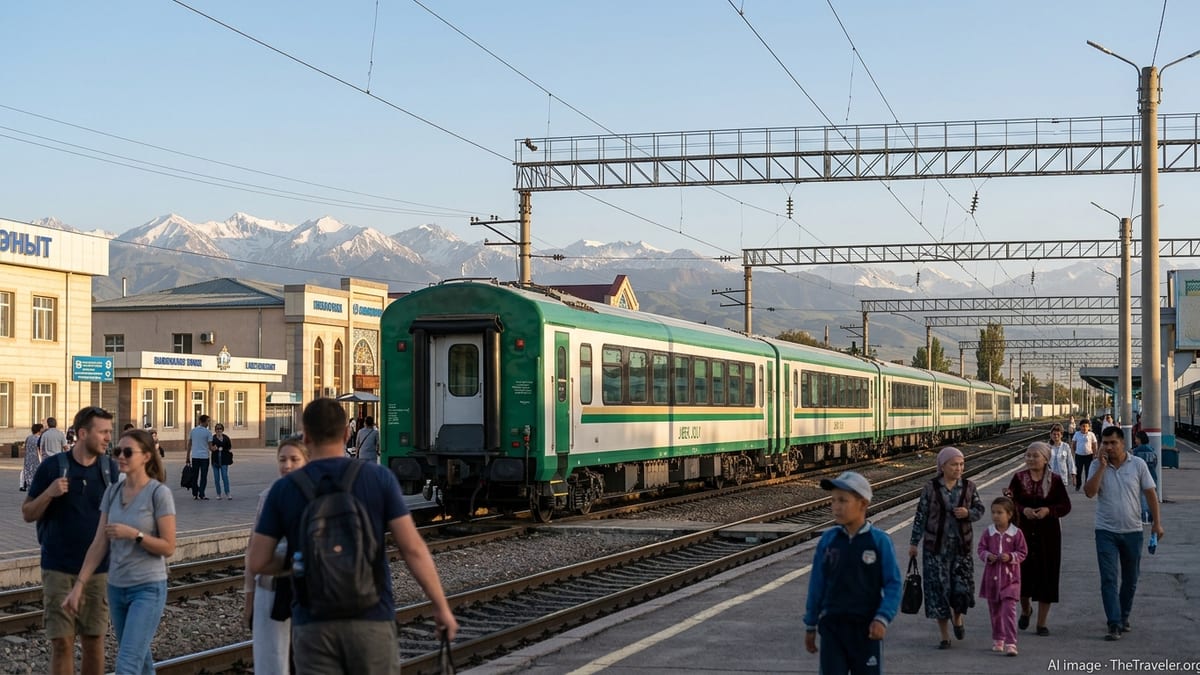
Kazakhstan’s strategy to position itself as a key stop on modern Silk Road routes is increasingly visible in new rail-based tourism products. Publicly available information from Kazakhstan’s national tourism promotion body highlights dedicated tourist trains designed to trace historic caravan paths across the south of the country and into neighboring Uzbekistan, linking cities such as Almaty, Turkistan, Samarkand and Bukhara.
One flagship example is a long-distance tourist service marketed as a Silk Road experience, developed in cooperation with the national railway operator and regional tour companies. Promotional material describes multi-day itineraries with sleeper carriages, guided excursions in ancient cities and curated food experiences, tapping into a global appetite for slow travel and rail journeys that prioritize landscape and culture over speed.
Recent announcements from Kazakh tourism officials and partner agencies also point to plans for further cross-border rail routes covering sections of the historic corridors recognized by UNESCO under the Chang’an to Tianshan Silk Roads inscription. For international visitors, including Australians, these products offer a structured way to cover large distances in comfort while accessing cities and archaeological sites that remain far less commercialized than better-known Silk Road hubs elsewhere.
Australian-focused tour companies have begun to incorporate these trains into broader itineraries marketed through local travel agencies and online platforms. Packages typically pair rail segments with stays in boutique hotels or guesthouses, enabling travelers to experience both Kazakhstan’s modern urban centers and smaller historic towns that once served as caravan halts.
From Astana’s Skyline to Turkistan’s Shrines
Travel guides produced by Kazakhstan’s official visitor portals describe a country that combines futuristic architecture with deeply rooted Islamic and nomadic heritage. Astana, the capital, is promoted as a contemporary city of statement buildings and wide boulevards, while Almaty, the former capital, is highlighted for its leafy streets, café culture and proximity to the Tian Shan mountains.
For Australians seeking Silk Road history, attention is increasingly drawn southward to Turkistan, Shymkent and Taraz, where mausoleums, caravanserai ruins and medieval fortifications trace the path of the trading routes that once linked China with the Mediterranean. National tourism planning documents emphasize efforts to integrate these cities into multi-country Silk Road circuits, an approach that aligns with Australian travelers’ preference for combining several destinations in one long-haul trip.
Specialist operators also showcase natural landscapes as a key draw, pairing historic sites with excursions to Charyn Canyon, the steppe around Almaty and the lake and mountain regions close to the Kyrgyz and Chinese borders. This blend of culture and outdoor adventure appears to resonate with Australians who might otherwise look to the Alps or the Canadian Rockies for a similar mix of hiking and scenery.
Some itineraries marketed in Australia specifically underline the relative lack of mass tourism in these regions compared with classic European hotspots. Promotional material refers to uncrowded sites and a sense of discovery, which appeals to travelers who have already visited Europe several times and are looking for a new frontier without sacrificing comfort.
Tour Operators Pivot Toward a More Curious Australian Market
Evidence from Australian-based tour catalogs and online booking platforms shows a growing selection of Central Asia itineraries branded explicitly as Silk Road adventures. Small-group journeys featuring Kazakhstan appear alongside more established Eastern Europe and Middle East offerings, often labeled as "premium" or "discovery" products aimed at experienced travelers in their 40s, 50s and 60s.
Some Australian firms bundle Kazakhstan within broader "Five Stans" itineraries that include Uzbekistan, Kyrgyzstan, Tajikistan and Turkmenistan, with flights from major Australian cities into key Central Asian hubs. These packages typically emphasize inclusions such as local guides, overland transfers and visa support, addressing a perception that Central Asia is more complex to navigate independently than Europe or Southeast Asia.
Industry commentary in travel trade publications suggests that this pivot is supported by Australians’ increasing comfort with long-haul connections via hubs in the Gulf, East Asia and Türkiye. While there are currently no direct flights between Australia and Kazakhstan, a combination of one or two stopovers now makes Almaty or Astana reachable in a time frame comparable to travel to parts of Europe or North America.
Travel advisors report that Australians booking these itineraries are often repeat overseas travelers who have already visited major European highlights and are now motivated by themes such as Silk Road archaeology, Soviet-era history and high-altitude landscapes. Kazakhstan’s emerging profile fits this appetite for destinations that feel new, but which benefit from improving infrastructure and a growing ecosystem of English-language services.
Infrastructure Upgrades Aim to Capture Long-Haul Growth
Publicly available policy papers and tourism strategies from Kazakhstan highlight continued investment in airports, roads and visitor facilities, all framed as essential for converting rising awareness into sustained visitor growth. Almaty and Astana airports have seen modernization programs, while regional centers along the Silk Road corridors are earmarked for upgrades to accommodation, signage and heritage site management.
International organizations monitoring Silk Road tourism corridors point to Kazakhstan as a key player in efforts to develop multi-destination routes that allow travelers to move efficiently between countries. Coordinated marketing, simplified visa regimes and joint participation in global travel fairs are intended to make Central Asia more visible as a single, coherent region in the eyes of long-haul markets such as Australia.
Tourism development experts note that Kazakhstan still faces challenges, including seasonal extremes, variable service standards outside major cities and limited direct air connectivity from some source markets. However, the combination of rail-based products, regional cooperation and targeted promotion is seen as creating conditions for steady growth rather than rapid, unmanageable surges in visitor numbers.
For Australian travelers, these shifts are beginning to translate into more options on the ground, from curated Silk Road rail itineraries to small-group cultural tours that combine Kazakhstan’s modern cities with its caravan-era monuments and mountain landscapes. As word of mouth spreads and more images of domed mausoleums and red-rock canyons replace familiar European skylines in holiday albums, Kazakhstan appears set to hold its place on an expanding Australian travel map.