


More news on this day
Flight operations at Kenya’s main international gateway have been severely disrupted after a two-day go-slow by aviation workers at Nairobi’s Jomo Kenyatta International Airport and other hubs, delaying or cancelling scores of flights and stranding thousands of passengers at the height of the travel season.
Get the latest news straight to your inbox!
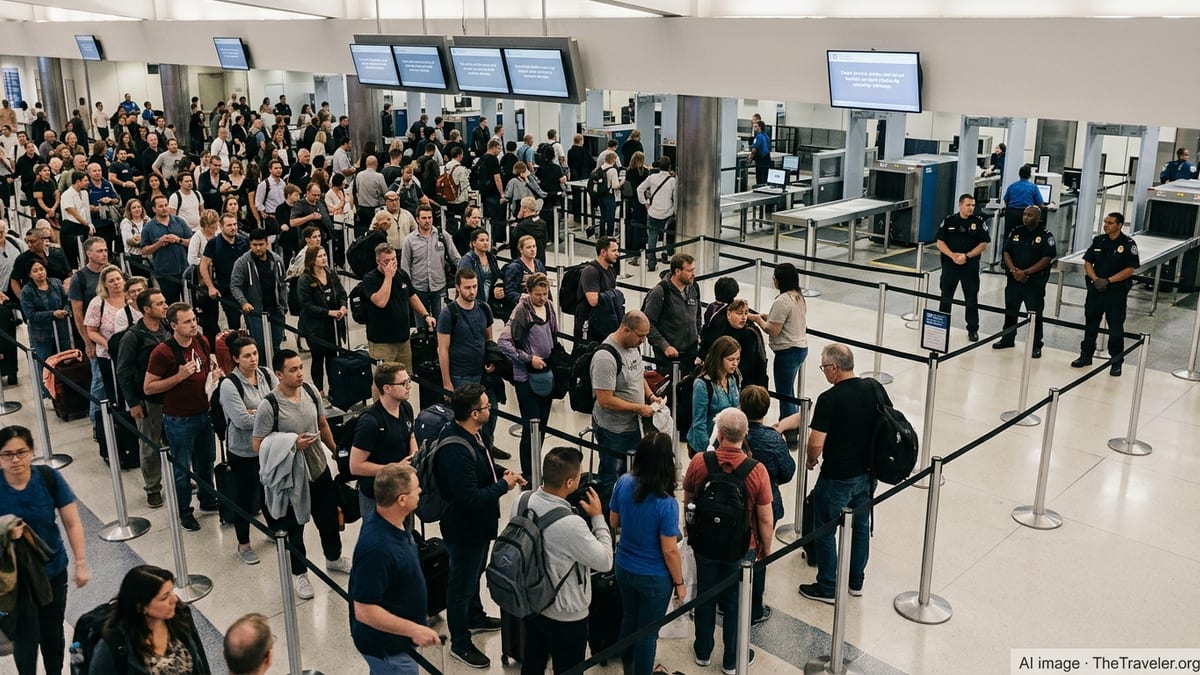
Strike at Kenya’s busiest airport ripples across the network
Published coverage indicates that industrial action began on Sunday, August 30, 2026, when members of the Kenya Aviation Workers Union launched a go-slow at Jomo Kenyatta International Airport (JKIA) in Nairobi and other key airports. The action quickly disrupted check-in, baggage handling and air traffic control functions, triggering long queues and extended waits across terminals.
Reports from regional and international outlets describe hours-long delays and rolling cancellations as airlines struggled to obtain departure slots and crew clearances. Some carriers held aircraft on the ground while awaiting confirmation that routes were safe to operate, while others preemptively cancelled services into Nairobi and secondary cities.
JKIA handles a large share of East Africa’s international passenger and cargo traffic, making it a vital connection point for long-haul routes between Europe, the Middle East, Asia and the wider African region. The concentration of traffic at the hub meant that disruption in Nairobi quickly cascaded to airports including Mombasa’s Moi International, Eldoret International and Kisumu International, where schedules also fell behind.
By Monday, August 31, reports indicated that “go-slow” tactics had entered a second day, with airport workers reducing the pace of operations rather than staging a full walkout. Airlines and airport operators warned passengers to expect continued disruption, advising travelers to arrive early, remain in close contact with carriers and prepare for schedule changes at short notice.
Thousands of passengers face long delays and missed connections
News reports from the affected airports describe crowded departure halls, long lines at check-in counters and passengers stretched out on the floor as they waited for updates on their flights. Some travelers reported overnight waits in the terminal after a sequence of rolling delays culminated in last-minute cancellations.
International coverage highlights cases in which passengers faced initial delays of more than an hour, followed by further pushes into the early morning hours before flights were ultimately cancelled. Travelers with onward connections through Nairobi were particularly affected, with some missing long-haul departures to Europe and North America and being rebooked days later.
Publicly available information from airlines indicates that national carrier Kenya Airways and low-cost subsidiary Jambojet both experienced significant schedule disruption as the go-slow continued. Kenya Airways notified customers of multi-hour delays and urged those with flexible plans to consider changing travel dates, while also outlining rebooking options for those unable to travel as planned.
Travel forums and local media report that hotels near JKIA saw a surge in demand as stranded passengers sought last-minute accommodation. Others remained in the terminal, uncertain whether to leave the airport or wait in case their flights were reinstated. Confusion around which services would operate added to the frustration, particularly for those without local contacts or access to up-to-date online information.
Union grievances center on pay, contracts and recognition
According to multiple Kenyan outlets, the Kenya Aviation Workers Union attributed the industrial action to a series of unresolved grievances involving the Kenya Civil Aviation Authority, the Kenya Airports Authority and certain airline operators. Key points cited include the absence of a concluded collective bargaining agreement for some staff, concerns over pay and benefits, and disputes about working conditions and staffing levels.
Publicly available coverage notes that union representatives have argued that negotiations over pay and conditions have dragged on for years, particularly for technical and safety-critical roles in air traffic management. The lack of a comprehensive agreement has reportedly fueled discontent among employees who passed through the pandemic downturn and subsequent rebound in traffic without what they consider to be commensurate improvements in compensation.
In addition to pay and contracts, union statements referenced in local reporting cite broader concerns about staff welfare and recognition. These include calls for clearer structures for career progression, improved rostering practices and formal recognition arrangements between specific aviation companies and the union, which would give worker representatives a stronger role in future negotiations.
Aviation sector analysts quoted across several outlets indicate that the dispute reflects wider pressures in global air transport, where traffic has rebounded faster than staffing levels. In Kenya’s case, the combination of rising passenger numbers, constrained resources and stalled labour talks created conditions in which a go-slow at critical posts could have outsized impact on the travel system.
Deal reached, but operational recovery will take time
By Tuesday, September 1, 2026, publicly available information showed that the Kenya Aviation Workers Union had signed a return-to-work agreement with government representatives and aviation agencies, prompting workers to call off the strike. The deal committed the parties to resume negotiations on a collective bargaining agreement and to address outstanding issues around salaries, benefits and recognition frameworks.
Coverage from Kenyan newsrooms indicates that the agreement applies across the country’s main airports, paving the way for air traffic control and ground operations to ramp back up. However, industry observers note that clearing the backlog of stranded passengers and rescheduling affected flights is likely to take at least several days, given the volume of cancellations and missed connections accumulated since Sunday.
Some airlines, including Jambojet, have publicly indicated that delays would continue even after the strike was suspended, as carriers work to reposition aircraft, realign crews and accommodate displaced travelers. Passengers are being advised to monitor flight-status tools closely, reconfirm departure times before heading to the airport and allow extra time for connections, especially on regional itineraries.
Travel agents and tourism operators interviewed in local media warn that the disruption may have lingering effects on confidence in Kenya as a transit hub, at least in the short term. However, they also note that previous aviation strikes in the region have produced only temporary dips in traffic, provided that authorities and industry stakeholders move quickly to implement agreements and reassure travelers that stronger contingency plans will be in place going forward.
Tourism and regional connectivity exposed to labour shocks
The timing of the industrial action has drawn particular attention within the travel and tourism sector, given Kenya’s role as both a regional aviation hub and a gateway to popular safari destinations, beach resorts and business centers. JKIA serves as a critical link for travelers headed to national parks, the Kenyan coast and neighboring countries, meaning prolonged disruption can quickly ripple through tour itineraries and conference schedules.
Analysts cited in business coverage highlight that even a short-lived airport strike can carry economic consequences that extend well beyond lost ticket revenue. Missed departures can reduce hotel occupancy, delay time-sensitive cargo shipments and complicate logistics for perishable exports. For countries positioning themselves as reliable transit points, repeated labour shocks can also influence airline decisions on where to base aircraft and schedule future capacity.
Travel industry bodies are urging carriers, airport authorities and worker representatives to prioritize early-warning mechanisms and structured dialogue to reduce the risk of sudden disruptions. Some commentators suggest that clearer communication protocols around industrial action, including timely public advisories and transparent rebooking policies, could help mitigate the impact on travelers when disputes arise.
For now, the focus remains on restoring normal operations, reuniting passengers with their destinations and rebuilding confidence in Kenya’s aviation system. As airlines work through the backlog of delayed and cancelled flights, the recent strike serves as a sharp reminder of how quickly labour disputes can ground even the most carefully planned trips.