


More news on this day
Berlin Brandenburg Airport’s main Terminal 1 has reopened after a hazardous materials alert on Thursday evening triggered an evacuation, temporary disruption to flights and a large-scale emergency response.
Get the latest news straight to your inbox!
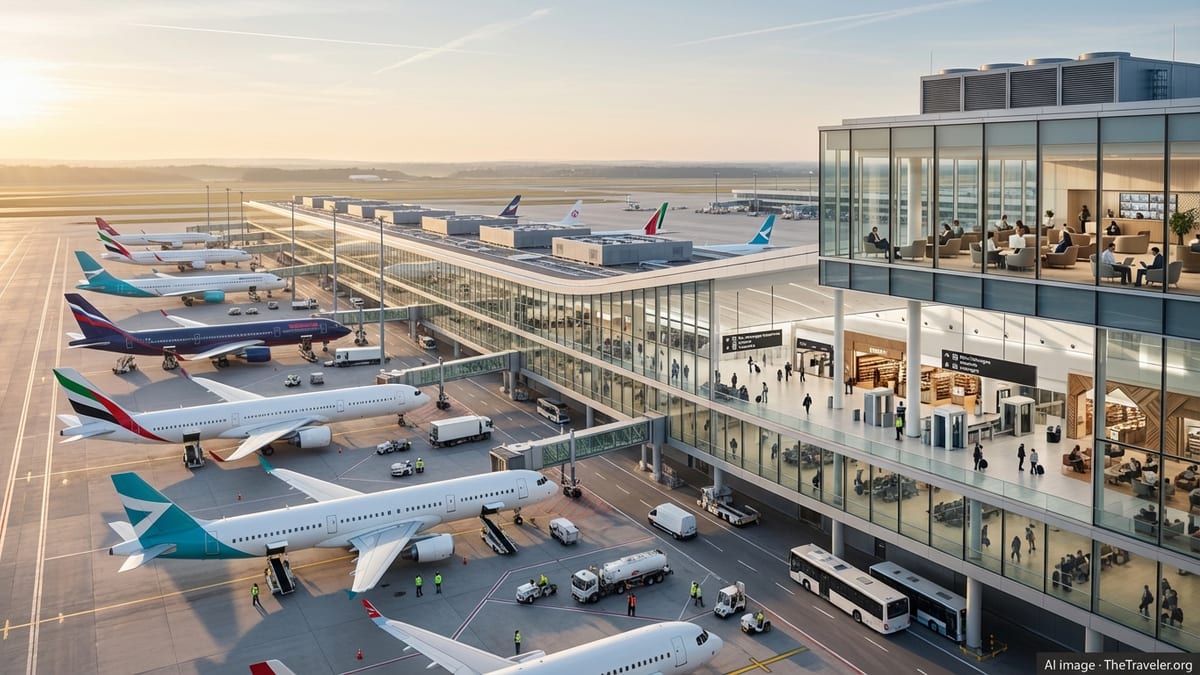
Evacuation at BER after report of dangerous substance
According to published coverage, the incident began early on Thursday evening, September 3, when a woman approached federal police at a service point in Terminal 1 and reported that she was carrying a dangerous or toxic substance in her bag. Reports indicate that the substance was initially unknown and could not be ruled out as hazardous, prompting a formal hazardous materials alarm.
Publicly available information from German media describes how the public area of Terminal 1, the main hall used by many of the airport’s largest airlines, was cleared within minutes. Passengers were instructed to leave the building and gathered outside the terminal while police, fire services and specialist hazardous materials teams moved in to assess the situation.
Coverage from multiple outlets notes that the woman was taken into custody for further questioning while experts examined the reported substance. At that stage, the priority focused on keeping passengers at a safe distance and securing the terminal’s public spaces until the assessment was complete.
Terminal 1 cleared and gradually reopened
Late on Thursday evening, the airport operator reported that the police operation had concluded and that the all clear was given for the terminal. Publicly available statements from the airport indicate that Terminal 1 was released by police at around 20:45 local time, allowing passengers and staff to return to the building.
Reports indicate that only the public landside area of Terminal 1 was evacuated. The secure airside area behind the security checkpoints remained in operation, which meant that aircraft already prepared for departure were largely able to take off and inbound flights could continue to land, albeit with some constraints.
Once the immediate hazard was ruled out, access routes into Terminal 1 were progressively reopened and check in, security screening and baggage processes ramped back up. The timeline described in local coverage suggests that while the disruption was concentrated in a few evening hours, knock-on effects extended later into the night as airlines worked through delayed rotations.
Impact on passengers, flights and rail links
Travelers at BER experienced significant disruption as the evacuation got under way. Images and first-hand accounts shared with local media show large crowds waiting outside Terminal 1, with many travelers uncertain about how long the closure would last or whether their flights would depart as planned.
According to published reporting, departures and arrivals continued but in a reduced and irregular pattern. Some flights were delayed, and a smaller number were canceled as ground handling and passenger processing became more complex. The airport operator advised passengers to monitor airline information channels and terminal displays closely throughout the evening.
Public transport to the airport was also affected. Local coverage notes that rail links between Schönefeld and BER were temporarily suspended during the peak of the operation, before resuming once the incident was brought under control. Travelers heading into central Berlin late in the evening reported longer journey times and crowding on replacement services after the line reopened.
Operations shifted to Terminal 2 during the closure
To keep as much of the evening schedule running as possible, passenger processing was partially shifted to the neighbouring Terminal 2 while Terminal 1 remained closed. Reports indicate that airlines and the airport coordinated to move check-in and, where feasible, security screening to Terminal 2, which is usually used for selected carriers and seasonal traffic.
For many travelers, this meant additional walking distances, re-routed security lines and rapidly changing gate information. Publicly available information shows that airport staff directed passengers between the terminals, and that boarding was at times paused entirely while the situation in Terminal 1 was reviewed.
Despite these complications, media coverage emphasizes that BER’s flight operations were never fully suspended. Aircraft already in the system continued to cycle through the airport, even as the terminal building at the heart of the operation temporarily shut its public doors.
Travel advice for upcoming flights from Berlin
With Terminal 1 now reopened and the hazardous materials alert lifted, the airport operator has indicated through public channels that regular flight operations are expected to resume on Friday. Nonetheless, residual delays and schedule changes remain possible as airlines and ground services reset their operations after the disruption.
For travellers departing from BER in the coming hours and days, current reporting suggests allowing extra time both for airport access and for check-in and security formalities. Passengers are advised to check their airline’s latest guidance before leaving for the airport, verify which terminal their flight is using, and review real-time departure information on the BER website or app.
While the incident ultimately ended with the terminal being cleared and reopened, the evening’s events underline how quickly a modern hub airport can be affected by a single security alert involving a suspected dangerous substance. For visitors and Berlin residents alike, building in a time buffer and staying flexible on routing between Terminal 1 and Terminal 2 remain practical ways to navigate any lingering effects on the travel schedule.
Tagesschau regional coverage on the BER Terminal 1 evacuation
Deutsche Welle report on the security scare at BER
Euronews article on the hazardous materials alert at Berlin airport
Tagesspiegel coverage on Terminal 1 reopening after the alert