


If you are flying through Toronto Pearson International Airport, one of the first questions you will face is simple but important: do you need Terminal 1 or Terminal 3? Because airlines, alliances and even the type of flight you are taking are split between the two buildings, choosing the wrong terminal can mean unnecessary stress, long walks, or even a missed flight. This guide breaks down, in practical terms, how Toronto Pearson is organized, which airlines use which terminal, and how to move smoothly between them.
Get the latest updates straight to your inbox!
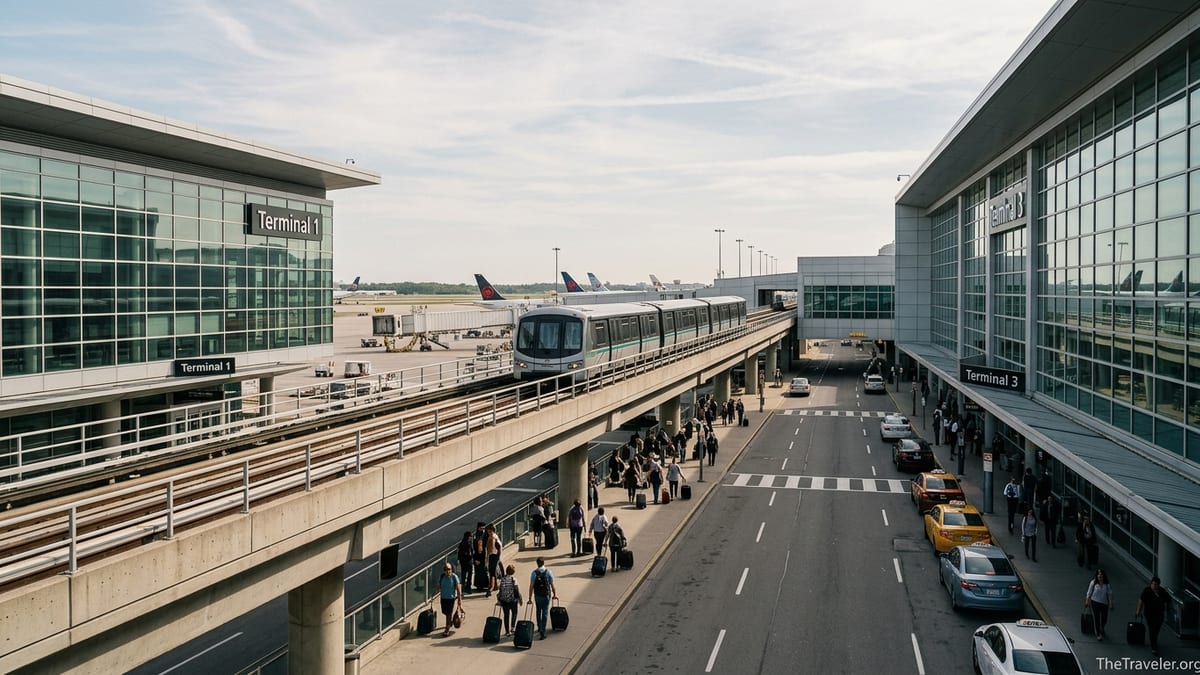
Terminal 1 vs Terminal 3: The Big Picture
Toronto Pearson has two main passenger terminals in use today: Terminal 1 and Terminal 3. There is no Terminal 2 for passengers. Operations are organized mostly by airline and alliance, not by destination, which is different from some airports that put all domestic or all international flights under one roof. In practice, that means once you know your airline, you usually know your terminal.
As of mid‑2026, a good rule of thumb applies: Air Canada and its Star Alliance partners use Terminal 1, while WestJet and most other international and leisure airlines use Terminal 3. This covers the vast majority of flights from Pearson, from quick hops to Ottawa or Montreal to long‑haul services to Europe and Asia. Always double‑check your booking or boarding pass, because occasional exceptions exist and airlines can shift terminals over time.
Both terminals handle domestic, international and flights to the United States. For example, an Air Canada flight to Vancouver, a Lufthansa flight to Frankfurt and a United Airlines flight to Chicago all use Terminal 1. A WestJet flight to Calgary, a Delta flight to Detroit and an Air Transat flight to Cancun all use Terminal 3. You do not pick a terminal based on whether you fly within Canada or abroad, but on the airline operating your flight.
The two terminals are connected by the free Terminal Link train, which usually takes just a few minutes between stations. That makes it possible, though not always convenient, to connect between Terminal 1 and Terminal 3 on a single itinerary. If you book separate tickets across airlines in different terminals, you should allow plenty of extra time because you may need to collect and recheck baggage, pass security again and possibly clear border controls a second time.
Which Airlines Use Terminal 1 and Terminal 3?
Terminal 1 is dominated by Air Canada and Star Alliance member airlines. That includes Air Canada domestic and international flights, as well as partners such as United Airlines, Lufthansa, Swiss, Turkish Airlines and others that share connections with Air Canada. Some unaffiliated long‑haul carriers also operate from Terminal 1, including several Middle Eastern and niche airlines that have agreements with Air Canada. If your ticket is issued by Air Canada, there is a strong chance you will be in Terminal 1 regardless of your final destination.
Terminal 3 is home to WestJet and many non‑Star Alliance carriers. This includes major North American airlines like Delta Air Lines and American Airlines, European carriers such as British Airways and leisure operators like Air Transat and Sunwing. Many low‑cost and seasonal airlines that serve holiday destinations in the Caribbean, Mexico and Europe also operate from Terminal 3. If your flight is on WestJet or on a ticket marketed by a US carrier like Delta or American departing Toronto, expect to depart from Terminal 3 unless your reservation explicitly states otherwise.
Alliance patterns provide a helpful shortcut. Most Star Alliance carriers go to Terminal 1, while many oneworld and SkyTeam carriers, along with independent leisure airlines, operate from Terminal 3. For example, a Toronto to London flight on Air Canada will leave from Terminal 1, while a Toronto to London flight on British Airways will depart from Terminal 3. Similarly, a Toronto to New York flight on United or Air Canada will use Terminal 1, whereas an equivalent route on Delta or American will leave from Terminal 3.
There are, however, some special cases. A small number of international carriers that connect heavily with Air Canada use Terminal 1 even though they are not Star Alliance members. These exceptions underline why you should always check your confirmation email or airline app for the terminal and gate details before you travel. Airline and terminal assignments can change, particularly during schedule reshuffles or as airlines expand or reduce their presence at Pearson.
Domestic, International and U.S. Flights in Each Terminal
Both Terminal 1 and Terminal 3 at Toronto Pearson handle the full mix of domestic, international and U.S. transborder flights. The split is internal: each terminal is divided into three secure zones, one for flights within Canada, one for international flights to destinations outside Canada and the United States, and one for flights to the United States that use U.S. preclearance facilities. The zones are physically separated behind security, and you can only enter the area that matches the destination printed on your boarding pass.
In Terminal 1, domestic flights such as Air Canada services to Calgary or Halifax depart from one section, while international flights to cities like London, Paris or Tokyo depart from another. U.S. flights on Air Canada or United to hubs such as Newark, Chicago or San Francisco leave from the transborder area after you clear U.S. customs and immigration in Toronto. Terminal 3 follows the same pattern for WestJet, Delta, American, Air Transat and others, with domestic gates for Canadian cities, international gates for overseas flights and a dedicated U.S. preclearance area.
For travelers, the key point is that you do not choose a different terminal when you fly to the United States or overseas. A family flying WestJet from Toronto to Orlando in March break, for instance, will check in at Terminal 3, clear security and then U.S. preclearance in that same terminal. A business traveler flying Air Canada from Toronto to New York on a Monday morning will do everything in Terminal 1. The fact that U.S. flights use preclearance simply shifts the location of immigration checks, not the terminal you need.
If you are connecting between domestic, international and U.S. flights within the same terminal, your experience will depend on your itinerary and whether your airline offers through‑checked baggage. A traveler arriving on an Air Canada flight from Winnipeg and connecting to Air Canada to Boston in Terminal 1, for example, may be able to follow domestic‑to‑U.S. connections signs without reclaiming bags. Meanwhile, someone arriving on a WestJet flight from Vancouver and connecting to an American Airlines flight to Miami, both in Terminal 3, will likely follow separate connection routing but remain in the same building throughout.
Check‑in, Security and Baggage Claim in Each Terminal
From a passenger perspective, the check‑in process is similar in both terminals. You enter the departures level, find your airline’s signage and either use a self‑service kiosk or go directly to a staffed counter. At Terminal 1, long banks of kiosks and bag‑drop counters are set up primarily for Air Canada, while smaller areas serve Star Alliance partners and a handful of other carriers. Terminal 3’s check‑in hall is shared more evenly among WestJet, American, Delta, Air Transat and a mix of other airlines, so it can feel more fragmented but also more compact.
Security screening is run by Canadian authorities in both terminals, and what happens next depends on your destination. For domestic and international flights, you go directly from security to the departure lounge that corresponds to your zone. For U.S. flights, security is followed by U.S. customs and immigration preclearance, which can add significant time. For instance, an 8:00 a.m. WestJet flight from Toronto to LaGuardia out of Terminal 3 might see peak preclearance lines at 6:00 a.m., so arriving at least three hours before departure is advisable.
On arrival, baggage claim is located on the ground level of each terminal, but the experience differs slightly based on where you are arriving from. Domestic arrivals typically involve a short walk from the gate to a carrousel with minimal formalities. International arrivals from outside the United States pass through Canadian border control before reaching baggage claim and the exit. U.S. arrivals have already cleared U.S. formalities before departure, so when they land in the United States they usually disembark into the domestic side without further immigration checks, which can make tight domestic connections in American hubs easier.
Real‑world timing can vary significantly. On a typical weekday evening, a domestic arrival from Montreal into Terminal 1 may be at the baggage carousel in under 10 minutes from landing. In contrast, an afternoon arrival from Europe into Terminal 3 at the height of summer could involve 30 minutes or more in immigration lines before bags even start appearing. Travelers should factor this into planning onward ground transportation, whether that is catching the Union Pearson Express into downtown, meeting a rideshare driver or boarding an intercity bus from the airport.
Terminal Link Train: Moving Between Terminals
The Terminal Link train is the backbone of movement between Terminal 1 and Terminal 3. It is a free, automated people mover that runs 24 hours a day, connecting Terminal 1, Terminal 3 and Viscount Station, where long‑term parking and several airport hotels are located. The one‑way ride between Terminal 1 and Terminal 3 is only a few minutes, and trains typically arrive every 4 to 8 minutes depending on the time of day.
In practical terms, this means you can move between terminals fairly quickly as long as you budget a short wait on the platform and a few minutes of walking time within each terminal. For example, a traveler arriving at Terminal 3 on a WestJet flight and connecting to an Air Canada flight from Terminal 1 would follow signs to the Terminal Link, ride the train to Terminal 1, then head to the appropriate security checkpoint or connection corridor. If everything runs smoothly, the transfer between buildings can be completed in under 15 minutes.
The Terminal Link also connects with ground transport. The Union Pearson Express, which links Terminal 1 with downtown Toronto’s Union Station in around half an hour, is adjacent to the Terminal 1 station. Someone landing at Terminal 3 and heading downtown by train would first take the Terminal Link to Terminal 1, then follow “Train to City” signs to the UP Express platform. This two‑step journey often takes around 40 minutes from gate to city train, depending on walking speed and crowding.
Travelers with mobility challenges can make use of both the Terminal Link and in‑terminal shuttle services. The train is accessible and designed to accommodate wheelchairs and other mobility aids, and there are separate shuttle vehicles operating inside the secure areas of each terminal to help move passengers between far‑flung gate areas. If you are concerned about long walks, especially in Terminal 1 where the gate areas can be extended, it is wise to request assistance through your airline in advance.
Connection Times and Typical Scenarios
How much time you need to connect at Toronto Pearson depends on the type of connection and whether it involves a terminal change. For same‑terminal domestic to domestic connections on a single ticket, airlines sometimes sell connections as short as 40 minutes. For example, Air Canada may book a passenger from Thunder Bay to Halifax via Toronto with only a short layover in Terminal 1, assuming on‑time arrivals and through‑checked baggage. Many travelers find such minimum connections workable in normal conditions but tight if flights are delayed.
Domestic to international or international to international connections within the same terminal usually require at least an hour, sometimes more. A typical case might be a traveler flying from Winnipeg to Toronto on Air Canada and then connecting to Frankfurt on Lufthansa, both in Terminal 1. On a through ticket, bags are checked to the final destination, and the passenger follows clearly marked connection signs rather than exiting and re‑entering security. In these cases, one to one and a half hours can be comfortable, provided flights arrive on schedule.
Connections that involve U.S. flights and preclearance are more complex. If you arrive on a domestic flight and connect to a U.S. flight in the same terminal, you must allow time to pass through the dedicated U.S. security and customs area. A traveler arriving from Quebec City into Terminal 3 on WestJet and connecting to a Delta flight to Atlanta should ideally have at least 90 minutes, especially at busy morning times. If you are connecting from an international flight to a U.S. flight, you may need even longer to account for immigration, baggage reclaim, customs and then U.S. preclearance.
Terminal‑to‑terminal connections are the most time‑sensitive. If you are changing from an airline in Terminal 1 to another in Terminal 3, even on a single ticket, you will need to factor in the Terminal Link ride plus any need to claim and recheck bags. For example, a traveler flying Air Canada from Los Angeles to Toronto and then WestJet from Toronto to St. John’s, booked separately, might have to collect bags in Terminal 1, pass customs, take the Terminal Link to Terminal 3, check in again with WestJet, clear security and reach the gate. In such a scenario, allowing close to three hours is prudent to avoid stress.
Choosing the Right Terminal for Ground Transport and Amenities
While your airline determines your terminal, understanding the differences can help you plan your ground transport and time at the airport more efficiently. Terminal 1 has the direct rail link to downtown via the Union Pearson Express. If you land in Terminal 3 but intend to take the UP Express, you must first ride the Terminal Link to Terminal 1. This adds only a few minutes, but it matters if you are trying to catch a specific departure, especially late at night when train frequencies can be lower.
Terminal 3, on the other hand, is directly connected to the Sheraton Gateway Hotel via a pedestrian bridge, making it convenient for overnight stays or daytime layovers that warrant a room. If you are flying in late on a WestJet or Air Transat flight and have an early morning departure from the same terminal, a night at the Sheraton can eliminate the need for ground transport altogether. Several other hotels are linked to the airport via the Terminal Link’s Viscount Station, including mid‑range properties that often appeal to budget‑conscious travelers.
In terms of amenities, both terminals offer a broad selection of restaurants, coffee shops, bars and retail outlets, though the mix differs. Terminal 1, being larger and dominated by Air Canada’s operations, has extensive Air Canada Maple Leaf Lounges for eligible passengers, along with other pay‑per‑use lounges that serve both domestic and international travelers. Terminal 3 hosts lounges linked to WestJet and various third‑party providers, and often has a heavy presence of leisure‑oriented dining and duty‑free shopping in the international area.
For many travelers, the deciding factor in how pleasant Pearson feels is not the terminal itself but how prepared they are for its layout and timing. Booking flights that keep you in the same terminal, avoiding ultra‑tight layovers, pre‑booking airport parking or rail tickets, and understanding where your airline operates can turn what might have been a stressful connection into a straightforward walk and a relaxed coffee before boarding.
The Takeaway
At Toronto Pearson, the most important decision you make is not between domestic and international terminals but between Terminal 1 and Terminal 3 based on your airline. Air Canada and Star Alliance carriers almost always use Terminal 1, while WestJet, many U.S. carriers and most international leisure airlines use Terminal 3. Both terminals handle domestic, international and U.S. flights, so you do not switch terminals simply because your route changes.
Understanding how check‑in, security, U.S. preclearance and baggage claim work in each terminal helps you plan enough time, especially if you are connecting or using separate tickets. The free Terminal Link train makes movement between the terminals relatively quick, but once you add walking, possible recheck of bags and another pass through security or border control, terminal‑to‑terminal connections demand generous buffers.
If you remember a few practical rules, you will be well prepared: always confirm your terminal in your booking, aim for at least 90 minutes for complex same‑terminal connections and closer to three hours if you must change terminals and airlines, and factor in extra time for U.S. preclearance. With those basics in mind, Toronto Pearson’s two‑terminal setup becomes much easier to navigate, whether you are flying across Canada, heading to the United States or beginning an overseas journey.
FAQ
Q1. How do I know if I need Terminal 1 or Terminal 3 at Toronto Pearson?
You generally follow your airline: Air Canada and Star Alliance partners use Terminal 1, while WestJet, many U.S. carriers and most leisure and international airlines use Terminal 3. Always check your booking or airline app shortly before travel in case of changes.
Q2. Do both terminals handle domestic, international and U.S. flights?
Yes. Both Terminal 1 and Terminal 3 handle domestic flights within Canada, international flights to the rest of the world and U.S. transborder flights with preclearance. The split is by airline and alliance, not by route type.
Q3. How long does it take to travel between Terminal 1 and Terminal 3?
The free Terminal Link train usually takes only a few minutes between terminals, with typical waits of 4 to 8 minutes for the next train. Including walking time inside each terminal, most travelers can move between Terminal 1 and Terminal 3 in around 10 to 15 minutes.
Q4. What is U.S. preclearance and where does it happen at Pearson?
U.S. preclearance means you complete U.S. customs and immigration in Toronto before boarding your flight. Both Terminal 1 and Terminal 3 have dedicated U.S. preclearance areas, which you access after security when flying to the United States.
Q5. How much connection time do I need for a same‑terminal domestic to domestic connection?
On a single ticket with through‑checked baggage, airlines may sell connections as short as about 40 minutes within the same terminal. Many travelers prefer at least an hour to account for minor delays and walking distance between gates, especially during busy periods.
Q6. How much time should I allow for a connection that involves U.S. flights?
Because U.S. flights require preclearance, it is wise to allow at least 90 minutes for a domestic to U.S. connection in the same terminal. For international to U.S. connections or any connection that involves collecting baggage, budget even more time, often two hours or longer.
Q7. What if I have to change from Terminal 1 to Terminal 3 between flights?
If you must change terminals, especially on separate tickets, you should allow a generous buffer. For many travelers this means close to three hours to cover walking, the Terminal Link train, baggage claim and recheck, security and any immigration or customs formalities.
Q8. Which terminal should I use to catch the train to downtown Toronto?
The Union Pearson Express station is located at Terminal 1. If you arrive at Terminal 3, take the free Terminal Link train to Terminal 1 and follow signs for the city train. The whole process from Terminal 3 gate to the UP Express platform typically takes about 20 to 30 minutes.
Q9. Are there hotels connected directly to either terminal?
Yes. Terminal 3 is connected by a pedestrian bridge to the Sheraton Gateway Hotel, which is convenient for early or late flights from that terminal. Additional hotels are reachable via the Terminal Link at Viscount Station, which serves Value Park garages and several nearby properties.
Q10. Can I walk between Terminal 1 and Terminal 3 instead of using the train?
In practice, travelers use the Terminal Link rather than walking between terminals. The buildings are separated by roadways and airfield infrastructure, and there is no straightforward pedestrian route for passengers outside secure zones, so the free train is the recommended and most efficient option.