


More news on this day
Ahmedabad is emerging as a strategic node in India’s evolving hub-and-spoke aviation strategy, with new policy moves and infrastructure upgrades intended to make international transit smoother and more predictable for passengers across western India.
Get the latest news straight to your inbox!
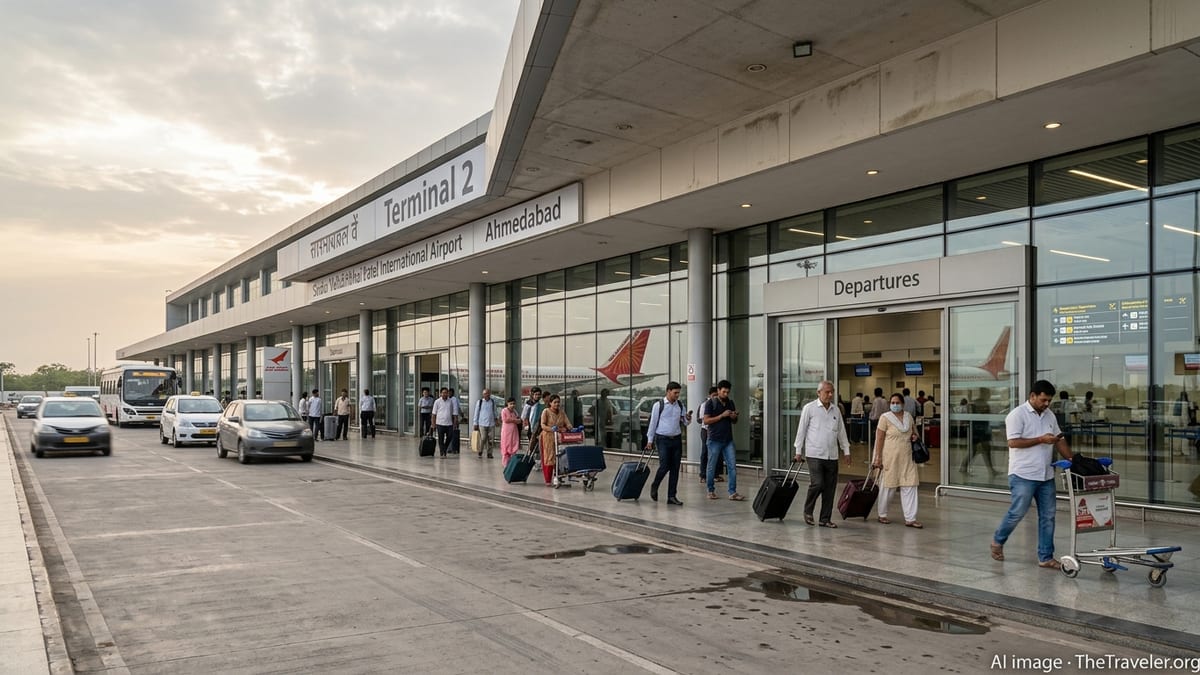
A Strategic Role for Ahmedabad in India’s Hub Network
India’s civil aviation strategy is shifting toward a hub-and-spoke model that concentrates long-haul international services at select airports while feeding them with shorter regional routes. Ahmedabad’s Sardar Vallabhbhai Patel International Airport is increasingly framed as a western India gateway within this network, serving both the fast-growing Gujarat market and nearby regions.
Publicly available data show that Ahmedabad already connects to major international destinations in the Middle East and Southeast Asia, while handling a significant volume of domestic traffic that can act as feeder capacity. The hub-and-spoke model is seen as a way to consolidate this traffic, giving passengers in tier‑2 and tier‑3 cities more one-stop choices to long-haul markets instead of relying on multiple point‑to‑point itineraries.
Reports on India’s aviation planning indicate that this model is also designed to relieve pressure on the most congested metros by distributing international access across a wider network of hubs. In this context, Ahmedabad’s location between traditional finance centers and the fast-rising Gujarat International Finance Tec-City is considered a structural advantage for long-term passenger growth.
Infrastructure Upgrades to Support Seamless Transit
To function effectively in a hub-and-spoke system, an airport must offer predictable transfer times, clear wayfinding and harmonized processes for domestic-to-international and international-to-domestic connections. Ahmedabad airport has been undergoing phased improvements to terminals, airside capacity and passenger amenities aimed at increasing throughput and smoothing passenger flows, according to published airport statistics and local infrastructure coverage.
Industry analyses of India’s hub airports emphasize the importance of coordinated schedules and common minimum connection times, especially where passengers need to re-clear security or immigration. At non-metro airports, even relatively modest terminal refurbishments and the rationalization of check-in and baggage systems can significantly reduce missed connections and transit stress.
Ahmedabad’s integration into broader surface transport corridors, including highway links toward Gandhinagar and GIFT City, further positions it as a multi-modal node. While most of this connectivity currently serves business travelers and local residents, the same infrastructure underpins the reliability of late-night and early-morning bank departures that are critical to hub operations.
GIFT City and the Rise of Gujarat as an Aviation Finance Cluster
The rapid development of Gujarat International Finance Tec-City, located between Ahmedabad and Gandhinagar, is adding a financial and regulatory dimension to the region’s aviation ambitions. GIFT City hosts India’s first and only International Financial Services Centre, where a dedicated regulator oversees cross-border banking, capital markets and specialized activities such as aircraft leasing, according to official information on the complex’s business ecosystem.
Recent coverage from financial and aviation outlets highlights that a growing number of Indian carriers and leasing platforms have set up units in GIFT City to structure aircraft and engine leases locally. This shift is intended to keep more aviation financing activity onshore, reduce reliance on overseas leasing jurisdictions and potentially lower costs over time for airlines operating from and through Indian hubs.
Observers note that as the GIFT City aviation cluster deepens, the proximity of Ahmedabad airport becomes strategically relevant. A regional hub for international passenger traffic anchored to a nearby center for aviation finance and related services creates a reinforcing loop, improving the business case for basing aircraft, crew and maintenance operations in and around the city.
Passenger Experience: From Regional Spokes to Global Routes
For travelers, the success of a hub-and-spoke system is measured less in macroeconomic benefits and more in tangible improvements to their journeys. In practical terms, a strengthened Ahmedabad hub could mean shorter total travel times from secondary cities in Gujarat and neighboring states, fewer overnight layovers and more one-stop options to Europe, North America, the Gulf and East Asia.
According to general analyses of hub-and-spoke systems, passengers using a regional hub typically benefit from denser schedules on trunk routes and coordinated banked departures that allow multiple spokes to connect to the same long-haul flights. This often translates into greater choice of departure times and the ability to mix and match domestic and international carriers on a single itinerary, depending on interline and codeshare arrangements.
Travel forums and consumer reports, however, illustrate that smooth transit still depends heavily on clear communication of baggage rules, check-in processes and immigration procedures at Indian airports. As Ahmedabad seeks a more prominent role in international transit, alignment of airline policies with airport processes and ongoing investments in signage, staffing and digital information channels are expected to be decisive for passenger satisfaction.
Opportunities and Constraints for a Western India Gateway
Analysts tracking India’s aviation growth point to both opportunities and constraints for Ahmedabad within the broader national network. On the opportunity side, sustained economic expansion in Gujarat, rising outbound travel demand and the presence of GIFT City’s financial ecosystem provide a strong foundation for increased international services and new airline entries.
Constraints include competition from established hubs in Mumbai and Delhi, airspace and runway capacity limitations during peak hours, and the need to continuously upgrade terminal infrastructure to meet global benchmarks. Industry commentary suggests that, to compete effectively, emerging hubs must offer reliable on-time performance, attractive turnaround times for airlines and a passenger experience that meets international expectations for comfort and efficiency.
As India’s civil aviation policy continues to foreground the hub-and-spoke model, Ahmedabad’s role will likely be defined by how successfully it can align infrastructure, airline strategy and regulatory support. For international passengers, the outcome will be visible in the form of more route choices, improved connection windows and a clearer, more predictable transit experience through western India.
Air India hub-and-spoke network press background
Sardar Vallabhbhai Patel International Airport profile
International Financial Services Centres Authority information