


More news on this day
Passengers traveling through Nairobi’s Jomo Kenyatta International Airport are being advised to brace for extended waiting times, as Kenya Airways reports average delays of up to three hours across parts of its network.
Get the latest news straight to your inbox!
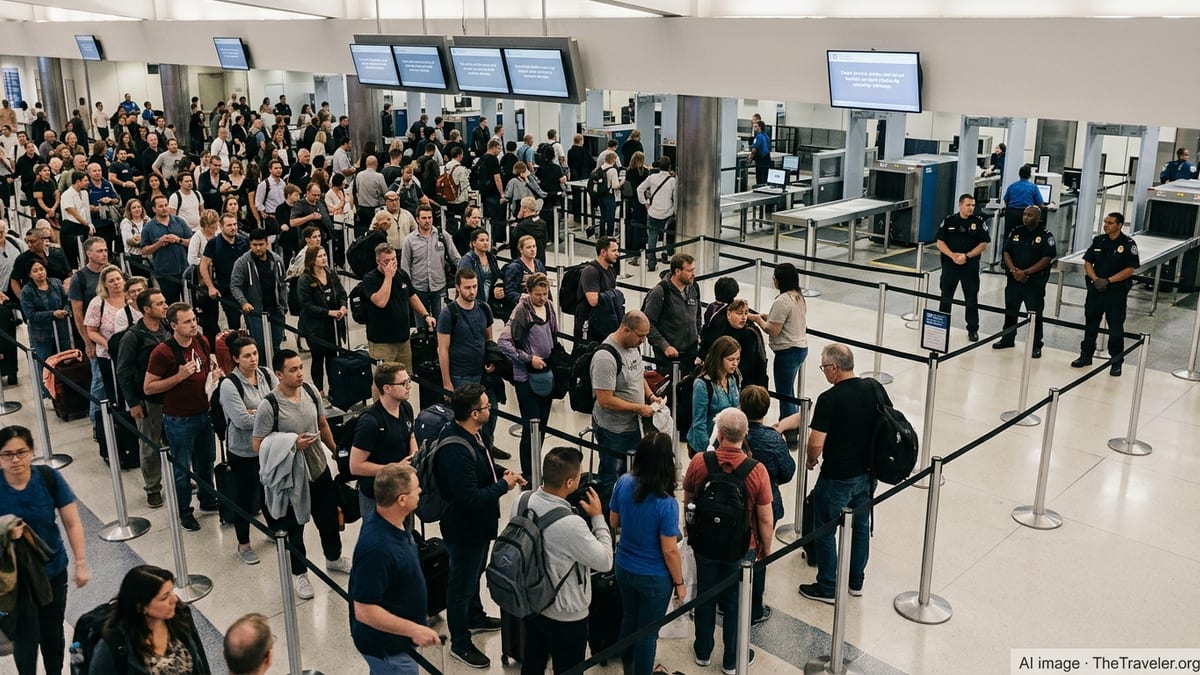
Operational pressures converge at Kenya’s busiest hub
Kenya Airways’ update on prolonged delays comes at a time when Jomo Kenyatta International Airport (JKIA) is already managing a combination of infrastructure constraints, staff-related disruptions and heightened travel demand. Publicly available data on recent flight performance shows a pattern of extended departure and arrival times on several Kenya Airways routes, leading to missed connections and rebookings for connecting passengers.
Tracking platforms covering Kenya Airways’ long-haul services between Nairobi and New York report average delays that can approach or exceed an hour on some rotations, with individual flights arriving significantly behind schedule when disruptions occur. On certain days, the cumulative effect of delayed inbound aircraft, crew scheduling knock-ons and airspace congestion has pushed overall passenger journey times closer to the three-hour mark beyond the original itinerary. ([airportia.com](https://www.airportia.com/flights/kq2/nairobi/new-york/?utm_source=openai))
Independent analysis by consumer-rights services focused on air travel indicates that Kenya Airways regularly features among carriers generating a sizeable number of long delays in and out of Nairobi. Data compiled from historical schedules and actual operations suggests that, over specific 24-hour periods, dozens of Kenya Airways flights have reached or surpassed the three-hour delay threshold, creating a visible backlog at JKIA during peak banks. ([airhelp.co.uk](https://www.airhelp.co.uk/airlines/kenya-airways/?utm_source=openai))
These network-wide strains have coincided with a broader uptick in passenger numbers. Recent financial disclosures for the first half of 2026 highlight robust demand and revenue growth at Kenya Airways, even as the airline operates with reduced capacity compared with previous years. This squeeze between strong demand and constrained fleet availability has heightened the impact of any irregular operations on the day of travel. ([corporate.kenya-airways.com](https://corporate.kenya-airways.com/en/news-press-release/2026/august/kenya-airways-revenue-rises/?utm_source=openai))
Infrastructure works and terminal changes at JKIA
The delay advisory is unfolding alongside a fresh phase of infrastructure works at JKIA. Kenya Airways has announced that from early September 2026, a series of flights will relocate to Terminal 1C to facilitate renovations and streamline operations at the main hub. The carrier has advised customers to check their departure terminal in advance and to allow extra time for check-in and security screening as terminal flows are adjusted. ([kenya-airways.com](https://www.kenya-airways.com/en-cf/travel-alerts/?utm_source=openai))
The upcoming move affects morning and evening departure waves on several regional routes, including services to Johannesburg, Entebbe, Kigali, Lusaka, Harare, Addis Ababa and Dar es Salaam, as well as selected long-haul departures. Industry observers note that any reallocation of flights between terminals during construction can initially increase processing times as passengers and ground staff adapt to new layouts and wayfinding, potentially contributing to the three-hour delays highlighted in the airline’s advisory.
JKIA’s passenger infrastructure has been under incremental pressure for several years, with previous disruptions linked to staff go-slows, resource constraints and weather-related airspace restrictions. Public reports this year from Kenya’s airport operator have again warned of periods of irregular operations affecting some departing flights, reflecting a system where small operational shocks can translate quickly into longer queues and departure holds at peak times. ([standardmedia.co.ke](https://www.standardmedia.co.ke/national/article/2001556535/kaa-warns-passengers-of-delays-affecting-departing-flights?utm_source=openai))
For travelers, these overlapping factors mean that even flights departing roughly on schedule can be part of a network still absorbing earlier delays. Longer connection times at JKIA, particularly for passengers arriving from or departing to Europe and North America, are increasingly being recommended in travel forums and advisory services in light of the evolving operational picture. ([reddit.com](https://www.reddit.com/r/safaris/comments/1vy5aem/welcoming_feedback_on_flights_for_upcoming_safari/?utm_source=openai))
Passenger impact and the three-hour benchmark
The three-hour mark has particular significance for many travelers because it is often the threshold at which additional rights or compensation may apply under various regulatory regimes and commercial policies. Air-travel advocacy platforms tracking Kenya Airways disruptions have documented numerous instances in which flights into or out of Nairobi arrive more than three hours late, or are cancelled outright, triggering eligibility checks for reimbursement on affected itineraries. ([airhelp.co.uk](https://www.airhelp.co.uk/airlines/kenya-airways/?utm_source=openai))
Recent case summaries compiled from passenger feedback describe scenarios where Kenya Airways flights departing JKIA have experienced extended ground delays during boarding, prolonged waits on the tarmac and late-night schedule changes that stretched overall disruption well beyond the three-hour point. In some examples, travelers reported missing long-haul connections or facing overnight stays after intra-African sectors ran late, compounding the effect of what began as a single late departure. ([reddit.com](https://www.reddit.com/r/ConsumerAdvice/comments/1o9d325?utm_source=openai))
Operational statistics published by flight-tracking services for specific Kenya Airways routes reflect this volatility. While average delays on some flagship intercontinental flights may appear moderate over a two-month period, the data also highlight individual days when disruptions spike sharply, resulting in multi-hour slippages on journeys connecting through Nairobi. This pattern underpins Kenya Airways’ signal that three-hour delays are a realistic scenario for a proportion of passengers using JKIA at present. ([flightinformation.com](https://www.flightinformation.com/KQ3-JFK-NBO?utm_source=openai))
Given this environment, consumer advocates encourage travelers transiting JKIA to familiarize themselves with both airline policies and applicable regional passenger-rights frameworks before departure. Understanding what constitutes a “long delay,” how rerouting is handled and when compensation may be available can help passengers respond more effectively if their journey is affected.
Advice for travelers using Nairobi’s main gateway
Travel specialists focusing on East Africa are increasingly recommending that visitors build additional buffers into their itineraries when using Nairobi as a gateway. For safari itineraries and multi-stop trips within the region, some advisers suggest inserting at least one overnight in the city between an intercontinental arrival and onward regional flight to reduce the risk that a three-hour delay disrupts high-value, pre-booked arrangements. ([reddit.com](https://www.reddit.com/r/safaris/comments/1vy5aem/welcoming_feedback_on_flights_for_upcoming_safari/?utm_source=openai))
Kenya Airways’ own customer updates in recent years have consistently urged passengers to arrive at JKIA well ahead of departure, in some instances advising at least four hours’ lead time to account for traffic congestion, security procedures and check-in queues. With current operational strains and infrastructure works underway, adopting similar or even longer margins may help reduce stress at the airport, particularly during holiday peaks and early-morning departure banks. ([corporate.kenya-airways.com](https://corporate.kenya-airways.com/en/news-press-release/2024/june/customer-update-on-road-closures-in-nairobi/?utm_source=openai))
Travelers are also being encouraged by publicly available guidance to make full use of online and mobile tools to monitor their flights. These include checking real-time status on airline websites and independent trackers, confirming any gate or terminal changes before leaving for the airport and enabling notifications from booking platforms. In an environment where three-hour disruptions are possible, timely digital updates can offer early warning of problems and provide alternatives such as rebooking onto later departures where capacity allows.
For many visitors, JKIA remains the primary access point to Kenya and the wider East African region. While Kenya Airways pursues fleet restoration and infrastructure partners advance renovation projects aimed at improving long-term capacity, travelers in the coming weeks should remain prepared for extended waits and schedule changes, and plan their connections through Nairobi with extra caution.
Further reading
Kenya Airways HY 2026 performance update
Kenya Airways long-delay statistics and compensation guidance