


More news on this day
Kenya’s status as one of Africa’s most popular safari gateways faces new scrutiny after the United States sharply tightened its travel advisory, asking Americans to reconsider trips to the East African nation amid health and security concerns.
Get the latest news straight to your inbox!
U.S. raises Kenya advisory to Level 3
Publicly available information from the U.S. Department of State shows that Kenya’s overall travel advisory was upgraded on October 19, 2026, from Level 2, where travelers are urged to exercise increased caution, to Level 3, which advises them to reconsider travel. The change places Kenya in a higher-risk category than many other long-haul leisure destinations that remain at Level 1 or Level 2.
The revised advisory cites a combination of health risks, crime, kidnapping, terrorism, unrest and traffic safety, and notes that some areas of the country carry significantly higher risk than others. The detailed text highlights long-standing concerns about urban crime and sporadic militant activity, while also reflecting new anxieties linked to this year’s Ebola outbreak.
The Level 3 status does not amount to a formal ban on visiting Kenya, and it does not prevent flights from operating or tourist visas from being issued. However, the wording is likely to influence travel insurance policies, corporate travel planners and risk assessments for group tours, potentially affecting bookings during what is normally a busy period for safaris and beach holidays.
According to published coverage of the advisory and recent updates to the official guidance, some Nairobi neighborhoods, including Eastleigh and Kibera, are listed under stronger “Do Not Travel” language, while border regions near Somalia, South Sudan and Ethiopia remain under long-standing restrictions due to the risk of militant attacks and banditry.
Safari heartlands under the spotlight
Kenya’s safari economy is heavily concentrated in and around Nairobi, which functions as the main international gateway, and in a handful of flagship wildlife regions such as the Maasai Mara, Amboseli and the private conservancies of Laikipia. Industry data cited in regional tourism reports indicate that the United States has, in recent years, been one of Kenya’s top two or three source markets by visitor numbers and revenue.
Trade publications and regional news outlets report that local tour operators and lodge owners are moving quickly to clarify how the advisory applies to the areas where most safaris actually take place. Their messaging emphasizes that the main game reserves and conservancies are geographically distant from the neighborhoods and border zones singled out for the strongest warnings, and that guests normally travel on pre-arranged road or air transfers rather than using informal public transport.
Publicly available tourism briefings note that Kenya’s flagship safari regions have, for many years, operated with layered security arrangements that include park rangers, private conservancy scouts and coordination with local authorities. Operators describe a focus on controlled access points, radio communications on game drives and pre-vetted transport between airstrips, lodges and nearby towns.
At the same time, the new advisory’s broader wording about crime, traffic safety and potential unrest is likely to prompt closer questioning from prospective visitors, particularly first-time safari travelers weighing Kenya against alternatives such as Tanzania, South Africa or Botswana. Travel agents and tour companies are already highlighting routing options that minimize time in Nairobi’s higher-risk districts and rely on scheduled or charter flights to reach the bush swiftly after arrival.
Health concerns and the Ebola backdrop
The latest shift in U.S. guidance is closely tied to health developments. Public health reports compiled over recent weeks describe how Kenya confirmed its first-ever Ebola case and death in early October 2026, involving a traveler with links to an outbreak of the Bundibugyo strain in the Democratic Republic of Congo. Subsequent updates from international health agencies have tracked a limited number of additional cases connected to the original cluster.
According to open-source reporting on the new Level 3 advisory, the State Department explicitly references health risk among the key reasons for the change. The wording appears alongside existing references to crime and terrorism, indicating that the advisory is intended to reflect a combined risk picture rather than a single trigger.
Kenyan health officials have publicly detailed screening measures at key entry points, including Jomo Kenyatta International Airport in Nairobi and regional airports that receive safari-bound travelers. Information shared by airlines and airport operators indicates that passengers arriving from affected areas in Central Africa are subject to additional checks, and that travelers may encounter health questionnaires or temperature screening on arrival.
Global health organizations have not called for blanket travel bans on Kenya, and available guidance stresses that, at this stage, known Ebola cases remain linked to identified chains of transmission. Even so, the association of Kenya with the wider regional outbreak is expected to weigh on traveler sentiment, especially among visitors unfamiliar with East Africa’s medical infrastructure or evacuation options.
Mixed reactions from tourism stakeholders
Kenya’s travel industry, still rebuilding after the disruptions of the pandemic and previous security scares, is assessing the potential fallout from the tougher advisory. Local media coverage and trade bulletins describe a mix of concern over possible cancellations and determination to keep safari operations running as normally as possible during the high season.
Reports from Nairobi indicate that some operators are revisiting contingency plans that were refined during earlier periods of political tension or health alerts. These include flexible routing to avoid demonstrations in urban centers, closer monitoring of domestic flight schedules serving safari airstrips, and renewed emphasis on briefing guests about personal security, such as avoiding walking alone at night in cities and using only vetted taxis or hotel-arranged transport.
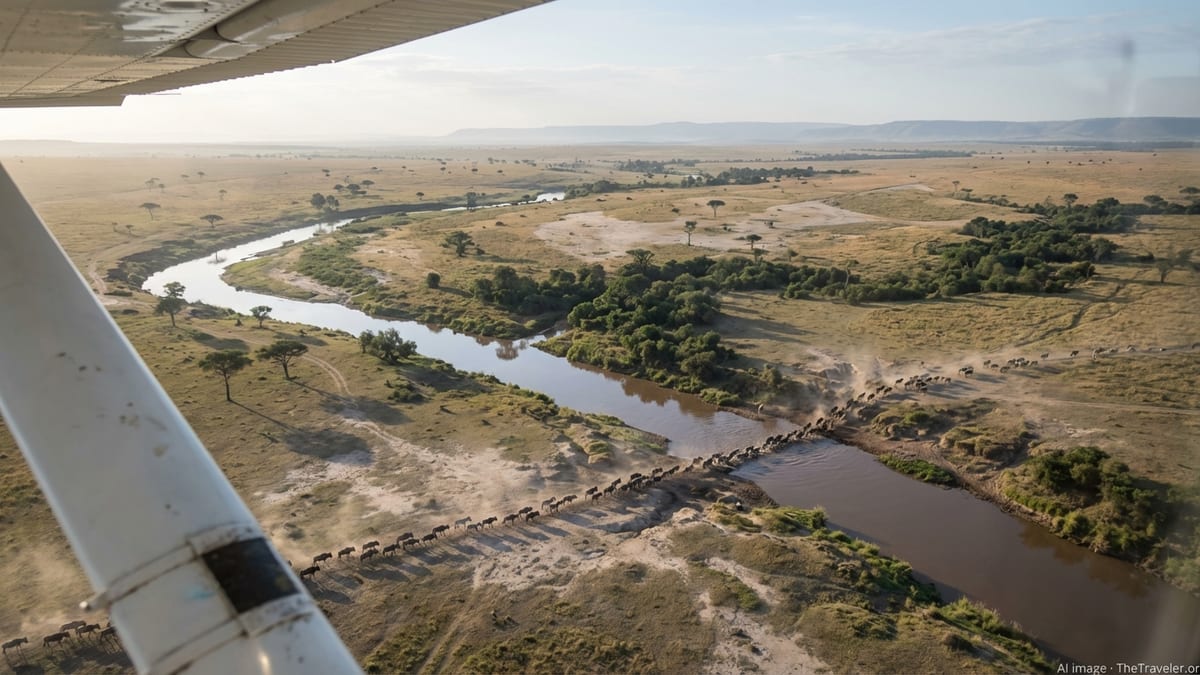
Regional tourism analysts note that Kenya has weathered previous cycles of heightened foreign advisories, including periods when individual countries warned their citizens about elevated terrorism risks. Historical data from those episodes suggests that while bookings can dip sharply in the short term, demand for marquee experiences such as the Maasai Mara’s wildebeest migration and big-cat viewing has tended to recover once the news cycle moves on and travelers seek more detailed, ground-level information.
For now, industry commentary points to a likely divergence between different segments of the market. Experienced safari travelers and repeat visitors may be more inclined to proceed with existing plans after reviewing the specifics of the advisory, while first-timers or large corporate groups could prove more sensitive to the Level 3 designation and opt for alternative destinations or postpone trips until the health situation stabilizes.
What the advisory means for travelers on the ground
For Americans already in Kenya or planning imminent departures, the new advisory does not automatically require itinerary changes, but it does alter the official risk assessment that many travel insurers and corporate travel departments use. Policy documents available online often distinguish between Level 2 and Level 3 destinations, with some requiring additional approvals or imposing higher premiums once a location reaches the “reconsider travel” category.
Travel risk consultants and tour operators are advising clients, through publicly accessible guidance, to read the U.S. advisory in full and pay close attention to the list of locations with “Do Not Travel” recommendations. They also underscore the importance of registering with consular services where available, checking that medical evacuation coverage is adequate for serious illness, and confirming the latest entry, screening and transit rules with airlines before departure.
On the ground, visitors to Nairobi are being encouraged to stay in well-established hotel districts, use airport or hotel-arranged transfers, and limit movements in crowded areas after dark. For those heading directly to national parks and conservancies, current advice circulating in the travel trade is to favor reputable operators, rely on prearranged transfers or scheduled bush flights, and follow lodge briefings on game-drive safety and wildlife interactions.
The situation remains fluid, with Kenyan and international health authorities continuing to monitor the Ebola outbreak and security analysts tracking developments in areas flagged for crime, terrorism and unrest. Travelers and the companies that send them are expected to keep revisiting their plans as new information emerges, balancing long-standing enthusiasm for Kenya’s wildlife and landscapes against the heightened caution signaled by the latest U.S. advisory.