


More news on this day
The United States has reissued its highest Level 4 “Do Not Travel” advisory for Iraq, maintaining a strict warning to American citizens to avoid all travel to the country amid a volatile security environment, heightened regional tensions and limited ability of U.S. authorities to assist in an emergency.
Get the latest news straight to your inbox!
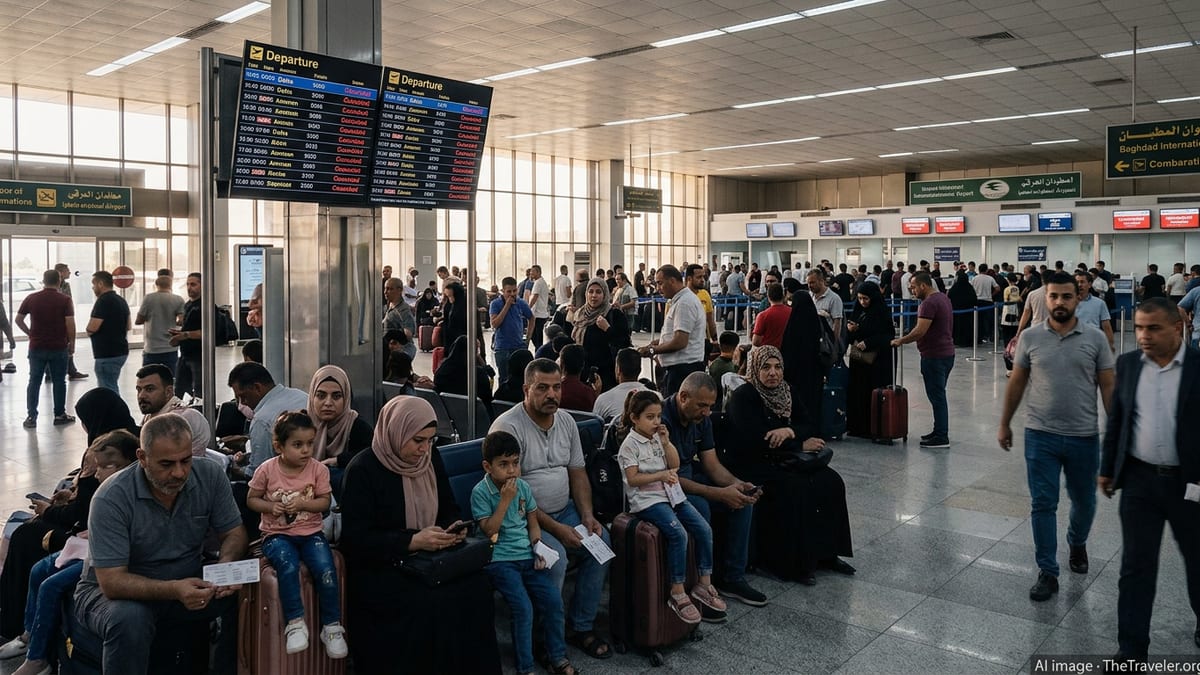
Advisory Reissued Amid Persistent Security Threats
Publicly available information on the U.S. State Department’s travel advisory portal shows that Iraq remains designated at Level 4, the highest warning level, which instructs U.S. citizens not to travel to the country. The renewed advisory, highlighted in media coverage on October 24, 2026, follows an updated Iraq notice dated August 29, 2026, that already classified the country as “Do Not Travel” due to a wide range of safety and security risks.
According to the advisory details, the decision reflects ongoing concerns about terrorism, kidnapping and armed conflict, along with crime, civil unrest, health risks and the constrained capacity of the U.S. government to provide emergency services. The guidance notes that U.S. government personnel in Iraq are subject to stringent movement and security restrictions, underscoring the severity of the threat environment for foreign nationals.
Reports indicate that the advisory applies to all parts of Iraq, including major urban centers such as Baghdad and Basra as well as the northern Kurdistan Region, which has at times been viewed by travelers as comparatively calmer. The updated message emphasizes that security incidents, including indirect fire, drone attacks and other asymmetric strikes, have affected areas used by civilians and can occur with little or no warning.
Regional and international travel-tracking sources also show Iraq listed among a small group of countries worldwide that are consistently rated at the highest risk category, aligning the U.S. stance with similar “do not travel” guidance issued by several other governments for their own citizens.
Regional Tensions and Recent Security Alerts
The renewed Level 4 advisory comes against the backdrop of broader instability across the Middle East in 2026. A series of recent security alerts directed at U.S. citizens in Iraq and neighboring states have pointed to an elevated risk of escalation, flight disruptions and potential attacks on locations associated with Western interests.
In mid-October, information posted by the U.S. Embassy in Baghdad and summarized by regional outlets warned Americans in the Middle East to remain vigilant for sudden airspace closures and airline schedule changes. Travelers were advised to monitor airport operations closely and to maintain contingency plans that do not rely solely on government-organized evacuation options.
Media coverage from regional news organizations on October 24, 2026, further highlighted that the advisory renewal coincides with recent security incidents, including attacks attributed to extremist groups and strikes targeting infrastructure in Iraq and surrounding countries. These events have reinforced concerns that the security trajectory in Iraq remains fragile despite political efforts to stabilize the situation following the formal end of the U.S.-led coalition mission.
Global risk consultancies and foreign-government advisories reviewed in parallel depict a broadly aligned assessment, describing Iraq’s situation as highly unpredictable, with the potential for localized incidents to escalate and affect major highways, airports and energy infrastructure.
Implications for Commercial Flights and Overland Travel
While commercial flights to Baghdad, Basra and Erbil continue to operate on many days, publicly available travel-industry bulletins and embassy security messages warn that routes can be curtailed with minimal notice due to shifts in the threat environment or airspace restrictions. Airlines serving Iraq have previously adjusted schedules, rerouted traffic or temporarily suspended services when regional tensions have spiked.
Travel risk briefings circulated to corporate clients in recent months indicate that airspace management decisions in neighboring countries can also affect itineraries involving Iraq, creating a knock-on effect in hub airports across the Gulf and wider Middle East. Passengers have been advised to confirm flights directly with carriers close to departure and to be prepared for last-minute changes, including diversions or extended stopovers.
The State Department advisory and parallel foreign-government notices uniformly caution against overland travel, highlighting danger on intercity roads from improvised explosive devices, criminal activity and the possibility of being caught between rival armed groups. Publicly available guidance notes that the use of public transportation within Iraq, apart from civil aviation, is strongly discouraged for foreign nationals.
International travel insurers continue to treat Iraq as an exclusion zone under many standard leisure policies, according to market summaries published by brokers and underwriters. Travelers who enter the country despite the Level 4 advisory may find that medical evacuation, trip interruption and liability coverage are restricted or unavailable unless they have obtained specialist high-risk travel insurance.
Advice for U.S. Citizens Already in Iraq
Although the Level 4 advisory is directed primarily at preventing new travel, it also carries important implications for U.S. citizens who are currently in Iraq for work, humanitarian operations or family reasons. Advisory language and subsequent security alerts reviewed by travel-news outlets suggest that individuals should consider departure as soon as they can do so safely, using commercially available options.
Public information distributed through consular channels encourages American citizens in Iraq to maintain a low profile, avoid locations that attract large crowds and keep away from demonstrations that may turn confrontational. Travelers are also urged to regularly review their personal security plans, check that communication tools and backup power supplies are functioning, and identify safe rooms or shelter locations in the event of indirect fire or nearby clashes.
Following earlier alerts in 2026, consular messaging noted that routine services at U.S. diplomatic posts in Iraq could be curtailed without advance notice during a crisis. Observers point out that a Level 4 designation reflects not only the overall insecurity, but also the practical limitations on what assistance can be offered if commercial routes out of the country are disrupted.
Non-governmental organizations and international companies with staff in Iraq have been advised in industry guidance to review evacuation and hibernation plans, verify that contact details are up to date, and ensure that employees clearly understand internal travel-approval procedures in light of the reissued U.S. advisory.
How the Iraq Advisory Fits Into the Global Risk Picture
The renewed Level 4 “Do Not Travel” warning places Iraq among a relatively small group of destinations worldwide that carry the most severe U.S. advisory level. According to State Department explainer documents on the four-tier system, a Level 4 classification is reserved for countries where the likelihood of life-threatening risks is judged to be high and where the U.S. government may have very limited ability to assist during an emergency.
Global mapping tools that aggregate official advisories show that Iraq shares this rating with a handful of other conflict-affected states, particularly in parts of the Middle East, North Africa and the Sahel. Analysts note that this categorization can influence corporate travel policies, insurance underwriting decisions and the willingness of airlines or tour operators to maintain services.
Some travel security assessments published in recent months observe that business activity and limited tourism have continued in certain Iraqi cities under controlled conditions, especially for specialized religious, cultural or commercial trips. However, these reports consistently stress that such travel tends to involve robust security arrangements, formal risk assessments and acceptance of residual danger that remains well above levels seen in more stable regional destinations.
As of late October 2026, public advisory databases and international travel-safety portals continue to show Iraq at the highest alert level, underscoring that, despite political dialogue and shifting military dynamics, the country remains classified as an extreme-risk destination for U.S. travelers.