


More news on this day
Rail travel around central Kyoto faced significant disruption on June 29 after a Kintetsu Kyoto Line local train derailed inside Kintetsu Kyoto Station, with early indications suggesting that restoring full service will take considerable time.
Get the latest news straight to your inbox!
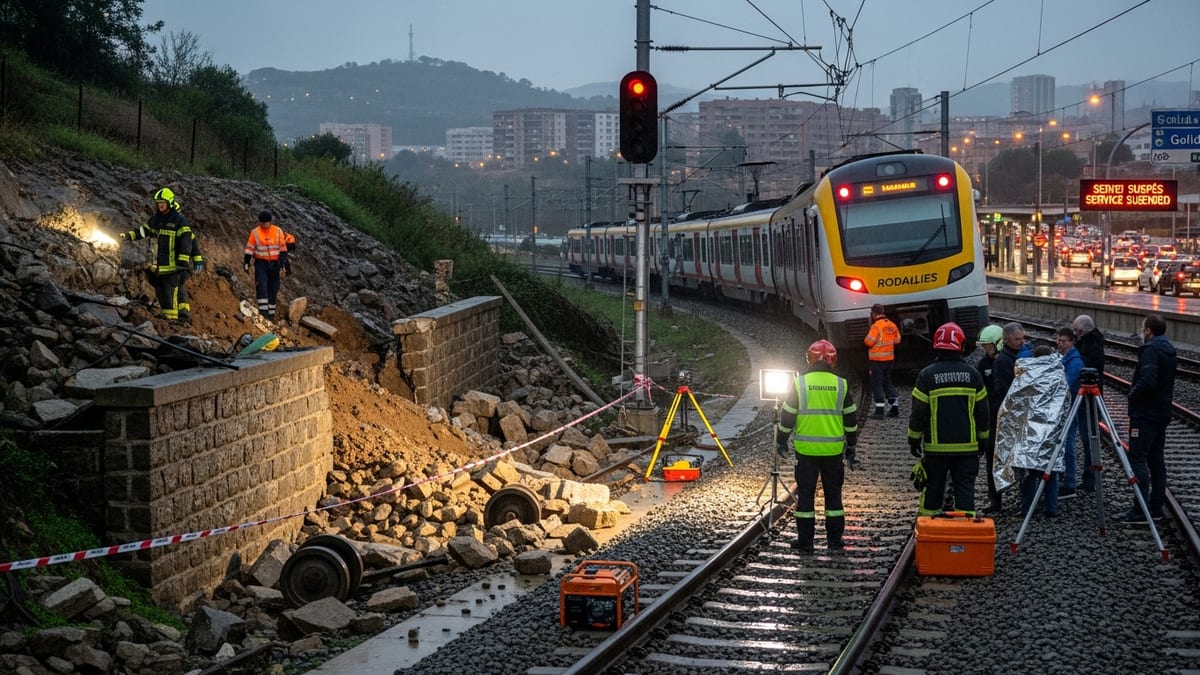
Pre-dawn derailment halts services near Kyoto’s main hub
According to published coverage, the incident occurred at around 5:13 a.m. local time on Monday, June 29, when a four-car local train bound for Kashiharajingu-mae left the tracks within the station area of Kintetsu Kyoto Station. Reports indicate that at least one axle derailed as the train was departing the platform, coming to a stop a short distance beyond the station.
Initial information suggests that around 30 passengers were on board the train at the time. Publicly available reports state that there were no injuries, and station staff guided passengers back to the platform on foot via the trackside route after power was cut and the situation was confirmed to be safe.
The derailment took place on the Kintetsu Kyoto Line, a key private railway corridor that connects Kyoto with Nara and communities further south. The line shares Kyoto Station, one of Japan’s busiest intercity and commuter hubs, with Japan Railways and other operators, amplifying the ripple effects of any incident inside the complex station area.
Extended suspension between Kyoto and Uji-area junctions
Following the derailment, Kintetsu Railway suspended operations on the Kyoto Line between Kyoto Station and Kamitobaguchi or Ujitawara-side intermediate stations, with reports from Japanese broadcasters stating that both inbound and outbound services were halted over the affected section. Trains on adjacent segments experienced cancellations and delays as operators worked to rearrange schedules and turn back services short of Kyoto.
Coverage from Japanese media indicates that Kintetsu described the expected timeline for restoration as taking a significant amount of time, citing the need to conduct on-site inspections, rerail the affected cars, and verify the condition of track, overhead lines, and signaling equipment. With the derailment occurring during the early morning period, the disruptions quickly overlapped with the start of the commuter rush.
On unaffected parts of the Kyoto Line and related routes such as the Nara Line, trains continued operating but with knock-on delays. Public information showed that through trains that would ordinarily continue into Kyoto were being turned back at stations south of the suspended section, requiring passengers to change routes or rely on alternative modes.
Alternative routes and impact on commuters and visitors
In response to the line closure, information from local transport agencies indicates that substitute travel options were arranged between Kintetsu and other rail and subway operators. Reports describe mutual arrangements enabling passengers holding Kintetsu tickets or commuter passes to use JR lines, the Kyoto Municipal Subway, and other private railways along parallel corridors.
The disruption is particularly significant for travelers moving between Kyoto and Nara, as the Kintetsu Kyoto Line is a popular route for both daily commuters and international visitors heading to major sightseeing areas. With the derailment occurring at the gateway station, tourists arriving in the city and planning day trips were faced with unexpected route changes and extended journey times.
Morning media footage from Kyoto showed crowded platforms on neighboring lines and station staff directing passengers to shuttle services and alternative lines. For many residents, the incident added considerable time to the start of the workday, while hotels and travel operators in central Kyoto advised guests to allow extra time for reaching temples, shrines, and other attractions by rail.
Safety checks and investigation into the cause
Publicly available information notes that Kintetsu Railway has launched an internal investigation into the cause of the derailment. Standard procedures in similar incidents typically include detailed checks on track geometry, switch points, train wheels and axles, and signaling conditions at the time of departure, as well as a review of onboard data recorders.
Japanese media reports emphasize that there were no injuries among passengers or crew, but the incident has prompted a thorough safety review given the station’s importance and the potential consequences of a derailment in such a confined and heavily used area. Technical teams are reported to be working to rerail the affected cars and to ensure that there is no hidden damage before service is gradually restored.
Once the immediate recovery work is complete, further attention is expected to focus on preventive measures. These may include inspection regimes on points and crossings near the departure tracks, adjustments to speed limits through complex track layouts, or targeted maintenance in response to any defects identified by the investigation.
Travel advice for those planning rail journeys via Kyoto
For the remainder of June 29 and potentially beyond, travelers planning to use the Kintetsu Kyoto Line are being advised through media reports and public notices to check the latest operational information before setting out. With the operator indicating that service restoration will take time, additional delays and partial suspensions are possible as recovery work continues.
Visitors staying in central Kyoto may find it more efficient to rely temporarily on JR lines from Kyoto Station, the Karasuma and Tozai subway lines, or buses for short-distance trips within the city. For journeys toward Nara, JR connections from Kyoto Station remain an important alternative when private railway links are affected.
Those connecting to long-distance shinkansen or limited express services through Kyoto Station are encouraged, according to published travel advisories, to build in extra transfer time and consider earlier departures. Given the scale of the rail network in and around Kyoto, most destinations remain accessible, but route flexibility is likely to be essential until Kintetsu confirms that normal operations on the Kyoto Line have fully resumed.