


More news on this day
Athens International Airport and Greece’s flagship island gateways at Santorini, Mykonos and Thessaloniki are emerging as some of Europe’s most stressed aviation chokepoints this summer, as a sharp rise in traffic, technical fragilities and slower passport checks combine to generate mounting disruption across the country’s skies.
Get the latest news straight to your inbox!
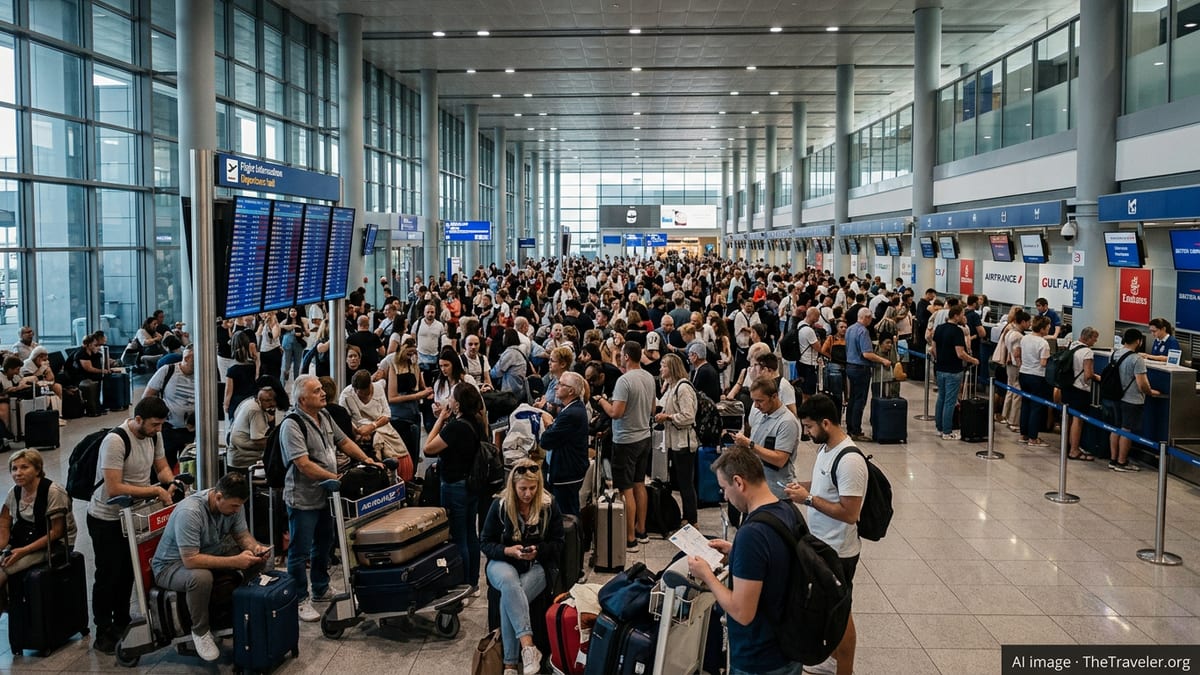
Over 2,400 Daily Flights Push Greek Network to Its Limits
Recent network data for June 2026 indicate that Greece is now handling more than 2,400 flights per day, including domestic services, international links and overflights routed through the Athens Flight Information Region. This places the country among Europe’s ten busiest aviation systems despite its relatively small size, underscoring how central Greek airspace has become for both tourism and east west connections.
The same figures show that Greece is contributing a disproportionately high share of air traffic flow management delays in Europe. Estimates for mid June attribute around 12 to 14 percent of all network delays to the Greek sector, a striking figure when compared with the country’s share of total flights. Capacity constraints in key control centers and limited flexibility in rerouting options over the eastern Mediterranean are cited in public briefings as core structural pressures.
Athens International Airport, which processed more than 77,000 flights in the first four months of 2026 according to its own statistics, is bearing the brunt of this trend. With traffic already running above 2025 levels before the summer peak fully arrived, the airport entered June with minimal spare runway and terminal capacity, leaving little margin to absorb cascading knock on effects from airspace restrictions or equipment checks.
This intensifying baseline workload means that even short lived operational issues now ripple quickly through the system. Delays of 30 to 60 minutes on a morning departure bank can translate into widespread schedule disruption by mid afternoon, especially on routes linking Athens with the Aegean islands, where aircraft often complete several rotations per day.
Radar Malfunctions and Legacy Systems Expose Vulnerabilities
The latest turbulence follows a series of technical scares that have raised questions over the resilience of Greece’s air traffic infrastructure. A nationwide shutdown in early January, linked to a communications failure affecting radio links between pilots and controllers, temporarily halted flights to and from all Greek airports and exposed deep reliance on aging systems at Athens and regional control centers.
In the months since, air traffic controller associations have repeatedly highlighted intermittent radio and navigation glitches in the Athens Flight Information Region and at approach facilities serving the capital. Reports describe episodes in which aircraft remained visible on radar but crews could not reliably communicate with the tower, prompting procedural workarounds and tighter spacing between arrivals, which in turn reduce hourly capacity.
Network performance briefings from European aviation bodies continue to list the Athens and Makedonia control areas among recurrent delay hotspots. The main causes cited are capacity and staffing limitations, compounded by equipment issues associated with older technology that is being stretched by rising volumes and more complex traffic flows around the eastern Mediterranean.
Checks and upgrades intended to address these vulnerabilities are themselves contributing to disruption when they occur during busy operating windows. Coverage in Greek media this month detailed how scheduled tests on approach systems at Athens in mid June led to notable departure and arrival delays when they coincided with peak traffic periods, prompting criticism from aviation unions and passenger groups.
Island Gateways Strain Under Peak Tourism Demand
While Athens functions as the primary hub, much of the visible disruption for holidaymakers is playing out at Greece’s island airports. Santorini, Mykonos and Thessaloniki, along with regional gateways such as Aktion, report surging passenger volumes as the summer tourism season reaches full intensity, driven by a rebound in international demand and dense schedules of seasonal routes from across Europe.
Travel trade coverage published this weekend highlights Athens, Santorini, Mykonos and Thessaloniki in particular as focal points for delays, citing radar issues, capacity bottlenecks and constrained turnaround times. Narrow operating footprints at the island airports, where there is often a single runway and limited apron space, leave little flexibility when inbound flights arrive out of sequence or when late evening services run into curfew pressures.
On Santorini and Mykonos, congestion on the ground is being amplified by cruise traffic and island road bottlenecks, making it harder for passengers to reach the airport in time for departures or to clear the terminal swiftly on arrival. Local tourism guides for June 2026 already describe conditions on these islands as high season level, noting that crowds, transport queues and accommodation demand are now more reminiscent of July than early summer shoulder periods.
Thessaloniki, which serves both as a tourism gateway for northern Greece and a key domestic and regional hub, is experiencing similar strain. Concentrated banks of low cost and charter flights, many operating within tight slot windows, leave schedules highly sensitive to even modest upstream delays from other European airports or from the Athens control region.
Biometric Border Checks Add New Bottlenecks
A further layer of complexity comes from the rollout of the European Union’s Entry Exit System, which introduces biometric checks for many non EU travelers. In Greece, the system is being phased in at major airports including Athens and principal island gateways, with fingerprint and facial data capture now required for an increasing share of departing and arriving passengers.
Industry and passenger reports from Athens in recent weeks describe notably longer queues at non Schengen passport control points, especially during morning and evening peaks when multiple long haul flights coincide. Processing times of up to around ninety seconds per traveler have been cited in travel industry analyses, significantly higher than under the previous manual stamping approach and enough to generate heavy backlogs when several full aircraft disembark at once.
Budget and leisure carriers have drawn attention to the impact on tightly timed turnarounds. Even a relatively modest extension in average processing time can push boarding and departure beyond scheduled slots, feeding into the broader pattern of delay that is already affecting Greek airspace. Calls from some airline groups to postpone full implementation of the biometric regime until after the high season reflect concern that infrastructure and staffing levels have not yet caught up with the new requirements.
For passengers, the combination of frequent schedule changes and less predictable border control times is eroding connection buffers, particularly at Athens where many travelers transfer between domestic island flights and long haul international services. Travel forums over the last week increasingly feature advice urging longer minimum connection times and flexible planning to account for unpredictable queues.
European Network Implications as Summer Peaks
The concentration of disruption in Greek airspace is beginning to ripple outward across the wider European network. Eurocontrol briefings for early and mid June show that while overall European traffic growth remains moderate compared with 2025, the eastern Mediterranean corridor, including Greece and neighboring states, is seeing some of the steepest increases in flight numbers.
Because many services to the Greek islands are operated as out and back rotations from hubs in Germany, Italy, the United Kingdom and central Europe, accumulated delays on Greek sectors are increasingly returning to those origin airports late, affecting subsequent legs. This is particularly visible on weekends, when charter programs from regional airports run at full capacity and aircraft are scheduled for multiple sectors in a single day.
Observers note that Greece’s share of en route delay is high relative to its traffic share, suggesting that structural factors rather than isolated incidents are driving the current pattern. Staffing shortfalls in air traffic control units, the slow pace of modernizing navigation and communication systems, and the complexity added by regional geopolitical tensions are all cited in public analyses as contributing elements.
With the core July and August holiday period still ahead, industry commentaries are increasingly framing the situation in Greece as an early warning for the rest of Europe’s aviation system. Unless capacity is expanded and technical vulnerabilities addressed more rapidly, the combination of peak seasonal demand, new border procedures and infrastructure constraints may continue to make Athens and its island airports a recurring flashpoint for continent wide travel disruption throughout the 2026 summer.