


More news on this day
Travelers connecting through Amsterdam Schiphol Airport faced another day of disruption as KLM scrapped 13 flights and reported extensive delays, stranding passengers and disrupting key routes to Switzerland, Germany, France, Portugal, the United States and other long haul destinations.
Get the latest news straight to your inbox!
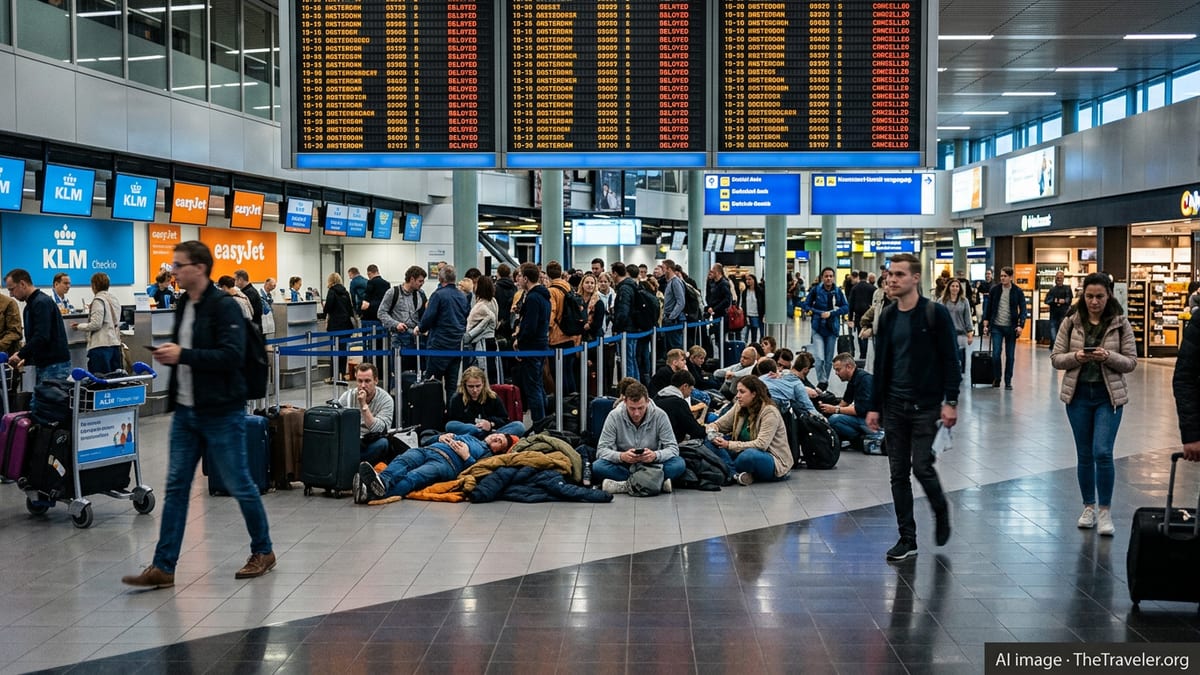
Schiphol Hub Gridlock Spills Across KLM Network
Amsterdam Schiphol functions as KLM’s primary hub, with tightly timed connections linking short haul European services to long haul departures to North America, Africa and Asia. When even a relatively small number of rotations are cancelled, the result can cascade quickly across the network as aircraft and crews fall out of position and connection banks begin to unravel.
Publicly available airport data and flight tracking snapshots from the day of disruption show KLM cancelling 13 departures from Schiphol while dozens more operated with significant delays. The affected flights included both intra European routes and long haul services, with connecting itineraries bearing the brunt as missed links forced last minute rebookings and overnight stays.
Operational strain at Schiphol has been a recurring theme in recent months, with winter weather, staff shortages and ground handling constraints frequently cited in published coverage as triggers for mass cancellations and long queues. The latest episode again underlined how vulnerable hub operations can be when a single airport experiences capacity limits, whether due to weather, runway availability or ground operations.
For passengers, the visible impact was crowded departure halls, long queues at KLM service desks and departure boards filled with red “cancelled” and amber “delayed” notices. Social media posts and traveler forums described families sleeping in terminal seating, business travelers missing onward meetings and holidaymakers attempting to salvage itineraries by buying separate tickets or turning to rail alternatives.
Key Routes to Switzerland, Germany, France and Portugal Affected
The cancellation and delay pattern at Schiphol particularly affected short haul links to neighboring European countries that normally feed KLM’s long haul bank. Services to Swiss cities, including Geneva and Zurich, saw aircraft rotations disrupted, leading to missed onward connections toward the United States and other intercontinental destinations.
Routes to major German hubs such as Frankfurt and Munich, as well as French destinations like Paris and Marseille, were similarly hit, according to route maps and same day timetable snapshots. These markets are central to KLM’s role as a transfer carrier, funneling passengers from regional European origins through Amsterdam onto long haul flights.
Flights between Schiphol and Portugal, including Lisbon and Porto, also appeared in disruption summaries, complicating travel plans for leisure passengers heading to or from winter sun destinations. In many cases, travelers reported being rebooked onto later flights with lengthy additional layovers or rerouted via partner hubs, adding another layer of complexity to already stressed travel days.
Because many of these European sectors operate multiple times per day, cancellations of specific rotations did not always eliminate same day travel options. However, the knock on effect on seat availability was immediate, with some passengers reporting that the next available KLM operated itinerary departed one or even two days later than originally planned.
Transatlantic and Long Haul Passengers Face Missed Connections
The disruption quickly spread beyond Europe as missed feeder flights rippled into KLM’s intercontinental schedule. Transatlantic routes linking Amsterdam with major United States gateways, including New York, Atlanta and Los Angeles, reported late departures and tight connections, leaving some travelers stranded in Amsterdam or at intermediate stops.
Industry monitoring platforms and consumer rights companies tracking delay statistics highlighted that even when long haul flights did eventually depart, large numbers of booked passengers were unable to board because their inbound European sectors had never left the ground. Many of those travelers were subsequently offered rerouting via partner airlines within the Air France KLM and wider SkyTeam networks, subject to seat availability.
For those already en route from North America, disruptions at Schiphol meant extended layovers and missed evening departures to final European destinations. Online accounts described travelers arriving from the US to find onward KLM flights to Switzerland, Germany or Portugal cancelled, forcing them to queue for rebooking and scramble for scarce hotel rooms near the airport.
This latest episode follows a winter marked by several large scale disruption days for KLM, involving hundreds of cancellations linked to shortages of de icing fluid, ground crew limitations and weather related capacity reductions at Schiphol. Passenger advocacy groups have repeatedly pointed to these events as evidence that travelers relying on single hub connections face heightened risk during peak disruption periods.
Passengers Turn to EU261 Rights and Alternative Transport
With hundreds of travelers stranded or heavily delayed, attention quickly turned to compensation and assistance rules under European Union Regulation 261/2004, which sets out passenger entitlements in cases of cancellations and long delays. Consumer advice sites and compensation firms circulated guidance on when travelers might claim reimbursement for meals, hotels or monetary compensation, depending on the cause of the disruption and available evidence.
Publicly available guidance from KLM reiterates that affected customers can typically rebook onto a later date, request a voucher or, in cases of significant delay or cancellation, seek a refund. Travelers posting online, however, described mixed experiences, with some reporting smooth automatic rebookings via the airline’s app, while others spent hours in digital queues or at airport desks seeking alternative options.
The disruption also pushed some passengers toward rail and bus alternatives. Reports on travel forums referenced travelers abandoning complex rebooking processes and instead purchasing last minute train tickets from Amsterdam to cities in Germany, France or Switzerland in order to salvage onward connections or return home. In a number of cases, those travelers later sought reimbursement for out of pocket expenses from the airline or through travel insurance.
Legal specialists who comment on air passenger rights noted that compensation eligibility often hinges on whether the root cause is considered within the airline’s control. Purely weather related disruptions can fall outside mandatory compensation, while operational or staffing issues may strengthen a claim. For stranded passengers at Schiphol, documenting the reason for cancellation and keeping receipts for hotels, meals and replacement transport remained critical steps in protecting their position.
Calls Grow for Greater Resilience at Europe’s Major Hubs
The latest wave of KLM cancellations and delays at Amsterdam Schiphol has renewed debate about the resilience of Europe’s largest hub airports. Over the past two years, Schiphol has been repeatedly cited in published analyses as an example of an airport operating near the limits of its capacity, where sudden shocks, from weather to staffing shortages, can trigger large scale disruption.
Aviation analysts writing in trade publications have argued that hub and spoke models, in which carriers like KLM concentrate flights at a single mega hub, are particularly vulnerable to such bottlenecks. When a critical mass of flights at Schiphol is cancelled or heavily delayed, there is limited room in the schedule to recover, and the impacts can reverberate for days across both European and intercontinental networks.
Passenger advocacy groups and travel industry commentators have called for more transparent, real time communication with customers when widespread disruption occurs, including clearer guidance on whether to proceed to the airport, how rebooking priorities are determined and what expenses are likely to be covered. During recent disruption days, some online posts referenced conflicting instructions, with some travelers told not to come to Schiphol while others received boarding reminders for flights that were later cancelled.
For travelers planning itineraries in the coming weeks, industry observers continue to recommend building longer connection windows through congested hubs, monitoring flight status closely on the day of departure and considering flexible booking options that allow for fee free changes during periods of heightened operational strain. As KLM and Schiphol work to stabilize operations after the latest round of cancellations, many passengers will be weighing future travel choices against the prospect of further disruption at the Dutch hub.