


More news on this day
West Bengal is emerging as a focal point in India’s rail modernisation drive, with a proposed bullet train corridor touching the state and a sweeping expansion of the Kolkata Metro network that together signal one of the most ambitious transport overhauls in its history.
Get the latest news straight to your inbox!
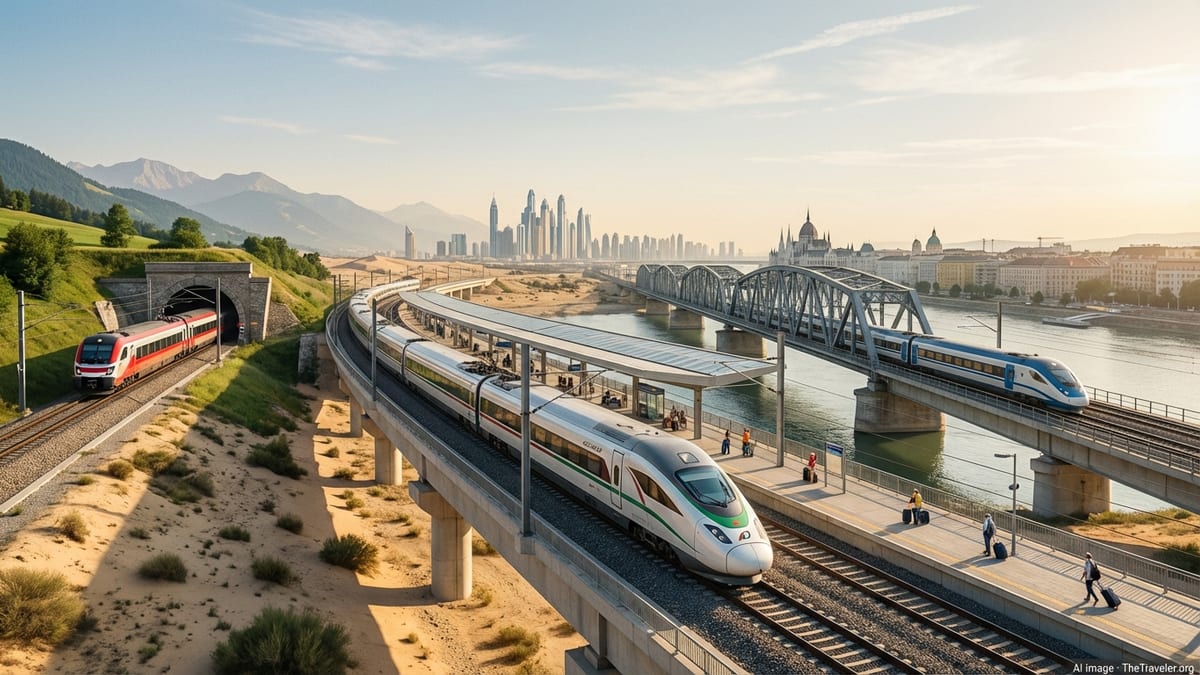
Bullet Train Vision Brings High Speed Rail Closer to Bengal
India’s high speed rail program is moving beyond the pioneering Mumbai Ahmedabad route toward a wider network, and recent policy discussions and budget documents indicate that at least one of the next corridors is planned to connect into eastern India, bringing a Shinkansen-style bullet train concept closer to West Bengal for the first time. While detailed alignments are still being refined, publicly available information on proposed east-focused corridors suggests that Howrah and the wider Kolkata region are being evaluated as key terminals or intermediate hubs in the next phase of high speed development.
The broader national strategy is to pair purpose-built bullet train lines with extensive track upgrades for semi high speed services, using new generations of Vande Bharat trains that can run at up to 160 kilometers per hour on upgraded routes. Policy papers and railway yearbooks show that track sections capable of speeds of 130 kilometers per hour and above have expanded sharply in recent years, with routes in electrified eastern zones, including West Bengal, identified as candidates for faster long distance links. The result is a layered plan in which a dedicated bullet train spine would be complemented by faster conventional services radiating into the state.
Recent launches of Vande Bharat sleeper trains between Guwahati and Howrah, together with published accounts of upcoming higher speed variants, underline how eastern India is being woven into this emerging premium rail network. For travelers in and out of West Bengal, the combination of a future bullet train corridor and upgraded intercity services promises significantly shorter journey times on routes that today are among the country’s most congested.
Even before a shovel goes into the ground for a dedicated high speed line in Bengal, the preparatory steps are already reshaping investment and planning conversations. Rail electrification, signaling upgrades and station modernisation in and around Howrah and Sealdah are increasingly framed as foundations for a future high speed era rather than isolated improvement projects, raising expectations that Kolkata could evolve into a major eastern gateway for India’s next-generation rail grid.
Kolkata Metro Network Enters Aggressive Expansion Phase
While bullet train proposals capture imaginations, it is the Kolkata Metro that is delivering visible change on the ground. The network, currently anchored by the north south Blue Line between Dakshineswar and Kavi Subhash, is in the midst of an unprecedented build-out that aims to knit together the city’s historic core, new business districts and airport with multiple color-coded corridors by the end of the decade.
Budget documents for the 2026 financial year and subsequent project approvals highlight a significant jump in spending on Kolkata’s urban rail. A package of works worth nearly 900 crore rupees has recently been cleared that pairs a 671.7 crore rupee upgrade of the Blue Line’s power and systems with additional funds for wider metro enhancement in the city. Reports indicate that these investments are designed to allow more trains, higher speeds on key stretches and greater operational reliability on India’s oldest metro corridor.
In parallel, construction continues on a series of new lines that will dramatically extend the reach of rapid transit. Official metro maps and recent inaugurations show that portions of the east west Green Line, the airport-bound Orange Line and the south western Purple Line are already open in truncated form. Planners expect that, once fully built, the combined network will add around 19 kilometers of route length by 2026 and ultimately evolve into a multi-line system of well over 100 kilometers as remaining phases are completed.
For daily commuters, the implications are far-reaching. Areas that for decades relied on overcrowded buses, autos and suburban rail, such as Joka, Behala, EM Bypass neighborhoods and the New Town periphery, are steadily being brought within metro reach. Travel modeling cited in recent urban planning and real estate analyses points to significant reductions in end-to-end journey times, especially once multiple interchanges between lines are operational.
Orange Line: Airport Link Gains Momentum After Chingrighata Breakthrough
The most closely watched of Kolkata’s new corridors is the Orange Line, a north south axis intended to link New Garia in the south with Salt Lake’s IT hub and Netaji Subhas Chandra Bose International Airport in the northeast. After years of delays, a critical bottleneck at Chingrighata near the Eastern Metropolitan Bypass has finally been cleared, with girder-launching work on a 366 meter stretch completed ahead of schedule according to recent coverage in national dailies.
This engineering milestone has allowed metro authorities and contractors to reset timetables. Construction-focused publications report that the segment between Beleghata and the IT Centre in Sector V is now being targeted for opening around December 2026, providing a vital interchange with the Green Line at Sector V. The full New Garia to airport alignment is being discussed in published reports with an indicative horizon of late 2027, restoring confidence that Kolkata’s long-promised direct rail link to the terminal is back on track.
Recent transport and property market analyses stress that the Orange Line is likely to be transformative for both daily commuters and investors. The corridor ties together high-density residential clusters along EM Bypass, major employment centers in Sector V and New Town, and the international gateway at the airport. With the Chingrighata obstruction removed and central funding allocations continuing in the current budget cycle, urban economists expect land values and development interest to intensify along key stations well before the first full-length trains are running.
Public debate has not disappeared, however. Civic discussions and local forums still highlight concerns over construction impact, station spacing and the pace of work near existing traffic choke points. Yet the tangible progress at Chingrighata over the past month has shifted the tone from frustration to cautious optimism, with many residents now recalibrating their housing and commute choices around the expectation that the airport metro is genuinely within sight.
Purple and Green Lines Reshape South and Central Kolkata
To the southwest, the Purple Line from Joka toward Esplanade is quietly redrawing South Kolkata’s transport geography. The initial Joka to Taratala stretch opened in 2022, and a further extension to Majerhat followed in 2024. Infrastructure and real estate trackers note that this phased rollout has already triggered a surge of residential launches and price appreciation in Joka, Behala and adjoining neighborhoods, with buyers betting on the eventual completion of the full Joka to Esplanade to BBD Bag corridor.
The remaining central sections of the Purple Line, particularly around Khidirpur, Victoria and Park Street, are among the most technically challenging due to dense construction and the need to relocate established markets and utilities. Government project monitoring reports list revised completion targets extending toward the end of this decade, although industry commentary suggests that visible progress around Park Street and Esplanade is accelerating as key clearances come through.
Across the river, the Green Line, or East West Metro, has already become a backbone for commuters between the IT parks of Salt Lake and the office districts around Howrah Maidan. With roughly 16.6 kilometers operational and more works underway, additional funding in the current budget has been earmarked to finish remaining tunnels and stations, including sections that will deepen the line’s integration with the historic business district. Travel writers and local media describe steadily rising ridership as residents become more familiar with cross-city journeys that avoid surface congestion entirely.
Together, the Purple and Green Lines are expected to redistribute passenger flows that have long overwhelmed the Blue Line and key road bridges. As each new phase opens, interchange stations such as Esplanade are projected to emerge as powerful hubs where multiple corridors intersect, a pattern that transport planners say is central to reducing dependency on private vehicles and bus fleets over the medium term.
Economic and Urban Impact: A New Rail Spine for West Bengal
The combination of a proposed bullet train link, expanding semi high speed services and a fast-growing urban metro network is giving West Bengal something it has historically lacked: a cohesive, future-focused rail spine that aligns intercity and intracity mobility. Analysts of infrastructure-led growth argue that this multi-layered rail build-out could lift productivity by shrinking travel times across scales, from the daily commute between Joka and Sector V to overnight journeys between Kolkata and other metros.
Real estate consultancies are already documenting price premiums along key metro corridors, especially near operational or near-complete stations on the Purple, Orange and Green lines. Developers have responded with transit-oriented projects that cluster housing, retail and offices within walking distance of upcoming stations in areas such as Behala, EM Bypass and New Town. This trend mirrors patterns seen in cities like Delhi and Mumbai, but with the added twist that Kolkata’s new lines are penetrating previously under-served micro-markets rather than simply reinforcing existing prime zones.
Regional economic strategies also increasingly frame Kolkata as a gateway for rail-based tourism and trade into the eastern and northeastern states. The launch of premium services such as the Vande Bharat sleeper between Guwahati and Howrah, and the prospect of a future bullet train stopping in or terminating at Howrah, bolster narratives of an integrated eastern corridor where passengers and freight can move more efficiently across long distances.
For travelers, the changes will unfold over several years rather than overnight. Yet the convergence of high speed rail proposals, metro expansion milestones and substantial budgetary backing in 2026 has created a sense that West Bengal is entering a decisive decade for rail. Whether boarding a metro in Joka, a semi high speed sleeper at Howrah or, one day, a bullet train connecting Kolkata to other major metros, passengers are poised to experience a transport landscape very different from the one that existed just a few years ago.