


More news on this day
Cambodia’s Koh Rong, a fast-developing island in the Gulf of Thailand, is moving to brand itself as a model for healthy, sustainable beach travel with a new smoke-free tourism push that aims to reshape visitor behavior and the island’s long-term appeal.
Get the latest news straight to your inbox!
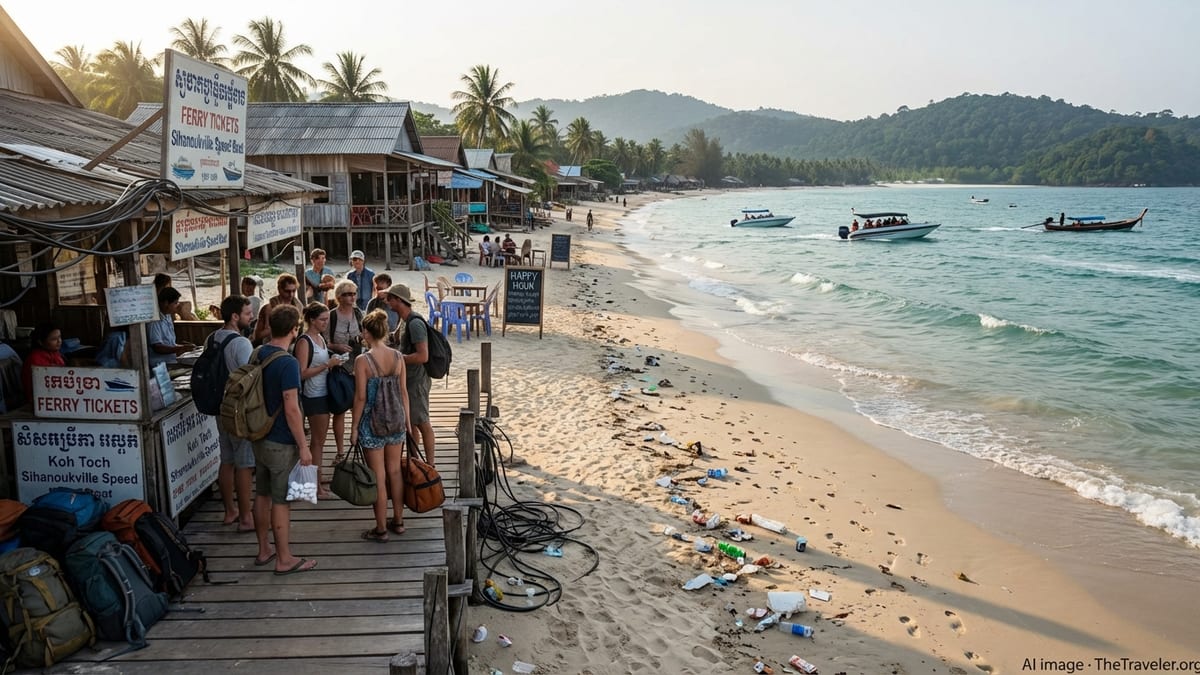
A New Chapter for Cambodia’s Premier Beach Island
The move toward a smoke-free tourism model on Koh Rong builds on Cambodia’s broader tobacco-control framework, which already includes restrictions on smoking in many public spaces and hospitality venues. Publicly available policy documents show that national guidelines encourage smoke-free environments in tourism hubs, from hotels and restaurants to major attractions, in an effort to protect both workers and visitors from second-hand smoke.
On Koh Rong, local authorities and tourism stakeholders are beginning to translate those principles into concrete rules and branding for the island itself. The ambition is to move beyond isolated non-smoking resorts and establish smoke-free norms in key areas such as busy village centers, ferry piers, shared transport, and popular beach fronts.
The initiative comes as Koh Rong evolves from a backpacker haunt into a large-scale tourism investment zone, with new roads, utilities, and resort projects reshaping the coastline. Promoters of the smoke-free agenda present it as part of a broader repositioning of the island toward higher-value, environmentally conscious travel.
Observers note that the timing is significant. With parts of Cambodia already pursuing smoke-free tourism city models, Koh Rong’s push signals that the country’s most prominent island destination is looking to align itself with regional trends that favor cleaner air, wellness tourism, and family-friendly beach environments.
How a Smoke-Free Tourism Model Works on Koh Rong
Details emerging from public guidance on smoke-free tourism suggest Koh Rong’s strategy will hinge on a combination of designated non-smoking zones, clear signage, and cooperation from businesses across the island’s main beaches and villages. Instead of focusing solely on penalties, the approach emphasizes information campaigns that nudge visitors to comply voluntarily.
Accommodation providers, bars, and restaurants are expected to play a central role. Many properties already operate smoke-free rooms and indoor spaces, and some market non-smoking policies as part of their sustainability positioning. Extending these practices to outdoor communal areas, shared facilities, and beach-facing zones is seen as the next step in normalizing smoke-free tourism on the island.
Transport hubs are another priority. Ferry piers, ticket offices, and boat waiting areas linking Sihanoukville to Koh Rong are among the most crowded parts of the journey for visitors. Turning these high-traffic spaces into clearly signposted non-smoking areas is intended to set expectations from the moment travelers arrive.
Campaign materials and educational messaging are expected to highlight not only health concerns but also the environmental impact of cigarette litter on beaches and marine ecosystems. By framing compliance as part of protecting Koh Rong’s natural assets, local tourism operators aim to enlist visitors as partners in maintaining the island’s appeal.
Balancing Visitor Experience, Health, and Local Economy
The smoke-free push on Koh Rong is emerging at a time when tourism operators across Southeast Asia are looking for ways to differentiate their destinations while addressing public health goals. The island’s reputation for white-sand beaches, diving, and nightlife has traditionally catered to a mix of backpackers, domestic travelers, and higher-end resort guests, each with different expectations around smoking.
Striking a balance between visitor freedom and stricter controls is expected to be a core challenge. Some small businesses that cater to budget travelers may worry that tougher enforcement near beach bars and party areas could dampen their appeal. Others, especially family-focused resorts and eco-lodges, are likely to view a smoke-free brand as an asset that supports premium pricing and longer stays.
Economic arguments in favor of the smoke-free model draw on international research suggesting that comprehensive smoke-free policies do not necessarily reduce overall tourism demand and can, over time, attract health-conscious travelers. Proponents on Koh Rong frame the policy not as a ban on smokers themselves, but as a reorganization of where and how smoking is permitted, with the most visible public and tourism spaces prioritized for clean air.
Local employment in hospitality and services is another factor. Advocates of smoke-free tourism policies often point to the occupational health benefits for staff working long hours in bars, restaurants, and guesthouses. As Koh Rong’s tourism workforce grows, such protections are increasingly presented as part of responsible destination management.
Environmental Stakes: From Cigarette Litter to Marine Protection
Beyond health, Koh Rong’s smoke-free tourism drive is closely bound up with concern over environmental degradation. Cigarette butts are among the most common items found in global coastal clean-ups, and the island’s expanding built-up areas have raised fears that litter could undermine its image as a tropical getaway.
Koh Rong lies within a broader marine and coastal ecosystem that supports coral reefs, seagrass beds, and fisheries. Plastic filters from discarded cigarettes can break down into microplastics and leach chemicals into the water, adding to the pressures already posed by construction, boat traffic, and climate-related stress on coral.
By limiting smoking in key tourism zones and encouraging proper disposal where it remains allowed, the island’s managers aim to cut a visible source of pollution that directly affects visitor perceptions. Cleaner beaches and clearer water are not only environmental goals but also core assets in the island’s marketing as a premium destination.
Environmental groups active in Cambodia have long promoted integrated approaches that link public health with conservation. Koh Rong’s experiment with smoke-free tourism is being watched as a test case for whether such combined messaging can shift behavior at scale in a rapidly growing beach destination.
What Travelers Can Expect in the Coming Seasons
For visitors planning trips to Koh Rong, the practical impact of the smoke-free initiative is likely to become more visible over the next few high season cycles. Travelers can expect more non-smoking signage at ferry terminals, beaches, and popular pathways, along with clearer information from hotels and guesthouses at the time of booking and check-in.
Smokers may still find designated outdoor corners or clearly marked areas where lighting up is permitted, particularly away from main promenades and communal beach sections. However, lighting a cigarette in front of resort entrances, in indoor public spaces, or along busy stretches of sand is increasingly likely to be discouraged, with staff trained to point guests toward appropriate areas.
Non-smoking travelers, including families with children and visitors with respiratory sensitivities, may find the shifting norms make the island more attractive compared with destinations where beach smoking remains common. The ability to spend long hours in open-air bars, beach clubs, and cafés without significant exposure to second-hand smoke is central to the island’s new value proposition.
As Koh Rong continues to invest in infrastructure and upscale properties, the smoke-free tourism revolution on the island signals an effort to match physical development with a higher standard of environmental and health-conscious management. How successfully it can maintain that balance will help determine whether Cambodia’s flagship island emerges as a regional model for smoke-free beach tourism.