


More news on this day
Powerful Typhoon Dolphin has triggered sweeping flight cancellations between Taiwan and Okinawa, abruptly grounding services operated by Starlux Airlines and leaving holidaymakers scrambling to rebook peak summer trips across the East China Sea.
Get the latest news straight to your inbox!
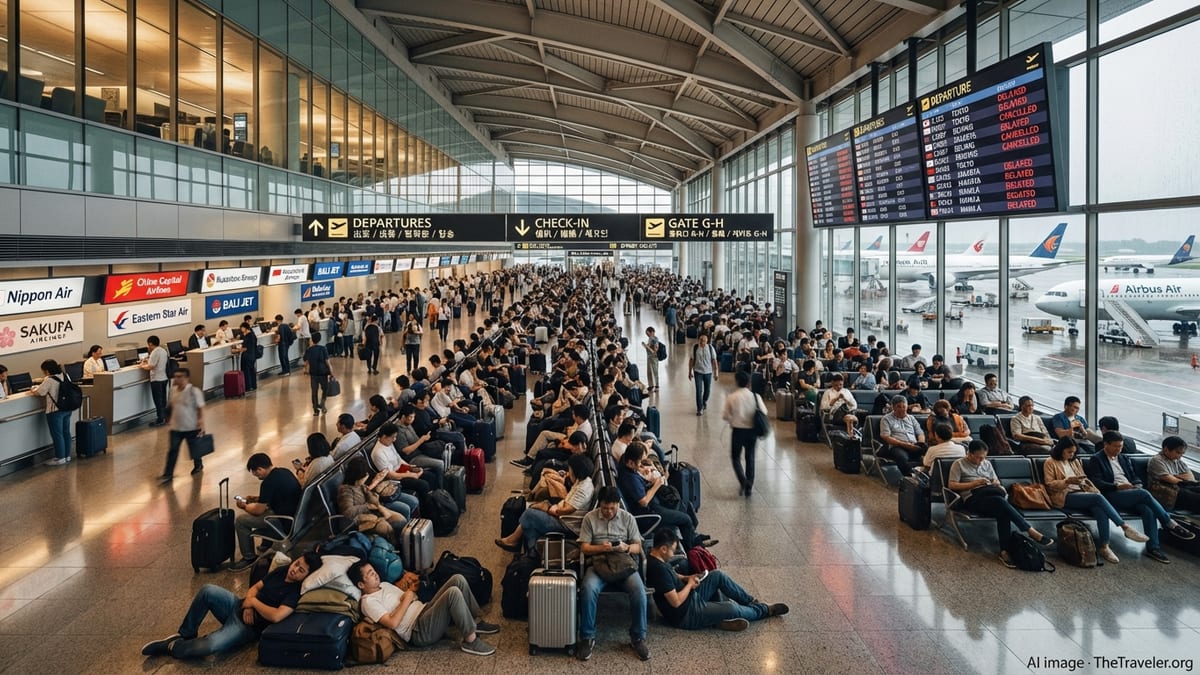
Typhoon Slams Key Holiday Corridor at Peak Season
The storm, identified as Typhoon Dolphin, swept across the East China Sea during one of the busiest travel periods of the year, prompting widespread disruption on routes linking Taiwan with Japan’s southern island chain. Publicly available tracking data and regional media reports indicate that heavy rain, strong winds, and deteriorating visibility forced carriers to halt operations into and out of Naha and other Okinawan airports as the system approached.
Regional airlines serving the Taiwan–Okinawa corridor, including Taiwan based Starlux, had built up summer schedules to capture surging leisure demand after several strong seasons on Japan routes. The abrupt shutdown of flights as the storm intensified has left aircraft out of position and passengers facing multi day delays, particularly on short haul sectors where spare capacity is limited.
Weather agencies in the region describe Dolphin as a powerful tropical system with conditions severe enough to temporarily close runways and disrupt ground operations. Past storms of similar strength have repeatedly forced airlines in Taiwan and Japan to suspend flights for safety reasons, and early indications suggest that Dolphin is following a similar pattern in terms of aviation impact.
The Taiwan–Okinawa market has grown rapidly on the back of beach tourism, diving trips, and short city breaks, making any extended shutdown highly visible to travelers. The timing of Dolphin’s closest approach, coinciding with school holidays in several markets, has magnified the effect of each cancellation.
Starlux Cancels Taiwan–Okinawa Rotations as Aircraft Grounded
Published flight status information shows that Starlux has canceled multiple Taiwan–Okinawa rotations as Dolphin’s outer bands brought unsafe conditions to airports on both ends of the route. These short hops, often operated several times per week, have been pulled from schedules as the carrier prioritizes safety and waits for ground conditions to stabilize.
The airline, which has been expanding its Japan network since launching services to Okinawa, now faces the immediate operational challenge of resetting its schedule. Canceled sectors create a knock on effect, leaving aircraft and crews in the wrong locations and compressing capacity once flying resumes. Given the short flight time between Taiwan and Okinawa, many travelers had planned tightly packed weekend and three day itineraries that are now difficult to salvage.
Publicly accessible timetables and airport screens show that cancellations have tended to cluster around the storm’s projected peak impact window, with some flights scrubbed proactively a day in advance. Aviation observers note that such early decisions are designed to avoid last minute airport crowding, but they also mean that travelers lose flexibility to wait and see if conditions improve.
Starlux, like other regional carriers, must also coordinate with airport authorities in both Taiwan and Japan on restart times, runway inspections, and the availability of parking stands once winds begin to ease. These operational factors will influence how quickly the airline can restore its regular Taiwan–Okinawa pattern after Dolphin passes.
Passengers Report Long Waits, Confusion Over Rebooking
As the cancellations mounted, travelers took to social media and online forums to describe long waits to reach airline call centers and uncertainty over new travel dates. Accounts from passengers booked on Starlux services between Taiwan and Japan describe busy phone lines, limited rebooking options on alternative days, and concerns about expiring hotel reservations in Naha and nearby resort areas.
Several reports highlight the broader challenge of rebooking during a weather event that affects multiple carriers at once. When a typhoon disrupts Okinawa’s air links, airlines across the region may reduce or suspend flights, shrinking the pool of available seats. Even when additional services are added after the storm, high demand from stranded travelers can make it difficult for everyone to secure a prompt departure.
Online discussions also point to divergent experiences with customer service. Some travelers describe relatively smooth reassignments or refunds handled through digital channels, while others report repeated dropped calls or uncertainty over whether no show penalties would apply when airports closed or flights disappeared from departure boards.
Travel industry analysts note that disruptions on short haul leisure routes can be particularly frustrating because trips are often short and tightly scheduled. A delay of one or two days on a four day beach holiday can wipe out much of the planned stay, and rebooking may no longer make sense for travelers who cannot extend their time off work or school.
Okinawa Tourism and Taiwan Carriers Brace for Revenue Hit
The disruptions have significant implications for Okinawa’s tourism reliant economy, which counts Taiwanese visitors among its key international markets. Tourism promotion materials and local government statistics show that travelers from Taiwan contribute strongly to hotel occupancy, restaurant revenue, and marine activity bookings in and around Naha and nearby islands.
When a typhoon forces cancellations across multiple days, the impact is felt not only by airlines but also by hotels, tour operators, and transport providers that depend on steady passenger flows. Industry observers point out that while some visitors will simply shift their trips by a few days, others may abandon their plans entirely, especially if they face rebooking fees or lose nonrefundable accommodation payments.
The financial hit for airlines such as Starlux can also be meaningful. While safety related cancellations avoid potentially higher risks, they generate lost ticket revenue, additional crew and aircraft positioning costs, and a wave of customer service expenses. Company disclosures and regulatory filings in recent years have highlighted extreme weather as a growing operational and financial risk for carriers based in typhoon prone regions.
For Taiwan’s aviation sector, Dolphin is the latest in a series of weather events that have tested contingency plans and highlighted the sensitivity of regional networks to storms forming over the western Pacific. Each incident adds pressure on carriers to refine forecasting tools, strengthen communication channels, and build greater flexibility into schedules that connect Taiwan with nearby leisure destinations.
What Stranded Travelers Can Expect in the Coming Days
With Dolphin expected to move away from the region after its peak, publicly available forecasts suggest that conditions around Okinawa and northern Taiwan should gradually improve, allowing airports to reopen runways fully and airlines to begin clearing backlogs. When that happens, carriers typically prioritize rebooking passengers from canceled flights, often at no additional fare for travel within a set window.
Travel advisers recommend that affected passengers monitor airline apps and official notices frequently, as new seats may be released in batches when additional flights or larger aircraft are scheduled. On heavily impacted routes such as Taiwan–Okinawa, those who can remain flexible on travel dates and times are more likely to secure seats quickly once operations restart.
Travel insurance policies may provide some relief for accommodation, missed tours, or extra nights incurred because of the storm, although coverage details vary widely. Industry guidance suggests that travelers keep all receipts, boarding passes, and written proof of cancellations to support any claims related to Dolphin’s impact on their itineraries.
As the typhoon season continues in the western Pacific, the experience of Dolphin is likely to influence how both airlines and travelers prepare for future storms. For carriers like Starlux, the event underscores the need for clear communication and flexible rebooking tools. For passengers eyeing the Taiwan–Okinawa corridor, it is a reminder that postcard perfect beaches sit in a region where the weather can change travel plans overnight.