


More news on this day
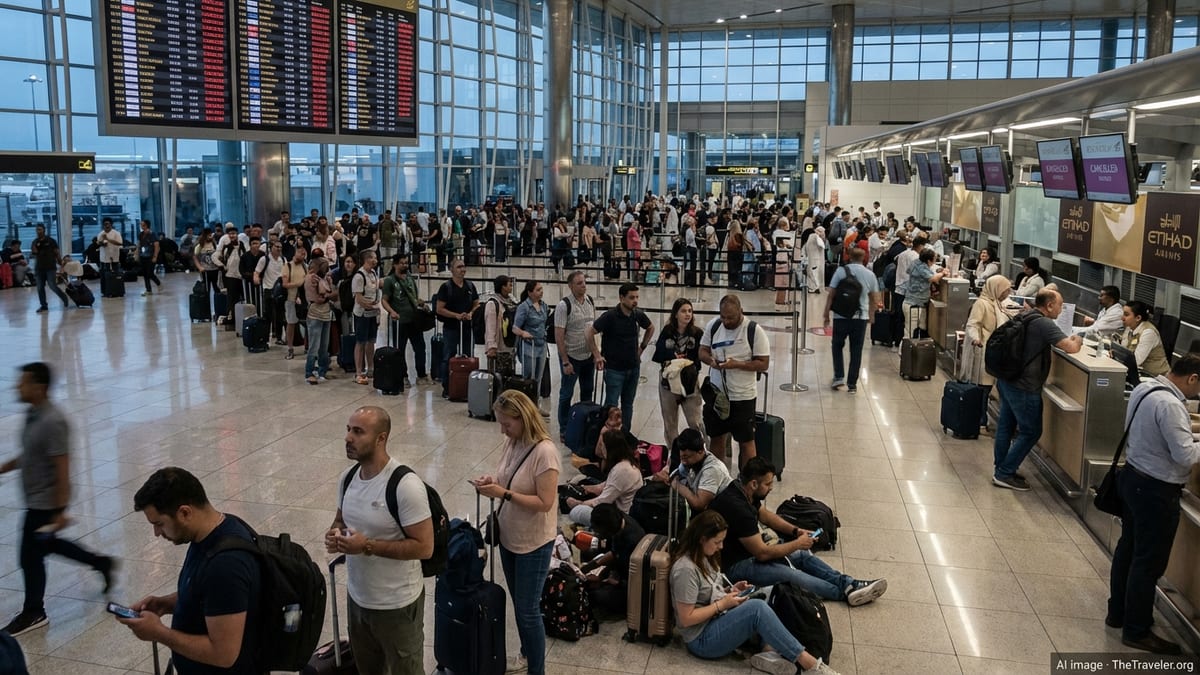
A sharp wave of disruption swept major Gulf aviation hubs on September 19, 2026, with flight-tracking tallies showing 1,585 delayed flights and 40 cancellations across airports that function as critical connectors between Europe, Asia, and Africa.
Get the latest news straight to your inbox!
What the September 19 spike suggests about Gulf network fragility
The mid-September totals stand out because the Gulf’s hub-and-spoke model is designed for tight connections and high aircraft utilization. When delays concentrate in a short time window, the effects can cascade quickly: late inbound aircraft arrive behind schedule, crews approach duty-time limits, and gate plans get reshuffled across multiple banks of departures.
Publicly available coverage describing the September 19 snapshot frames the pattern as region-wide rather than isolated to a single airport. That matters for travelers because network disruption reduces the number of “easy” recovery options. A passenger who misses a connection in Dubai or Doha may find that later flights are already filling with displaced travelers from other disrupted routes.
The timing also arrives during a year when Gulf aviation has faced multiple operational stressors, including air-traffic flow changes and periodic route adjustments across the wider region. Even when airports remain open and flights continue operating, small changes to routings and arrival waves can amplify congestion during peak hours.
Security advisories and airspace constraints remain part of the 2026 backdrop
Aviation risk and airspace planning has been unusually prominent in 2026. The European Union Aviation Safety Agency has maintained a Conflict Zone Information Bulletin covering the airspace of the Persian Gulf and Gulf of Oman, and its published materials show the bulletin’s validity extended through September 30, 2026. For travelers, such advisories can translate into longer routings, fewer available slots at certain hours, and knock-on schedule pressure.
Earlier in 2026, published reporting also highlighted how regional tensions and restrictions contributed to interruptions in service, including temporary suspensions and extended cancellations on some city pairs. When airspace or routing options tighten, airlines often need to re-time waves of departures to match available corridors, which can stress hubs built around carefully timed connecting “banks.”
Separate from security-related constraints, routine operational factors can still do real damage to punctuality at high-volume gateways: construction work, runway or taxiway projects, seasonal demand peaks, and irregular weather patterns can all strain schedules. In a connection-heavy region, the main traveler impact is often missed onward flights, not just late arrivals.
How to check your flight before leaving for the airport
For trips that connect through the Gulf, the most practical step is to confirm status through multiple official channels shortly before departure. Dubai Airports maintains a live flight-status page for airport-wide arrivals and departures, and most major carriers serving the region also offer flight-status tools within “Manage booking” sections of their websites and apps.
Travelers should treat a long delay as a trip disruption even if it is not yet labeled a cancellation. A multi-hour slip can jeopardize hotel check-in windows, paid ground transfers, cruise embarkations, or onward rail legs. When delays are widespread, rebooking can become more constrained because replacement flights fill quickly and because aircraft rotations may be out of position across multiple cities.
Another practical consideration is baggage and connection timing. When a hub is running behind schedule, minimum connection times can be stressed, and checked baggage may not move as quickly as normal between banks. Travelers with tight connections may want to verify whether their itinerary is protected as a single ticket, because that determines which rebooking options are available if a connection is missed.
Passenger rights: what Saudi-based rules say about care during delays
Passenger protections vary by jurisdiction, and travelers transiting or departing from Saudi Arabia face a framework that includes specific “care” obligations during delays. Publicly available guidance published by King Khalid International Airport in Riyadh describes service thresholds that include drinks within the first hour of delay, a suitable meal if the delay exceeds three hours, and hotel accommodation plus transport when the delay exceeds six hours.
The same publicly available guidance also outlines basic expectations around cancellations, including refund or alternative travel options depending on notice timing, and notes that refunds or compensation should be processed via specified payment methods within defined working-day timeframes once eligibility is established.
For travelers who believe their case has not been handled properly, Saudi Arabia’s national platform lists an electronic service that enables passengers to submit and escalate complaints related to airline services and operations to the General Authority of Civil Aviation. While complaint outcomes depend on the facts of each case, the availability of a formal escalation channel is a practical detail for passengers departing Saudi airports during a disruption cycle.
What travelers can do now if their itinerary routes through Gulf hubs
For travel in late September 2026, the immediate planning takeaway is to build extra buffer time around connections and arrival commitments, particularly for itineraries that rely on a single tight transfer through a major hub. When disruptions are region-wide, switching to a different Gulf hub may not materially improve reliability on the same day, so travelers may want to consider rebooking to earlier departures or selecting longer connections if those options exist.
It can also help to confirm the rules attached to the ticket type before disruption strikes. Some fares allow changes for a fee, others are more restrictive, and loyalty-program tickets may have different reissue rules. Travelers should also keep documentation of delay notifications and updated itineraries, since reimbursement and insurance claims typically require timestamps and proof of additional expenses.
Finally, travelers should watch for system-wide disruption signals rather than focusing only on a single flight number. When flight-tracking tallies show elevated delays and cancellations across the region, it often means recovery will be gradual, with schedules taking time to normalize as aircraft and crews cycle back into position.