


More news on this day
Korean Air has issued a fresh travel advisory alerting passengers to the risk of weather-related delays and disruptions on routes serving Tokyo’s Narita and Haneda airports, as seasonal storms and unstable conditions heighten the likelihood of schedule changes across the region.
Get the latest news straight to your inbox!
Advisory Highlights Increased Risk Of Schedule Disruptions
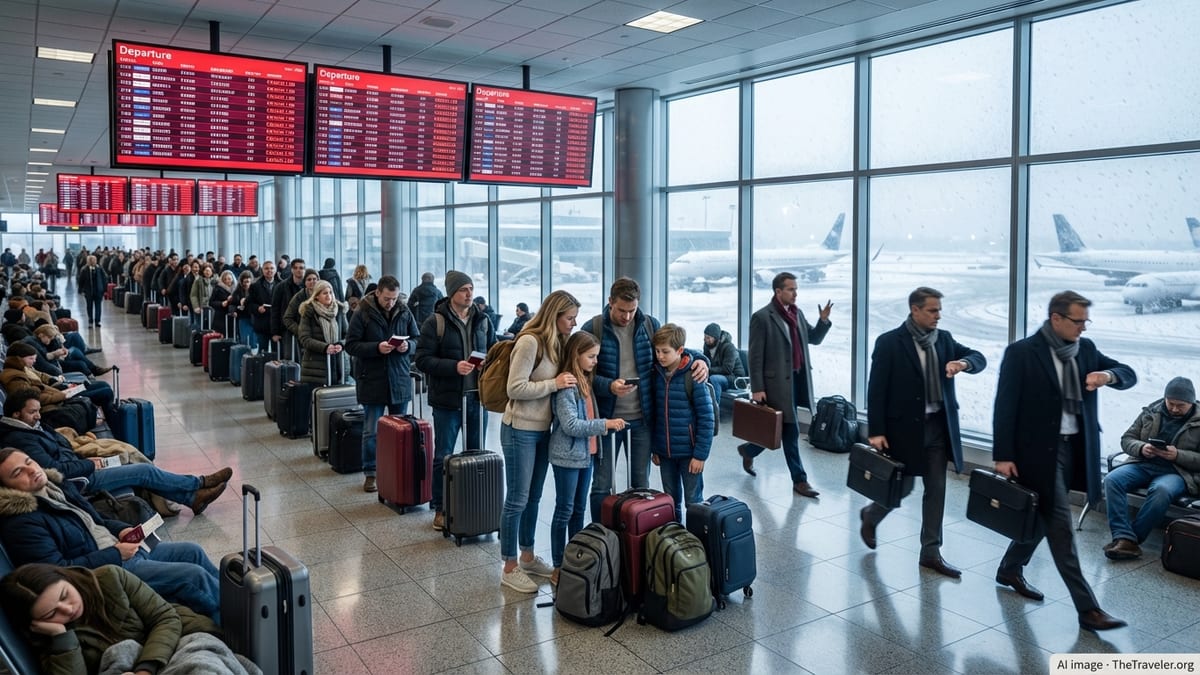
According to information published by Korean Air and summarized in recent travel updates, the carrier is asking customers booked on flights to and from Tokyo to prepare for potential delays, longer ground times and last-minute schedule adjustments when adverse weather is forecast. The advisory centers on flights serving Tokyo’s two main gateways, Narita International Airport and Haneda Airport, both of which are prone to knock-on congestion when strong winds, heavy rain or low visibility affect runway operations.
Publicly available guidance indicates that the airline is encouraging travelers to monitor their booking status through official digital channels on the day of departure and to allow additional time at the airport. In periods of intensified weather systems, such as typhoons or prolonged heavy rain bands, both airports often impose flow-control measures that reduce the number of arrivals and departures per hour, which can quickly cascade into widespread delays.
The advisory reflects a broader pattern in East Asia’s 2026 summer season, which meteorological research suggests is marked by elevated temperature and precipitation anomalies across Japan and the Korean Peninsula. These conditions are associated with more frequent convective storms and can exacerbate the operational challenges facing busy hubs like Narita and Haneda.
Tokyo’s Airports Vulnerable During Typhoon And Rainy Seasons
Tokyo’s aviation network regularly experiences disruption during the region’s rainy and typhoon seasons, when strong crosswinds, cloud bands and intense downpours can trigger temporary runway closures or tighter spacing between aircraft. Historical accounts of Pacific typhoon seasons show that major systems moving through the Kanto region have forced significant delays and cancellations at both Narita and Haneda, with airlines adjusting schedules to keep aircraft and crews within safety margins.
While modern air traffic management and forecasting tools have improved the ability of airlines and airports to plan around severe weather, the inherently dynamic nature of storms means that exact impacts on any given day can be difficult to predict more than a short time in advance. As a result, carriers such as Korean Air use advisories to flag periods when the overall risk profile is elevated, even if specific flights have not yet been altered.
Operational records from past weather events illustrate how quickly conditions can change in and around Tokyo. Strong low-pressure systems and typhoons have previously resulted in temporary suspensions of operations, diversions to other airports and extended turnaround times for aircraft on the ground. The new advisory suggests that Korean Air is seeking to prepare customers for similar patterns if current forecasts materialize.
What The Advisory Means For Korean Air Passengers
For travelers flying with Korean Air on routes connecting Seoul with Tokyo, the advisory is primarily a call for flexibility and preparation rather than a sign of immediate large-scale cancellations. The airline continues to operate its scheduled services to Narita and Haneda, but it notes that flight times, aircraft assignments and even routings may be adjusted if weather conditions deteriorate along the way or at the destination.
Publicly available information on recent airline responses to East Asia storms shows that typical measures include departure time shifts, temporary holds on the ground to wait for improving conditions and, in more severe cases, diversions to alternate airports if crosswinds or visibility fall outside approved limits. When these steps become necessary, passengers may experience missed connections, extended layovers and late arrivals into Tokyo or onward destinations.
The advisory underscores the importance of checking flight status frequently, particularly within 24 hours of departure, and staying attentive to any email or app notifications about gate changes or revised boarding times. Travelers holding separate onward tickets, either on domestic Japan services or other international legs, face heightened connection risk during unsettled weather periods and may need to build in extra buffer time where possible.
Regional Weather Outlook Raises Travel Planning Concerns
Recent climate and seasonal outlooks for East Asia in 2026 point to an increased likelihood of extreme summer heat and associated weather instability across Japan and neighboring countries, including Korea. Academic analyses of temperature forecasts highlight above-average conditions that can intensify convective activity and place additional strain on transport and power infrastructure. In the aviation context, hotter and more humid air masses can influence aircraft performance, turbulence patterns and the formation of sudden thunderstorms.
In Japan, the combination of high summer temperatures, intense humidity and periodic typhoons has already become a recurring theme in traveler reports this season, especially in urban centers such as Tokyo. Some visitors describe challenging outdoor conditions, while local meteorological bulletins have periodically flagged strong wind and heavy rain risks in coastal and island regions. When such systems track close to the capital, both Narita and Haneda frequently implement precautionary operational limits that reverberate across regional and long-haul networks.
The Korean Air advisory is aligned with these broader patterns, signaling that passengers on Tokyo-bound routes may encounter a more volatile operating environment in the coming weeks. While not every forecast disturbance will result in significant disruption, the cumulative effect of multiple weather events over a season can increase the odds of at least one affected sector during a multi-stop trip.
Practical Steps For Travelers Using Tokyo During The Advisory
For travelers planning to pass through Tokyo on Korean Air during this advisory period, several practical strategies can help mitigate the impact of possible delays. Travel industry guidance commonly recommends building additional time into itineraries involving tight same-day connections, particularly when transiting between international and domestic terminals or between different Tokyo airports.
Passengers are also encouraged to keep essential items, such as medications, a change of clothes and basic toiletries, in carry-on baggage in case checked luggage is delayed or overnight accommodation becomes necessary due to missed connections. Given the potential for late arrivals that extend beyond regular public transport hours from Narita or Haneda into central Tokyo, travelers may wish to familiarize themselves with late-night bus and train options or be prepared for the possibility of higher taxi or ride-hail costs.
Publicly accessible airline policy summaries indicate that, during significant weather events, carriers typically relax certain change-fee rules or offer rebooking flexibility for affected flights, although the exact conditions vary by fare type and route. Travelers booked on Korean Air are advised, based on these patterns, to review the latest conditions attached to their tickets and to consider making proactive adjustments if forecasts clearly show severe weather expected at their time of travel.