


Kuala Lumpur International Airport (KLIA) is a major Southeast Asian hub, and many itineraries through Asia route you through here for a few hours. The good news is that if your layover is long enough, you can absolutely leave the airport and enjoy a taste of Kuala Lumpur or even visit Batu Caves. The bad news is that traffic, immigration queues and tight flight connections can quickly turn a fun side trip into a missed departure. This guide walks you through exactly how much time you need, the realities of immigration and luggage storage, KLIA Ekspres timings, quick-hit city highlights, and the realistic risks you should factor in before you commit.
Get the latest updates straight to your inbox!
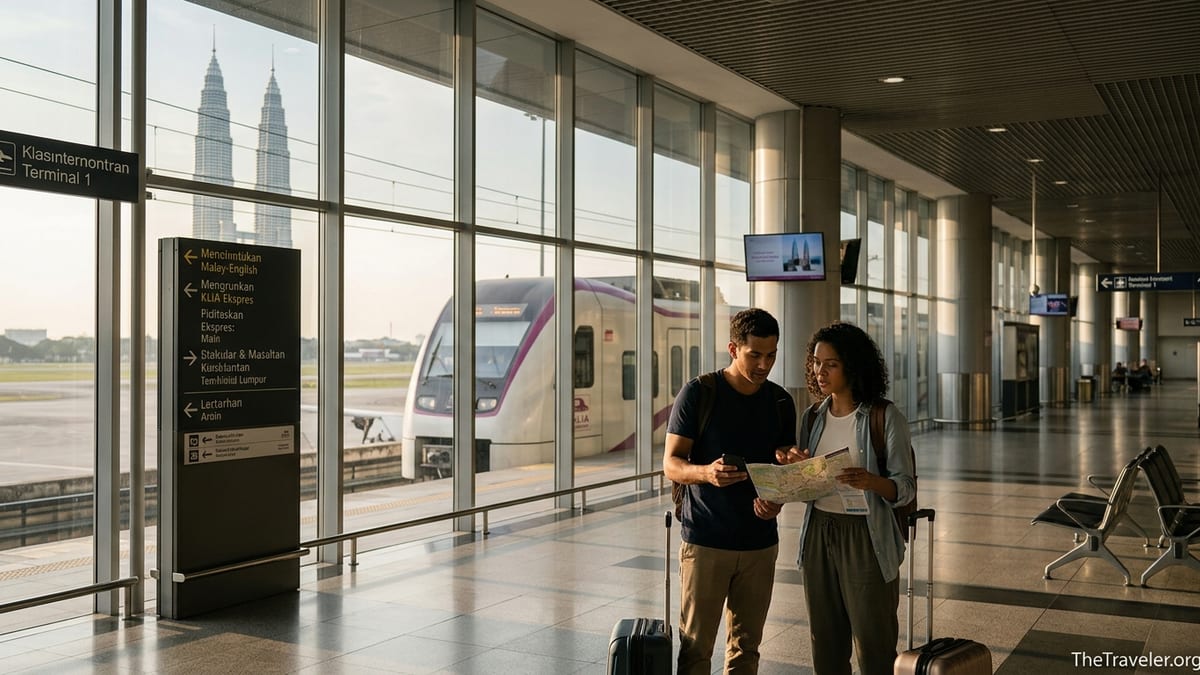
Can You Realistically Visit Kuala Lumpur on a KLIA Layover?
Whether you can leave KLIA and visit the city between flights depends on three hard constraints: your total layover time, your nationality and visa situation, and whether your bags are checked through. As of mid 2026, most Western, many Asian and Middle Eastern passports receive visa-free entry to Malaysia for short stays, often 30 to 90 days. Many others can still transit landside for up to 24 to 72 hours, but some nationalities must secure a visa in advance, or use a limited Transit Without Visa (TWOV) scheme that is only available in specific circumstances. Immigration officers also retain the right to deny entry case by case, so nothing is 100 percent guaranteed.
Where time is concerned, the useful benchmark is this: a comfortable city visit usually requires at least 8 to 9 hours between scheduled arrival and departure, measured gate to gate. That allows roughly 1.5 to 2 hours to clear immigration and reach central Kuala Lumpur, 3 to 4 hours in town, and 1.5 to 2 hours to get back, clear security and board. Travelers with only 5 to 6 hours often underestimate how quickly that window disappears once you factor in late arrivals, queues, and the 28-minute rail ride plus walking and waiting time.
Your baggage situation is just as important. If you are on a single through ticket with checked luggage sent to your final destination, you can walk straight to immigration with only your cabin bag. If you are on separate tickets, you may need to collect and recheck your bags, adding at least an hour and some uncertainty. On top of that, changing between Terminal 1 and Terminal 2 typically means a landside transfer by shuttle bus or train, which also eats into your margin. Before you plan a whirlwind city tour, confirm how your tickets and bags are handled.
To see how this plays out in real life, imagine an 11:00 arrival from London and a 21:00 connection to Bangkok on the same airline. You arrive roughly on time, clear immigration by 12:00, board the KLIA Ekspres, and reach KL Sentral around 12:45. That gives you about 4 to 4.5 hours to see the Petronas Twin Towers area, grab lunch and maybe visit a rooftop bar before catching a late afternoon train back. Compare that with a 6-hour layover with two separate tickets and you will quickly see why most frequent travelers advise staying in or near the airport in the shorter scenario.
Immigration, Visas and Transit Rules to Leave KLIA
Malaysia’s entry rules are relatively friendly, but they are not uniform for everyone. Many nationalities, including most from Europe, North America, Oceania and ASEAN, can enter visa-free for tourism and short business trips. Others need an eVisa or sticker visa even if they only want a few hours in the city. If your flights are on a single booking and you remain in the airside transit area, you generally do not need to worry about Malaysian entry rules at all. The moment you intend to pass through immigration and step outside, however, you are treated as a regular short-term visitor and must meet visa requirements for your passport.
For certain nationalities that usually require a visa, Malaysia operates a Transit Without Visa (TWOV) facility at KLIA Terminal 1 under strict conditions. Recent official notices describe this as intended for passengers in transit to a third country, entering and leaving through the same airport within 72 hours, with confirmed onward tickets and acceptable documentation. In practice, eligibility is narrow and immigration officers have discretion. Travelers have reported mixed experiences, which makes TWOV a poor basis for a casual sightseeing plan. If you need a visa for Malaysia, it is safer to obtain one in advance if you are serious about leaving the airport.
If you are transiting between two airlines on separate tickets, another set of rules applies. Malaysian immigration guidance emphasizes that passengers whose bags are not checked through, or who need to change terminals or check in again, must enter Malaysia formally to do so. In that case you are no longer a sterile transit passenger but a regular arrival, and you must satisfy visa rules like any other visitor. For example, a traveler from India flying Kochi to Kuala Lumpur on a low-cost carrier, then onward to Tokyo on a separate booking, would need a valid Malaysian visa if they plan to collect luggage, recheck and potentially visit the city during a long layover.
Practical timing at immigration also matters. During busy banks of arrivals, especially early morning and late evening, queues can be 30 to 60 minutes for foreign passports. At quieter times you may be through in 10 to 20 minutes. Automated eGates are being rolled out for more nationalities and can speed this up, but you should always base your layover calculations on a conservative scenario. Many cautious travelers assume up to 90 minutes from aircraft door to train platform, particularly if they are arriving off a widebody with several hundred passengers ahead of them.
How Much Layover Time Do You Need for KL and Batu Caves?
The right layover length depends on what you want to see. If your goal is simply to leave the terminal for a short walk, a local meal or a coffee with a view, you need far less time than someone aiming to reach Batu Caves and central KL in one loop. A sensible way to think about it is to start from your hard deadline to be back at the gate. For international flights out of KLIA, most airlines begin boarding 40 to 50 minutes before departure and close the gate 15 to 20 minutes before. You should aim to be back in the terminal, airside and relaxed, at least 90 minutes before departure, and preferably two hours if you still need to check in or drop a bag.
As a rule of thumb, a relaxed city center visit without Batu Caves works best with at least an 8-hour layover. That allows an hour to deplane and clear immigration, 30 to 45 minutes to reach KL Sentral by train, 3 hours around KLCC and Bukit Bintang, and about 2 hours for the return journey and airport procedures. You might, for example, arrive at 08:00, be at KL Sentral by 09:30, have breakfast near KLCC Park while taking photos of the Petronas Towers, stroll the nearby Suria KLCC mall, and be back at KLIA by mid-afternoon for an early evening departure.
Visiting Batu Caves on top of central KL is considerably more ambitious. From KL Sentral, a commuter KTM train to Batu Caves takes roughly 30 minutes one way, plus waiting time and walking. Even with an efficient transfer, a quick visit to climb the famous colorful staircase, explore the main cave and take photos will take at least two hours door to door from KL Sentral and often more. Combining Batu Caves and central KL in one layover makes sense only when you have 10 to 12 hours or more between flights. One realistic pattern is to go straight from KLIA to KL Sentral, change to the KTM line for Batu Caves, spend 1.5 to 2 hours there, return to KLCC for lunch and city views, and head back to the airport by late afternoon.
With layovers under 7 hours, the recommendation is usually to stay closer to the airport. That might mean booking a day room at an airside transit hotel such as those in the satellite building, or taking the express train only as far as Putrajaya & Cyberjaya station to see the lakeside government district, then returning without pushing all the way into central KL. Once you drop under 6 hours, it becomes difficult to justify leaving the airport at all unless you are extremely comfortable with tight margins and have no check-in or baggage formalities on the return leg.
KLIA Ekspres, KLIA Transit and Other Transport Options
The backbone of most layover excursions from KLIA is the KLIA Ekspres, a non-stop airport rail link between KLIA Terminal 1, Terminal 2 and KL Sentral. As of 2026, the published journey time from KL Sentral to KLIA T1 is about 28 minutes, with an extra 3 minutes on to KLIA T2. Trains typically run every 20 minutes throughout most of the day. Adult one-way fares are around 55 Malaysian ringgit, with discounts available when booking return tickets, using certain cards or purchasing online in advance. The KLIA Transit service shares the same tracks but makes several intermediate stops, taking a few minutes longer but costing the same.
From a time-management perspective, the KLIA Ekspres is the most predictable option. Even when highway traffic into KL is heavy, the train journey time remains almost constant. That reliability is important if you are calculating narrow buffers between a city visit and a long-haul onward flight. The main drawback is that you still need to connect from KL Sentral to your chosen sights. For the Petronas Towers at KLCC, you can take the LRT Kelana Jaya Line; for Bukit Bintang and the shopping district, the monorail or MRT is convenient. Each city transfer adds 10 to 20 minutes of walking, waiting and riding, so build that into your schedule.
Road options include taxis, airport limousines and ride-hailing services such as Grab. Official airport taxi counters in the arrivals hall sell fixed-price coupons, with budget taxis to the city center often quoted in the RM80 to RM90 range, and higher for premium or family vehicles. Ride-hailing prices vary with demand but can be lower, especially if you are traveling as a couple or group and would otherwise buy multiple train tickets. The downside is exposure to traffic on the North–South Expressway and city center congestion. At peak hours, the journey can stretch from 45 minutes to well over an hour one way, making it less attractive for tighter layovers.
There are also airport coaches that run between KLIA and KL Sentral for a fraction of the train fare. Recent transport guides list fares around RM10 one way, with a nominal journey time of about one hour. While this is by far the cheapest method, it is usually a poor choice for layover sightseeing. Coaches operate on a timetable and run on the same roads as every other vehicle, so delays are common. If your aim is to maximize time in KLCC Park or at Batu Caves during a limited layover, the money saved on the bus fare is unlikely to justify the extra uncertainty.
Luggage Storage and Traveling Light Between Flights
One of the biggest practical questions for layover visitors is what to do with their luggage. If your bags are checked through to your final destination and you only have a small daypack, the answer is simple. If you are on separate tickets or traveling with full-size suitcases and cabin bags, things get more complicated. Fortunately, KLIA has several luggage storage solutions in both terminals, along with additional options in the city at KL Sentral and in some hotels.
At Kuala Lumpur International Airport Terminal 1, there are staffed left luggage counters and locker-style services run by third-party operators. These typically offer short- and long-term storage for everything from small backpacks to large suitcases and sports gear. Prices vary by size and duration, but travelers can expect to pay a modest per-bag fee for a few hours’ storage, with higher rates for 24 hours and beyond. Similar services operate at Terminal 2, with lockers and storage rooms near the arrivals area. These facilities are designed to cater to people heading into the city or connecting to domestic flights who want to drop their heavy bags first.
In central Kuala Lumpur, KL Sentral station has become another popular storage point. Left-luggage lockers in the station complex allow passengers to store bags while they explore KLCC, Bukit Bintang or nearby neighborhoods, before returning to catch the KLIA Ekspres back to the airport. Travelers on forums regularly report using these lockers for a few hours between trains, or even leaving bags for a day or more while they make a side trip to destinations such as Langkawi or Penang. The usual advice is to keep valuable items with you and use storage primarily for clothes and non-critical belongings.
Beyond formal storage, some airport and city hotels will hold luggage for guests before check-in or after check-out, although this is not guaranteed. For example, a traveler with a long daytime layover and an overnight booking at a KLCC hotel might drop their bags with the concierge in the morning, explore the city, then return to check in later. Others opt for luggage pick-up services that collect bags from KLIA or KL Sentral, store them in a warehouse and redeliver them at a prearranged time. These are useful for complex itineraries but must be arranged in advance and are not usually necessary for a simple half-day city visit.
Whatever option you choose, keep all baggage tags and receipts and allow extra time on your way back to retrieve your belongings, especially at peak periods when queues can form at storage counters. Build a clear sequence into your plan: train from KL to the airport, collect stored luggage, check in or drop bags, clear security and immigration, then head to the gate. Trying to combine bag pick-up and last-minute souvenir shopping in a tight 60-minute window is the kind of behavior that leads to stressful sprints across the terminal.
Quick-Visit Highlights: Petronas Towers, KLCC and Batu Caves
For most layover visitors, the two biggest draws are the Petronas Twin Towers and Batu Caves. They are iconic, photogenic and give a strong sense of Kuala Lumpur in a short time. The key is to approach them with realistic expectations. You are unlikely to experience every museum, observation deck and hidden cafe in a single layover visit, and you do not need to. A few well-chosen sights can be enough to make your time outside the airport feel worthwhile.
The Petronas Towers and the surrounding KLCC area are the easiest major sights to include. From KL Sentral, you can take the LRT straight to KLCC station in around 10 minutes. Once there, KLCC Park offers excellent vantage points for photos of the towers, especially around the lake and fountains. If your timing and budget allow, you can book a ticket for the skybridge and observation deck, but many layover travelers prefer to stay at ground level and relax over a coffee in the mall instead of committing to timed entry slots. On a tight schedule, simply circling the park, taking photos and grabbing a quick meal in Suria KLCC can be a satisfying way to spend 2 to 3 hours.
Batu Caves, about 13 kilometers north of central KL, is more of a time investment but offers a very different experience. After arriving at KL Sentral, you transfer to the KTM Komuter line for a roughly 30-minute ride to Batu Caves station, then walk a short distance to the base of the famous staircase guarded by the towering golden statue of Lord Murugan. Climbing the 272 steps, exploring the main cave and taking photographs easily takes an hour, not including waiting for trains. The limestone formations and colorful shrines inside the cave are memorable, but the site can be hot and crowded, and you should be comfortable with humidity and stairs.
If your layover is long enough, a combined KLCC and Batu Caves itinerary is possible. A typical pattern might be: arrive at KLIA in late morning, take the KLIA Ekspres to KL Sentral, head immediately to Batu Caves for a couple of hours, then return to KLCC for a late lunch and city views before heading back to the airport in the late afternoon. Expect this to take at least 6 to 7 hours from airport to airport, not counting airport formalities. For anything under a 10-hour layover, it is usually wiser to choose either Batu Caves or a city center focus rather than trying to do both.
Other easy add-ons near KLCC include a short walk through Bukit Bintang’s shopping streets, a stop at a rooftop bar with skyline views, or a casual meal at Jalan Alor, known for its night-time street food stalls. All of these are reachable by LRT, monorail or a short taxi or Grab ride from KLCC. The secret to a good layover experience is not how many attractions you squeeze in, but how relaxed you feel knowing you have time to enjoy them and still return to KLIA with a comfortable cushion before your next flight.
Risks, Common Pitfalls and How to Stay on Time
Leaving any airport during a layover carries risk. In Kuala Lumpur, the most common issues are flight delays, long immigration lines, underestimating transfer times, and unexpected disruptions to public transport. A late-arriving inbound flight can instantly erase the hour you had mentally allocated for passport control. Public holidays and long weekends can see motorway congestion and crowds at major sights. Occasionally, train services run reduced schedules or experience temporary suspensions for maintenance, which can catch visitors off guard if they have not checked same-day information.
One realistic scenario: you land 45 minutes late, reach immigration just as several other widebodies arrive, and spend more than an hour in line. By the time you reach the KLIA Ekspres platform, you have already lost half of the free time you expected in the city. Another: a thunderstorm slows road traffic, turning a 50-minute Grab ride back to the airport into an 80-minute crawl. Neither outcome is dramatic on its own, but if you only built a 90-minute buffer into your plans, they can push you dangerously close to check-in closure or final boarding call.
Visa misunderstandings are another risk, especially for travelers on separate tickets or those relying on TWOV schemes. It is not uncommon for passengers to assume that a transit status exempts them from Malaysian entry requirements when they in fact need to pass through immigration to recheck bags or change terminals. If you are denied entry, you will be stuck airside and may have to rebook your onward flight from within the transit area, possibly at significant cost. To avoid this, verify your nationality’s rules with official sources or your airline before travel, and do not plan a sightseeing trip that depends on an uncertain immigration outcome.
The safest way to mitigate these risks is conservative planning. Treat the recommended minimum layover times as exactly that: minimums. If you are anxious about missing flights, consider only leaving KLIA on layovers of 9 hours or more. Use the KLIA Ekspres rather than slower road options where possible, check same-day train schedules before you land, and keep your itinerary simple. If your inbound flight is significantly delayed, be willing to abandon your city plan and stay in the airport instead. There are lounges, quiet areas, basic transit hotels and enough food options to make a few hours pass comfortably, which is still a better outcome than missing your onward connection.
The Takeaway
A layover at Kuala Lumpur International Airport can be an excellent opportunity to see a snapshot of Malaysia, but success depends on clear, realistic planning. The combination of immigration formalities, transfer times and city transport means that only layovers of around 8 to 9 hours or longer are truly comfortable for a visit to central KL. Shorter windows quickly become stressful as delays and queues eat into your schedule.
For many travelers, the ideal layover experience is straightforward: use the KLIA Ekspres to reach KL Sentral, head to the Petronas Towers and KLCC Park for a few hours, perhaps add a stop in Bukit Bintang, then return to the airport with a generous buffer. With more time, Batu Caves or a lakeside detour to Putrajaya can be added, but these should be treated as optional extras, not essential ticks that endanger your onward flight.
Above all, be honest about your own risk tolerance and energy levels. If you have just stepped off a red-eye long-haul flight, a shower and a nap at an airport hotel may be more rewarding than racing into the city. If you thrive on tight schedules and have a full day in transit, a carefully planned mini-tour can leave you with striking photos and a strong first impression of Kuala Lumpur. Either way, understanding KLIA’s transport options, immigration rules and practical realities will help you turn your layover into a positive part of your journey rather than a source of stress.
FAQ
Q1. What is the minimum layover time needed to visit Kuala Lumpur from KLIA?
For a relaxed city visit to KLCC or Bukit Bintang using the KLIA Ekspres, aim for at least an 8 to 9 hour layover from scheduled arrival to departure. This allows for possible delays, immigration, train transfers, several hours in the city and a safe buffer back at the airport before boarding.
Q2. Can I visit Batu Caves during a layover at KLIA?
Yes, but Batu Caves is best attempted only if you have 10 to 12 hours or more between flights. You will need time to reach KL Sentral, transfer to the KTM Komuter train, explore the caves and return to KLIA. With shorter layovers, focusing on KLCC and nearby areas is usually a safer choice.
Q3. Do I need a visa to leave the airport on a layover in Kuala Lumpur?
It depends on your nationality and your itinerary. Many passports receive visa-free entry to Malaysia for short stays, but others require a visa even for a few hours outside the airport. If you plan to pass through immigration to visit the city, you must comply with normal entry rules. Transit Without Visa schemes exist for some nationalities under strict conditions but should not be relied on for casual sightseeing without checking official guidance in advance.
Q4. How long does it take to get from KLIA to central Kuala Lumpur?
The KLIA Ekspres train takes about 28 minutes from KL Sentral to KLIA Terminal 1, plus a few extra minutes to Terminal 2. Including walking, waiting and buying tickets, most travelers should budget 40 to 45 minutes each way between the terminal and KL Sentral. Road journeys by taxi or Grab can range from 45 minutes in light traffic to more than an hour at busy times.
Q5. Is the KLIA Ekspres better than taking a taxi or Grab during a layover?
For most layover visitors, the KLIA Ekspres is the best option because the journey time is fast and predictable, and it avoids highway congestion. Taxis and Grab can be more convenient if your hotel or destination is far from KL Sentral or you are traveling in a group, but they are exposed to traffic and can take significantly longer during peak hours or in bad weather.
Q6. Where can I store my luggage if I want to visit the city?
KLIA Terminal 1 and Terminal 2 both have left luggage and locker services run by third-party operators, offering short and long term storage for different bag sizes. KL Sentral also has lockers that many travelers use while they visit KLCC or Batu Caves. Some hotels will store luggage for guests before check-in or after check-out, but this is at the hotel’s discretion.
Q7. Is a 5 or 6 hour layover enough time to see Kuala Lumpur?
A 5 to 6 hour window is generally too short for a relaxed visit to central KL. By the time you clear immigration, travel to KL Sentral and return with enough time for security and boarding, you would have very little time left in the city. For such short layovers, it is usually wiser to stay in or near the airport, perhaps using a transit hotel or lounge to rest.
Q8. What are the main risks of leaving KLIA during a layover?
The main risks include delayed flights, long immigration queues, transport disruptions, heavy traffic on the highway, and misunderstandings about visa requirements. Any of these can eat into your schedule and increase the chance of missing your onward flight. Conservative timing, simple itineraries and a willingness to abandon plans if delays occur are the best ways to manage these risks.
Q9. Can I visit both Petronas Towers and Batu Caves on the same layover?
It is possible with a long layover of 10 to 12 hours or more, but it requires careful time management. A typical combined itinerary involves going from KLIA to KL Sentral, then to Batu Caves, returning to KLCC to see the Petronas Towers and grabbing a meal before heading back to the airport. If your layover is shorter, it is safer to choose one highlight rather than both.
Q10. Are there hotels inside KLIA for long or overnight layovers?
Yes. KLIA has airside and landside transit hotels and capsule-style options that allow travelers to rest, shower and sleep without leaving the airport complex. These are especially useful for overnight layovers, very short connections where leaving the airport is impractical, or travelers arriving from long-haul flights who prefer comfort and rest over rushing into the city.