


Arriving at Kuala Lumpur International Airport for the first time can be disorienting, especially after a long flight and in the humid Malaysian heat. Tired travelers step into the arrivals hall at KLIA or KLIA2 and are immediately met by a blur of signs, mall walkways, ride-hailing apps, and the occasional persistent driver offering a “special price” to the city. Understanding how the official airport taxi system works, what fares to expect, and how to avoid unofficial drivers will save you money, stress and, in some cases, real trouble.
Get the latest updates straight to your inbox!
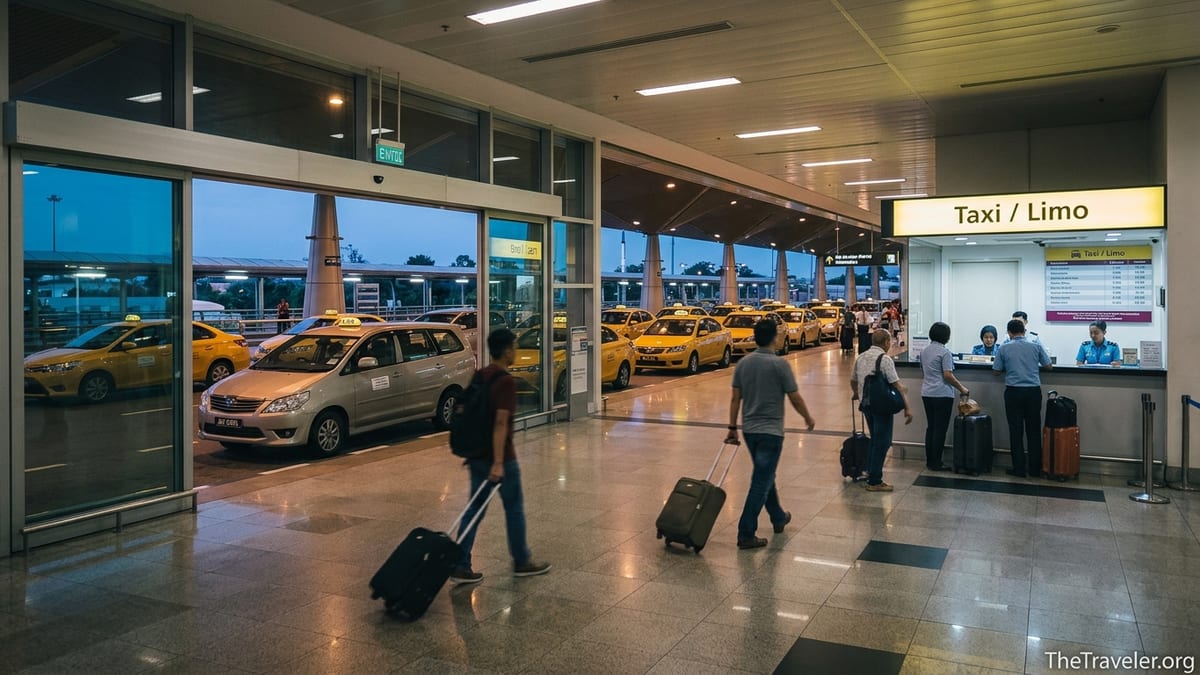
Understanding KLIA vs KLIA2 and Where Taxis Depart
Kuala Lumpur International Airport is split into two main passenger terminals: KLIA Terminal 1 (often just called KLIA) and KLIA2, which mainly serves AirAsia and other low-cost carriers. The two terminals sit several kilometres apart and are linked by train, bus and road, but the basic taxi setup is similar at both. In each terminal you will find official airport taxi counters inside the arrivals area and designated taxi bays outside on the lower levels, away from private pick ups.
At KLIA Terminal 1, international passengers come out into the arrivals level and follow overhead signs for “Taxi” or “Ground Transport.” Official airport taxi and limo counters are located on the arrivals floor, typically near the exits that lead down to Level 1, where the taxi bays are located. Staff at these counters sell prepaid coupons or register a metered taxi for you, then direct you to the correct door and lane.
At KLIA2, you will exit into Level 2 of the Gateway@KLIA2 shopping mall. From here, you walk straight through the mall following the “Taxi / Bus / Transport Hub” signs, then take escalators or travelators down to Level 1. This level is the transport hub, where you will see taxi coupon counters, car rental desks and bus ticket booths lined up along one side, and clearly marked taxi bays outside. It typically takes three to five minutes’ walk from customs to the taxi counters if you do not stop at shops along the way.
As a rule of thumb, if you are still in the main arrivals hall surrounded by currency exchange counters, cafés and mobile phone kiosks, you are not yet at the taxi boarding point. The genuine taxi process always involves going first to a staffed counter, then down to a clearly signed taxi lane. Anyone who approaches you offering a ride before you reach that counter should be treated with caution.
How the Airport Taxi System Works: Coupon vs Metered
The airport uses a mixed system that can be confusing at first glance. In practical terms, you will usually be choosing between a prepaid coupon taxi with a fixed fare to your destination, a regular metered taxi, or an app-based ride such as Grab. The taxi counters and signs often refer to “Coupon Taxi,” “Metered Taxi,” “Budget,” “Premier” or “Limo” services, all of which are legal as long as they are arranged at the official counter or through a licensed app.
Coupon taxis are the simplest option for many visitors. You go to the airport taxi counter, tell the staff your hotel or full address, choose a vehicle category and pay the quoted price upfront. In return, you receive a printed coupon or receipt which you hand to the driver at the taxi bay. The fare is fixed based on your destination zone and vehicle type, and in most cases it already includes tolls and airport surcharges. This means that heavy traffic on the highway into the city will not increase your bill.
Metered taxis work differently. At some counters, particularly at KLIA2, you can obtain a small ticket or queue number for a metered taxi, then pay the driver according to the meter when you arrive. In this case, tolls and an airport surcharge are usually added on top of the meter reading. Metered fares can be cheaper than coupons when traffic is light or if you are going to a suburb that is closer than central Kuala Lumpur, but they can also end up slightly higher than coupon prices if there is congestion or multiple toll plazas along your route.
On top of taxis, app-based e-hailing services such as Grab, AirAsia Ride and inDrive are well established in Malaysia, and both KLIA and KLIA2 have designated e-hailing pick up points. These services usually provide a fare estimate in the app before you confirm. However, taxis remain the most straightforward choice for many first-time visitors, especially those arriving very late at night, traveling with family or carrying large amounts of luggage.
Typical Fares, Vehicle Types and Hotel Zones
Fares from KLIA and KLIA2 into Kuala Lumpur vary depending on your destination, vehicle category and the time of day. As of mid 2026, a typical coupon taxi fare from either terminal to a hotel in the KLCC or Bukit Bintang area of central Kuala Lumpur often falls in the region of 70 to 100 Malaysian ringgit for a standard four-seat sedan. Some conference guides and hotel information sheets quote example coupon fares around 65 to 75 ringgit for Kuala Lumpur city centre, and around 90 ringgit or more for areas further out such as Petaling Jaya or Shah Alam, but these are subject to periodic revision.
Vehicle categories are usually labelled “Budget,” “Premier,” “MPV” or “Limo.” Budget taxis are ordinary four-door sedans suitable for one to three passengers with a couple of medium suitcases. Premier taxis and limousines are larger, more comfortable vehicles often used by business travelers or families who want extra space. MPV options, typically using vehicles similar to a Toyota Innova or larger vans, are designed for groups or travelers with bulky luggage and may cost nearly double the budget fare. For example, while a budget taxi to KLCC might be quoted around 80 ringgit, an MPV or limo for four adults and several large suitcases could be quoted closer to 140 ringgit.
The airport and taxi operators use zone-based pricing. Popular tourist districts such as KLCC, Bukit Bintang, Chinatown and Bangsar are grouped into a central zone, while outlying suburbs, Cyberjaya and Putrajaya, and neighbouring states fall into separate zones. You do not need to know your zone number, but you should have your full hotel name and address ready, ideally written down or on your phone. A common real-world scenario is a traveler asking for “Hilton” at the counter, only to realize there are several Hilton-branded properties in greater Kuala Lumpur. Having “Hilton Kuala Lumpur, KL Sentral” or “DoubleTree by Hilton, Jalan Ampang” clearly written avoids misquoting and confusion.
Late-night and early-morning arrivals sometimes attract extra charges from taxi companies, known locally as midnight surcharges. These can take the form of a flat add-on to the normal fare rather than a percentage. For example, some private transfer operators and taxi services advertise an additional 20 ringgit surcharge between roughly 11.30 pm and 6.30 am. Exact policies vary by operator and are occasionally adjusted, so it is wise to ask the counter staff if there is any night surcharge before you pay. The figure you see on the receipt should clearly indicate if a premium has been applied.
Step-by-Step: Using the Official Taxi Counters
Navigating the system is easier if you follow a simple step-by-step routine from the moment you clear customs. After collecting your luggage and passing into the public arrivals area, ignore any individuals who approach you offering taxis. Instead, look for overhead signs that mention “Taxi,” “Limo” or “Ground Transport” and follow these to the official counters. In KLIA the counters are generally on the arrivals level near the exits that lead down to the taxi bays. In KLIA2, you will walk through the mall section until you see the transport hub signs and then take the escalators down to Level 1, where a row of taxi counters faces the seating area and bus bays.
Once you reach the counter, join the queue and have your destination details ready. When it is your turn, tell the staff your hotel name and whether you prefer a budget sedan or need a larger vehicle. The agent will enter your destination into the system and quote a fare. Listen carefully to the amount, and if you are unsure, you can ask them to write it down. It is completely acceptable to ask whether toll charges are included in the coupon price, and whether there is any extra night surcharge. If the quote seems unusually high compared to what you expected, you can politely verify whether it covers tolls and surcharges or ask if a smaller vehicle class is available.
After you agree to the fare, you pay in cash or by card, depending on the facilities at that counter. Some counters accept major credit cards and contactless payments, while others remain cash-focused, so it is sensible to withdraw or exchange some ringgit before approaching. You will be given a printed coupon or receipt and instructed which exit door and lane to use. Outside, there are usually staff members or marshals who will look at your coupon, direct you to a specific taxi and sometimes record the vehicle details on your slip. Once your bags are loaded, the driver will keep the coupon, and you keep your payment receipt and any luggage tags until you reach your hotel.
This process might add ten minutes to your journey compared to jumping into the first car that offers you a ride, but it gives you a fixed price, a traceable record of the taxi you used, and the reassurance that the vehicle is licensed to operate at the airport. It also makes it easier to raise a complaint with airport authorities if something goes wrong during the trip.
Late Arrivals, Heavy Luggage and Traveling as a Group
Many long-haul flights into Kuala Lumpur arrive late at night or early in the morning, sometimes after the last train or airport bus has departed for the city. In these situations, taxis and e-hailing cars become the main practical choice. Official airport taxi services run 24 hours a day, although the number of vehicles waiting in the taxi bays at 2 am will obviously be lower than during the afternoon rush. Expect a slightly longer wait in the queue and a higher chance that only certain vehicle categories are immediately available.
Late-night coupon fares may include a modest night surcharge. For instance, a solo traveler arriving around midnight and heading to a hotel in Bukit Bintang might be quoted something in the region of 90 to 110 ringgit for a budget taxi, where daytime examples for a similar trip might be 70 to 90 ringgit. For couples or families, it can still work out as good value for a door-to-door service compared with trains plus local taxis. If you are arriving very late, it is sensible to factor the higher end of this fare range into your budget.
Luggage is another important consideration. A standard sedan taxi will comfortably carry two medium checked suitcases and two carry-on bags in the boot and on the back seat. However, real-world travelers often arrive with three or four large suitcases, sports equipment or baby strollers. In these cases, the taxi counter staff may insist that you book an MPV or van for safety and comfort, which can significantly increase the fare. As a rough guide, if a sedans costs around 80 ringgit to a central hotel, the MPV for the same journey may be quoted approximately 120 to 150 ringgit depending on operator and time of day.
Groups of three or more adults plus luggage will almost always find an MPV or van more practical than trying to squeeze into a standard car. For example, a group of four friends landing at KLIA2 in the afternoon and heading to a serviced apartment in the KLCC area might be quoted a coupon price that, when divided per person, comes close to the cost of individual train tickets plus a local taxi, but with far less hassle. Similarly, families traveling with young children often prefer the privacy of a single large vehicle where kids can nap on the way into town.
Using Grab and Other E-hailing Apps from KLIA
Ride-hailing apps are popular alternatives to taxis in Malaysia. Grab is the most commonly used, with other services such as AirAsia Ride and inDrive also operating. Both KLIA and KLIA2 have designated pick up points for e-hailing vehicles. These are usually located in specific lanes or on a different level from the ordinary taxi bays, with clear signage directing passengers from the arrivals area. Drivers are only allowed a short window to pick up passengers once they arrive, so the apps will typically instruct you to wait at a precise pillar or gate number.
App-based fares between the airport and Kuala Lumpur fluctuate according to demand, time of day and the type of car you choose. At quiet times, it is common to see quoted prices from the airport to central Kuala Lumpur in the same broad range as coupon taxis, and sometimes slightly lower. During peak hours or in bad weather, surge pricing can make app rides more expensive than an official coupon taxi. Unlike some older taxi systems, major e-hailing apps in Malaysia generally show the full estimated fare before you confirm, making it easier to compare on the spot with the fixed price at the taxi counter.
One recurring real-world issue is misinformation about night surcharges. Some unofficial drivers at the airport claim that app fares double after midnight or insist that the app does not work during certain hours, then offer an unmetered cash ride for a “special” flat rate. Travelers who have used Grab from KLIA2 in the early hours of the morning often report that the app continues to function and does not impose an automatic midnight surcharge beyond the usual surge pricing. If an individual at the curb tells you otherwise and suggests cancelling your booking to take their car for cash, that is a strong sign you are dealing with a tout rather than a legitimate partner driver.
For maximum flexibility, many frequent visitors to Kuala Lumpur keep both options open: if the queue at the taxi counter is long, they open an app and check the fare and waiting time for an e-hailing car; if surge pricing is high or no cars are nearby, they return to the official counter and purchase a taxi coupon instead. This simple comparison helps you avoid overspending and reduces the temptation to accept rides from unlicensed drivers hanging around the arrivals doors.
How to Spot and Avoid Unofficial Drivers and Touts
Taxi touts remain an issue at KLIA and KLIA2 despite periodic crackdowns. Local media have reported several enforcement operations in recent years, including a July 2026 campaign in which Malaysian authorities seized dozens of vehicles linked to touting activities around the airport. These efforts show that the problem is taken seriously, but they also underscore that illegal operators do exist and actively target newly arrived passengers, especially those looking tired, confused or in a hurry.
The typical pattern is familiar to regular travelers. Shortly after you exit customs, a man in plain clothes approaches and asks where you are going, sometimes holding a folder or a lanyard to appear official. He quotes a price on the spot, often in a mix of currencies, and pressures you by warning that official taxis are “very slow” or that Grab is “not safe” or “not available now.” In other cases, touts loiter near the escalators leading to the taxi counters, suggesting that they can offer a cheaper or faster ride if you follow them to a nearby parking area.
Real-world complaints from travelers include being charged two or three times the normal fare, being driven by unlicensed or uninsured drivers, having drivers attempt to renegotiate the fare mid-journey, and in rare cases being taken on unnecessarily long routes. There have also been reports of people falsely claiming association with airport or airline staff to gain trust. An unofficial driver might say he works for a particular airline’s cargo department or that he is a “friend of the hotel” to make his offer sound more legitimate.
The simplest and most effective way to avoid problems is to follow a short checklist. Do not accept rides from anyone who approaches you inside the terminal or in the immediate exit area. Do not get into a car that does not have a proper taxi sign, company branding or app decal. Always either buy a coupon at an official taxi counter or book through a recognized e-hailing app, then meet the car at the designated pick up point. If anyone tries to stop you walking towards the official counter or discourages you from using the app on your phone, treat that as a clear warning sign and keep going.
Practical Tips: Money, Receipts and Safety
A small amount of preparation before you land can make your journey from the airport smoother and safer. First, plan how you will pay for your ride. While some airport taxi counters accept cards, many travelers still find cash the fastest and most reliable option, especially at busy times. Withdrawing around 200 to 300 ringgit at an ATM in the arrivals hall will usually cover a taxi into the city plus a snack or bottled water. If you intend to use Grab or another app, ensure your payment method is set up and your phone has roaming or a local SIM activated by the time you are ready to request a car.
Second, keep your taxi coupon or e-hailing booking screen handy until you reach your destination. Before leaving the airport, take a quick photo of the taxi number plate or the in-car license displayed on the dashboard. In the unlikely event of a dispute or forgotten item, having these details makes it easier for your hotel or the airport authorities to assist. Many travelers also find it reassuring to share their live location or trip details with a friend or family member, particularly when traveling alone at night.
Third, be realistic about journey times. The drive from KLIA or KLIA2 to central Kuala Lumpur usually takes around 45 to 60 minutes in moderate traffic, but during evening rush hour or in heavy rain it can stretch to 75 minutes or more. Tired passengers sometimes worry they are being taken on an unnecessarily long route when in fact the driver is using the main highway and slowing for toll plazas and congestion. Having a mapping app open on your phone, even just to glance at occasionally, can provide reassurance that you are following the standard route into the city.
Finally, if something feels wrong, trust your instincts. If a driver refuses to use the meter in a metered taxi, tries to change the agreed coupon price or demands extra cash for luggage that was clearly included in the quote, you are entitled to refuse and, if necessary, ask to be dropped at a safe public place such as a hotel or petrol station. In most cases, interactions with official airport taxi drivers are uneventful and professional, but knowing your basic rights as a passenger helps you handle the occasional exception with confidence.
The Takeaway
Using taxis from Kuala Lumpur International Airport does not have to be stressful or expensive. Once you understand the layout of KLIA and KLIA2, the difference between coupon and metered taxis, and the approximate fare range to central hotel zones, the process becomes routine. For a first-time visitor, the most straightforward option is usually to walk past anyone offering rides in the arrivals hall, head directly to the official taxi counter, purchase a coupon for a budget or MPV taxi depending on your luggage, and follow the staff’s directions to the taxi bay.
If you are comfortable with apps and prefer to compare prices, using Grab or another e-hailing service from the designated airport pick up point can be equally convenient, especially outside peak hours. Just remember that legitimate drivers will not ask you to cancel your booking to pay cash off the app, and that stories about sudden “midnight surcharges” that only apply if you skip the counter are often tactics used by touts.
Above all, take your time. Pause to withdraw some ringgit, confirm your hotel address, and read the fare quote carefully before you pay. Thousands of passengers pass through KLIA and KLIA2 every day without incident, and the official taxi and e-hailing systems are designed to move them efficiently into the city. With a small amount of advance knowledge and a firm refusal to engage with unofficial drivers, your own journey from the runway to your hotel can be just as straightforward.
FAQ
Q1. Where exactly are the official taxi counters at KLIA and KLIA2?
At KLIA Terminal 1, taxi and limo counters are on the arrivals level, signposted as “Taxi” or “Ground Transport,” leading down to Level 1 taxi bays. At KLIA2, you exit into Level 2 of the Gateway@KLIA2 mall, walk straight following transport signs, then go down to Level 1 where the taxi counters and bays are located together in the transport hub.
Q2. How much does a taxi from KLIA to central Kuala Lumpur usually cost?
Prices vary, but many travelers pay somewhere in the region of 70 to 100 ringgit for a standard sedan coupon taxi from either terminal to popular central areas such as KLCC or Bukit Bintang, with higher fares for larger MPVs, late-night arrivals or destinations beyond the city centre.
Q3. Do I need to pay extra for tolls or night surcharges?
For coupon taxis, tolls and airport surcharges are often included in the prepaid price, but policies can differ, so it is wise to ask the counter staff before paying. Some operators apply a flat night surcharge for trips between late evening and early morning, which will either be built into the quoted coupon fare or clearly itemised.
Q4. Is it cheaper to use Grab instead of an airport taxi?
It depends on timing and demand. During quiet periods, Grab and other e-hailing fares from the airport to central Kuala Lumpur can be similar to or slightly below official coupon taxi prices, while during peak hours or heavy rain, surge pricing can push app fares above the fixed coupon rate. Checking both options on arrival is the best way to decide.
Q5. How can I tell if a driver is an unofficial tout?
Warning signs include approaching you inside the terminal, quoting a price without going through a counter or app, insisting that official taxis are “too slow,” or asking you to cancel an existing app booking to pay cash. Legitimate airport taxis are obtained through a staffed counter or a recognised e-hailing app and picked up at clearly signed taxi or e-hailing bays.
Q6. Are taxis available 24 hours a day at KLIA and KLIA2?
Yes, official airport taxis operate around the clock, although there may be fewer vehicles waiting in the small hours, so you might experience a longer queue. E-hailing services also run through the night, but car availability depends on the number of active drivers at that time.
Q7. What type of taxi should I book if I have a lot of luggage?
If you are traveling with more than two large suitcases or as a group of three or more adults, it is usually better to book an MPV or van at the taxi counter or choose a larger car category in your e-hailing app. These vehicles offer more space for bags and passengers and reduce the risk of being turned away at the bay for safety reasons.
Q8. Can I pay for my airport taxi by credit card?
Some official taxi counters accept major credit and debit cards, while others are mainly cash-based. Because facilities can change and card terminals sometimes go offline, it is sensible to have enough local currency on hand to pay in cash if needed, especially if you are arriving late at night.
Q9. How long does the taxi ride from the airport to the city take?
Under normal conditions, the drive from KLIA or KLIA2 to central Kuala Lumpur usually takes 45 to 60 minutes. During evening rush hour, heavy rain or accidents on the highway, the journey can extend to around 75 minutes or more, so it is best not to schedule tight appointments immediately after arrival.
Q10. What should I do if I feel overcharged or unsafe in a taxi?
Keep your receipt and note the taxi number plate or in-car license. Once you reach a safe place such as your hotel, you can ask staff to help you contact the taxi company or airport authorities to lodge a complaint. If you ever feel unsafe during the ride, you can ask the driver to stop at a public, well-lit location and seek assistance from security personnel, hotel staff or, in serious situations, the police.