


Landing at Kuala Lumpur International Airport, your first real travel decision is how to get into the city. With two terminals, several train options, buses, taxis, Grab cars and private transfers, working out the best route to Bukit Bintang, KLCC or Chinatown can feel confusing, especially after a long flight. This guide breaks down each option, what it really costs in 2026, and which works best depending on where you are staying and how much luggage you are carrying.
Get the latest updates straight to your inbox!
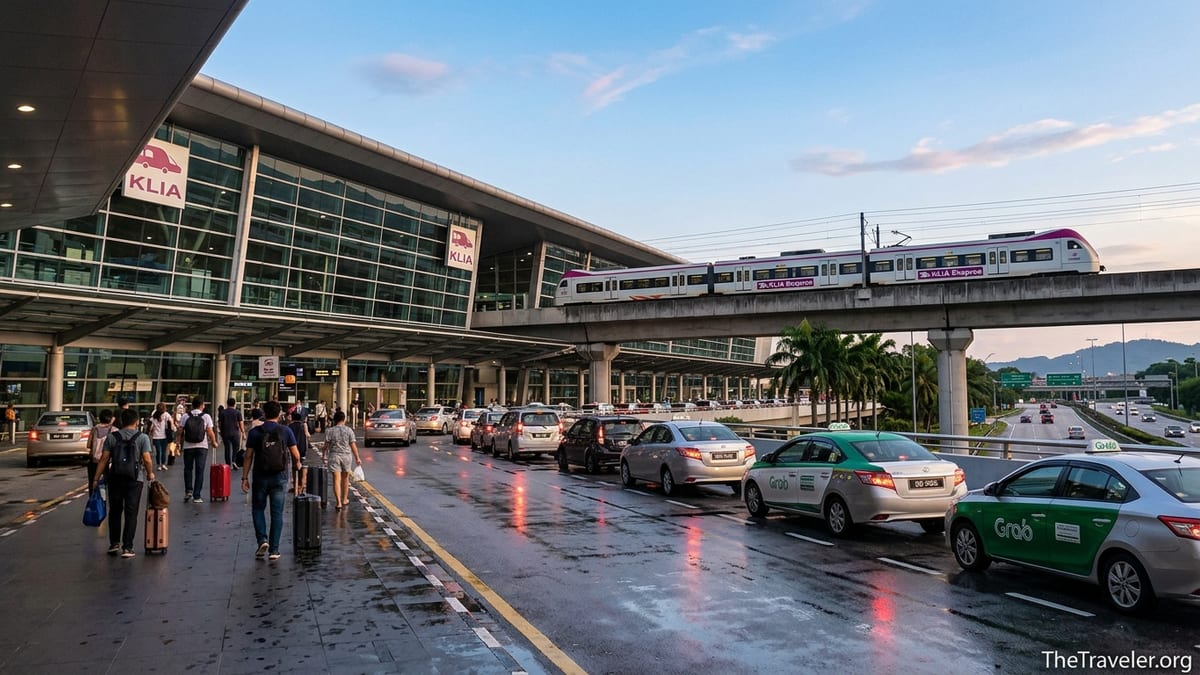
Understanding KLIA, KLIA2 and the Kuala Lumpur city layout
Kuala Lumpur International Airport actually has two terminals: KLIA Terminal 1, the original main building, and KLIA Terminal 2, used heavily by low cost carriers such as AirAsia. The terminals are about three minutes apart by train, and all rail services, buses, taxis and ride hailing options covered in this guide are available from both. When you land, signage will usually say either KLIA or KLIA2, but for transport planning you can treat them as parts of the same airport complex.
In the city, most visitors stay in a few core areas. KLCC is the business and high rise hotel district around the Petronas Twin Towers, home to properties like the Mandarin Oriental and Traders Hotel. Bukit Bintang is the main shopping and nightlife hub, with hotels such as The Westin, JW Marriott, ParkRoyal Collection and many mid range options. Chinatown and the heritage district around Petaling Street, as well as Brickfields near KL Sentral, attract budget and boutique travelers. Knowing your hotel area makes it much easier to choose the right transfer.
KL Sentral is the key rail hub that links the airport to the rest of the city. Both KLIA Ekspres and KLIA Transit terminate here, and from the same building you can change to the LRT, MRT, KTM Komuter, monorail and plenty of Grab or taxi options. In practical terms, most rail based airport transfers get you as far as KL Sentral, then you either continue by train, short Grab ride or on foot if staying in Brickfields.
Traffic in Kuala Lumpur is highly variable. A taxi from KLIA to Bukit Bintang can take around 45 minutes in light traffic or well over an hour in the evening rush, especially on a Friday. Trains, by contrast, are predictable but require at least one transfer to reach most hotel areas. Your choice comes down to a trade off between cost, luggage convenience and how much you want to avoid sitting in a highway jam after a long flight.
KLIA Ekspres: Fastest rail link to KL Sentral
KLIA Ekspres is the dedicated non stop airport train between the airport and KL Sentral. In 2026, the journey from KLIA Terminal 1 to KL Sentral is advertised at about 28 to 30 minutes, and around 33 minutes from KLIA2. Trains normally run every 20 minutes from early morning to just before midnight, with slightly reduced frequency late at night. The service uses modern, air conditioned trains with luggage racks and wide doors, which makes it comfortable even with large suitcases.
The standard adult fare for KLIA Ekspres is around 55 Malaysian ringgit one way between the airport and KL Sentral, with discounts sometimes available for online purchases or return tickets. Children travel at a reduced fare. For a solo traveler, that price is competitive with taxis and ride hailing when you factor in predictable travel time. For families or groups of three or four, the train becomes relatively more expensive compared to sharing a car, though some occasional family promotions narrow the gap.
KLIA Ekspres works best if you value speed and certainty. For example, a business traveler landing on a Monday morning and staying at a KLCC hotel could take the Ekspres to KL Sentral, then connect to the Kelana Jaya LRT line to KLCC station in about 10 minutes, finishing with a short covered walk to hotels such as the Mandarin Oriental or Four Seasons. The entire trip can often be completed in under an hour from stepping off the plane, regardless of traffic conditions on the highway.
The main limitation is that the train does not take you directly to most hotel doors. If you are staying in Bukit Bintang at properties like The Westin or Capri by Fraser, you will need a short onward ride by monorail, MRT or Grab from KL Sentral. With light luggage that is manageable, but if you are wheeling two large suitcases and traveling with young children, the extra transfers may outweigh the benefit of the fast non stop train.
KLIA Transit: Same tracks, more stops and local connections
KLIA Transit uses the same line as KLIA Ekspres but stops at several intermediate stations between the airport and KL Sentral: Salak Tinggi, Putrajaya & Cyberjaya, and Bandar Tasik Selatan. Travel time from KLIA to KL Sentral is around 35 minutes. Frequencies typically range from every 15 to 30 minutes depending on the time of day, starting early morning and running until late evening.
Fares for KLIA Transit from the airport to KL Sentral are similar to KLIA Ekspres for the full route, but can be lower if you are only traveling to an intermediate station such as Putrajaya & Cyberjaya. This makes KLIA Transit particularly attractive for travelers whose hotels or meetings are in Putrajaya, Cyberjaya or southern suburbs. For example, if you are staying at a business hotel in Cyberjaya, getting off at Putrajaya & Cyberjaya station and taking a short Grab ride from there is usually faster and cheaper than going all the way to KL Sentral.
KLIA Transit is also useful if you need to reach areas served by KTM Komuter or the southern bus terminal at Bandar Tasik Selatan. A traveler heading to Melaka or Seremban by coach might take KLIA Transit to Bandar Tasik Selatan and walk upstairs to the bus platforms, instead of going into central Kuala Lumpur first. This can save time and avoid backtracking.
For most visitors whose final destination is central Kuala Lumpur or Bukit Bintang, KLIA Ekspres and KLIA Transit feel similar in price and convenience. If you are landing at a time when one service has a train departing sooner than the other, it is reasonable to simply take whichever leaves first. Both use similar rolling stock and have comparable comfort levels, including air conditioning and luggage space.
Airport buses: Cheapest ride to the city
Several coach operators run airport buses between KLIA, KLIA2 and central Kuala Lumpur. Historically names such as Aerobus and SkyBus have served routes to KL Sentral, while other companies operate to hubs like Pudu Sentral or One Utama. Timetables and branding can change, but in general airport buses are the cheapest way to travel from the airport into the city, with one way fares often around 12 to 18 ringgit per person in 2026.
Travel time by bus varies widely with traffic. In light traffic, a coach from KLIA2 to KL Sentral might take around 60 minutes, but during evening rush hours or holiday periods the same journey can stretch to 90 minutes or more. Buses can also be delayed by weather or road incidents on the highway. Most coaches are air conditioned and have luggage stored in a large compartment under the bus, so you are not struggling with bags in the aisle.
Airport buses work best for budget conscious travelers who are not in a hurry and are comfortable with some uncertainty in arrival time. For instance, a backpacker arriving midday and staying in Chinatown might take a bus to KL Sentral, then transfer to the Kelana Jaya LRT line or take a short Grab ride to a hostel near Petaling Street. The total cost can be less than half of taking the airport train plus onward taxi, especially for solo travelers.
However, buses are less flexible if you are arriving late at night or very early in the morning, when services thin out or stop altogether. They are also less appealing if you are traveling with small children, elderly relatives or heavy luggage, because of the need to climb on and off the coach and potentially wait outside at bus bays in the tropical heat. If you are landing after a long haul flight and staying at a mid or high range hotel, paying extra for rail or car based transfers usually feels worthwhile.
Grab and metered taxis: Door to door convenience
Ride hailing with Grab and traditional metered taxis are the most straightforward door to door options from KLIA to your hotel. From the arrivals hall, you can use the Grab app to request a car to the designated pickup area, or follow signs to the official taxi counter where you purchase a coupon for budget or premier taxis. The counter staff will quote a fixed price to your destination zone, with a surcharge during late night hours.
As a rough guide, a GrabCar from KLIA to Bukit Bintang in 2026 often falls in the range of 70 to 100 ringgit, depending on time of day, demand and any tolls along the route. To KLCC, expect similar or slightly lower fares due to shorter driving distances once inside the city. Official airport budget taxis using the coupon system can be somewhat higher, with estimates around 80 to 120 ringgit into central Kuala Lumpur, and premium taxis more than that. For families of three or four, this can compare favorably to buying individual train tickets.
Door to door convenience is the main advantage. A couple staying at The Westin Kuala Lumpur with two large suitcases each might prefer to step out of arrivals, get in a Grab, and be dropped directly at the hotel entrance about 50 to 70 minutes later, traffic allowing. There is no need to navigate escalators at KL Sentral, find the monorail, or drag luggage from Bukit Bintang station through busy sidewalks and shopping malls.
The downside is vulnerability to traffic. On Friday evenings, on the eve of public holidays or during heavy rain, highway congestion can be severe. What is normally a 50 minute ride can become a 90 minute crawl, especially approaching the city center. There is also some variability in vehicle condition and driver experience, although Grab and the official taxi system generally maintain acceptable standards. For late night arrivals after the final airport train, Grab and taxis become effectively the only practical ways into town for most travelers.
Private transfers and hotel cars: Stress free but pricier
Private transfer services and hotel cars offer a more premium version of the door to door experience. Pre booked providers typically track your flight, meet you in the arrivals hall with a signboard and escort you to a dedicated vehicle. Many mid range and high end hotels in KLCC and Bukit Bintang partner with such services, or operate their own fleets. Vehicle types range from standard sedans to luxury MPVs that comfortably fit families and several large suitcases.
Prices vary widely by company and vehicle class, but as an approximate range in 2026, a pre arranged private transfer from KLIA to a KLCC or Bukit Bintang hotel might cost anywhere from 150 to 280 ringgit per car. Luxury brands or hotel operated limousines can be higher. While this is significantly more than the train or a GrabCar, the cost per person can be reasonable if shared between four travelers, especially if you value a smooth and predictable arrival experience.
Private transfers make particular sense for late night arrivals, families with young children, older travelers and guests carrying bulky items such as golf bags or exhibition materials. For example, a family of five staying at a serviced apartment in the Pavilion or TRX area might book a large MPV in advance. The driver meets them at arrivals, helps load strollers and suitcases, and drives directly to the apartment lobby, avoiding the complexity of using multiple trains and escalators.
One additional benefit is language support and local knowledge. Many private transfer drivers are accustomed to international visitors and can provide practical tips on cash withdrawals, mobile data and basic orientation during the ride. If you are traveling to Kuala Lumpur for the first time, this can ease initial anxiety. The main disadvantages are cost and the need to book in advance, especially during busy travel periods when popular time slots sell out.
Best transfer options by hotel area and travel style
For KLCC hotels near the Petronas Twin Towers, the ideal choice often comes down to your tolerance for transfers and your luggage load. If you are traveling solo or as a couple with light bags, taking KLIA Ekspres to KL Sentral and transferring to the Kelana Jaya LRT line toward Gombak is efficient. You can exit at KLCC station and walk underground into Suria KLCC, reaching hotels like the Mandarin Oriental, Traders Hotel or Four Seasons largely under cover. If you have heavier luggage, a Grab from KL Sentral to your KLCC hotel is a simple second stage that usually costs modestly, turning the trip into a fast train plus short car ride combination.
For Bukit Bintang, you have several workable combinations. A common strategy is KLIA Ekspres or Transit to KL Sentral, then Grab to your hotel in the Golden Triangle, especially if staying at properties along Jalan Bukit Bintang such as JW Marriott, The Westin, Capri by Fraser or The Ritz Carlton. Alternatively, you can switch at KL Sentral to the KL Monorail and ride to stations such as Bukit Bintang or Raja Chulan, then walk. This works best with backpacks or one rolling suitcase per person, as some monorail stations have stairs and crowded platforms.
Travelers staying in Chinatown, Merdeka 118 or the heritage core around Petaling Street can mix rail and road in similar ways. You might take the airport train to KL Sentral, then transfer to the MRT Kajang Line and exit at Pasar Seni, from which many Chinatown hotels and guesthouses are within a 10 to 15 minute walk. Alternatively, a direct Grab from KLIA may feel simpler if you are arriving in the late evening or carrying multiple bags. For budget hostels around Pasar Seni, combining an airport bus to KL Sentral with MRT or a short taxi ride keeps costs very low.
If your accommodation is in Brickfields or directly connected to KL Sentral, such as Le Méridien, Hilton Kuala Lumpur, Aloft Kuala Lumpur Sentral or several nearby budget hotels, the airport train is an obvious winner. You can step off KLIA Ekspres or Transit, walk directly into the station complex and reach your hotel within minutes, largely under cover. In these cases the extra cost of a taxi from the airport rarely makes sense unless you are arriving after trains have stopped for the night.
Luggage, mobility and arrival timing considerations
Luggage and mobility are major factors when deciding on a transfer. Kuala Lumpur’s rail network is modern and generally well maintained, but not every station has escalators or lifts perfectly aligned with your route, and platforms can be crowded at peak times. If you are managing two large suitcases and a stroller, navigating KL Sentral and transferring to the monorail or LRT can be tiring, especially after an overnight flight.
In such situations, a direct Grab, taxi or private transfer from the airport to your hotel door may justify the extra cost. A family of four staying at a Bukit Bintang serviced apartment, arriving at 22:00 with two tired children and several bags, is often happier going straight into a pre booked car than wrestling with trains. By contrast, a solo traveler on a daytime arrival with a small carry on and backpack will usually find the airport train plus a short onward ride fast and economical.
Arrival time also matters. For flights landing before about 22:30, you will typically find both KLIA Ekspres and KLIA Transit operating reliably, along with most airport buses. For very late arrivals, train frequencies drop and some bus services may end entirely, leaving Grab, taxis and pre arranged private transfers as the only realistic options. Similarly, during the morning and evening rush hours, trains maintain their schedule while highway traffic can slow road based options significantly.
Finally, consider your comfort with technology and local payments. Grab requires mobile data and cashless payment methods such as cards or e wallets linked to the app, although some travelers manage by using airport Wi Fi and adding cards in advance. Airport taxis can be paid at the coupon counter by card or cash. Train tickets can be purchased at ticket machines or counters using cash or cards, and some users buy e tickets through the operator’s app before traveling, which can occasionally be cheaper and saves queueing time.
The Takeaway
No single transfer option from KLIA to central Kuala Lumpur works best for every traveler, because your hotel location, arrival time, budget and luggage all shape the decision. KLIA Ekspres and KLIA Transit provide the fastest and most predictable journey to KL Sentral, especially for those heading to nearby hotels in Brickfields or willing to make a quick LRT or Grab connection to KLCC or Chinatown. Airport buses offer the lowest fares but require more patience with variable journey times.
Grab and official taxis deliver door to door ease, which is particularly valuable for families, late night arrivals and visitors carrying heavy bags. Private transfers and hotel cars represent the most comfortable but also the most expensive solution, trading higher cost for a meet and greet experience and complete removal of logistical stress. In practice, many travelers combine options based on circumstance: taking the train during daytime on arrival, but booking a private transfer for an early morning return flight.
When planning your trip, start by identifying your hotel area, then consider how much you value speed, cost and simplicity. If you are staying near KL Sentral, rail almost always wins. If you are deep in Bukit Bintang with lots of luggage, a direct car makes sense. By matching the transfer choice to your specific situation, you can turn the journey from KLIA into an easy first chapter of your time in Kuala Lumpur rather than a tiring puzzle after a long flight.
FAQ
Q1. How long does it take to travel from KLIA to KL Sentral by train?
The KLIA Ekspres takes around 28 to 30 minutes from KLIA Terminal 1 to KL Sentral, and about 33 minutes from KLIA2, while KLIA Transit is a few minutes slower due to additional stops.
Q2. Is KLIA Ekspres or a Grab car cheaper for one person?
For a solo traveler, KLIA Ekspres is usually cheaper or comparable to a Grab, since the train fare is fixed while Grab prices from KLIA to central Kuala Lumpur often fluctuate in a higher range.
Q3. What is the cheapest way to get from KLIA to the city center?
Airport buses are generally the cheapest option, with fares significantly lower than the train or taxis, but they take longer and are more affected by traffic.
Q4. Can I use Grab easily at KLIA and KLIA2?
Yes, Grab is widely used at both terminals. You request a car through the app and follow signs to the designated pickup area, with payment handled in the app.
Q5. Which transfer is best if I am staying in Bukit Bintang?
A common choice is KLIA Ekspres or Transit to KL Sentral followed by a short Grab ride to your Bukit Bintang hotel, or a direct Grab from the airport if you have heavy luggage.
Q6. What is the most convenient option for families with children?
Families often prefer a direct Grab, taxi or pre booked private transfer for door to door convenience, especially if arriving late or carrying strollers and multiple suitcases.
Q7. Is it safe to travel from KLIA to the city late at night?
Yes, but train and bus frequencies reduce or stop, so most late night travelers rely on Grab, official taxis or private transfers, which are commonly used and generally considered safe.
Q8. Do I need to book KLIA Ekspres tickets in advance?
You do not have to book in advance, as tickets can be bought on arrival, though some travelers buy online e tickets to save a little money and avoid queues at the machines.
Q9. Which option is best if my hotel is next to KL Sentral?
If you are staying at hotels like Hilton Kuala Lumpur, Le Méridien, Aloft or nearby properties in Brickfields, KLIA Ekspres or Transit is ideal because you arrive almost at your hotel doorstep.
Q10. Are there good options for reaching Putrajaya or Cyberjaya from KLIA?
Yes, KLIA Transit stops at Putrajaya & Cyberjaya station, from where a short Grab ride can take you to most offices and hotels in those areas.