


More news on this day
Air travel across the Gulf has faced fresh disruption after Iranian missile and drone attacks over Kuwait prompted a temporary airspace shutdown, forcing diversions and compounding pressure on major hubs such as Dubai.
Get the latest news straight to your inbox!
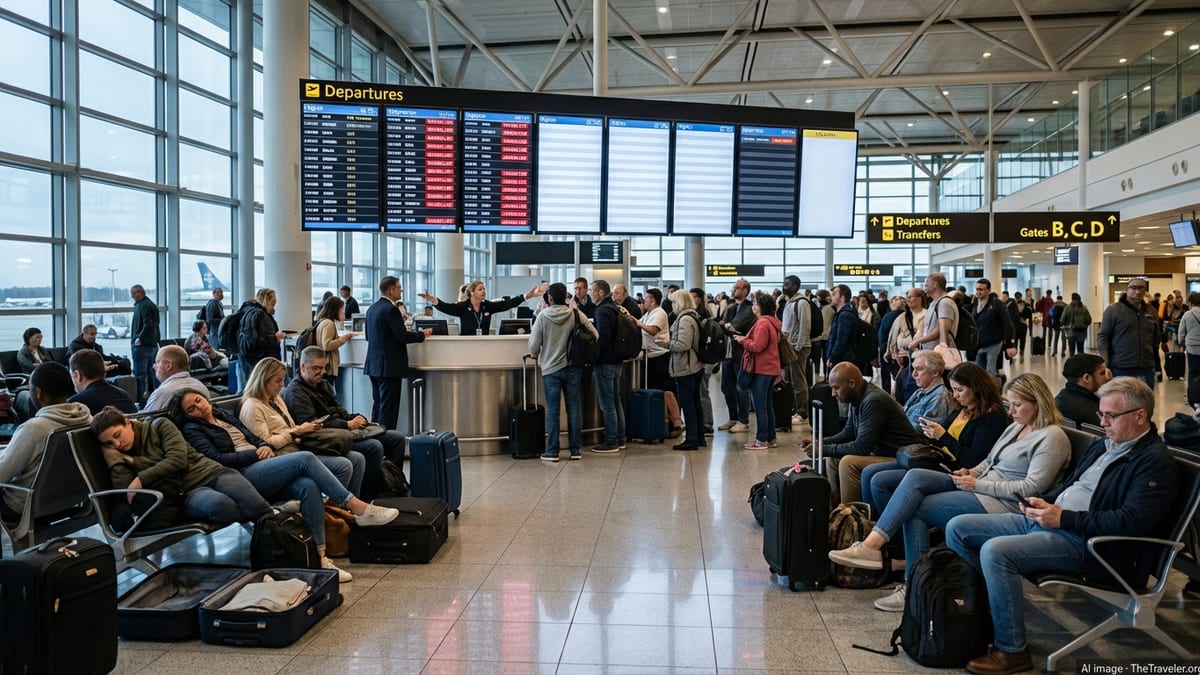
Missile and drone strikes trigger rapid airspace shutdown in Kuwait
According to published coverage from regional media, Kuwait temporarily closed its airspace in the early hours of a recent Saturday after coming under Iranian missile and drone fire, implemented as part of a wider escalation between Tehran and the United States and their respective allies.
Publicly available information from Kuwait’s civil aviation authorities shows that air navigation was suspended from approximately 4:15 a.m. to 6:15 a.m. local time as a precaution, with air defense systems intercepting multiple incoming projectiles over the country. Reports indicate that explosions heard in several areas were linked to interception operations rather than direct strikes on civilian aircraft.
During the two-hour shutdown, at least 11 flights operated by Kuwait Airways and Jazeera Airways were diverted to neighboring airports in Saudi Arabia, including Dammam and Riyadh, before later returning once conditions were deemed stable and the airspace reopened.
Kuwaiti and regional press have described the barrage as a serious and deliberate targeting of the country’s territory, with official communiqués characterizing the incident as a violation of sovereignty and international norms, particularly given the proximity of some interceptions to Kuwait International Airport and other civilian infrastructure.
Dubai and regional hubs absorb diversions and delays
While Kuwait experienced the most immediate impact from the missile and drone activity, the knock-on effects extended across the wider Middle East air network, including the vital hub of Dubai. Tracking data and airline updates show that carriers began rerouting aircraft to avoid affected airspace over Kuwait and adjacent corridors, adding time and complexity to already congested routes.
Previous regional flare-ups involving Iranian missile and drone launches have led to widespread airspace closures across Iran, Iraq, Jordan, Lebanon, and Israel, prompting extensive rerouting and diversions via Saudi Arabia and Egypt. In the latest wave of attacks, aviation analysts note a similar pattern, with operators rapidly bypassing sensitive zones, sometimes at short notice while aircraft were already airborne.
Dubai’s role as the world’s busiest international hub means that even localized closures can ripple through its timetables. During earlier phases of the broader Iran–US confrontation, public data shows that Dubai International and other major Gulf airports were forced to throttle arrivals, accommodate stranded passengers, and reassign aircraft after significant portions of Middle Eastern airspace temporarily shut down.
Industry observers point out that these cumulative disruptions add to a period of sustained operational stress for Gulf airports, which have already faced weather-related delays, congestion from diversions during previous crises, and ongoing security-driven route adjustments over parts of the region.
Heightened risk management for airlines over the Middle East
The latest Iranian attacks over Kuwait form part of a broader risk calculus that airlines now apply to the Middle East. Aviation safety advisories from European regulators and other authorities highlight how missile and drone exchanges in the region necessitate continuous monitoring of airspace notices and rapid route changes when tensions spike.
In previous large-scale Iranian missile and drone launches toward Israel, several Middle Eastern states temporarily closed their skies, and carriers from Europe, the Gulf, and Asia diverted or cancelled services, sometimes returning aircraft to their point of origin. Similar caution has been evident in Kuwait’s brief airspace closure, where preemptive action was taken even before any confirmed damage to airport facilities.
Data from international aviation safety bodies suggests that, during such escalations, overflight risks are mitigated primarily through coordinated notices to airmen, altitude restrictions, and rerouting away from known or potential missile tracks. Airlines then overlay their own internal risk assessments, taking into account the range and type of weapons reportedly used, as well as the presence of military activity along key corridors.
Carriers serving Dubai, Abu Dhabi, Doha, Kuwait City, and other Gulf destinations therefore maintain contingency plans that include extended flight times around Iranian, Iraqi, or Kuwaiti airspace, alternative fuel planning, and the use of more southerly or westerly routings via Saudi Arabia and the Red Sea when required.
Passenger impact: diversions, delays and changing itineraries
For travelers, the direct experience of the Kuwait incident has largely taken the form of diversions, overnight delays, and last-minute schedule changes. Publicly available reports from Kuwait’s civil aviation sector indicate that diverted flights were temporarily handled in Saudi airports while authorities evaluated the security situation.
In comparable episodes since 2024, some flights from Dubai and other Gulf hubs bound for destinations such as Amman, Tel Aviv, Tehran, or Baghdad have been forced to return to origin or hold until airspace restrictions were clarified. While the latest exchanges over Kuwait were shorter in duration, travel experts note that even brief closures can disrupt aircraft and crew rotations, creating knock-on delays that persist for much of the day.
Passengers transiting through Dubai and other Middle Eastern hubs are being advised, through airline websites and travel alerts, to check their flight status frequently and allow additional time for connections. Routing changes that avoid sensitive airspace may also increase flight times, which can affect onward itineraries to Europe, Asia, and North America.
Airlines with large Gulf operations have continued to stress, in public statements, that safety remains paramount and that no flight will operate without meeting internal and regulatory risk thresholds. However, the combination of shifting airspace availability and high traffic volumes in hubs such as Dubai and Doha means that disruption is likely to remain a periodic feature for travelers while regional tensions persist.
Longer-term implications for Gulf aviation and connectivity
The temporary grounding of flights over Kuwait, and the broader pattern of missile and drone incidents across the Gulf, underline the strategic vulnerability of a region that functions as a crossroads for global air travel. With major hubs in the United Arab Emirates, Qatar, and Saudi Arabia handling vast numbers of connecting passengers, any sustained threat to airspace integrity has implications far beyond the Middle East.
Analysts following the sector point out that airlines already face increased operating costs when rerouting around conflict zones, including higher fuel burn, extended crew duty times, and more complex scheduling. Insurance premiums and security-related expenditures can also rise when missile and drone activity intensifies near key airports or along popular overflight corridors.
At the same time, Gulf governments have invested heavily in resilience measures such as diversified routing options, enhanced radar coverage, and coordinated contingency planning among civil aviation authorities. Kuwait’s rapid reopening of its airspace after the recent Iranian attacks, following a short period of assessment, is being cited in regional coverage as an example of how authorities are attempting to balance caution with the economic imperative to keep air links open.
For travelers and the global aviation industry, the latest disruption over Kuwait serves as another reminder that geopolitical flashpoints in the Middle East can swiftly impact flights far beyond the immediate conflict area, with Dubai and other hubs often bearing the brunt of the resulting congestion and schedule upheaval.
Gulf News coverage of Kuwait airspace suspension
Kuwait Times reporting on Iranian missile and drone attacks
Emirates News Agency update on resumption of Kuwait air navigation