


More news on this day
Labor Day weekend is shaping up to be a stressful test for U.S. air travel as fresh performance data shows JetBlue near the bottom of the industry for punctuality, raising the risk of disruptions for millions of holiday travelers.
Get the latest news straight to your inbox!
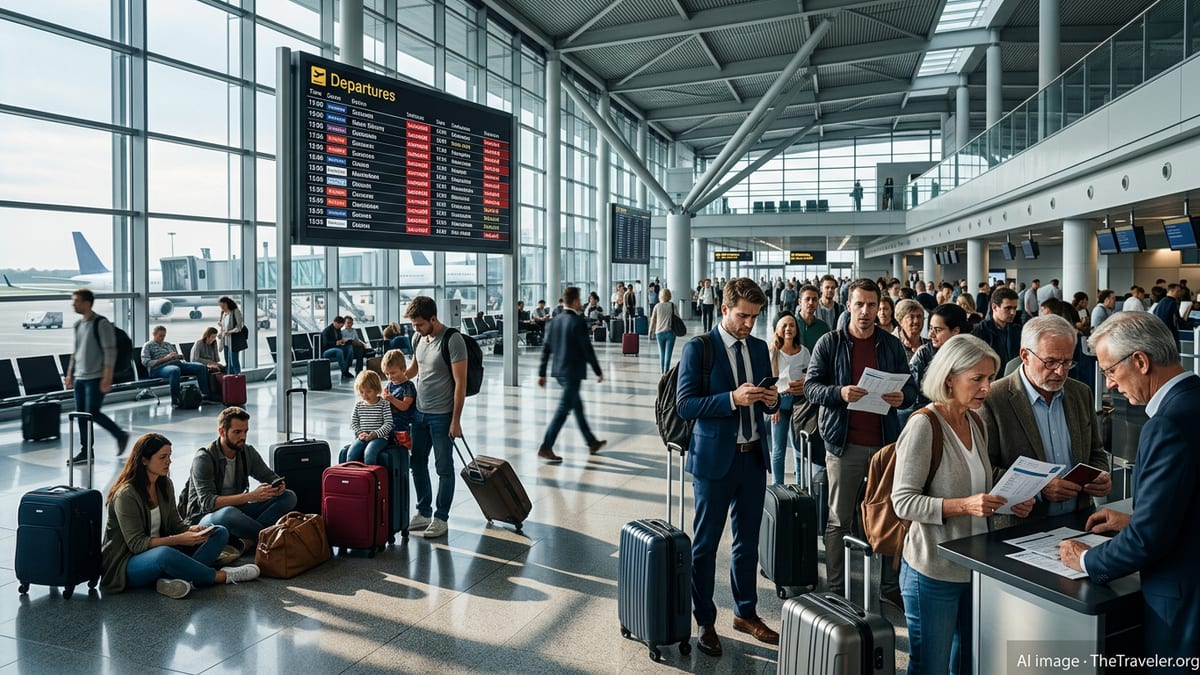
JetBlue’s Delay Record Stands Out Ahead of Holiday Rush
Publicly available statistics indicate that JetBlue has been trailing many major U.S. carriers on on-time performance heading into the late-summer peak. A long-run analysis of more than 7 million domestic flights between June 2025 and May 2026 found that JetBlue posted a delay rate of about 27.6 percent and a cancellation rate of 2.5 percent, the highest combined disruption level among the large airlines studied during that period.
Separate tracking of JetBlue’s operations tells a similar story. An independent aggregation of U.S. Department of Transportation data covering July 2024 through July 2026 shows the airline arriving on time on roughly 74 percent of flights, behind top performers such as Delta and United, which have generally operated closer to or above 80 percent on-time during 2026 so far. Rankings of North American carriers based on first half 2026 performance also place JetBlue near the lower end of the pack on punctuality, while Delta tops the list with an on-time rate above 82 percent.
Monthly snapshots show that JetBlue has made incremental improvements at times without closing the gap to its peers. A May 2026 report using federal on-time data calculated that about 81 percent of the airline’s flights arrived on time that month, an improvement of more than 5 percentage points over April. Even at that improved level, however, JetBlue still lagged behind several legacy competitors that consistently report higher punctuality.
These patterns mean that as Labor Day approaches, JetBlue customers face statistically higher odds of a disruption compared with travelers on some rival carriers. While day-of operations are heavily influenced by weather and air traffic control constraints, the historical gap in performance has become an important data point for consumers weighing holiday flight options.
Labor Day Has Become a High-Risk Weekend for Delays
Labor Day is traditionally one of the most congested periods on the U.S. aviation calendar, and recent research suggests the holiday weekend carries a heightened risk of delays across the board. An analysis of past Labor Day periods by parking and travel platform Rightway Parking, drawing on federal on-time data, concluded that JetBlue has recorded the highest share of delayed departures among major U.S. airlines over multiple Labor Day weekends, with about 23.1 percent of its flights departing late.
The same review identified Frontier and American as other carriers with elevated Labor Day delay rates, but JetBlue stood out for consistently leading the pack on disruptions during the holiday. By contrast, airlines such as Delta and Alaska have tended to post fewer delayed departures, reflecting the broader pattern seen in year round performance tables.
On a systemwide basis, government data shows that U.S. airlines typically see on-time arrival rates fall once peak summer crowds hit, then remain under pressure through late August and early September. Earlier Air Travel Consumer Reports from the Department of Transportation have documented how industry-wide punctuality can swing by nearly 10 percentage points from month to month, underscoring how sensitive holiday weekends are to operational strain.
For Labor Day 2026, those structural pressures are colliding with JetBlue’s existing reliability challenges. The combination of historically high holiday demand and an operator that has seen elevated delay and cancellation rates in recent years is prompting closer scrutiny from travelers planning last minute trips.
Inside JetBlue’s Operational Struggles
Underlying data from the Bureau of Transportation Statistics indicates that a meaningful share of JetBlue’s delays stem from causes inside the airline’s control. A breakdown of delay minutes reported by the carrier shows that issues such as crew, maintenance, fueling and boarding account for more than one third of its delay time, slightly higher than the average across a group of major U.S. airlines analyzed over the same multiyear period.
At the same time, JetBlue’s network and scheduling choices amplify its vulnerability to bad weather and air traffic constraints along the East Coast. The airline is heavily concentrated at airports such as New York’s JFK and Boston Logan, which are prone to ground stops and flow restrictions in summer thunderstorms. When storms or congestion hit those hubs, a relatively lean staffing model and limited spare aircraft make it harder for JetBlue to recover quickly compared with carriers that maintain larger fleets and more extensive rerouting options.
Recent weeks have highlighted those weaknesses. Social media and passenger forums have been filled with reports of rolling delays, multi day disruptions and long hold times for customer support since the July 4 period, with some accounts describing network wide knock on effects when weather and scheduling system issues intersect. In several of those episodes, other major airlines operating similar routes recovered more quickly once conditions improved, while JetBlue’s schedules took longer to stabilize.
Federal regulators have also kept JetBlue on their radar. In early 2025, the airline was ordered to pay a multimillion dollar civil penalty after an investigation into what the U.S. Department of Transportation characterized as chronically delayed flights on certain routes. The action, which relied on extended on-time performance records, underscored the degree to which punctuality has become a regulatory as well as a commercial concern for the carrier.
How JetBlue Compares With Rival U.S. Airlines
Comparative rankings of U.S. airlines show a widening gap between JetBlue and several of its competitors on core reliability metrics. A mid 2026 roundup of North American airline punctuality placed Delta first in the United States with an on-time rate above 82.6 percent, followed closely by United at about 79.9 percent. Other large carriers including Alaska and Southwest clustered in the high 70s to low 80s, while JetBlue trailed with an on-time rate around 74 percent.
That difference of roughly five to eight percentage points translates into thousands of additional delayed flights over the course of a year for a carrier of JetBlue’s size. When cancellations are added to the picture, studies relying on federal on-time databases have consistently ranked JetBlue as one of the most disruption prone large airlines in the domestic market over the last 12 months.
Low cost rivals are not immune to problems either. Frontier and Spirit have posted their own elevated delay rates during peak periods, and American, the country’s largest carrier by many measures, has faced sharp scrutiny over disruptions in previous holiday seasons. Yet the most recent cross airline comparisons generally place JetBlue closer to the bottom than the middle of the pack, even when controlling for factors such as weather and airport mix.
These relative standings matter increasingly as travelers use real time dashboards and historical performance tools to inform booking decisions. With more consumers accustomed to checking on time scores alongside fares, a persistent position among the least reliable carriers can weigh on a brand heading into critical travel weekends such as Labor Day.
What Travelers Can Expect This Labor Day
For passengers, the numbers point to a Labor Day that could prove challenging, especially on routes heavily served by JetBlue. Industry wide traffic for the 2026 holiday weekend is expected to match or exceed record levels set in 2024 and 2025, and recent months have already produced several high profile disruption waves tied to thunderstorms, airspace constraints and crew availability problems.
Real time trackers operated by aviation data firms show that on many peak days this summer, JetBlue has ranked near the top of the charts for delays and cancellations among U.S. airlines. While those rankings shift from day to day, the pattern reinforces the risk implied by the longer term statistics, particularly for afternoon and evening departures when knock on delays tend to accumulate.
Travel analysts suggest that travelers who choose JetBlue for Labor Day should build in additional buffer time, especially for connections or same day events, and monitor their flights closely in the days leading up to departure. Flexible tickets, early morning departures, and direct routes where possible can help reduce exposure to cascading delays, regardless of carrier.
For now, publicly available performance tables and independent studies converge on the same message. As the 2026 Labor Day weekend approaches, JetBlue is entering one of the busiest travel periods of the year with some of the industry’s highest recent delay rates, leaving passengers to weigh attractive fares and cabin products against a measurable increase in the risk of disruption.
U.S. DOT Air Travel Consumer Report
Study on worst ranked U.S. airlines for delays
Labor Day airline delay analysis