


More news on this day
Great Western Railway services between London Paddington and Reading faced severe disruption on Saturday evening after a failure of the electricity supply blocked some lines and forced widespread cancellations.
Get the latest news straight to your inbox!
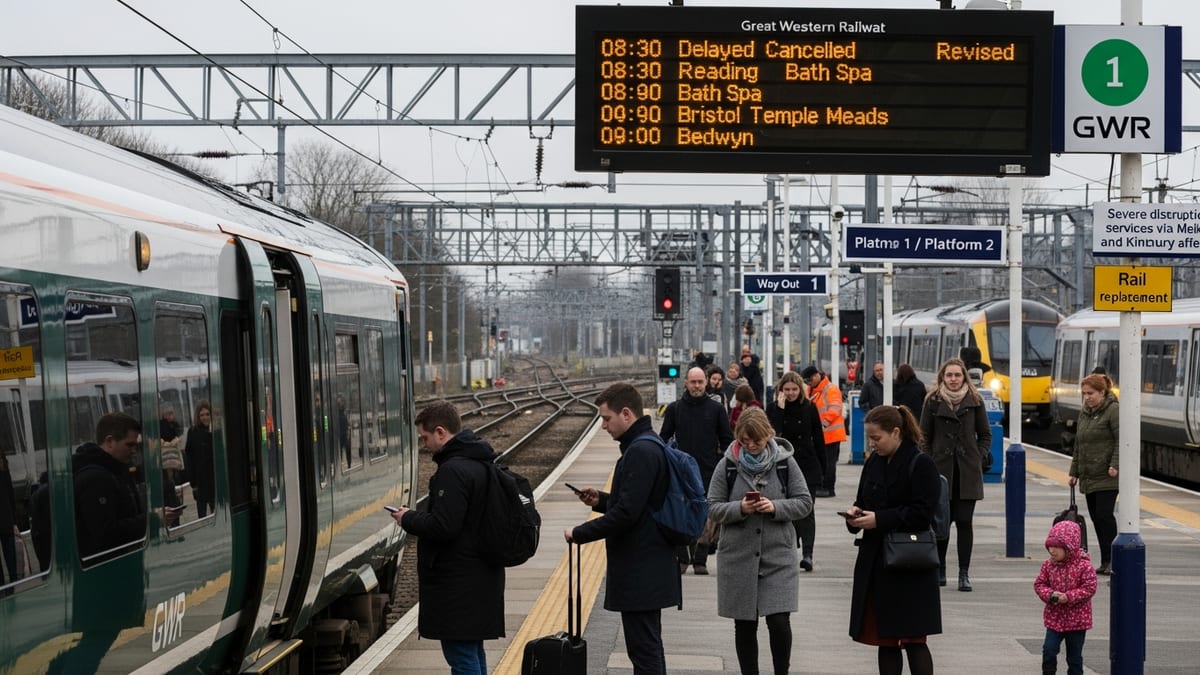
Power Supply Failure Blocks Key Stretch of Great Western Main Line
According to real-time disruption information published on Great Western Railway’s JourneyCheck service, a failure of the electricity supply between London Paddington and Reading led to multiple lines being blocked on the evening of 5 September 2026. The issue affected the overhead power equipment on the busy Great Western Main Line, prompting trains to be held, diverted or cancelled at short notice.
The incident was first flagged in journey-planning and disruption feeds as services between London Paddington and Reading began to experience significant delays. JourneyCheck reports state that the failure of the electricity supply resulted in a number of services being unable to operate normally, with trains terminating short of their planned destinations or being removed from the timetable altogether.
National Rail journey planners and third-party travel update platforms also reflected the scale of the disruption, listing an ongoing incident affecting Great Western Railway services on the Paddington–Reading corridor from the afternoon into the late evening of 5 September. The stretch is one of the most heavily used sections of the UK rail network, meaning any power-related issue can have rapid knock-on effects across western routes.
Passenger Warnings and Ticket Flexibility Measures
Publicly available disruption notices show that Great Western Railway has advised passengers to check their journeys carefully and allow extra time, as delays and cancellations may continue while services recover. JourneyCheck information indicates that customers with tickets dated 5 September are being permitted to travel on 6 September on Great Western Railway services, providing additional flexibility for those who were unable to complete their journeys due to the evening disruption.
Online journey planners and operator updates highlight a range of service alterations, including cancelled and part-cancelled trains between London Paddington, Reading and onward destinations such as Didcot Parkway and Bristol. Some services were reported as starting or terminating at Reading instead of running through to the capital, while others were withdrawn entirely during the height of the incident.
Passengers have been encouraged, via digital travel updates, to use later or alternative services where available and to consult operator websites and National Rail Enquiries before setting out. The advice reflects the continuing uncertainty around train movements while power is restored and train diagrams are reset following the evening disruption window.
Impact on Wider Western Routes and Evening Travel
The Paddington–Reading corridor forms the core of Great Western Railway’s long-distance and commuter network, linking the capital with destinations across the Thames Valley, South West England and South Wales. When lines are blocked on this section, trains to and from cities such as Bristol, Cardiff and Exeter can be delayed or cancelled, even if the disruption originates on a relatively short stretch of track.
Real-time journey tools on operator and independent platforms show that services scheduled to run later in the evening, including some trains between London Paddington, Reading and Didcot Parkway, were either delayed or cancelled as a result of the power failure. Passengers reported online that late-evening intercity services to the west of England were particularly affected, with some travellers needing to seek alternative routes or postpone their trips.
Because the incident coincided with evening peak and leisure travel, the failure of the electricity supply had a disproportionate effect on people returning from London or heading out of the city for weekend plans. Advisories published through National Rail and regional transport portals indicated that disruption was expected to last until the end of the day, with normal service not anticipated until the following morning.
Context: Busy Corridor Already Under Pressure
The section between London Paddington and Reading is widely described in rail commentary as one of the busiest pieces of railway in the country, carrying a dense mix of fast intercity trains, commuter services, freight and Heathrow Airport links. Previous analyses of performance on this corridor have highlighted how even relatively short-lived signalling or power issues can quickly reduce capacity and cause widespread delays.
Network Rail has separately outlined significant planned engineering work in the wider Slough and Paddington area during September, focused on renewing track and improving resilience on the Great Western route. Public information on these projects notes that services between Reading and London Paddington are already subject to timetable changes and weekend alterations while infrastructure upgrades are carried out.
The latest incident involving a failure of the electricity supply adds to a pattern of operational challenges on this critical stretch of line, where both unplanned faults and planned engineering work can affect reliability. Passenger groups and online communities frequently draw attention to how quickly minor faults can escalate into extended disruption when they occur on the constrained approaches to Paddington or on the main line east of Reading.
What Passengers Should Do Next
Travel information services advise anyone planning to use Great Western Railway services between London Paddington and Reading, or connecting routes, to continue monitoring live updates before departing. Journey planners and live departure boards are being updated frequently as the operator restores normal working and repositions trains and train crews following the disruption.
Customers who were unable to travel on 5 September are being directed, through published information, to either use their tickets on 6 September or seek guidance on refunds and delay compensation via Great Western Railway’s official channels. Standard industry compensation arrangements typically apply when delays or cancellations reach certain thresholds, although passengers are urged to retain their tickets and any relevant receipts for claims.
With the corridor due to see further planned engineering activity later in the month, passengers are being reminded through public notices to check both short-term disruption alerts and longer-range timetable changes. Staying informed through official digital tools is presented as the most effective way to navigate a period of heightened disruption risk on the London Paddington to Reading route.
Great Western Railway JourneyCheck – London Paddington disruption
National Rail Enquiries – live departure boards and updates
Great Western Railway – planned engineering and travel updates