


More news on this day
Travelers across the United States are facing another day of turbulence on the ground as disruption centered on New York’s LaGuardia Airport spreads through major hubs including Boston, Chicago and Atlanta, stranding passengers and stretching airline operations already under summer pressure.
Get the latest news straight to your inbox!
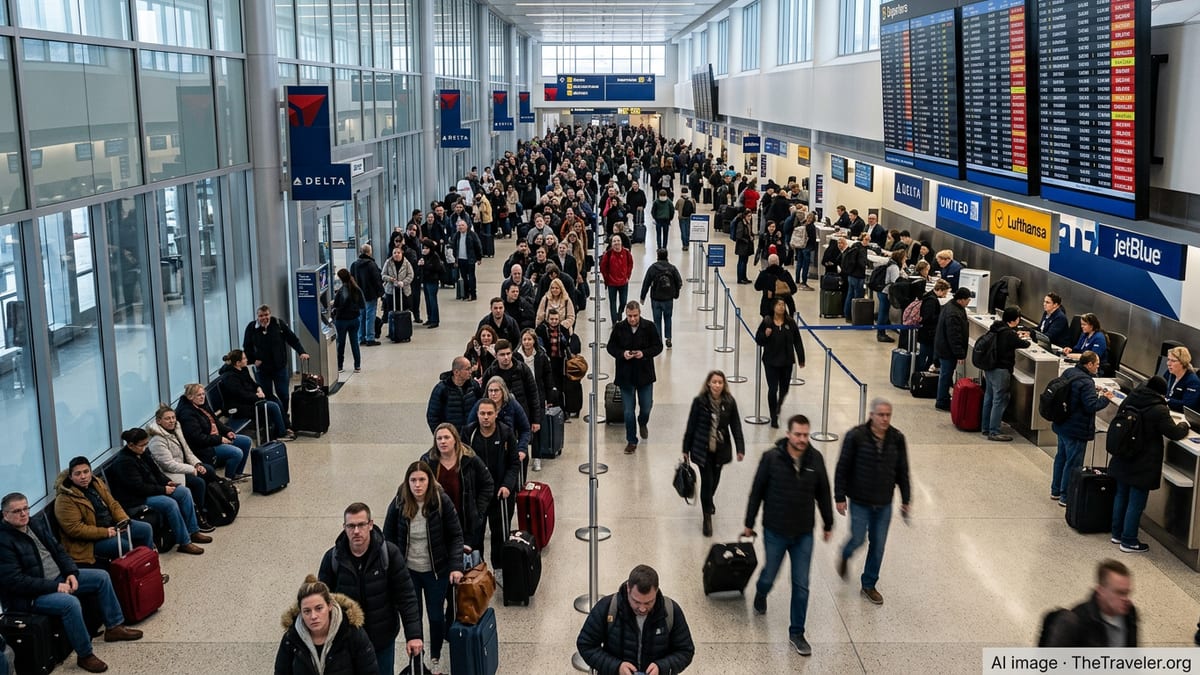
LaGuardia at the center of fresh disruption
Publicly available tracking data and industry coverage indicate that LaGuardia has once again emerged as a flashpoint for operational strain, with a tight runway layout and heavy schedule magnifying the impact of even modest timetable changes. Recent reports focused on LaGuardia describe dozens of departure and arrival delays accumulating over the course of the day, with a smaller number of targeted cancellations used to reset schedules.
The latest figures referenced in aviation and travel outlets point to a pattern of far more delays than outright cancellations, with some snapshots mentioning only a handful of flights scrubbed but dozens pushed back. Even a minimal cancellation count can leave travelers stuck when those flights serve as key connectors to onward routes through hubs such as Chicago O’Hare and Atlanta.
Operators serving LaGuardia, including Delta Air Lines, JetBlue, American Airlines, United Airlines and Southwest Airlines, are all appearing in disruption tallies. Although regional affiliates often operate flights under major-brand codes, passengers experience the impact as problems with the headline carriers when departure boards show rolling delays to popular domestic destinations.
Analysts note that New York’s constrained airspace and LaGuardia’s compact layout mean recovery from any disruption takes time. Taxiway congestion, limited spare gate capacity and staggered crew rotations can create a knock-on effect, where an initial weather or staffing issue in one time block leads to hours of schedule reshuffling.
Ripple effects in Boston, Chicago, Atlanta and beyond
The strain at LaGuardia is not contained to New York. Published disruption trackers for Boston Logan, Chicago O’Hare and Hartsfield–Jackson Atlanta show elevated levels of late-running flights in recent days, particularly on routes that intersect with New York and other Northeast airports. Coverage of Boston Logan, for example, has highlighted more than 300 delayed services in a single day, with a smaller number of cancellations recorded across large domestic carriers.
In Chicago and Atlanta, which function as critical hubs for national networks, relatively low cancellation numbers can still translate into widespread inconvenience. Aircraft and crews arriving late from New York or Boston compress turnaround windows and reduce schedule flexibility. That dynamic has led to growing clusters of delayed flights throughout the afternoon and evening wave periods, hitting travelers on both point-to-point and connecting itineraries.
Secondary airports are also feeling the strain. Reports referencing routes through Orlando, Dallas–Fort Worth, Toronto and Washington-area airports describe irregular operations tied back to disruptions along the East Coast corridor. When LaGuardia or Boston Logan experience pressure, it is common for delays to radiate outward through shared aircraft rotations and crew pairing schedules across multiple cities.
This interconnected structure means that a passenger booked from a smaller regional airport may feel the impact of congestion at LaGuardia or Boston even if their own departure board initially appears calm. Rebooking options can be limited when multiple hubs are working through the same bank of late-running flights.
Airlines juggle schedules, crews and aircraft
The major carriers most visible on departure boards at LaGuardia and other affected hubs are relying on a mix of strategic cancellations and rolling delays to navigate the disruption. Publicly available information shows airlines trimming select flights that have alternative options for travelers, in order to free aircraft and crews for routes with fewer back-up services.
Delta Air Lines and American Airlines, both with substantial operations in New York and Boston, continue to appear prominently in disruption tables, alongside JetBlue’s large East Coast network and United’s links through Chicago and other hubs. Southwest, while operating a different point-to-point model, is also present in delay and cancellation tallies where its routes intersect busy Northeast and Mid-Atlantic markets.
Industry observers point out that regional partners play a significant, if less visible, role in the current pattern. Carriers such as Republic Airways, Endeavor Air and PSA Airlines operate flights on behalf of the larger brands, and operational constraints in these feeder networks can have the same practical impact on passengers as issues at the mainline airlines. When regional flights into hubs run late, connecting banks are disrupted and missed connections increase.
Scheduling complexity is compounded by crew duty regulations and aircraft positioning requirements. Once a rotation is pushed beyond certain thresholds, crews may time out and aircraft may not be in the correct city for their next assigned leg. Airlines then face difficult trade-offs between canceling lightly booked flights or accepting additional delays for services with higher passenger loads.
Passengers stranded amid rolling delays
For travelers on the concourse, the technical details of fleet utilization and crew rosters translate into long lines and uncertain departure times. Reports from across New York, Boston, Chicago and Atlanta describe passengers queuing at service desks as they try to secure seats on later flights, with some resorting to overnight stays when same-day options are exhausted.
In some cases, only a small number of cancellations can still leave hundreds of passengers without immediate alternatives. Heavily trafficked corridors between the Northeast and Florida, the Midwest and major Southern hubs tend to operate near capacity in the summer period, making it difficult to re-accommodate disrupted travelers on remaining services.
Travel rights and compensation options vary depending on the cause of the disruption and the route involved. Consumer advocates regularly advise affected passengers to monitor official airline channels for rebooking options and to keep records of delay durations, especially when disruptions extend overnight or exceed several hours. Travelers connecting to or from international flights may have additional protections compared with those on purely domestic itineraries.
Airport terminal operations are also challenged by extended dwell times when large numbers of passengers remain airside longer than planned. Seating, food outlets and ground transport services all experience increased pressure when waves of delayed flights keep travelers in the building well beyond scheduled departure windows.
What travelers should watch in the coming days
With summer demand at high levels and key hubs still working through irregular operations, aviation analysts expect conditions to remain fragile in the short term. Any new bout of severe weather, air traffic control constraint or staffing shortage at a major airport such as LaGuardia, Boston Logan or Chicago O’Hare could trigger another round of rolling disruptions across the network.
Travelers planning to pass through New York, Boston, Chicago, Atlanta or other busy hubs are being urged in public guidance to check flight status frequently on the day of travel, arrive at the airport with extra time, and build wider buffers into connections, particularly when separate tickets are involved. Early-morning departures are often identified as less vulnerable to knock-on delays because aircraft and crews are more likely to be in position from overnight stays.
Observers also note that the broader pattern of high delays and modest cancellation counts seen in recent tallies may continue as airlines seek to preserve as much of their scheduled capacity as possible. That approach keeps more flights on the board but can leave passengers facing longer-than-expected waits at gates and on taxiways.
As the peak summer period advances, operational data from LaGuardia and other hubs will be closely watched for signs that carriers are regaining schedule stability. Until then, the combination of crowded airports, tight turnaround times and already-stretched networks means that even a limited number of cancellations and dozens of delays can quickly cascade into a difficult travel day for passengers across the United States.