


More news on this day
Severe weather and operational pressures are disrupting air travel across Australia and New Zealand, with publicly available data showing at least 22 flight cancellations and numerous delays for Jetstar, Qantas, and Air New Zealand on key routes linking Sydney, Brisbane, Wellington, Auckland, and Christchurch.
Get the latest news straight to your inbox!
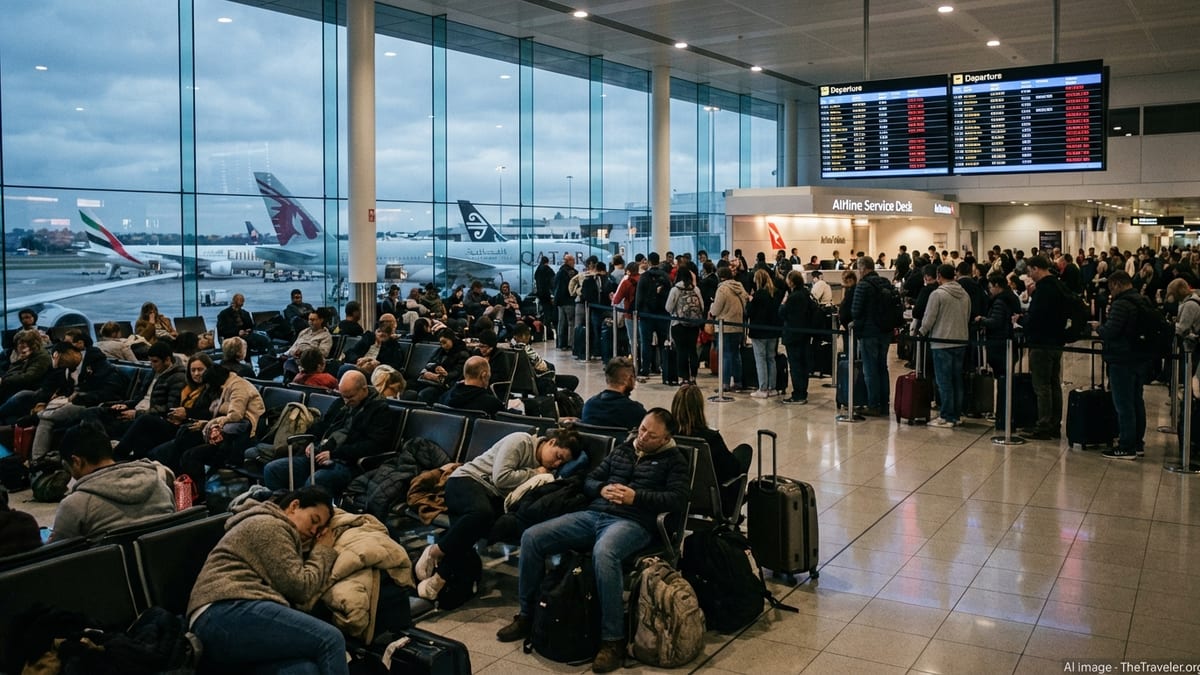
Major Hubs Across the Tasman Hit by Cancellations
Travelers moving between Australia and New Zealand are experiencing widespread disruption as a wave of cancellations and delays affects major gateways on both sides of the Tasman Sea. Reports from aviation news outlets and airport information boards on 26 and 27 June 2026 indicate that Sydney and Brisbane in Australia, along with Wellington, Auckland, and Christchurch in New Zealand, are among the most heavily impacted airports.
Published coverage from regional travel industry media notes that at least 22 individual flights operated by Jetstar, Qantas, and Air New Zealand have been cancelled over a short period, with many more experiencing significant delays. These cancellations are concentrated on high-traffic trans-Tasman corridors, as well as important domestic links that funnel passengers into long-haul services.
Disruptions are particularly visible at Sydney and Brisbane, where trans-Tasman departures and arrivals form a key part of daily schedules. On the New Zealand side, knock-on effects are being felt at Wellington, Auckland, and Christchurch, where flights connecting to and from Australia are facing tighter turnaround windows, re-timed departures, or outright suspension.
The cancellations come at a busy time for regional travel, with late June typically bringing a mix of business trips, school holiday movements, and early winter tourism flows. The clustering of affected services across multiple hubs is compounding the challenge for travelers who rely on carefully timed connections between domestic and international legs.
Weather and Operational Strain Drive Irregular Operations
Airport information from Wellington and other New Zealand hubs points to strong winds and poor conditions as a major driver of the latest wave of flight disruption. Notices to passengers at Wellington Airport on 26 and 27 June highlight that high winds have forced multiple cancellations and schedule changes, in line with the airport’s exposure to southerly weather systems that frequently complicate landings and takeoffs.
These conditions have coincided with ongoing operational pressures across airline networks, from crew rostering issues to aircraft positioning and maintenance requirements. Publicly available tracking data and airline status pages show that even routes not directly hit by outright cancellations are experiencing extended delays, as carriers juggle aircraft and staff to maintain as much of their schedule as possible.
Recent analysis from New Zealand’s transport authorities on aviation on-time performance has already highlighted the sensitivity of trans-Tasman and key domestic sectors to weather and congestion. Historical data for routes such as Sydney to Christchurch and Auckland to Sydney shows fluctuating punctuality and notable periods of disrupted operations, underlining how quickly adverse conditions can ripple through the system when multiple carriers share the same busy corridors.
Industry observers note that while isolated weather events are an accepted feature of flying in the region, the current disruption illustrates how a combination of strong winds, tight scheduling, and high seasonal demand can magnify the impact of each individual cancellation.
Impact on Jetstar, Qantas, and Air New Zealand Networks
Jetstar, Qantas, and Air New Zealand, the three main carriers on affected routes, are each managing different patterns of disruption across their networks. Jetstar’s mixed domestic and trans-Tasman schedule means that cancellations on New Zealand domestic sectors such as Christchurch to Auckland or Wellington to Auckland can quickly cascade into missed onward connections to Sydney and Brisbane.
Qantas, which operates trans-Tasman flights directly and through its New Zealand-based crew subsidiary on services from Sydney and Brisbane to cities including Wellington, Christchurch, and Auckland, is also contending with schedule compression. Some of the 22 recorded cancellations involve services that normally function as key links for Australian travelers heading into New Zealand’s South and North Islands.
Air New Zealand, with its extensive domestic feed into Auckland, Wellington, and Christchurch, faces its own challenges as strong winds constrain operations at Wellington and affect arrivals and departures elsewhere. When even a handful of flights between the three main New Zealand hubs are cancelled, passengers lose crucial connectivity to long-haul and regional flights that depend on tight transfer windows.
Across all three airlines, the disruption is producing a familiar pattern of rebooking queues, longer waiting times at customer service desks, and reshuffled itineraries. Travelers relying on same-day connections between Australian and New Zealand cities are among the most exposed, as limited spare capacity on later flights makes it harder to secure alternative seats.
Key Routes and Passengers Most Affected
The pattern of cancellations and delays suggests that some of the region’s most heavily used routes are bearing the brunt of the disruption. Brisbane to Auckland and Brisbane to Christchurch are particularly sensitive, as Brisbane Airport has emerged as a major international gateway to New Zealand, with substantial passenger volumes recorded on services operated by Air New Zealand, Qantas, and Jetstar.
Similarly, the Sydney to Auckland and Sydney to Christchurch corridors are experiencing pressure, with delayed departures leading to missed onward connections within both countries. Wellington’s role as both a domestic hub and a trans-Tasman gateway means that cancellations there are especially disruptive for travelers attempting multi-leg journeys that rely on a single carrier for the entire itinerary.
Within New Zealand, high-frequency links such as Auckland to Christchurch and Wellington to Auckland are being used to absorb some of the displaced demand from cancelled trans-Tasman flights. However, public tracking data indicates that delays on these sectors are growing as aircraft and crew are reassigned, leaving fewer backup options for passengers whose plans are already in flux.
International visitors with fixed cruise departures, tour start dates, or business meetings find themselves at greater risk of missing time-sensitive commitments. In some cases, passengers are being rerouted through alternative Australian gateways or shifted onto later services, stretching travel days well beyond their original timetable.
What Travelers Can Expect in the Coming Days
With weather systems still moving across parts of New Zealand and continued pressure on airline operations, industry observers anticipate that disruption may persist in the short term, even if the number of outright cancellations begins to fall. Residual delays often linger for several days after a period of intense disruption, as airlines gradually reposition aircraft and crews and work through the backlog of stranded passengers.
Publicly available guidance from airports and airlines stresses the importance of checking real-time flight status before heading to the airport, as schedules can change at short notice when winds pick up or when a previous leg of an aircraft’s rotation has been delayed. Travelers with tight connections, particularly those linking domestic New Zealand flights with trans-Tasman departures from Sydney or Brisbane, may wish to consider additional buffer time between segments.
Travel insurance policies and credit card protections can play an important role for passengers facing unexpected overnight stays or missed segments. Industry coverage recommends that passengers retain boarding passes, cancellation notifications, and any receipts for accommodation or meals, in case these documents are needed to support later claims.
For now, the immediate priority for Jetstar, Qantas, and Air New Zealand appears to be restoring stability on their core trans-Tasman and New Zealand domestic routes. As winter progresses and weather systems continue to move through the region, travelers are being advised by published reports to remain flexible with their plans and to monitor updates closely, particularly when flying through Sydney, Brisbane, Wellington, Auckland, or Christchurch.