


More news on this day
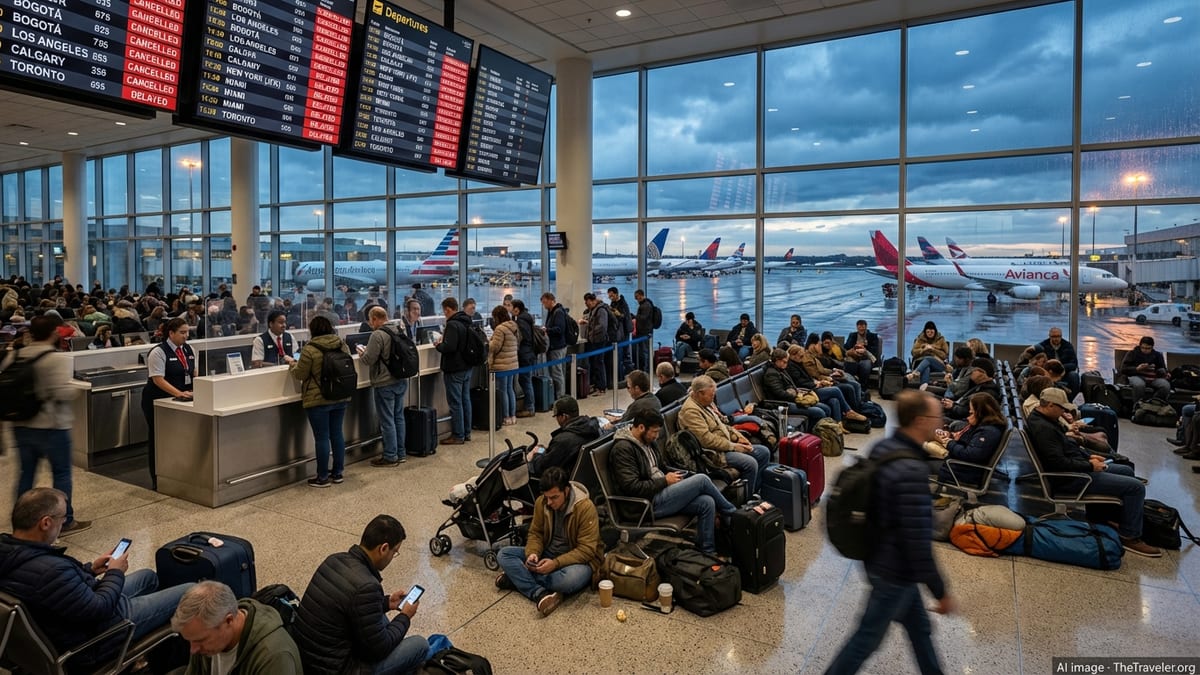
Passengers at Miami International Airport are facing a difficult travel day as publicly available data point to more than one hundred flight delays and several cancellations affecting major carriers and key routes across North and South America and the Caribbean.
Get the latest news straight to your inbox!
Operational Strain Hits Major Carriers at MIA
Miami International Airport, one of the United States’ busiest international gateways, is experiencing another period of disruption as airlines contend with a fresh wave of delays and cancellations. Tracking services and aviation data show that carriers including American Airlines, Air Canada, Delta Air Lines, Qatar Airways, LATAM Airlines, Avianca and others have together recorded more than one hundred delays and a cluster of cancellations, straining travel between the United States and destinations in Canada, Venezuela, Colombia, Brazil and the Caribbean.
The disruption follows a pattern of recent operational pressure at the hub. Earlier this week, consumer-rights and aviation tracking platforms highlighted significant irregular operations at Miami, citing more than one hundred delayed departures and close to ten cancellations on a single day. Those issues have now been compounded by continuing schedule instability that is rippling through regional and long haul networks.
American Airlines, the dominant carrier at Miami, appears to be bearing much of the impact, with its dense schedule to Latin America and the Caribbean particularly vulnerable when aircraft and crew fall out of position. Published flight-status boards show late departures to key South American capitals such as Bogota and connections across the Caribbean basin, as well as hold-ups on high-frequency domestic routes that feed the hub.
Other airlines serving Miami are also affected. Reports from flight tracking sites and airport-monitoring services indicate that Air Canada, Delta, LATAM, Avianca and a mix of U.S. and foreign carriers are registering delays from modest schedule slips to multi-hour holdups, along with a small but disruptive number of outright cancellations.
Regional Routes to Canada, Venezuela and Colombia Disrupted
The strain is particularly evident on routes connecting Miami with major gateways in Canada and northern South America. Data aggregators tracking today’s schedules show delayed departures on services between Miami and Canadian hubs such as Toronto and Montreal, where Air Canada and U.S. carriers operate competitive transborder routes that rely on tight connection windows.
Travel between the United States and Venezuela, already limited to a narrow range of options, is also affected. Industry coverage in recent months has highlighted Miami’s role as a primary departure point for flights serving Venezuelan travelers, and delays through the hub can quickly reduce alternatives for passengers who have few nonstop routes to choose from.
Colombian routes are experiencing visible pressure as well. Miami is one of the main North American gateways to cities like Bogota, Medellin and Cartagena, with American Airlines and Avianca among the principal operators. Flight-status tools on Friday showed staggered departure times and rolling delays on some of these services, creating longer layovers and missed onward connections for passengers headed deeper into South America or back to U.S. interior cities.
While many of the delays measured in minutes or an hour, the cumulative effect across multiple banks of departures has been to compress turnaround times and reduce the margin for recovery later in the day, especially as evening transcontinental and overnight flights come into play.
Brazil and Caribbean Links Feel the Knock-On Effects
The impact is also being felt on southbound links to Brazil and on busy leisure routes into the Caribbean. Miami is a key U.S. origin point for Brazil-bound travelers, with services to major cities such as Sao Paulo and Rio de Janeiro operated by U.S. and Latin American carriers. Recent travel-industry reporting has noted that longer-haul international flights can be especially vulnerable to upstream disruptions because aircraft and crews are scheduled more tightly and have fewer backup options.
On Friday, public flight boards showed several Brazil and broader South America departures running behind schedule, with knock-on effects for travelers connecting from other U.S. cities through Miami. When late-arriving domestic flights face tight connection windows, even short inbound delays can lead to missed long haul departures that may not operate again for 24 hours.
Caribbean destinations, many of which rely heavily on Miami for both tourism and visiting-friends-and-relatives traffic, are also experiencing schedule irregularities. Consumer rights websites that track airport performance recently highlighted a spike in Miami delays affecting flights to island destinations, pointing to more than a hundred disrupted operations in a single day and singling out routes across the Caribbean and to Central and South America.
Passengers heading to popular island destinations are reporting extended waits at departure gates and late-night arrivals, with some flights arriving outside normal ground-transport operating hours. For travelers on tightly scheduled cruise departures or resort stays, even a few hours of delay can complicate transfers and planned itineraries.
Causes Range from Weather to Tight Scheduling
Miami’s current difficulties are unfolding against a backdrop of broader airline operational challenges in North America. Aviation commentators and passenger forums have pointed to a combination of factors behind this latest round of disruption, including summer weather patterns, heavy traffic flows at major hubs and the lingering effects of tight fleet and crew utilization across several carriers.
According to public data from federal aviation authorities, Miami was operating under modest departure delays earlier on Friday, with traffic-management initiatives in place and minimum and maximum delay estimates in the tens of minutes. While those figures are relatively moderate, they can amplify quickly when superimposed on already busy schedules and constrained turnaround times for aircraft.
In recent weeks, travel-industry analysis has also emphasized structural strains at some large U.S. carriers, highlighting reports of maintenance-related delays, crew-availability issues and aircraft routed through tight, multi-leg daily schedules. Although individual flight disruptions can have many different causes, the cumulative picture at Miami reflects how quickly minor schedule slippages can spread through a hub with global connections.
Operational bulletins from airlines show that some carriers are continuing to manage separate disruption events elsewhere in their networks, including weather-related challenges in distant regions, which can in turn affect aircraft and crews scheduled to operate services into and out of Miami.
What Passengers Can Expect and How They Are Adapting
For travelers at Miami International Airport, the practical effects are visible in crowded gate areas, longer lines at customer-service counters and a higher volume of schedule-change notifications. Airport and airline apps, as well as third-party trackers, are displaying shifting departure times as carriers work to re-sequence aircraft and crews and to minimize knock-on disruptions.
Passenger-rights organizations note that the impact on travelers varies depending on the underlying cause of each disruption. Under U.S. rules, airlines have broad discretion when delays or cancellations are attributed to weather or air-traffic-control constraints, while more extensive assistance may be expected in cases where issues fall within an airline’s control, such as maintenance or crew scheduling. Recent consumer guidance has urged travelers to document communications, monitor official airline channels closely and understand the conditions attached to any offers of rebooking or vouchers.
With Miami continuing to handle substantial international traffic and preparing for future surges tied to major events and seasonal peaks, analysts say that episodes like the current one highlight the importance of resilient scheduling and clear communication with passengers. As airlines work through today’s backlog of delayed and canceled flights, travelers across the Americas are watching closely for signs that operations at one of the region’s most important hubs will stabilize in the coming days.