


More news on this day
Travelers at Porto’s Francisco Sá Carneiro Airport have faced a fresh wave of disruption, with easyJet, KLM, and Air France suspending seven flights and triggering delays on routes linking the Portuguese hub to key European cities including Frankfurt, Amsterdam, Nantes, Zurich, and Valencia.
Get the latest news straight to your inbox!
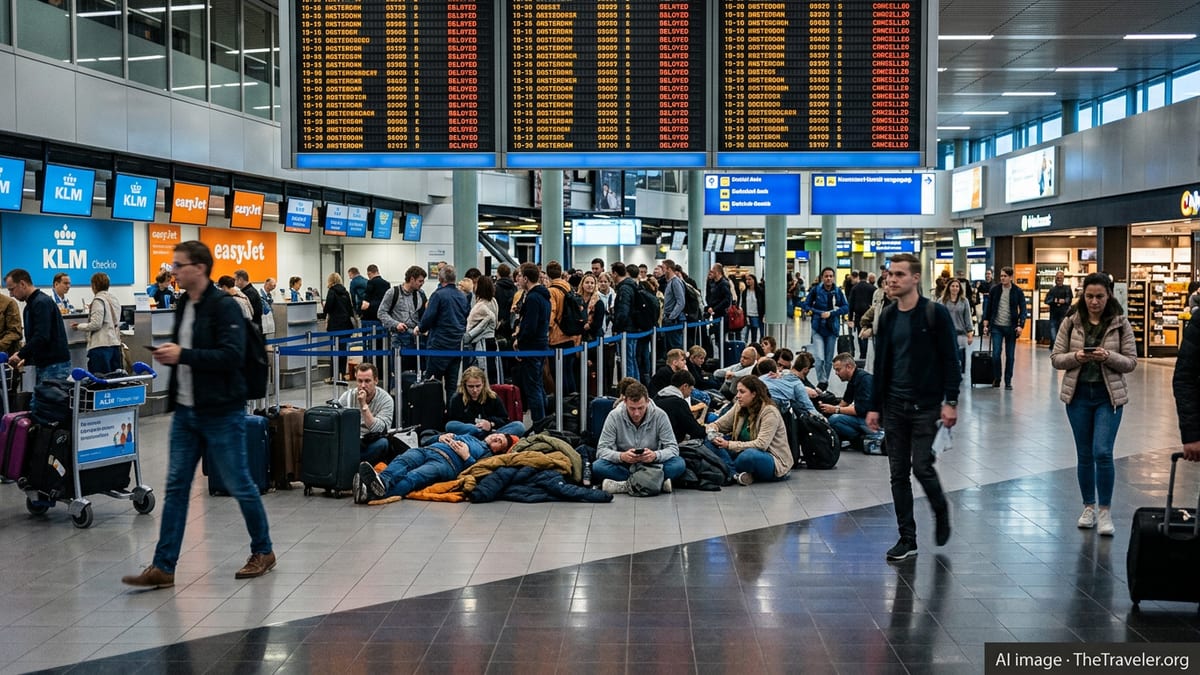
Wave of Cancellations Ripples Across Key European Routes
According to publicly available operational data and media coverage, a cluster of cancellations by easyJet, KLM, and Air France has affected at least seven flights connected with Porto, creating knock-on disruption across Western Europe. While precise tallies vary by tracker and by day, the pattern shows multiple same-day cancellations paired with a larger number of delayed services.
These cancellations are concentrated on routes between Porto and major hubs such as Frankfurt, Amsterdam, and Zurich, as well as secondary but strategically important cities including Nantes and Valencia. The affected flights form part of wider networks, meaning a single cancellation in Porto can disrupt onward connections throughout Europe.
Travel-disruption trackers and airline schedule data indicate that the three carriers have adjusted timetables repeatedly in recent days, in some cases suspending rotations that normally operate daily or several times per week. This has left travelers facing rebookings, extended layovers, and last-minute changes to itineraries into and out of northern Portugal.
Although some services have resumed on subsequent days, the pattern of cancellations and delays has generated significant uncertainty for passengers planning short breaks, business trips, or onward long-haul connections via European hubs.
easyJet Disruptions Affect Zurich, Valencia and Other Leisure Routes
easyJet, which maintains a base at Porto Airport, has been particularly visible in the disruption pattern. Publicly available flight-status data show repeated schedule changes on services linking Porto with Zurich and other key leisure destinations. Travelers reported cancelled or heavily delayed rotations, forcing rerouting via alternative hubs or overnight stays.
Services between Porto and Valencia, already operating with limited frequencies compared with larger city pairs, have also been affected. When a single daily or several-times-weekly flight is suspended, passengers typically have fewer same-day alternatives, increasing the impact of each cancellation on travel plans.
These issues come against a backdrop of heightened strain on European low-cost operations during the early summer peak. Sector-wide performance summaries for June indicate elevated levels of delays and cancellations across low-cost and network airlines alike, driven by air traffic control bottlenecks, weather, and capacity constraints at busy airports.
For travelers using Porto as a gateway to central Europe or the Mediterranean on easyJet services, this has meant a higher risk of missed connections, truncated city breaks, and additional expenses for last-minute accommodation and alternative transport.
KLM and Air France Schedule Strains Reach Porto via Amsterdam and Paris
KLM and Air France have also played a central role in the disruption affecting Porto, particularly through their hubs in Amsterdam and Paris. Network-wide analyses of recent days point to spikes in cancellations and delays at Amsterdam Schiphol and Paris Charles de Gaulle, involving both carriers and their regional partners.
Because Porto is served by KLM and Air France largely as a spoke destination feeding into these hubs, any operational disruption upstream can quickly cascade onto Porto-bound and Porto-originating flights. Suspended rotations between Porto and Amsterdam or between Porto and Paris have also weakened connectivity to onward destinations such as Frankfurt, Zurich, and Scandinavian or North American cities.
Published coverage of recent European flight chaos notes that hub-focused airlines have been particularly exposed to knock-on effects, as a single cancelled leg can compromise waves of connecting passengers. In this environment, a suspended Porto rotation may translate into missed onward flights for travelers bound for cities far beyond the immediate network of direct services from northern Portugal.
The result is a complicated picture for passengers who rely on KLM and Air France for multi-leg itineraries. Even when the Porto segment operates, delays at Amsterdam or Paris can lead to missed onward departures, rebookings, and extended time in transit.
European Network Pressures and Weather Add to the Turbulence
Analysis of broader European air traffic patterns for June indicates that the problems at Porto are part of a wider network strain. Pan-European performance briefings show elevated en route and airport-related delays at large hubs such as Frankfurt, Amsterdam, and Zurich, with knock-on effects spreading through airline schedules.
These constraints are compounded by localized issues, including weather-related air traffic control restrictions, crew and aircraft rotations running out of place, and peak-season demand stretching airport resources. When airports such as Frankfurt or Amsterdam experience concentrated disruption, secondary airports linked via spokes like Porto can swiftly feel the impact in the form of suspended rotations or heavily delayed arrivals and departures.
Porto’s role as a growing gateway for both tourism and business travel magnifies the consequences. With carriers focusing on optimizing their networks around constrained capacity, flights with lower yields or more flexible alternatives can be temporarily removed from schedules, leading to the type of short-notice suspensions now being observed.
In this environment, even travelers whose flights are not cancelled outright may encounter gate changes, last-minute schedule adjustments, and extended taxi or holding times, all of which contribute to an overall perception of instability across the European air travel system.
Passenger Impact and Practical Steps for Affected Travelers
For passengers moving through Porto during this period, the immediate impact has been uncertainty. Travelers attempting to reach Frankfurt, Amsterdam, Nantes, Zurich, Valencia, and other destinations have faced queues at service desks, reissued boarding passes, and, in some cases, involuntary overnight stays when replacement flights were unavailable on the same day.
Consumer-rights organizations and travel advisories consistently highlight the importance of documenting disruption, retaining boarding passes, and keeping records of any written communication from airlines. Such documentation can be vital when seeking compensation or reimbursement for expenses where applicable under European consumer protection rules.
Publicly available guidance also underscores the value of proactive monitoring. Passengers are advised to check flight status repeatedly in the 24 hours before departure, to enroll in airline notification systems where possible, and to build additional buffer time into itineraries involving tight connections through major hubs.
While the current pattern of cancellations and delays affecting easyJet, KLM, and Air France at Porto may ease as operational pressures stabilise, recent days have shown how quickly disruptions at major European airports can ripple outward. For now, travelers using Porto as a starting point or transit gateway are navigating a more unpredictable environment than in previous summers, prompting many to plan more cautiously and remain alert to last-minute changes.