


More news on this day
One of LaGuardia Airport’s two main runways remained out of service on Thursday after a sinkhole discovered near Runway 4/22 forced an ongoing repair effort and continued flight disruptions at the New York City hub.
Get the latest news straight to your inbox!
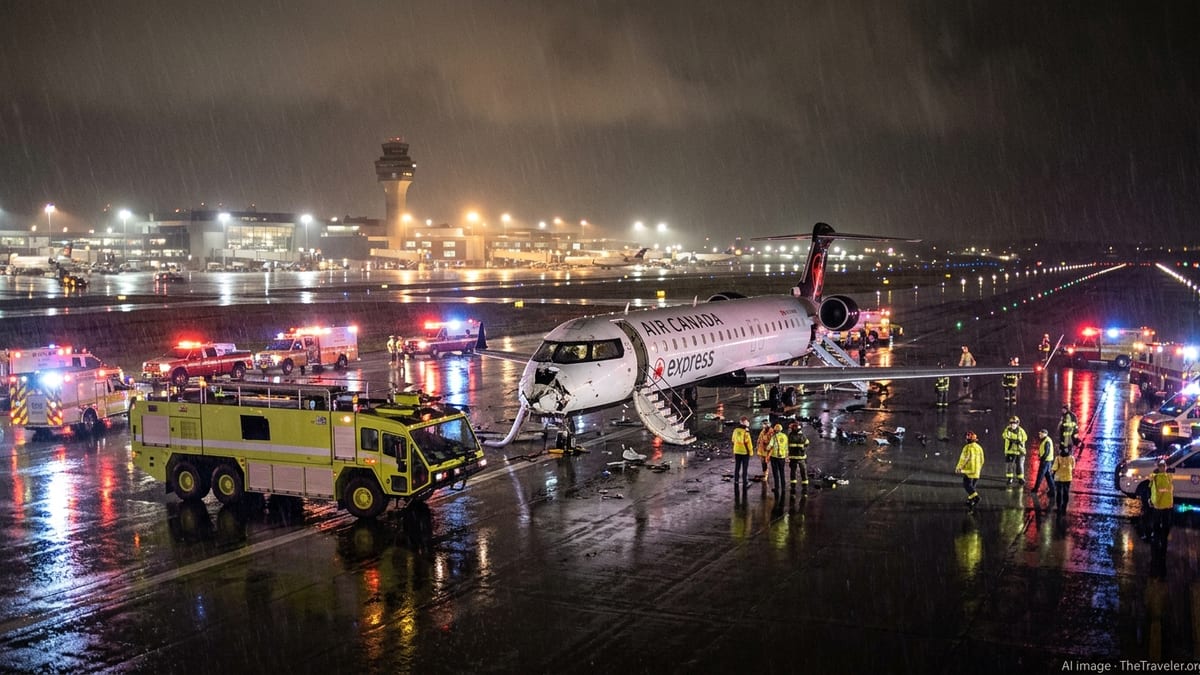
Runway 4/22 still shut as crews work around the clock
Publicly available information indicates that airfield inspection teams first spotted the depression late Wednesday morning, May 20, during a routine sweep of the LaGuardia airfield. The sinkhole was found near Runway 4/22, a key strip used for a large share of the airport’s arrivals and departures, prompting an immediate closure of the runway for safety reasons.
Coverage from multiple outlets on Thursday reports that the runway has not yet reopened while construction crews continue excavation, stabilization and resurfacing work. Heavy machinery and materials have been staged at the site, and operations remain concentrated on keeping the damaged area isolated while preserving access to taxiways and the remaining runway.
Reports indicate that the closure effectively halves LaGuardia’s runway capacity, forcing air traffic managers to meter arrivals and departures more tightly. With storms moving through the Northeast on Wednesday and Thursday, the combination of weather and infrastructure problems has sharply reduced the number of flights the airport can safely handle in a given hour.
Industry trackers show that a ground delay program remains in effect, with average holds near LaGuardia previously reported at around an hour and a half for some inbound flights. While conditions can fluctuate by the minute, the ongoing single-runway operation continues to produce rolling delays and cancellations into Thursday.
Hundreds of flights disrupted and schedules reshuffled
Data compiled from flight-tracking services on Wednesday and early Thursday point to hundreds of cancellations and delays tied to the sinkhole and the subsequent runway shutdown. Earlier figures showed nearly 200 cancellations and a similar number of delays for flights into and out of LaGuardia, and disruption has continued as airlines rework schedules.
According to published coverage, carriers have been trimming peak-time departures, consolidating lightly booked services and, in some cases, rebooking passengers onto flights from other New York area airports. Travelers connecting through major hubs such as Chicago, Atlanta and Dallas have also reported knock-on effects as aircraft and crews become misaligned.
Airline advisories reviewed on Thursday morning encourage customers to check their flight status frequently and allow extra time at the airport, particularly for early morning and late afternoon departures when runway demand is highest. Several major carriers have issued flexible travel policies for LaGuardia, allowing passengers to move their trips without change fees within defined date ranges.
Passengers already at the airport have reported crowded gate areas, longer lines at customer service desks and challenges securing same-day alternatives. With one runway offline, even minor weather or traffic control constraints can ripple quickly through the day’s schedule.
Questions over ground stability at a heavily engineered airfield
The incident has renewed attention on LaGuardia’s unique geography and history. The airport was built along the shoreline of Queens with extensive fill and has undergone layers of reconstruction and expansion over decades, leaving a complex subsurface environment beneath its runways and taxiways.
According to background material from aviation planners and past environmental reviews, parts of the airfield rest on engineered land that requires careful monitoring for settlement and water intrusion. While localized pavement failures are not uncommon at older airports, the emergence of a sinkhole sizable enough to shut a primary runway has focused concern on how underlying soils and aging infrastructure respond to heavy use and changing weather patterns.
Recent years have seen a broader campaign to modernize LaGuardia, including terminal replacements, taxiway upgrades and runway rehabilitation projects. Planning documents show that Runway 4/22 and its associated taxiways have been the subject of ongoing evaluation and programmed work, reflecting their central role in airport operations.
Infrastructure analysts note that the LaGuardia event follows other high-profile ground failures in the region, including a separate sinkhole reported on the Long Island Expressway earlier in May. While each incident involves distinct conditions, the cluster of events has added urgency to discussions about long-term maintenance and climate resilience across New York’s transportation network.
Travelers face tough choices amid uncertain reopening timeline
As of Thursday, there is no firm public timeline for the full reopening of Runway 4/22. Reports suggest that engineers must complete geotechnical assessments, repair underlying voids, rebuild pavement layers and validate that the affected area meets safety standards before the runway can return to service.
In the meantime, travelers passing through LaGuardia are weighing whether to keep existing itineraries, reroute via John F. Kennedy International or Newark Liberty, or shift to rail and intercity bus options for shorter trips along the Northeast Corridor. Published coverage and airline guidance emphasize that conditions can change quickly, and a flight that appears on time in the morning can still be delayed if weather or construction progress alters the flow of traffic.
Airport information channels continue to advise passengers to monitor airline apps and notification systems closely, rather than relying on static departure boards or third-party summaries. Early check-in, flexible ground transport plans and carry-on baggage are commonly recommended strategies to navigate periods of operational stress at congested airports.
With one of New York City’s key runways still closed for repairs, the LaGuardia sinkhole has become another reminder of how a local infrastructure failure can quickly spread across airline networks. The pace of repairs over the coming days will determine how long travelers feel the effects of this latest disruption at the Queens airport.