


More news on this day
Passengers across Europe faced another challenging travel day as a fresh wave of cancellations and more than 1,300 delays rippled through major hubs in the Netherlands, Spain, Italy, Denmark and Sweden, disrupting services on carriers including British Airways, SAS, Norwegian, Austrian Airlines and Icelandair.
Get the latest news straight to your inbox!
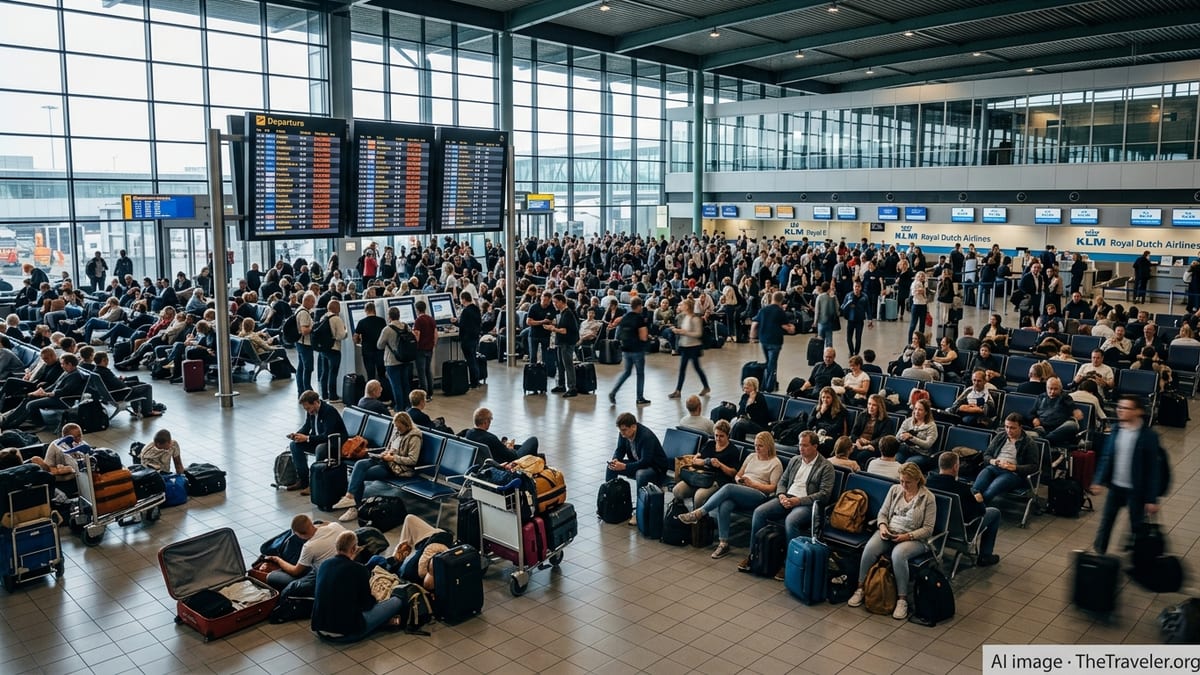
Tracking the Latest Wave of Disruption
Publicly available operational data from flight-tracking platforms and passenger-compensation services indicates that more than 60 flights have been cancelled and close to 1,400 delayed in a single 24-hour period across Europe, concentrating heavily on northern and southern corridor routes. The pattern closely mirrors disruption seen in recent weeks, when similar datasets showed more than 1,300 delayed flights and several dozen cancellations in Spain, Italy, Sweden and neighboring states.
The latest numbers place airports in the Netherlands, Spain, Italy, Denmark and Sweden among the most affected, with significant knock-on effects across the wider European air network. Amsterdam Schiphol, Barcelona El Prat, Rome Fiumicino, Copenhagen Kastrup and Oslo Gardermoen feature prominently in current tracking tables that list growing clusters of late and cancelled departures.
Reports compiled by aviation analysis outlets and specialist travel media describe how the disruption is fanning out across the day’s schedule. Even where the absolute number of cancellations remains relatively modest compared with peak crisis periods, the concentration of delayed flights at major transfer airports is creating long queues, missed connections and difficult rebooking conditions for passengers.
Recent coverage in European aviation reports and industry briefings highlights that the figures for the current disruption are broadly in line with a wider pattern this spring, which has already produced multiple days with more than 1,300 delayed flights and around 50 cancellations across the continent. That broader backdrop is heightening concern among frequent flyers and travel businesses ahead of the approaching peak summer season.
Key Airports Under Pressure
Amsterdam Schiphol once again appears as one of the focal points of the latest disruption. Earlier episodes this year linked delays and cancellations at the Dutch hub to a mix of adverse weather, runway constraints and staffing challenges. Analysis from European network managers shows that airports with complex runway systems and high volumes, such as Schiphol, are particularly vulnerable when capacity is trimmed for even a few hours.
In southern Europe, Barcelona and Rome feature repeatedly in public delay statistics, reflecting both their role as major tourist gateways and their position in the network of routes linking Mediterranean destinations with northern Europe. Coverage from travel outlets in recent weeks has described repeated clusters of late departures from Spanish and Italian hubs, with some services to and from the Nordic region and the United Kingdom arriving more than an hour behind schedule.
Copenhagen and Oslo are also appearing near the top of delay rankings, according to flight-tracking dashboards followed by aviation enthusiasts and travelers. Northern hubs often face challenging weather and capacity constraints that can ripple across regional networks serving Sweden, Norway and Denmark, leading to short-notice schedule changes when runway or airspace availability tightens.
Stockholm and Gothenburg in Sweden, as well as secondary airports in Spain and Italy, have reported smaller but still significant pockets of disruption. When these regional airports are combined with the larger hubs, the result is a pan-European pattern in which delays compound throughout the day. Late inbound aircraft and crews arriving out of position make it harder for airlines to recover schedules before the evening peak.
Airlines Feeling the Impact
The current wave of delays and cancellations is affecting a diverse group of carriers. Published disruption trackers and rights-advisory platforms list services operated by British Airways, SAS, Norwegian, Austrian Airlines and Icelandair among those impacted, particularly on cross-border routes linking the United Kingdom, Scandinavia and continental hubs in the Netherlands, Spain and Italy.
SAS and Norwegian, which both run extensive networks across Scandinavia and into central and southern Europe, show multiple delayed flights in the latest round of data, echoing earlier episodes this spring when services between Denmark, Sweden, Norway and Mediterranean holiday destinations experienced knock-on delays. Similar patterns are visible on British Airways and Austrian Airlines flights connecting London, Vienna and key hubs such as Amsterdam and Rome.
Icelandair, which uses Keflavik as a transatlantic bridge, appears in delay listings on services feeding into northern European airports where congestion has been building. Travel-industry commentary notes that when hub airports such as Amsterdam or Copenhagen encounter a burst of disruption, the effects can quickly spread onto connecting long-haul services operated by European and non-European airlines alike.
Publicly available statements and advisories from several airlines in recent weeks have encouraged passengers to monitor mobile apps and booking portals for real-time information on departure times, gate changes and potential schedule adjustments. Many carriers are also highlighting options for free rebooking within defined time windows when flights are significantly delayed or cancelled.
Why Delays Are Rising Across the Network
Industry reports from organizations that monitor the European air traffic network indicate that structural pressures have been building for several seasons. Analyses from Eurocontrol and airline associations describe a combination of factors, including air traffic control bottlenecks, staffing shortages and adverse weather episodes that are increasingly intense and harder to predict.
Recent assessments from European air traffic specialists suggest that air traffic flow management delays have risen markedly over the past decade, reflecting both higher traffic volumes and slower progress in modernizing infrastructure. According to these assessments, days with widespread disruption often coincide with sector capacity restrictions in key portions of European airspace, where controllers must slow the rate of arrivals and departures to maintain safe separation.
Weather remains a critical driver. Coverage of earlier incidents this year documented how dense fog, strong winds and winter conditions in the Netherlands and Scandinavia triggered runway constraints and forced airlines to cut frequencies or re-time services. Even when the weather improves within hours, the backlog of delayed flights can persist well into the evening as aircraft and crews attempt to realign with the planned schedule.
Operational analysts also point to the interconnected nature of the European network. A single morning of disruption at one major hub can send late aircraft into multiple downstream airports in Spain, Italy or the Nordic region, where limited spare capacity makes it difficult to absorb delays. This appears to be the case in the current episode, with data showing how disruption at a handful of large hubs is now reflected in widespread delays across the broader system.
What Today’s Numbers Mean for Travelers
For passengers booked on flights through Amsterdam, Barcelona, Rome, Copenhagen, Oslo and other affected airports, today’s figures translate into longer waits, tighter connections and greater uncertainty around arrival times. Travel forums and social media posts from recent disruption days describe long lines at check-in and transfer desks, as well as rapidly changing information on departure boards when crew or aircraft become unavailable.
Consumer-rights organizations and compensation advisory services continue to emphasize the importance of checking booking details frequently and staying alert to notifications from airlines. Many carriers encourage travelers to confirm their flight status before leaving for the airport and to use mobile apps for rebooking when options are available, which can sometimes be faster than queuing at a service desk during peak disruption.
Under European and United Kingdom air passenger regulations, travelers whose flights are cancelled or arrive with a substantial delay may be entitled to assistance such as meals, refreshments and hotel accommodation where necessary, along with rerouting or refunds. Eligibility for financial compensation depends on the cause of the disruption and the length of delay, and passengers are advised by consumer groups to keep boarding passes, booking confirmations and receipts for reasonable expenses.
Looking ahead to the busy summer period, recent analyses from aviation bodies and travel-industry commentators suggest that days like this may become more frequent unless additional capacity and contingency measures are brought online. For now, the latest tally of 62 cancellations and nearly 1,400 delays offers another reminder of how quickly conditions can deteriorate across Europe’s highly interconnected air travel network.