


More news on this day
One of Alaska’s most dramatic fjords is falling off the cruise map for 2026, as mounting evidence of landslide-related tsunami hazards prompts major lines to abandon scenic sailings into Tracy Arm Fjord.
Get the latest news straight to your inbox!
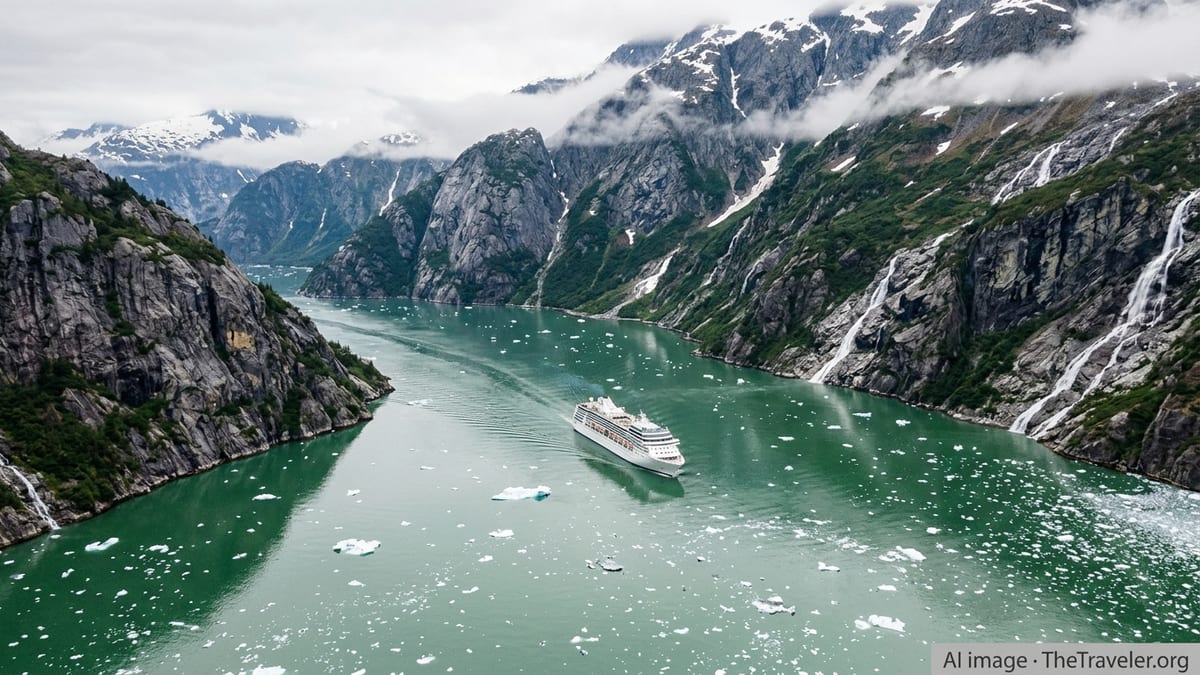
A Sudden End to a Signature Alaska Scenic Sail
Tracy Arm Fjord, a narrow, glacier-carved channel southeast of Juneau, has long ranked among the marquee sights on Inside Passage itineraries, drawing large ships and small tour vessels to its cliff walls, waterfalls and the twin Sawyer glaciers. For the 2026 season, however, that once-standard highlight has effectively disappeared from big-ship schedules.
Publicly available itinerary updates compiled in recent weeks show that Holland America Line, Carnival Cruise Line, Royal Caribbean, Virgin Voyages and other operators have removed Tracy Arm from all published 2026 Alaska cruises, typically substituting nearby Endicott Arm and Dawes Glacier instead. Cruise-industry coverage indicates that the changes affect both full transits into Tracy Arm and dedicated sightseeing calls marketed as Tracy Arm or Sawyer Glacier scenic cruising.
Consumer notices shared by cruise-focused outlets describe the adjustments as safety-driven substitutions rather than outright cancellations of a voyage, meaning most guests are being offered an alternative scenic fjord transit on the same day rather than refunds for the lost destination. The pattern, taken together, points to a de facto pause on large-ship visits to Tracy Arm for at least the 2026 season.
The 2025 Landslide That Changed Tracy Arm
The industry-wide retreat from Tracy Arm traces back to a major slope failure that occurred on August 10, 2025, near the terminus of South Sawyer Glacier at the head of the fjord. Documentation from the U.S. Geological Survey and Alaska state hazard agencies describes a massive rock and ice collapse, with tens of millions of cubic meters of material plunging into the water.
Scientists characterize the event as a landslide-generated tsunami that sent waves racing down the narrow fjord and produced run-up heights on the order of 30 meters or more on opposing valley walls. Photographs and field reports compiled in late 2025 show heavily scoured shorelines and damaged vegetation along coves at the entrance to Tracy Arm, evidence of the power of the displacement wave that followed the collapse.
While the event took place in the early morning and far from any visiting cruise ship, it immediately drew comparisons to other high-consequence, landslide-driven tsunamis in Alaska’s glacial fjords. Technical briefings released for scientific conferences and hazard summaries circulated among state agencies in early 2026 emphasize that the 2025 Tracy Arm tsunami ranks among the larger landslide-generated waves recorded in recent decades.
That scale has direct implications for cruise navigation. Modeling work referenced in publicly available hazard profiles notes that even localized slope failures can create dangerously steep waves in confined fjords, with little warning time for vessels in narrow channels where turning or outrunning a wave may be impossible.
Continuing Instability and a New Assessment of Risk
Although the 2025 slide itself is over, ongoing monitoring suggests that the hazard in Tracy Arm has not fully passed. Updates from the Alaska Division of Geological and Geophysical Surveys and the U.S. Geological Survey describe a still-evolving slope system near South Sawyer Glacier, where the initial collapse left an exposed, oversteepened scar.
These published assessments indicate that rockfall and smaller secondary slides are expected to continue as the slope adjusts, the ice front retreats and seasonal freeze-thaw cycles act on fractured rock. Any additional failures that reach the water, even at a much smaller scale than the 2025 event, have the potential to generate localized displacement waves within sections of the fjord.
In parallel, state hazard bulletins and federal technical notes point out that glacial fjords like Tracy Arm are inherently dynamic environments. Rapid glacier thinning and retreat can destabilize surrounding valley walls, increasing the likelihood of large landslides into deep water. The 2025 event is being cited in scientific literature as a case study in how climate-driven landscape changes intersect with marine navigation and coastal safety.
Against that backdrop, cruise companies appear to be recalibrating their tolerance for risk in narrow Alaskan fjords where a single, sudden slope failure could intersect with a passing vessel. The collective move away from Tracy Arm for 2026 aligns with a more conservative approach that has already been applied to other monitored fjords in the region where large potential landslides have been identified.
Cruise Lines Shift to Endicott Arm and Other Alternatives
For travelers booked on 2026 Alaska sailings, the most visible impact of the hazard reassessment is a change of name on the itinerary. Where brochures once highlighted Tracy Arm and Sawyer Glacier, schedules now more commonly list Endicott Arm and Dawes Glacier or other fjord alternatives.
Notices summarized by cruise-news outlets describe how Holland America’s 2026 itineraries now route ships into Endicott Arm on dates that previously featured Tracy Arm, citing unstable ice and geological conditions that “preclude” entry into Tracy Arm. Carnival’s Alaska program for 2026 has been adjusted along similar lines, with internal communications to guests explaining that the line has been “closely monitoring” geological conditions and will instead offer scenic cruising in Endicott Arm.
Coverage of Royal Caribbean’s program notes a comparable shift, with the company stating that it will no longer operate scenic cruising to Tracy Arm Fjord and Sawyer Glacier due to a recent landslide and ongoing navigation safety concerns. Reports focusing on newer entrants to the Alaska market, such as Virgin Voyages, indicate that these lines have removed Tracy Arm from inaugural-season plans altogether and are marketing Endicott Arm as the primary glacier-viewing alternative.
Smaller expedition-style ships and local day boats, which draw far less water and can maneuver more easily in tight spaces, may face different operational decisions, but large, ocean-going cruise vessels appear to be treating Tracy Arm as off-limits in 2026 while scientists continue to study the slope and wave hazards.
What the 2026 Pause Means for Alaska-Bound Travelers
The effective closure of Tracy Arm to large ships in 2026 has sparked disappointment among some travelers who chose specific sailings in order to see Sawyer Glacier and the fjord’s sheer granite walls. Posts on cruise forums over the last month detail emails advising guests that Tracy Arm excursions have been changed or canceled and replaced with Endicott Arm or other glacier-viewing options.
Travel advisors quoted in travel-industry coverage emphasize that Endicott Arm and Dawes Glacier still deliver a classic Alaska fjord experience, with steep-sided valleys, floating ice and active tidewater calving. However, long-time Alaska cruisers responding in online discussions frequently describe Tracy Arm as a particularly dramatic and narrow fjord, a factor that both heightened its appeal and underlies the current safety concerns.
For those already booked on 2026 itineraries, consumer advocates suggest carefully reviewing updated shore-excursion descriptions and scenic cruising notes provided in cruise line portals, since some marketing materials still reference Tracy Arm in legacy text while the underlying route has shifted. Prospective guests weighing new bookings are also being encouraged to focus less on a specific fjord name and more on the overall mix of glacier viewing, wildlife and port calls offered on a given itinerary.
As of mid-April 2026, publicly available information from scientific agencies and cruise operators shows no firm timeline for when Tracy Arm might return to big-ship schedules. With landslide hazards still under investigation and cruise lines signaling that safety assessments will drive any future changes, travelers dreaming of this particular fjord may need to look beyond the 2026 season or consider smaller-vessel options that are able to operate under different risk thresholds.