


Levi Ski Resort in Finnish Lapland has grown into one of Northern Europe’s most accessible Arctic ski destinations, with modern lifts, varied terrain and a compact village wrapped around the fell. If you are planning your first trip, the details that matter most in practice are lift passes, up-to-date trail maps and the on-the-ground logistics that help you move around the mountain without stress. This guide brings together the latest publicly available information and real-world examples so you can arrive in Levi prepared, with your passes sorted and a clear mental picture of how the slopes and services are laid out.
Get the latest updates straight to your inbox!
Getting Oriented: What Makes Levi Different
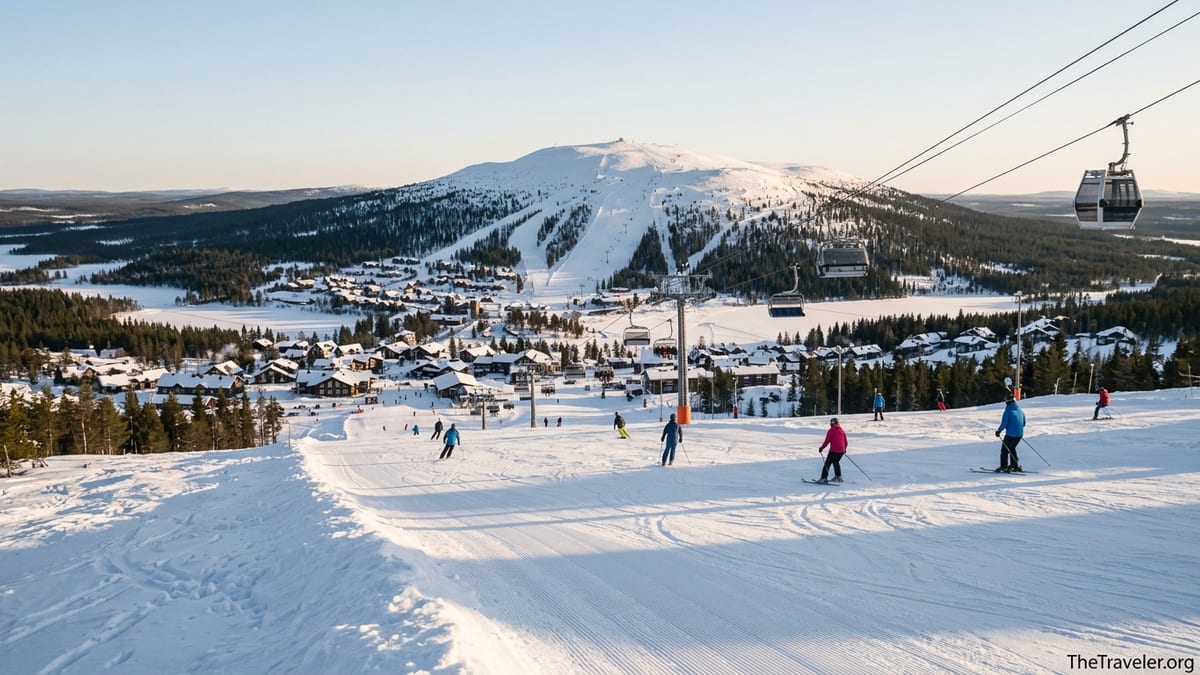
Levi sits in Finnish Lapland, roughly 170 kilometers north of the Arctic Circle, in the municipality of Kittilä. The resort spreads over a single rounded fell with multiple slope sectors rather than a long mountain chain, which means you can ski around the hill in a loop, linking different faces as the light and wind change throughout the day. The main village is clustered at the base, so most accommodation, restaurants and ski services are either ski-in/ski-out or a short walk from the lifts.
The ski area itself offers dozens of marked pistes and more than twenty lifts, from covered magic carpets for beginners to chairlifts and gondolas serving the summit. Night skiing is a major part of the experience; many runs are floodlit, which matters because mid-winter days are very short this far north. In practical terms, this allows you to book a mid-afternoon three or four hour pass and still have plenty of riding time under the lights.
Levi is especially well known for the Levi Black World Cup slalom course, used each November for the FIS Alpine Ski World Cup. Recreational skiers can ride the same general slope outside of event closures, which adds appeal for confident intermediates and experts. At the same time, the South and Northeast sectors provide long, mellow groomers that appeal to families and cautious skiers, so mixed-ability groups can usually find suitable terrain without splitting up entirely.
Because Levi combines a compact village, modern infrastructure and reliable winter operations, you will see a mix of Finnish families on school holidays, British package guests, and independent travelers from across Europe and Asia. This mix influences how lift passes are structured and how busy different sectors feel at peak times, something worth understanding before you purchase your pass or choose your base.
Understanding Levi Lift Pass Options
Levi operates an electronic lift pass system with reloadable keycards, similar to other Nordic and Alpine resorts. You typically pay a small supplement for the physical card on your first visit, then keep and top it up online or at ticket offices for future trips. This is helpful if you return to Levi in later seasons or combine your skiing with other resorts that use compatible media within Finland.
The resort sells passes in multiple formats: multi-day passes for classic week-long holidays, single-day passes, and shorter duration products such as 3-hour or 4-hour tickets that start from the first gate entry. There are distinct prices for adults, youth and children, and usually discounts or free skiing for the youngest kids when they share a pass with a paying adult, though exact age brackets and conditions can change by season. As an example, a family of four with two school-age children might opt for a 6 or 7 day pass for everyone if they plan to ski all day, whereas a couple on a Northern Lights trip who only want to ski casually could buy a series of afternoon four hour passes on the days that suit the weather.
Season passes are popular with locals and long-stay guests. Recent seasons have also featured partnerships with airlines, such as options to use frequent flyer points toward passes, and occasional early-bird discounts if you buy before the core winter school holiday period in February and March. Because pricing is dynamic and promotions can be tied to specific dates, it is wise to check the official Levi ski pass information and webstore shortly before your trip rather than relying on prices you saw months earlier.
When comparing passes, pay attention to operating dates as well as hours. Levi often opens selected front slopes relatively early in the season for training and World Cup preparations, then expands terrain as snowmaking and natural snowfall allow. If you are visiting in early or late season, check which lifts and sectors your pass covers and whether there are any maintenance closures, so you do not pay for more access than you can realistically use.
Where and How to Buy Lift Passes
For most visitors, the easiest way to purchase Levi lift passes is through the resort’s online shop before arrival. You can either load days onto an existing keycard if you have one from a prior season or order new cards and collect them from dedicated pick-up machines or ticket windows in the village. Buying in advance saves time on your first morning, which can be crucial on busy holiday weeks when lines form at Zero Point, the main base at the front slopes.
On-site, you will find ski pass offices at key base areas such as Zero Point, the South slopes base and other major lift terminals. These offices can handle new purchases, reloading, and troubleshooting if your card stops working. They are also the right place to ask about age-based discounts, student reductions, or packages that combine ski passes with rental equipment or lessons. For example, families frequently book a bundle that includes children’s gear, a beginner group lesson, and a child’s lift pass for the same two or three days.
If you prefer flexibility, remember that shorter duration passes at Levi are counted from the first scan at the lift gate, not from a fixed clock time like 09:00 or 12:00. This means you can plan your day around the Arctic light and the temperature. On the coldest mornings, many visitors choose to start skiing closer to midday, when the sun is at its highest, then ski into the evening under the lights. In practice, that might look like starting at 11:15 on a four hour pass, taking a short warming break at a slope-side hut, and finishing around 15:15 with enough time to catch a snowmobile tour or husky ride afterward.
Groups staying with tour operators sometimes receive vouchers that must be exchanged for physical lift passes at specific desks. If you are arriving on a late-evening charter flight into Kittilä and heading straight to Levi, it is worth checking the operating hours of the pass office listed on your voucher. In some cases, you may only be able to activate your pass the following morning, so plan any first-night activities accordingly.
Making Sense of Levi’s Trail Maps
Levi’s official slope map, also called a piste or trail map, is available as a downloadable PDF and in printed form at the resort. It shows all marked pistes, lifts, park areas and key services, color coded by difficulty. The fell is divided into sectors such as Front, South, West, Northeast and Southeast, each with its own character. The map also shows connections between sectors, which helps you avoid dead ends or ending up far from your accommodation at the end of the day.
On the front slopes, directly above Levi village, you will see a cluster of red runs served by chairlifts and the main gondola up to the summit. This is where you find the Levi Black World Cup course and the Fun Park, along with Kids’ Land near the base area for beginners. The South slopes sector, reached easily by ski bus or car if you are not staying nearby, is dominated by wide blue pistes that suit learning skiers and boarders, plus a children’s area called Leevilandia with magic carpets and very gentle inclines.
The West slopes sector offers a mix of cruising runs and sportier terrain, along with access to popular mountain huts and restaurants where locals linger over hot chocolate and grilled sausages. Further around the fell, the Northeast sector features long, flowing pistes ideal for carving, generally a bit quieter than the front side during peak times. The Southeast slopes are particularly calm and well suited to first-timers who want gentle terrain without too much through-traffic from stronger skiers.
In addition to the downhill map, Levi publishes separate maps for cross-country ski tracks, winter walking routes, fatbike trails and snowmobile routes. These are available through an electronic route service and as printed paper maps from Levi Tourist Information in the village. In practice, many visitors keep the piste map in a jacket pocket and the wider area map back at their accommodation, using it to plan non-ski days or evening excursions like Aurora viewing walks just outside the village lights.
Using Maps and Signage Safely on the Mountain
Levi’s slope map uses standard European difficulty colors: green for the easiest beginner terrain, blue for easy, red for intermediate and black for expert. When you study the map before heading out, trace the sequence of lifts and pistes that fit the weakest skier or rider in your group. For example, a mixed group might take a gondola up to the summit but choose a blue or easy red route back down on the South or Northeast side, avoiding the steeper sections of Levi Black even if some members could handle it.
On the mountain itself, numbered lifts on the map correspond to physical signs at the lift bases and on trail markers. This makes it easier to reorient yourself if visibility drops due to snowfall or flat light. It also helps you communicate clearly with ski patrol or staff if you need assistance; saying that you are near the lower station of lift 6 on the Northeast slopes is much more precise than “on a blue run somewhere near the top.” Carrying a small, folded paper map is useful in case your phone battery drains quickly in the cold.
Many newcomers underestimate how rapidly conditions can change in Lapland. A run that feels straightforward in bright midday light can feel very different under late-afternoon floodlights or during a snow squall. Use the map to identify sheltered routes that descend into tree-lined sections if the summit is windy or foggy. Practice conservative route choices on your first day, then gradually explore more of the fell once you have a feel for the snow and light. Parents especially appreciate knowing where to find short “escape” routes back to the village from various mid-stations, which are clearly marked on the map.
For those interested in cross-country skiing or winter walking, the separate trail maps indicate track grooming status and recommended loops. Some classic loops start directly from Levi center, while others begin at parking areas a short drive away. Signs along the trails often include both Finnish and English, along with symbols indicating difficulty, distance and whether the track is intended for classic, skate skiing or shared use. Observing these markings is important for safety and for maintaining the quality of groomed tracks for everyone.
Practical Visitor Information: Getting There and Around
Reaching Levi typically involves flying or taking the train to Helsinki and then connecting north. The closest airport is Kittilä, roughly a 15 to 20 minute drive from Levi village in normal winter conditions. In winter, there are usually direct domestic flights from Helsinki, and during peak weeks some international charter flights operate from major European cities. From Kittilä airport, travelers commonly pre-book a shared shuttle, arrange a taxi through their accommodation, or pick up a rental car to drive themselves to the resort.
Travelers who prefer trains can ride north from Helsinki toward Kolari or Rovaniemi, then continue by bus or car to Levi. For example, a visitor might take an overnight sleeper train to Kolari, wake up close to the Arctic, then transfer to a regional bus that serves Levi during the winter season. This route takes longer than flying but allows you to avoid airport security lines and gives you the classic experience of watching the landscape gradually whiten through the train window.
Once in Levi, most people get around on foot within the central village. The base of the main front slopes is a short walk from many hotels, restaurants and shops. There is also a ski bus network that links accommodation clusters and outlying cabins with the different slope sectors, including the South slopes and some cross-country starting points. If you are staying in a cabin outside the walkable center, it is worth checking in advance how frequently the ski bus serves your stop, especially in the early morning and late afternoon when you are most likely to use it.
Because winter road conditions in Lapland can involve snow and ice, visitors who rent cars should be comfortable with Nordic winter driving. Rental vehicles in season are typically equipped with winter tires, but you still need to allow extra travel time, maintain safe distances and be prepared for limited daylight. For many first-time visitors, relying on shuttles and buses is a lower-stress option that allows you to focus on skiing and activities rather than on the road.
On-Mountain Services, Rentals and Lessons
Levi’s slope map marks key service points such as equipment rental shops, restaurants, cafes and ski schools. At Zero Point and the South slopes base in particular, you will find full-service rental outlets offering alpine skis, snowboards, boots, helmets and often cross-country gear. It is possible to reserve equipment online ahead of time and pick it up once you arrive, which shortens queues on busy Saturdays when many package guests change over.
Ski schools at Levi offer group and private lessons in multiple languages, reflecting the international mix of visitors. Beginner-friendly areas like Kids’ Land and Leevilandia are designed to keep learners slightly separated from faster traffic, making it easier for instructors to manage groups safely. A common pattern for families is to book a two-hour group lesson for children on the first two or three mornings of the trip, then spend the afternoon skiing together on gentle blue runs that connect directly back to the practice zones.
Restaurants and huts scattered around the fell provide natural breaks in your ski day. Many serve hearty Finnish and Lappish dishes such as salmon soup, reindeer stew and cinnamon buns, alongside international staples. Because temperatures can drop well below freezing, especially in January and February, these warm stops are not just about food but also about safely managing cold exposure. When studying the piste map, it can be helpful to circle one or two huts that you plan to use as regular meeting points if your group separates.
In the village, visitor information offices and hotel reception desks provide printed maps, current opening hours, and advice on non-ski activities. Popular options include Northern Lights excursions, reindeer and husky safaris, snowmobile tours and ice swimming with sauna. Aligning your lift pass days with these activities is a smart way to control costs: many travelers choose to ski three or four days out of a week and book passes only for those days, dedicating the remaining days to excursions or rest.
The Takeaway
Levi Ski Resort combines modern, family-friendly infrastructure with the distinctive atmosphere of the Arctic, making it a compelling choice for visitors who want both reliable skiing and a sense of place. To make the most of a trip here, it pays to understand how lift passes are structured, how the various slope sectors fit together on the trail map, and how to navigate the practicalities of transport, rentals and lessons.
In real terms, that means choosing passes that match how much you will actually ski, whether that is a week-long, all-day ticket for a committed group of riders or flexible three or four hour passes for travelers who are balancing skiing with safaris and Aurora hunting. It means downloading the latest piste map before you travel, studying the front, South, West and Northeast sectors, and planning routes that respect the ability level of the least experienced person in your group.
With a bit of advance planning, Levi is straightforward to navigate. Arriving with passes preloaded or a clear plan for buying them, a good grasp of the piste map, and realistic expectations about Arctic light and weather will help you spend your time on snow instead of in queues or confusion. Combined with the village’s compact layout and range of winter experiences, that preparation turns Levi from just another ski trip into a memorable Lapland adventure.
FAQ
Q1. When is the main ski season at Levi?
The core season typically runs from late November to late April, with the most reliable snow and widest lift openings from around December to late March, especially during the Finnish school holidays in February and early March.
Q2. Where can I find the latest Levi trail map?
You can download the current Levi slope map as a PDF from the resort’s official channels or pick up a printed version at lift ticket offices, rental shops and the Levi Tourist Information office in the village.
Q3. Do I need to buy lift passes in advance?
Buying in advance through the official webstore is recommended during peak weeks, as it lets you load or collect your pass quickly and head straight to the lifts instead of queuing at ticket windows on busy mornings.
Q4. Are there beginner-friendly slopes at Levi?
Yes. The South slopes and dedicated beginner areas like Kids’ Land and Leevilandia provide gentle, wide runs served by easy lifts, making them particularly suitable for first-timers and children.
Q5. How flexible are Levi’s lift pass options?
Levi offers everything from multi-day passes to half-day and hourly products such as 3-hour and 4-hour passes that start from your first lift entry, allowing you to tailor skiing time to your plans and the weather.
Q6. What is the best way to get from Kittilä Airport to Levi?
The most common options are pre-booked shared shuttles, taxis arranged through your accommodation, or rental cars. The drive usually takes about 15 to 20 minutes in normal winter conditions.
Q7. Is Levi suitable for non-skiers in my group?
Levi offers plenty for non-skiers, including Northern Lights tours, reindeer and husky safaris, snowmobile trips, winter walking routes, spas and saunas, plus restaurants and cafes in the compact village center.
Q8. Can I use one map for both downhill and cross-country skiing?
The downhill piste map and cross-country trail maps are separate, though both are available in digital and paper formats. If you plan to do both activities, it is worth picking up each type so you have clear, activity-specific information.
Q9. Do children get discounted lift passes?
Yes. Levi typically offers reduced prices for children and youth, and in some seasons the youngest children ski free when accompanied by a paying adult. Exact age limits and conditions can change, so check the current season details before you buy.
Q10. How crowded does Levi get during peak times?
Levi is busiest during Finnish school holidays in February and early March and around Christmas and New Year. Booking lift passes, rentals and lessons early, and starting your ski day slightly before or after the main rush, helps you avoid the longest queues.