


Planning a trip to Norway in 2026 means thinking beyond fjords and northern lights. Between Schengen entry rules, the new European border systems, strict drink-driving limits and practical details like payment options or winter driving, a bit of homework will make your arrival smoother and your stay far less stressful. This guide brings together the key entry requirements and visitor essentials you need right now, with current examples and on-the-ground context for modern Norway.
Get the latest updates straight to your inbox!
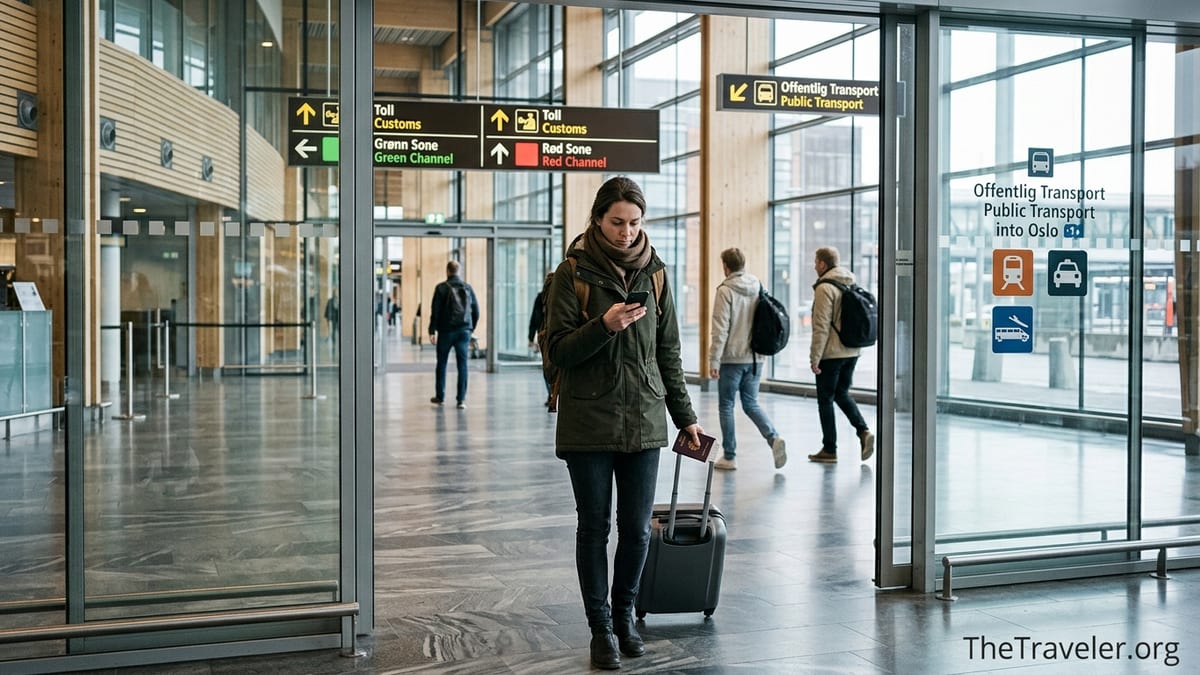
Understanding Norway’s Entry & Visa Rules
Norway is part of the Schengen Area, which means its external border rules mirror those of most continental EU countries. For many travelers, including citizens of the United States, Canada, the United Kingdom, Australia and Japan, short visits of up to 90 days in any 180 day period are visa free for tourism or business, as long as you do not work or study. If you are from a country that normally needs a Schengen visa, you will still apply for a short stay visa through the embassy or consulate of the Schengen country that is your main destination, which may be the Norwegian embassy or a partner country if Norway outsources processing in your region.
At the border, you should be prepared to show a passport that is less than 10 years old and usually valid for at least three months beyond your intended departure from the Schengen Area. In practice, airlines often refuse boarding if your passport is very close to expiry, so a comfortable six month validity margin is sensible. Border officers can also ask for proof of onward travel, such as a return ticket from Oslo Airport or a connecting flight out of the Schengen Area, and evidence that you can cover your expenses, for example recent bank statements or credit cards.
Norway follows the standard Schengen rule that your 90 days of visa free stay are counted across the whole Schengen Area, not just Norway. That means if you spend 40 days in Spain and France before flying to Bergen, you only have 50 days left in the 180 day window for Norway and other Schengen countries combined. Frequent visitors increasingly track this using Schengen stay calculators or travel planning apps to avoid inadvertent overstays that can result in fines or future entry bans.
There are limited exceptions for longer stays. If you plan to study in Trondheim for a semester, work a winter in Tromsø, or join a long research project, you will generally need a residence permit rather than relying on visa free entry. These permits are usually arranged in advance through the Norwegian Directorate of Immigration and often require appointments at embassies or visa centers, so you should plan many months ahead.
What’s New: EES, ETIAS and Digital Borders
Europe is in the middle of the biggest update to its external border controls in decades, and this affects travel to Norway. The Entry/Exit System, commonly called EES, is being rolled out across the Schengen Area. Instead of only a passport stamp, your entry and exit will be recorded digitally, including biometric data such as fingerprints and a facial image on first entry. For a traveler arriving at Oslo Gardermoen from New York, this typically means using automated kiosks or being processed at a manned desk that captures your data once, then speeds later crossings.
Alongside EES, the European Travel Information and Authorisation System, ETIAS, is expected to start in the last quarter of 2026. Official Norwegian police guidance notes that ETIAS will become mandatory for travelers who currently enter Schengen visa free for short stays, including Americans and many other nationalities. When it launches, you will apply online before travel, pay a small fee, and receive an authorisation linked to your passport, similar in concept to the US ESTA or Canada’s eTA. Until ETIAS actually goes live, however, visa exempt travelers can still board flights to Norway with only a valid passport.
In real terms you should expect a more digital, slightly slower first entry experience at busy times as systems bed in, particularly at large hubs such as Oslo Gardermoen or Copenhagen if you connect there before flying on to Norway. Families with children should allow extra time, since each traveler has to be processed individually. For now, the smartest move is to build a buffer into tight connections and to follow signage carefully; airports will typically separate EES processing lanes for non EU and EEA passengers.
These systems are designed to make overstays harder, as your days in and out of Schengen are tallied automatically. If you tend to hop in and out of the region for business or extended trips, the era of relying on faded passport stamps as your only record is ending. Keeping a simple log of your Schengen days, or using an app that mirrors the 90/180 rule, is becoming essential travel admin for regular visitors to Norway.
Health, Insurance and Current Public Health Rules
At the time of writing, Norway has removed the emergency style COVID era border closures and quarantine hotels that characterized 2020 and 2021, and standard entry is largely back to normal for most travelers. However, Norwegian health authorities still strongly recommend that visitors are up to date with routine vaccinations and that they monitor official health advice in the weeks before travel, particularly if new variants or respiratory disease surges emerge in winter.
Unlike some destinations that require proof of travel insurance at the border, Norway typically does not ask to see your policy on arrival, but coming without it is a significant risk. A single night in a Norwegian hospital can easily run to hundreds or thousands of euros, and helicopter evacuation after a hiking accident in Lofoten or a skiing injury in Hemsedal can be astronomically expensive without coverage. Many European visitors rely on the EHIC or GHIC cards for medically necessary care during temporary stays, but these do not cover private rescue or repatriation flights, so a dedicated travel policy remains worthwhile even for EU and EEA citizens.
Some activities in Norway, such as guided glacier hikes on Folgefonna, snowmobile trips in Finnmark or multi day fjord kayaking, may be excluded or limited in basic insurance packages because they are deemed higher risk. Before booking adventures, it is worth reading the policy fine print and, if necessary, upgrading to an adventure sports tier. A practical check is to ask yourself whether what you are doing is more demanding than walking around Oslo; if the answer is yes and involves equipment, altitude or remote areas, verify your coverage explicitly.
Pharmacies, branded as Apotek in Norwegian, are widespread in cities and larger towns, and pharmacists can give advice on common ailments in English. Over the counter painkillers such as paracetamol and ibuprofen are available, though often in smaller pack sizes than visitors from the United States or the United Kingdom are used to. If you take prescription medication, you should bring enough for your stay in original packaging and, for controlled medicines or large quantities, carry a doctor’s note or printout of your prescription to avoid problems at customs.
Customs, Allowances and Money Matters
Norwegian customs rules are strict but clearly defined, and understanding them can save you both time and money at the border. Travelers aged 18 or over can bring a limited duty free allowance of alcohol and tobacco when arriving from abroad. The standard combination, for example, is often one liter of spirits, 1.5 liters of wine and two liters of beer, or an equivalent mix within a fixed overall quota. If you choose not to bring cigarettes, you may usually substitute additional wine or beer within that same framework, which is why many tourists stock up on a mix of wine bottles and beer cans at airport duty free shops before exiting into the arrivals hall.
Norwegian Customs also runs a simplified declaration system for people who want to bring in more than the duty free quota of alcohol or tobacco for personal use. Using the official customs app you can, for instance, declare an extra 12 bottles of wine on top of your normal allowance, pay a fixed per liter fee on your phone, and then walk through the red channel on arrival ready to show your digital receipt if stopped. This system is particularly popular with Norwegians returning from shopping trips to continental Europe, but tourists renting a remote cabin for a week sometimes use it to avoid multiple pricey trips to the state run Vinmonopolet wine shops.
Beyond alcohol and tobacco, there is a value limit for general goods you can bring in duty free, which typically covers normal tourist items such as clothing, personal electronics and gifts. If you are carrying very high value items, or professional equipment like multiple camera bodies for a film shoot, it is wise to carry purchase receipts or temporary export papers from your home country to prove that you are not importing them for sale in Norway. Cash of 25,000 Norwegian kroner or more must be declared on entry; as a visitor you are rarely carrying that much physical currency, but it matters if you habitually travel with large sums of cash.
On the financial side, Norway is one of the most cash light societies in Europe. In Oslo or Bergen, it is increasingly normal to complete an entire trip without touching banknotes, as cafes, buses, bakeries and even public toilets accept standard Visa and Mastercard debit or credit cards, as well as mobile payments. A coffee in a central Oslo cafe often costs the equivalent of 4 to 5 dollars, and a casual dinner main course in a midrange restaurant might run 250 to 350 kroner. Contactless payment limits are high enough that tapping for a 500 kroner supermarket shop is completely routine. That said, keeping a small amount of cash for rural honesty boxes or older campsites is still useful.
Driving, Public Transport and Everyday Practicalities
Norway’s landscapes make driving tempting, but its road rules and fines are tougher than many visitors expect. Speed limits are relatively low compared with North America, with typical limits of 80 kilometers per hour on rural roads and 90 or 100 on some major highways. Automatic speed cameras are common, and fines are steep, often running to several hundred euros for modest excess speeds and more for serious violations. Since 2025 Norway participates in cross border enforcement within the EU system, meaning that if you rent a car in Oslo and speed on the E6, the fine can be traced and billed to you later in many European home countries.
The country also has a strict drink driving limit of 0.02 percent blood alcohol content, far lower than in many jurisdictions. In practice this means that even a single beer with dinner before driving could push you close to or over the legal threshold, especially if you are small or tired. Police carry out random roadside checks, and penalties can include heavy fines, driving bans and even short prison sentences for serious cases. The safest cultural rule in Norway is that if you are driving, you do not drink at all; leave the aquavit or craft beer tastings for evenings when you can walk back to your hotel or cabin.
Winter adds another layer. Norwegian law focuses on a principle of grip responsibility, which makes the driver responsible for ensuring that tyres provide sufficient traction for the conditions. Official guidance specifies minimum tread depths that increase in the colder months, and during winter practically all local cars switch to dedicated winter tyres, often studded in the north and on mountain routes. If you arrive in Tromsø in January and pick up a rental car, it will normally come fitted with appropriate winter tyres by default, sometimes with a small seasonal surcharge visible on your rental invoice.
That said, if you have little or no experience of driving on snow and ice, using public transport can be wiser. Intercity trains between Oslo and Bergen, express coaches through fjord country and regular buses in the Arctic run year round, and the national travel planner and ticketing apps make it easy to stitch together multi leg journeys. Within cities like Oslo, a single zone ticket bought in a local transit app or at a ticket machine can cover buses, trams, metro and many local trains for a fixed period, usually 60 or 90 minutes, making urban travel straightforward even for first timers.
Accommodation, Everyday Costs and Paying Your Way
Norway has a reputation for high prices, and visitors are often surprised at first receipts. A central Oslo hotel room in peak summer can easily cost the equivalent of 200 to 300 dollars per night for a midrange international chain, and even basic hostel beds regularly exceed 40 to 60 dollars in popular locations like Bergen or Ålesund. On the other hand, midrange hotels commonly include a substantial breakfast buffet in the room rate, and making this your main meal of the day can significantly offset food costs.
Self catering is a popular strategy. Supermarket chains such as Kiwi, Rema 1000 and Coop Extra stock plenty of reasonably priced basics, and many rental apartments or cabins come with fully equipped kitchens. For example, buying pasta, sauce, salad and a loaf of bread for two might come to 150 to 200 kroner in a supermarket, compared with 500 kroner or more for two restaurant main courses in a touristy fjord town. Many Norwegians on domestic trips fill the car with groceries at a city supermarket before driving to remote cabins where options are limited and prices higher.
When paying, standard international credit and debit cards are widely accepted. American visitors sometimes find that smaller rural businesses do not accept American Express, so carrying a Visa or Mastercard as a backup is wise. Taxis, including those booked via popular Norwegian taxi apps, will happily take cards, and ticket machines for trains such as the Oslo airport express accommodate major card brands. Tipping is not as entrenched as in North America; service staff are paid higher baseline wages, and rounding up the bill or leaving around 10 percent for good service in a restaurant is appreciated but not mandatory.
Norwegian tap water is clean and drinkable almost everywhere, so there is little reason to spend heavily on bottled water. Carrying a reusable bottle and refilling from hotel taps, mountain huts or public fountains is entirely normal. Cafes will often provide free tap water if you ask when buying something else, and in many workplaces and public buildings you will see chilled water dispensers used constantly by locals.
Digital Life, Safety and Local Etiquette
Norway is thoroughly wired, and a good portion of visitor life now happens through apps. Most urban public transport systems, such as Ruter in Oslo, sell tickets primarily through mobile apps, with paper tickets gradually being phased out. Long distance rail operator Vy offers digital tickets with QR codes you can store in your phone wallet. Many restaurants, especially casual spots serving ramen, burgers or pizza, ask you to scan a QR code at the table, order from an online menu and pay by phone, with food arriving at your table shortly afterwards.
Free public Wi Fi is common in airports, hotels, some long distance buses and even on ferries along major routes such as the Oslofjord. Nonetheless, mobile data is so central to modern Norwegian life that getting yourself online reliably is a priority. Visitors from other European Economic Area countries can usually roam on their domestic plans at home rates, while others often buy a local prepaid SIM from providers like Telenor or Telia at convenience stores and kiosks. A typical visitor data pack might cost the equivalent of 20 to 30 dollars for several dozen gigabytes, enough for maps, streaming and uploading your fjord photos.
Personal safety levels are high by global standards. Violent crime against tourists is rare, and walking around cities like Trondheim or Stavanger late in the evening usually feels calm, especially outside weekend nightlife hubs. Standard city awareness still applies: keep your phone and wallet secure on crowded trams, be cautious around very drunk groups outside bars at closing time, and avoid leaving bags unattended in rental cars. Norwegian emergency numbers are straightforward: 112 for police, 113 for medical emergencies and 110 for fire.
Culturally, Norwegians tend to value personal space and understatement. In a tram queue, people stand with noticeable gaps rather than bunching together, and loud public conversations may draw glances. It is perfectly acceptable to greet hiking strangers with a simple “hei” or “hei hei” on a trail in Jotunheimen, but striking up long conversations in confined spaces can feel intrusive. In private homes, removing shoes at the door is the norm, and even many Airbnb listings explicitly request it. Respect for nature is deep rooted; leaving litter in a national park, flying drones close to nesting birds or straying off marked paths in fragile tundra areas is frowned upon and sometimes illegal.
FAQ
Q1. Do I need a visa to visit Norway for a short holiday?
Most visitors from visa exempt countries, including the United States, Canada, the United Kingdom, Australia and much of East Asia, can enter Norway and other Schengen states visa free for up to 90 days in any 180 day period for tourism or business. Travelers from countries that require a Schengen visa must apply in advance through the appropriate embassy or visa center.
Q2. What passport validity do I need to enter Norway?
Your passport should generally be less than 10 years old on the date of entry and valid for at least three months beyond the date you plan to leave the Schengen Area. Airlines often enforce these rules strictly and may refuse boarding if your passport is near expiry, so traveling with at least six months’ remaining validity is prudent.
Q3. Is ETIAS already required for travel to Norway?
At the time of writing, ETIAS has not yet entered into force but is expected to start in late 2026 for visa exempt travelers to the Schengen Area, including Norway. Until it launches, eligible travelers can continue to visit using only a valid passport, but you should check official guidance close to your departure because the start date and details could still change.
Q4. Are there any COVID related entry restrictions for Norway now?
Norway has rolled back the strict border closures and quarantine rules that applied earlier in the pandemic, and routine tourism is generally permitted without special COVID paperwork. However, public health advice can evolve, and in the event of new variants or serious outbreaks authorities may reintroduce testing, documentation or other measures, so you should always verify the latest rules with official Norwegian sources before traveling.
Q5. How much alcohol can I bring into Norway as a visitor?
Adults can bring a defined duty free allowance of alcohol, such as a typical mix that might include one liter of spirits, 1.5 liters of wine and two liters of beer, or equivalent combinations within a fixed quota. If you want to bring more for personal use, you must declare it on arrival, often using the Norwegian Customs app or the red channel, and pay set per liter fees on the excess.
Q6. Do I need winter tyres or snow chains to drive in Norway?
Norwegian law requires that your vehicle always has sufficient grip for the conditions, which in practice means winter tyres are expected during the snowy season and in colder regions. Rental cars in winter almost always come fitted with appropriate tyres, and drivers tackling mountain roads or northern routes should also consider carrying snow chains when conditions are severe or passes are exposed.
Q7. Is it safe to drink the tap water in Norway?
Yes, tap water throughout Norway is generally safe to drink and of high quality, both in cities and in most towns and villages. Many locals routinely refill bottles from the tap at home, at work and in hotels, so carrying a reusable bottle and using tap water is normal and helps cut costs and plastic waste.
Q8. Can I pay with cash, or do I need a card everywhere?
Cards are the primary payment method in Norway, and many businesses effectively operate cash free, especially in larger cities. You should bring at least one widely accepted card such as Visa or Mastercard, and while having a small amount of Norwegian kroner in cash is handy for rural honesty boxes or occasional older establishments, most visitors manage almost entirely with cards and mobile payments.
Q9. How expensive is Norway compared with other European destinations?
Norway is more expensive than most of continental Europe for accommodation, dining and some services, with hotel rooms, restaurant meals and alcohol particularly costly. Visitors often manage budgets by using hotel breakfast buffets fully, cooking some meals in self catering accommodation, and prioritising free or low cost activities like hiking, fjord viewpoints and museum days with combined tickets.
Q10. Is Norway a safe destination for solo travelers?
Norway is widely regarded as a very safe destination, including for solo travelers of all genders. Violent crime is rare, public transport is reliable, and locals are generally helpful if you need assistance, although they may appear reserved at first. Standard precautions such as looking after your belongings, avoiding very dark or deserted areas late at night, and respecting weather conditions in nature are usually sufficient.