


Deep inside Finnish Lapland, just above the Arctic Circle, Levi Ski Resort has become one of Northern Europe’s most talked‑about winter destinations. With a long ski season, Northern Lights, easy airport access and a compact village packed with activities, it is drawing everyone from families on their first snow holiday to aurora hunters and city‑break skiers from across Europe. But is Levi really worth visiting, and what do travelers actually love most about it in 2026? This guide looks at Levi’s strengths and trade‑offs, with real‑world examples to help you decide if it fits your style and budget.
Get the latest updates straight to your inbox!
Where Levi Is and How Easy It Is to Reach
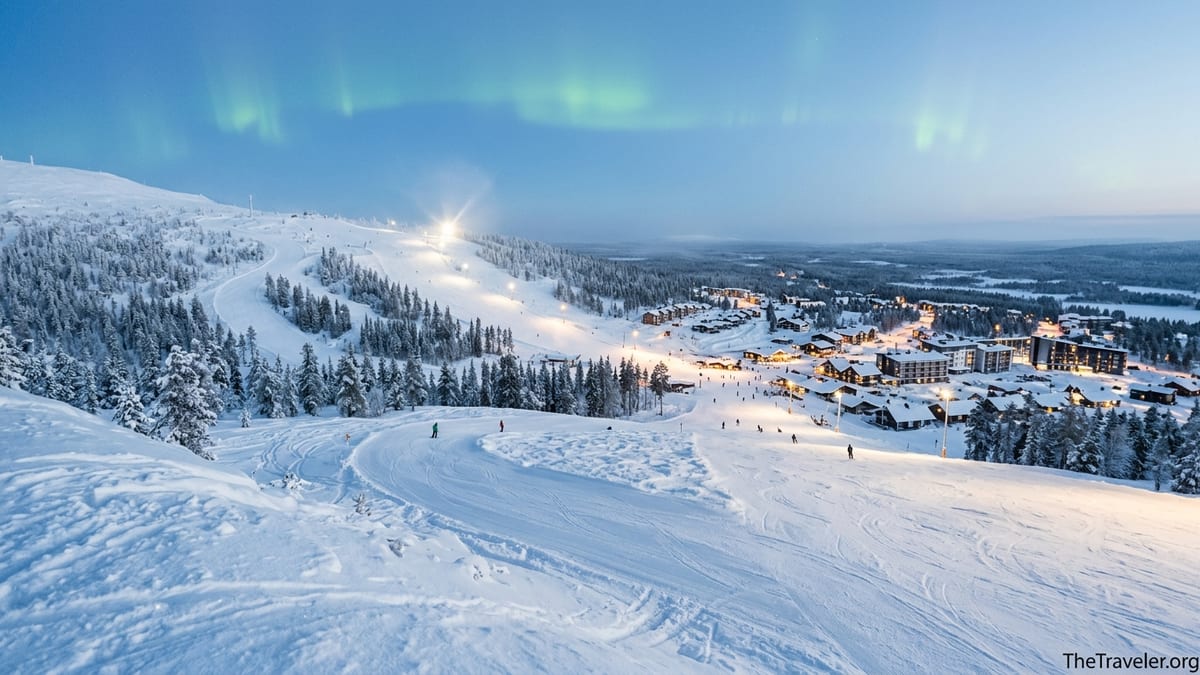
Levi sits in Finnish Lapland, in the village of Sirkka in Kittilä municipality, roughly 170 kilometers north of the Arctic Circle. The resort is clustered around Levi Fell, a rounded Arctic hill that tops out at about 531 meters. That might sound modest compared with the Alps, but the latitude and landscape give Levi a very different atmosphere: think dusky blue light in mid‑winter, snow‑covered forests and frozen lakes stretching to the horizon.
One of Levi’s biggest practical advantages is Kittilä Airport, around 15 kilometers away, with winter flights from Helsinki and seasonal connections from several European cities. In practice, that means many visitors land in Kittilä and are in their hotel in Levi within 25 to 40 minutes by pre‑booked shuttle or taxi. Compared with more remote Lapland villages, that short transfer can be a deciding factor for families traveling with young children or anyone squeezing the trip into a long weekend.
For independent travelers, it is common to fly to Helsinki, then connect on a one‑and‑a‑half‑hour domestic flight to Kittilä. From Helsinki, there are usually multiple daily departures in peak winter. If you prefer trains, an overnight sleeper from southern Finland to Rovaniemi combined with a bus to Levi is possible, but flying is what most short‑stay visitors choose for convenience.
Because Levi is compact and most accommodation is clustered around the front slopes, many guests skip car rental altogether. You can walk from centrally located hotels such as the large spa‑style properties near the village center to the main lifts in about 5 to 10 minutes, and local ski buses cover the outlying cabins and apartment areas.
Skiing and Snowboarding: What to Expect on the Slopes
Levi is Finland’s largest ski resort, with its slopes spread around a single fell in five main areas: Front, South, West, Northeast and Southeast. The layout allows you to chase the best snow and light throughout the day, and it gives the resort more variety than you might expect from one hill. You won’t find 1,000‑meter vertical drops, but you will find a mix of gentle family pistes, park features and a handful of steeper runs.
Officially, Levi’s lift system includes gondolas, chairlifts, T‑bars and carpet lifts for beginners. The fell hosts the Levi Black World Cup race piste each November, which gives you an idea of the standard possible there, but in reality most visitors come for relaxed cruising rather than high‑end alpine challenges. Intermediate skiers typically spend their days lapping the wide red and blue runs on the front and south slopes, while first‑timers often stick to beginner areas served by covered carpet lifts near the village.
Snow reliability is one of Levi’s strong points. The ski season usually runs from late October or early November into late April, thanks to its northern latitude, cold temperatures and extensive snowmaking. Travelers who visited in recent seasons report skiing good snow at Christmas and strong conditions again in March, when days are longer and the light is brighter but temperatures can still be well below freezing, especially in the mornings.
For snowboarders and freestyle skiers, Levi typically builds snow parks and has the Alpine Training Park near one of its main lifts. While it cannot rival the giant parks of North American or Alpine mega‑resorts, it is enough to keep advanced riders entertained for a short holiday. On the other hand, strong off‑piste skiers who love long, steep freeride lines may find Levi limited. Most of the terrain is on‑piste or close to it, and the fell’s height naturally caps the challenge. That is why many experienced skiers treat Levi as a relaxed winter experience destination rather than a pure high‑performance ski trip.
Beyond the Slopes: Northern Lights and Arctic Experiences
For many visitors, Levi’s biggest draw is not the skiing at all but the chance to combine snow activities with Northern Lights chasing and Arctic experiences. From late August to early April, the region has regular aurora activity on clear nights. Because the village sits away from major cities, you can sometimes step outside your cabin or hotel and see the lights dancing above the fell without leaving the resort.
Travelers who want a more curated experience often book guided Northern Lights tours run by local operators. A typical excursion might involve being picked up from your accommodation after dinner, driving 20 to 60 minutes away from village lights, then waiting by a campfire with hot berry juice and snacks while your guide checks the sky. Prices vary widely, but a small‑group tour with transport and thermal clothing often starts from a little over 100 euros per adult. Some companies offer “aurora guarantees” where you receive a partial refund or second chance if there is no visible activity, although nothing can eliminate the role of weather and solar conditions.
Levi is also packed with classic Lapland experiences. Husky safaris, for example, are among the most popular activities. On a typical half‑day program, two guests share a sled pulled by a team of dogs, taking turns driving and sitting while gliding through forest trails. Prices for a 5 to 10 kilometer safari often fall in the 120 to 180 euro range per adult, including warm clothing. Reindeer farm visits and sleigh rides are usually a bit gentler and slower paced, appealing to families with younger children or travelers interested in Sámi culture and reindeer herding traditions.
Other common activities include snowmobile safaris on marked routes, snowshoe hikes to viewpoints on nearby fells, cross‑country skiing on groomed tracks, ice fishing on frozen lakes and visits to ice hotels or snow villages within driving distance. Many visitors build itineraries where they ski a half day, then join an afternoon husky safari, or devote an entire non‑ski day to a snowmobile wilderness tour followed by a traditional Finnish sauna session and ice swimming.
Atmosphere, Village Life and Who Levi Suits Best
Levi is often described by visitors as a “complete winter resort” in miniature. The village center has hotels, rental apartments, restaurants, bars, a few nightclubs, supermarkets and gear rental shops clustered around the base of the front slopes. During peak winter weeks it feels busy and international, with families from the UK, Germany and central Europe mixing with Finnish holidaymakers. Outside Finnish holiday periods, it is noticeably calmer, especially on weekdays.
The après‑ski scene is lively by Finnish Lapland standards, but this is not an Alpine party hotspot. You will find a handful of slope‑side bars where skiers stop for drinks in the late afternoon and some venues offering live music or DJs at night, yet many guests prioritize early mornings on the slopes or aurora watching over late‑night clubbing. For couples on a romantic break, cozy bars with fireplaces and local Lapland tasting menus feel more central than big parties.
Families tend to appreciate Levi’s compactness and safety. Children’s ski areas are close to the village, many hotels have indoor play spaces or pools, and it is easy to walk around without traffic jams or long bus rides. Organized Santa experiences and kids’ snow playgrounds pop up in the run‑up to Christmas, and by February many European families are there for school holidays. Pre‑booking accommodation and key activities is essential in these periods, as husky and reindeer tours can sell out.
All that said, Levi will not be ideal for every traveler. Serious expert skiers looking for challenging terrain may be happier in higher Alpine resorts. Travelers who dislike cold and darkness might struggle visiting in December or January, when daylight is limited to a few hours and temperatures can drop well below minus 20 degrees Celsius. On the other hand, those shorter days create the deep Arctic winter atmosphere that many visitors find magical, especially under fresh snowfall and soft pink twilight.
Costs, Value for Money and How to Budget
Levi is not a budget destination, but visitors often find it better value than some of the more heavily marketed Lapland hubs further south. Prices fluctuate by season, but a realistic nightly rate for a mid‑range hotel room in central Levi during peak winter frequently sits in the 150 to 250 euro range for two people, with self‑catering apartments and cabins slightly cheaper on a per‑person basis for families or groups.
On the slopes, a full‑day lift pass for an adult typically falls somewhat below the prices seen in large Western European Alpine resorts, but it is still a significant daily cost. Gear rental for skis or a snowboard plus boots and helmet usually adds another 30 to 45 euros per day depending on the package. Many visitors reduce overall costs by buying multi‑day lift passes, renting equipment for several days at once or bringing their own boots and helmets while renting only skis or boards on site.
Activities are where expenses can climb quickly. A short introductory husky ride of 2 to 3 kilometers might start around 70 to 90 euros per adult, while longer safaris and private tours are priced higher. Reindeer farm visits, snowmobile tours and guided aurora excursions are in similar price bands. For a couple booking two or three major excursions plus lift passes, it is easy to spend several hundred euros in activity fees alone during a four‑ or five‑day stay.
Food and drink follow general Finnish price levels. A simple cafe lunch on the slopes, such as soup and bread or a burger, can cost around 12 to 20 euros, while a dinner with mains and drinks in a mid‑range restaurant often reaches 25 to 40 euros per person. Self‑catering in an apartment and using the supermarket in the village center for breakfasts and some dinners is a popular way to manage costs without feeling deprived, especially for families.
Practical Tips: When to Go and What to Pack
The “best” time to visit Levi depends strongly on your priorities. For deep winter atmosphere, Christmas markets and a good chance of snow, late December through January is appealing, but you must be comfortable with very short days, potentially extreme cold and high prices around the holidays. Families from the UK and central Europe often target February school holidays, when daylight has increased, temperatures may be slightly milder and most slopes and activities are fully up and running.
Many repeat visitors prefer March. The sun is higher, giving longer and brighter days that feel more like classic ski holidays, while the snowpack is still solid and Northern Lights remain possible. If you value milder temperatures and can travel outside school holidays, early to mid‑March offers a good balance of conditions and atmosphere. Late April can still deliver skiable snow on the fell, but some non‑ski activities may taper off as temperatures rise and operators wind down their winter programs.
Packing correctly is crucial for enjoying Levi. Instead of relying on a single massive parka, experienced travelers recommend layering: moisture‑wicking thermal base layers, a warm mid‑layer such as fleece or wool and a waterproof, windproof outer shell. High‑quality gloves or mittens, a thin liner glove, a warm hat, neck gaiter and proper winter boots with good grip are essential. Many activity operators provide thermal overalls and boots for snowmobile or husky safaris, but having your own good base layers and socks makes a big difference.
Remember that phones and camera batteries drain quickly in very cold temperatures. Travelers often carry spare batteries close to the body and keep phones inside inner pockets when not in use. For aurora photography, a compact mirrorless camera with manual settings, a fast wide‑angle lens and a small tripod or clamp is ideal, although the latest smartphones can capture surprisingly good results if you stabilize them and use night modes.
Is Levi Ski Resort Worth Visiting? Pros, Cons and Realistic Expectations
Whether Levi is “worth it” depends on what you want from your winter trip. If your main goals are world‑class steep skiing, huge vertical drops and endless off‑piste terrain, Levi will likely feel too small. In that case, high‑alpine resorts in the Alps or North America may suit you better. Levi’s skiing is best described as enjoyable, varied enough for a week for most intermediates and excellent for beginners and families, but not a destination purely for expert thrills.
Where Levi truly shines is as a complete Arctic experience. Visitors consistently praise the combination of reliable snow, easy airport access, a walkable village, good beginner and family facilities and a wide range of winter activities. The ability to ski a few hours, ride a husky sled, visit a reindeer farm, soak in a spa and watch for Northern Lights in a single short break is something relatively few resorts offer at this scale.
Levi is especially worth considering if you are planning a once‑in‑a‑lifetime Lapland trip, traveling with children or a mixed‑ability group, or if you are not actually that interested in skiing but love the idea of snow, auroras and Arctic landscapes. For these travelers, the resort’s limitations in vertical and terrain are more than offset by the variety of experiences and the distinctive atmosphere of Finnish Lapland.
To get the most value from Levi, it helps to arrive with realistic expectations and a clear budget. Decide early how many paid activities you truly want, book the most popular ones in advance in high season and leave some free time for simple pleasures like walking snowy forest trails, trying a Finnish sauna or just watching the sky. In that context, most travelers find Levi not only worth visiting but a place they are eager to return to.
The Takeaway
Levi Ski Resort offers something that many modern travelers are looking for: not just skiing, but a complete winter experience in an accessible corner of the Arctic. Its slopes are well suited to beginners and intermediates, its season is long and snow‑sure, and its compact village makes life straightforward for families and first‑time visitors to Lapland.
At the same time, Levi is not the best choice for everyone. Advanced skiers craving extreme terrain may outgrow its pistes in a few days, and the cost of activities can add up quickly if you try to do everything. The cold and darkness of deep winter can also be a shock for those unprepared for Arctic conditions.
If you picture your ideal winter holiday as a blend of relaxed skiing, Northern Lights watching, dog sledding, snowmobiling, reindeer encounters and quiet evenings in a warm cabin, Levi is well worth serious consideration. With thoughtful planning and realistic expectations, it can deliver a memorable taste of Lapland that feels both adventurous and surprisingly manageable.
FAQ
Q1. Is Levi Ski Resort a good choice for beginners?
Yes. Levi is very beginner friendly, with gentle front‑slope areas, covered carpet lifts for novices and several ski schools offering English‑language lessons. The compact layout makes it easy for new skiers to stay oriented and meet up with friends or family.
Q2. How long should I stay in Levi for a first visit?
For most first‑time visitors, 4 to 6 nights is ideal. That gives enough time to ski or snowboard, book one or two major activities like a husky or snowmobile safari and set aside at least one clear evening to watch for the Northern Lights.
Q3. When is the best time to see the Northern Lights in Levi?
The Northern Lights can appear from late August to early April, but many travelers target mid‑winter through March. In practice, your chances improve with longer stays, clear skies and some luck, rather than any specific single date.
Q4. Do I need a car in Levi?
No. Most visitors do not rent a car. The village is walkable, key lifts are close to the central accommodation areas and many activity providers include hotel transfers. A car is useful only if you plan to explore other towns or fells independently.
Q5. Is Levi very cold compared with other ski resorts?
Levi is colder than many Alpine resorts because it lies in the Arctic. Winter temperatures regularly drop well below freezing, and double‑digit negatives are common. With proper layered clothing and good boots, most visitors cope comfortably.
Q6. How expensive is Levi compared with the Alps?
Levi is generally comparable to mid‑priced Alpine resorts. Lift passes may be slightly cheaper, but activities like husky or reindeer safaris add costs that you would not encounter in most Alpine destinations, so overall budgets can be similar.
Q7. Is Levi suitable for non‑skiers?
Yes. Many people visit Levi without skiing at all. They focus on Northern Lights tours, husky and reindeer experiences, snowmobile safaris, snowshoe walks, spa days and simply enjoying the atmosphere of Lapland’s winter.
Q8. Can I rent all my winter gear in Levi?
You can rent skis, snowboards, boots, helmets and often even snowshoes or cross‑country gear from shops near the front slopes. Most people still bring their own base layers, gloves, hats and winter boots for comfort and fit.
Q9. Is Levi crowded?
Levi can be busy in peak weeks such as Christmas, New Year and February school holidays, with popular activities selling out. Outside those times, especially on weekdays, slopes and restaurants feel much quieter and more relaxed.
Q10. Is Levi worth it if I have already been to other Lapland resorts?
If you enjoyed Lapland and want a resort with a well‑developed village, strong beginner facilities and very easy airport access, Levi is still worth considering. If you prefer smaller, quieter villages or more remote wilderness, you might choose a different fell next time.