


If you are planning a winter trip to Finland and want at least a few days on the slopes, the same two names keep coming up: Levi and Ruka. Both are modern, well run and strongly snow reliable by European standards, yet the experience in each place feels quite different. Picking the right one can shape your whole Lapland holiday, from how you spend your evenings to how easy it is to fit in husky safaris, aurora hunting and family activities around your ski days.
Get the latest updates straight to your inbox!
Getting Oriented: Where Levi and Ruka Are and What They Feel Like
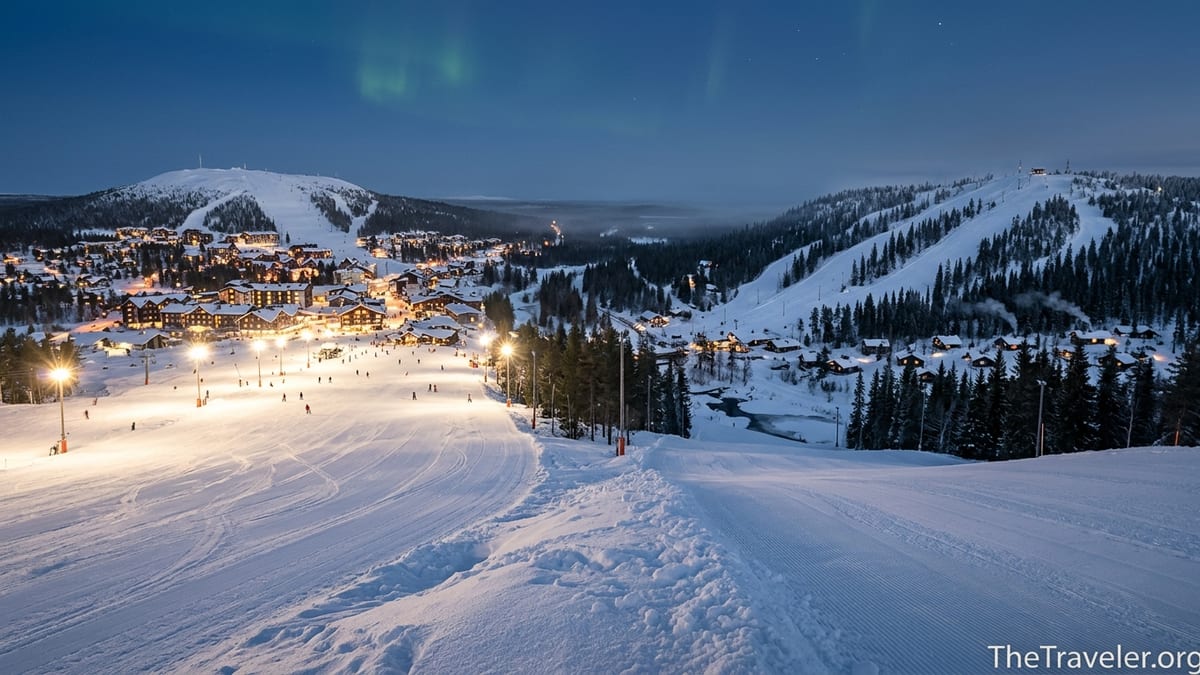
Levi sits in Finnish Lapland, in the municipality of Kittilä, about 170 kilometres north of the Arctic Circle. It is Finland’s largest and best known ski resort, with a compact village wrapped around a central front slope. The feel is close to a small Alpine town: several hotels, apartment blocks and log cabins, a handful of busy bars, and restaurants that range from burger joints to Nordic tasting menus. You can walk from the main square to the nearest lifts in a couple of minutes, which is part of Levi’s appeal for first timers.
Ruka is far to the east near the Russian border, above the small town of Kuusamo. The resort is built around a low fell called Rukatunturi and has grown into one of Finland’s biggest ski areas with its own pedestrian village and a second base area on the Saarua side. The atmosphere is slightly more low key and outdoorsy than Levi, with a strong focus on cross country skiing, snowshoeing and access to nearby national parks as well as alpine runs.
In practical terms, Levi usually fits travellers who want a "resort first" experience with nightlife, while Ruka often suits visitors who picture a quieter cabin in the trees and a week divided between skiing and wilderness activities. Both are fully English friendly. At Levi, menus, ski school and rental shops operate comfortably in English. At Ruka, the same is true, but you are more likely to share the gondola with Finnish families and local season pass holders, especially outside school holidays.
In winter 2025 and 2026, both resorts are investing heavily in digital lift passes and snowmaking infrastructure, which has helped them keep long seasons despite milder winters in parts of Europe. In recent years Levi has regularly started its ski season in early October, while Ruka often opens around the same time, making them among the first non-glacier resorts in Europe to offer lift served skiing each autumn.
Snow, Season Length and Ski Terrain
Neither Levi nor Ruka will match the vertical drop or off piste of the Alps. What they offer instead is long, reliable winter, floodlit runs and a dense network of pistes and lifts packed into a compact area. For many visitors coming for the northern lights and Lapland atmosphere, that is a very good trade.
Levi has around 43 to 44 marked slopes served by more than 25 lifts, including gondolas and modern chairlifts. The longest runs reach roughly 2.5 kilometres, and there is a good spread of blue and red pistes, plus a few short blacks and a FIS slalom course used for the Alpine Ski World Cup in November. The fell is skiable on all sides, so you can spend a day doing a full circuit from the front slopes to the quieter west and north faces, then back to the village. Tree line here is low, which gives you plenty of nicely spaced woodland skiing, especially on the south and west sides.
Ruka offers just over 40 slopes with about 20 lifts, including several high speed chairlifts and a gondola linking the main Ruka Village with the Saarua side. Its vertical is similar to Levi, and the front slopes that drop straight into the pedestrian village are steeper on average. Freestylers tend to like Ruka’s park setups and the fact that the resort hosts major events such as the Ruka Nordic competitions and international freestyle and ski jumping World Cup rounds. One of the resort’s quirks is a new fell roller coaster that operates as a summer attraction, a reminder that Ruka is evolving into a full four season destination.
If you are sensitive to snow reliability, both places rank highly compared with many central European resorts at similar altitude, mainly because of their latitude and extensive snowmaking. Ruka is often open from October into early May, and Levi has achieved similarly long seasons. During the darkest part of winter, almost all main slopes are floodlit, so you may find yourself lapping runs under pink twilight at 11 a.m. or skiing under full stadium style lighting after dinner.
Travel Logistics, Transfers and Getting Around
Levi is usually easier to reach from abroad, which can matter if you are packing winter gear and travelling with kids. Kittilä Airport is about 15 kilometres from the resort and in winter has direct seasonal flights from several European cities alongside daily connections from Helsinki. Typical transfer times from Kittilä to Levi village are 15 to 20 minutes by shuttle bus or pre booked taxi, so you can land mid afternoon and still pick up rental skis for a few evening laps on the front slopes.
Ruka’s gateway is Kuusamo Airport, around 25 kilometres away. It also has regular winter flights from Helsinki and some European hubs, but usually with fewer direct international options than Kittilä. Transfers by bus or taxi take around 30 minutes. A common pattern for Ruka visits is to fly Helsinki to Kuusamo, spend a week in a slopeside apartment, then fly back via Helsinki to connect to long haul flights home.
Once you are in resort, Levi is walkable for most visitors who stay in or near the village centre. The main rental shops, supermarkets, bars and restaurants cluster within a few blocks. A free or low cost ski bus loops around the various base areas, log cabin districts and the spa, so you can access quieter slopes without a car. Some cabins sit 2 to 3 kilometres from the centre, so if you prioritise apres ski and dining out, focus your search inside the ring road or within comfortable walking distance.
Ruka’s accommodation spreads out more. The main pedestrian village has ski in ski out hotels and apartments, but many chalets and cabins are strung along access roads and tucked into forested hillsides. A car is convenient here, particularly if you want to grocery shop in Kuusamo, visit Oulanka National Park or chase clear skies for aurora photography. There is a ski bus system, but its routes and frequency can be more limited outside peak weeks, so check timetables if you plan to rely on it.
Village Atmosphere, Dining and Nightlife
Levi is widely seen as Finland’s liveliest ski village. With over half a million annual overnight stays in recent seasons, it has enough scale to support several pubs with live bands, a couple of clubs, karaoke bars and late opening lounges. On a busy Saturday in March, after ski on the front slopes can be crowded with Finnish groups and international visitors enjoying DJ sets and drinks in outdoor tents. This is not an Ibiza level party scene, but compared with most Lapland villages, Levi’s nightlife is undeniably energetic.
For dining, Levi’s main street and surrounding blocks offer everything from simple pizza and pasta to local reindeer dishes, salmon grills and Nordic style tasting menus. A typical mid range main course in winter 2025 to 2026 might hover around 20 to 30 euros, with burgers at the lower end and reindeer fillet or Arctic char closer to the top. Many visitors on a weeklong package split their meals between self catering in an apartment and a couple of dinners out, possibly adding a splurge evening at a more upscale restaurant paired with a northern lights excursion.
Ruka’s village is smaller and more relaxed. You will still find a handful of bars and after ski terraces near the front slopes, but the vibe tends to be more local and less intense than Levi’s. Plenty of visitors turn in early after a full day that might have included both alpine and cross country skiing. Dining options include relaxed grill restaurants, cafes, pizzerias and a few venues serving Lapland specialities. Prices are broadly similar to Levi. Because so much accommodation is self catering, many guests do a single large grocery shop in Kuusamo at the start of the week and eat most dinners in, then head out for drinks or dessert rather than full restaurant meals each night.
If nightlife matters a lot to you, Levi wins clearly. If you are content with a few relaxed drinks, maybe a pub quiz or a local band one night and quiet cabin evenings the rest of the time, Ruka will feel just right. Families travelling with small children often appreciate how easy it is in Ruka to retreat to a slopeside apartment for early bedtimes without cutting themselves off from the lifts.
Families, First Timers and Non Skiers
Both Levi and Ruka work well for families and beginners, but the balance of activities and infrastructure is slightly different. Levi has several beginner zones with covered magic carpet lifts and gentle green and blue runs close to the village. The ski school runs group and private lessons in English, and private sessions for children are common, especially during the key holiday weeks from Christmas through February. Short 40 to 50 minute lessons for young kids are priced so that a couple of sessions per child sit in the same budget range as a northern lights tour for two adults.
Outside skiing, Levi sells itself as a full winter adventure base. You can book husky sledding, snowmobile safaris, reindeer farm visits, snowshoe tours and glass igloo style overnight stays, often bundled with transfers from your accommodation. A realistic example: a family of four might spend a day skiing, then take a two hour early evening reindeer sleigh ride with hot berry juice and a campfire at a nearby farm, returning in time for a simple dinner in the village. The next day, the same family might skip skiing and visit the Levi spa with its indoor pools and slides, before joining a guided aurora snowshoe walk in the evening.
Ruka feels slightly more focused on snow sports and nature than on packaged excursions, but you will still find tour operators offering husky, reindeer and snowmobile trips. The key difference is that in Ruka it is easier to blend your ski trip with serious cross country skiing. Hundreds of kilometres of maintained tracks spread out from the resort into the surrounding forests, many of them lit in the darkest months. It is entirely normal here for intermediate cross country skiers to ski 15 to 20 kilometres in the morning, then take a gondola up for a few alpine runs in the afternoon.
For complete beginners, both resorts are forgiving. English is widely spoken among instructors and rental staff, the slopes are well signposted, and lift lines are typically far shorter than at big Alpine destinations. Families with toddlers might lean towards Levi for its slightly more walkable village and easy indoor options like the spa and bowling. Active families with teens who want to try both downhill and cross country and spend quiet evenings in a cabin may find Ruka a better fit.
Budget, Lift Passes and Value for Money
Finland is not a low cost ski destination, but both Levi and Ruka often work out cheaper than large French or Swiss resorts once you factor in lift prices and the possibility of self catering. Recent public price lists for Levi’s winter 2025 to 2026 season show adult lift passes around the mid 190 euro mark for four days in high season, with children paying significantly less. Day passes are lower, and many visitors strategically ski three or four days in a week while dedicating other days to activities that do not require lift tickets.
Ruka’s current lift ticket structure is similar, with adult day passes typically slightly below or in the same range as Levi’s, and discounts when you buy online in advance or stay in partner accommodation. Both resorts use reloadable key cards, and Levi in particular has embraced mobile lift tickets, allowing you to load passes directly to your phone and tap gates without queuing at a ticket office.
Accommodation budgets vary widely. In Levi, a centrally located hotel room in peak winter might run in the low to mid hundreds of euros per night, while a simple log cabin a short drive away could work out cheaper per person if shared by a family or group. Ruka has a large stock of self catering apartments right by the slopes, some marketed specifically as ski in ski out chalets with supermarket access within a short walk. Travellers on tighter budgets often find that Ruka makes it easier to keep restaurant spending down while still enjoying prime slope access.
When comparing overall costs, think about how ski focused your trip will be. If you plan to ski all day, every day, lift pass prices and slopeside accommodation may matter more. In that case, Ruka’s combination of solid lift infrastructure and a big pool of ski in ski out apartments can offer excellent value. If you intend to mix skiing with other winter activities and nights out, Levi’s higher density of restaurants, bars and tour operators may justify slightly higher accommodation prices.
Who Should Choose Levi and Who Should Choose Ruka?
If you picture a classic ski holiday with a compact village, multiple bars, people watching from sun terraces and an easy stroll from hotel to lift, Levi is likely to suit you better. It is especially appealing for mixed groups where some people care about apres ski and dining, others want spa days and excursions, and everyone is happy skiing intermediate slopes. First time visitors to Finland who are unsure what to expect often find Levi an easy introduction because it feels familiar in layout to mid sized Alpine resorts.
On the other hand, if your main goal is to combine skiing with wilderness, quiet evenings and perhaps serious cross country mileage, Ruka is an excellent choice. Its slopes are varied enough to keep most intermediates busy for a week, and the proximity to Kuusamo’s forests and national parks adds a strong sense of place. Couples seeking a cosy cabin, self catered meals and a rhythm of ski, sauna and early nights under the northern sky tend to fall in love with Ruka.
For families, the decision often comes down to how independent you want to be. Levi’s walkable centre and dense cluster of services reduce the need for a car. You can drop kids at ski school, grab a coffee, then ski front side laps within sight of the meeting point. At Ruka, especially if you choose a cabin outside the immediate village, a car can make life smoother but also expands your options for exploring the region.
Finally, think about how often you realistically plan to ski. If you are keen on logging lots of lift served mileage, either resort works, but strong intermediates who like steeper front side runs and park features may prefer Ruka. If you see skiing as just one piece of a broader Lapland experience, Levi’s combination of World Cup level slopes, nightlife and tour infrastructure is hard to beat.
FAQ
Q1. Which resort is better for complete beginners, Levi or Ruka?
Both are beginner friendly, but Levi has more gentle slopes and beginner areas clustered right by the main village, which can make first days on skis feel simpler and less intimidating.
Q2. Is Levi or Ruka easier to reach from abroad?
Levi usually edges ahead because Kittilä Airport has more direct winter flights from European cities, and the transfer to the village is only about 15 to 20 minutes by bus or taxi.
Q3. Where will I find better nightlife, in Levi or Ruka?
Levi clearly wins for nightlife, with several busy bars, clubs and after ski venues. Ruka has a few relaxed bars and terraces but is generally quieter in the evenings.
Q4. Which resort is more budget friendly for families?
Overall costs are similar, but Ruka’s large supply of ski in ski out self catering apartments can make it easier for families to control food costs while staying close to the lifts.
Q5. Do I need a car in Levi or Ruka?
In Levi you can manage comfortably without a car if you stay in or near the centre and use the ski bus. In Ruka a car is helpful, especially if you stay in a cabin outside the village or want to explore Kuusamo and nearby national parks.
Q6. Which resort has better terrain for advanced skiers?
Neither matches major Alpine resorts, but advanced skiers will find slightly steeper front side runs and strong park features in Ruka, while Levi offers a good mix of reds, a few blacks and World Cup slalom slopes.
Q7. How long are the ski seasons at Levi and Ruka?
Both resorts typically open in early October and run into late April or early May, supported by extensive snowmaking and cold Lapland winters, making them among Europe’s longest non glacier seasons.
Q8. Which resort is better if I also want to do husky and snowmobile safaris?
Both offer these activities, but Levi has a slightly denser network of tour operators and packaged excursions, which can be convenient if you prefer to book multiple outings through one provider.
Q9. Is English widely spoken at Levi and Ruka?
Yes. In both resorts, staff in ski schools, rental shops, restaurants and hotels commonly speak good English, so international visitors rarely face language barriers.
Q10. If I want a quiet cabin, northern lights and mixed skiing and cross country, which should I choose?
Ruka is often the better fit, with easy access to extensive cross country trails, plenty of forest cabins and a calmer evening atmosphere that pairs well with aurora watching and early starts on the tracks.