


More news on this day
Rail passengers in and out of east London are facing significant disruption after a large fire next to the tracks near Stratford prompted line closures, widespread cancellations and long delays across one of the capital’s busiest commuter corridors.
Get the latest news straight to your inbox!
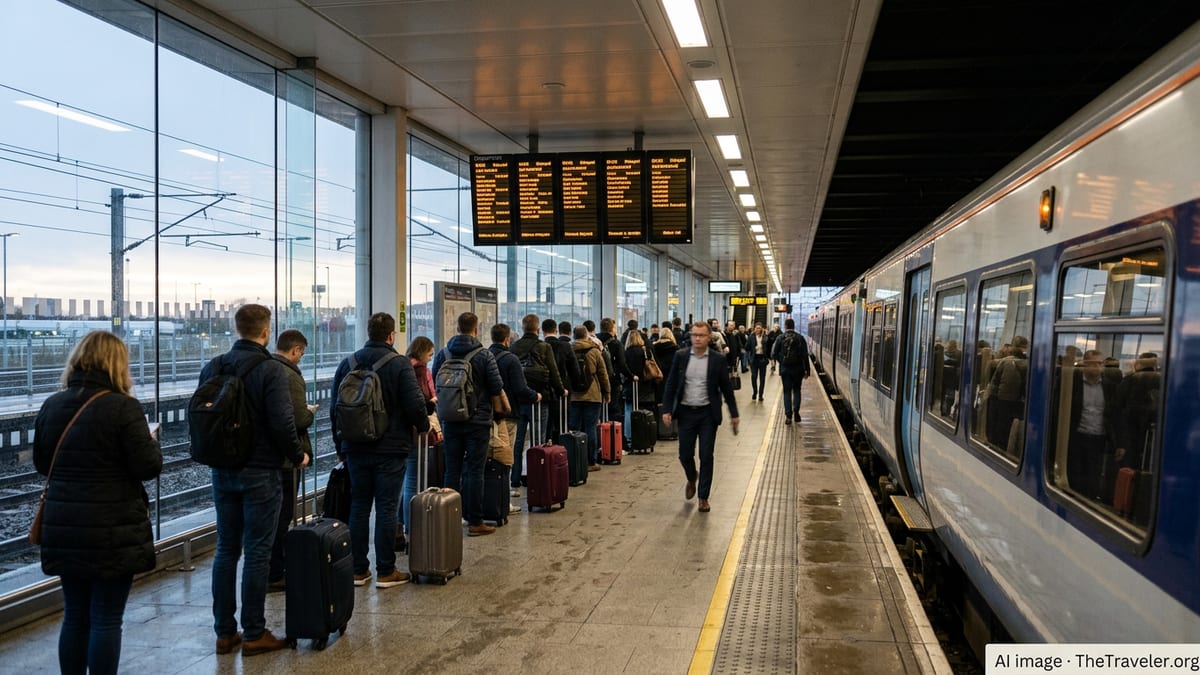
Major disruption around Stratford after evening blaze
Publicly available information from National Rail and train operators indicates that services through Stratford in east London were halted on Friday evening after a substantial lineside fire developed close to the railway. The incident led to all lines being closed in the area for safety reasons, with operators warning that disruption was expected to last into Saturday morning.
Travel updates describe a large fire adjacent to the station affecting overhead power equipment. As a result, electrical supply had to be switched off while emergency services dealt with the blaze and engineers assessed potential damage to infrastructure. With power isolated, both commuter and longer distance services using the route were unable to run normally.
The incident occurred at the height of the evening peak, catching many commuters and leisure travellers mid-journey. Reports from journey planning services show a wave of cancellations, significantly extended journey times and trains diverted away from the Stratford corridor to keep some traffic moving around the affected section of railway.
Information published overnight suggests that while some routes began to recover, disruption remained visible on timetables into Saturday, with residual delays and short-notice changes as operators repositioned trains and crews.
Cancellations, diversions and ticket flexibility
Passenger information systems for operators using Stratford show that multiple services were cancelled outright, while others were diverted via alternative routes where capacity allowed. Some services terminated short of their planned destinations, forcing travellers to change trains or find other ways to complete their journeys.
Journey updates indicate that ticket restrictions were relaxed on the evening of the fire and into the following day, allowing affected passengers to travel on later services. Travellers were also advised that tickets dated for the day of the incident could be used on specific services the following day, a common measure during major disruption on the British rail network.
Real-time feeds point to knock-on congestion at nearby hubs as diverted trains mixed with scheduled services. Trains running along diversionary routes often faced extended journey times, with some services routed via slower lines that normally handle less intensive traffic.
For passengers already on board trains approaching the affected area, on-screen and station announcements reported extended waiting times as controllers attempted to regulate traffic around the closure. Many travellers turned to social media and journey planning apps for live updates and alternative route suggestions.
Fire risk along busy rail corridors
Images and descriptions of the Stratford incident, along with recent reports of other fires beside tracks in southern England and on parts of the European network, highlight how vulnerable modern railways can be to lineside blazes. Dry vegetation, waste materials and embankment growth can all provide fuel when conditions are hot and dry, particularly near dense urban areas.
Rail infrastructure managers frequently warn that even relatively small fires can have outsized consequences. Flames or intense heat close to the railway can threaten signalling cables, overhead wires, equipment cabinets and fencing. As a precaution, controllers often suspend services while firefighters work and until engineers confirm it is safe to restore power and traffic.
Recent disruption reports from other locations in Britain show similar patterns, with services paused after fires next to the track and later restarted once checks are completed. In some cases, the line reopens fairly quickly, but the complex mix of trains and crew shifts can mean delays and cancellations continue for hours afterward.
Across mainland Europe, travel updates from international operators have also cited fires near the tracks as a cause of delays, reinforcing that this type of incident is not confined to a single country. As hotter, drier summers become more common, transport analysts note that managing vegetation and reducing ignition sources along rail corridors is emerging as a growing resilience priority.
Impact on weekend leisure and onward connections
The timing of the Stratford fire has had particular implications for weekend travel. The incident unfolded on a Friday evening at the start of the busy summer holiday period, affecting not only daily commuters but also leisure travellers heading to events, airports and coastal destinations.
Passengers connecting from regional services through Stratford to routes towards Essex and the east of England reported relying on slower alternatives and replacement options. The need to divert some trains placed additional pressure on neighbouring lines and junctions, where capacity is already tightly managed during peak periods.
For international visitors using London as a gateway to other parts of Britain, cancellations and short-notice platform changes added complexity to onward travel plans. Public travel advice suggested building in additional time for rail journeys, allowing for missed connections and altered departure times, particularly for those linking up with long-distance services or flights.
Hotel stays, event tickets and pre-booked excursions can all be affected when lineside incidents lead to widespread timetable changes. Travel experts generally recommend that visitors keep digital copies of bookings to hand and check disruption pages on operator websites as departure approaches, especially during periods of unsettled weather or heightened fire risk.
Advice for travellers during rail disruption
While fires next to railway tracks remain relatively rare compared with other causes of delay, the Stratford incident underlines the value of contingency planning for rail journeys. Passenger rights and refund policies vary by operator and ticket type, but many carriers offer options to rebook, claim delay compensation or seek alternative routes when disruption is severe.
For those relying on rail for critical connections, travel planners suggest monitoring live departure boards and official disruption feeds, and considering earlier trains where possible. In major hubs like London, alternative routes across the wider public transport network can sometimes provide a workable backup when a single corridor is shut due to a lineside incident.
Independent travel organisations also advise paying attention to national weather and fire risk outlooks during peak summer months. Extended hot, dry spells can increase the likelihood of small fires along transport corridors, while thunderstorms may introduce additional hazards such as flooding or power faults that compound disruption.
For visitors heading to or through London in the coming days, the key message from publicly available rail updates is to check services before leaving for the station, allow extra time for connections and remain flexible about routes. While engineers work to restore full capacity after the Stratford fire, services are expected to stabilise, but residual delays can continue even after lines officially reopen.