


Lisbon’s Humberto Delgado Airport sits just 7 kilometers from the city center, which makes it one of Europe’s easiest hubs for turning a layover into a mini city break. Whether you have a tight two-hour connection or a generous six hours to spare, a bit of planning will help you decide if you should stay in the terminal, freshen up in a lounge, or hop on the metro and grab a pastel de nata downtown.
Get the latest updates straight to your inbox!
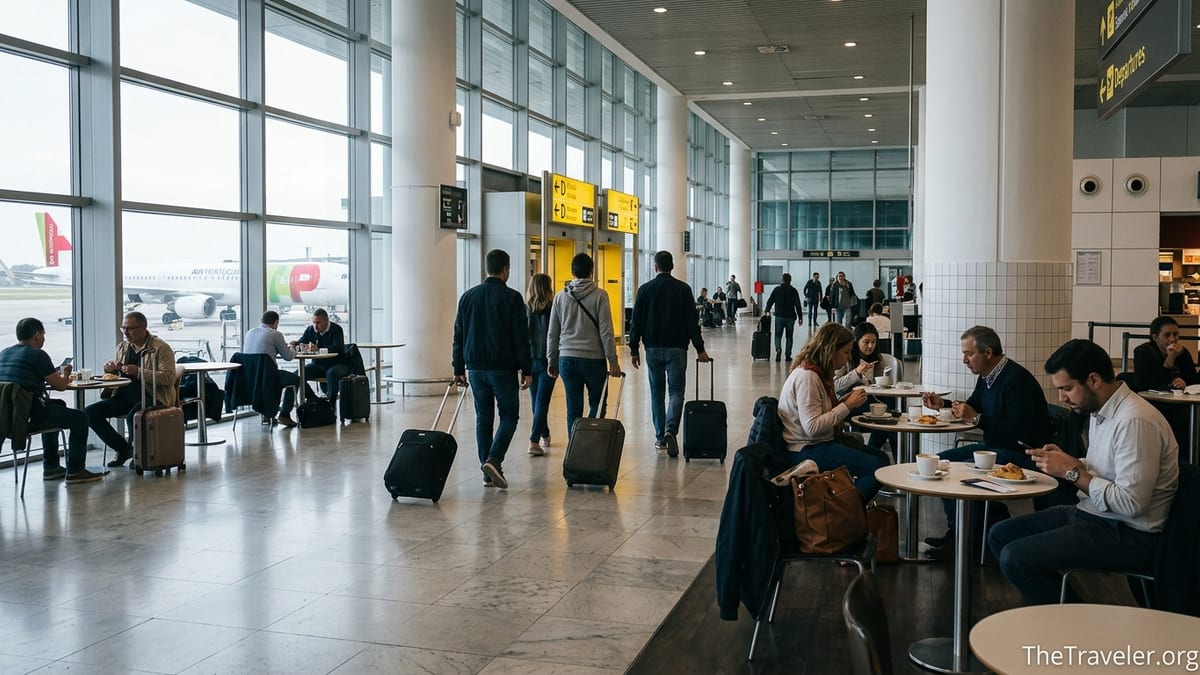
Understanding Lisbon Airport and Your Connection Time
Lisbon has one airport, Humberto Delgado (LIS), with two terminals. Terminal 1 handles almost all arrivals and most international flights, while Terminal 2 is mainly for low-cost carriers on European routes and is linked to Terminal 1 by a free shuttle bus. If your connection involves both terminals, factor in at least 20 to 30 minutes to move between them, including waiting time for the shuttle and walking through security again if needed.
For most travelers, a layover of under 3 hours from scheduled landing to boarding time is best spent inside the airport. Lisbon Airport can be busy at peak times, and queues for passport control, security, or boarding can lengthen suddenly. If your onward flight is long-haul, or you are flying to a non-Schengen destination such as the United Kingdom or the United States, give yourself extra buffer and avoid leaving the airport unless you have 5 to 6 hours or more between flights.
If you are connecting between two Schengen flights on a single ticket, you may not need to clear passport control again, which usually makes the process faster. However, gate changes at Lisbon are common and walking distances in Terminal 1 can be longer than many first-time visitors expect. Always check your boarding time rather than just the departure time and aim to be back at your gate at least 40 minutes beforehand, more if you need to re-clear security.
Travelers on separate tickets, or those who need to collect and re-check luggage, should treat Lisbon like a fresh arrival. In practice, that means allowing enough time to clear immigration, collect bags, check in again, and pass security a second time. In these cases, even a 4-hour layover can feel tight, so consider staying in the airport rather than heading into town.
Should You Stay in the Airport or Go Into the City?
Deciding whether to leave Lisbon Airport during a layover depends on three things: total time between flights, whether you need to clear passport control and baggage, and your risk tolerance. As a rough rule of thumb, less than 3 hours is usually a “stay in the terminal” situation, 3 to 5 hours can work for a quick visit to a nearby neighborhood, and 6 hours or more gives you enough margin to dip into the historic center if everything runs smoothly.
Calculate backwards from your next flight. Start with the boarding time, then subtract at least 40 minutes to be at the gate, another 10 to 20 minutes to pass security and walk through the terminal, and 30 to 45 minutes to get back from the city center by metro or taxi. Add at least 30 minutes at the beginning for deplaning, possible queues at passport control, and walking out of arrivals. If these chunks already consume most of your layover, you are better off enjoying what the airport itself offers.
Risk tolerance matters. If missing your connection would disrupt a long-haul trip or you are traveling with checked luggage and children, err on the cautious side. On the other hand, if you have a 7-hour stop on a daytime schedule, are traveling hand-luggage only, and your flights are on a single ticket, a quick ride to downtown Lisbon for a coffee in Baixa or a stroll along the Tagus can be a highlight of your journey.
Time of day is also key. The metro runs roughly from early morning until around 1 a.m. If your layover is overnight, or your arrival is close to the end of metro service, you will depend on taxis or ride-hailing services to go into town and back, which raises the cost and complexity. In those cases, many travelers find it more comfortable to stay close to the airport or book a nearby hotel for a proper sleep.
Making the Most of a Short Layover Inside Lisbon Airport
If you have 2 to 3 hours and decide to stay inside Lisbon Airport, you can still turn the wait into something pleasant. Start by orienting yourself in Terminal 1, where most shops, restaurants, and services are located. Look for Portuguese brands like pastelaria counters serving pastel de nata, local coffee stalls, and wine bars where you can sample a glass of vinho verde or Douro red. Prices are higher than in the city, but still reasonable compared with many large European hubs.
For comfort, consider accessing an airport lounge. Lisbon’s Terminal 1 offers several pay-in lounges where you can usually enter for a fixed fee, often around the cost of a sit-down meal. Inside, you can expect soft drinks, light snacks, Wi-Fi, quiet seating, and power outlets. Some travelers use lounge access through their airline status or travel credit cards, while others purchase entry on the spot, particularly on longer layovers or after overnight flights when a shower and a quiet corner are worth the expense.
Freshening up during a short layover can make a long journey far more bearable. Check information screens or ask staff about showers, which are sometimes available in lounges or dedicated facilities for a fee. If showers are not an option, most restrooms are reasonably modern, and you can at least change clothes and refresh. Many travelers pick up a small toiletry kit at duty free, with travel-sized toothpaste, moisturizer, and lip balm, which is particularly welcome if you have come off a long-haul flight.
Shopping at Lisbon Airport leans toward familiar European brands and local products. You will find duty free stores with Portuguese wines, port, and olive oil, as well as cork accessories, ceramics, and tinned fish from well-known local producers. Even if you do not plan to buy, browsing these products can give you a small taste of Portuguese culture. If you want to bring something home, focus on compact items that travel well and avoid purchasing liquids if your onward journey is within the European Union and you will have to pass additional security checks.
Using Airport Transport: Metro, Taxis, and Ride-Hailing
Lisbon Airport’s main advantage is its proximity to the city and its direct metro connection. The Aeroporto station sits just outside Terminal 1 on the red line of the Lisbon Metro. Trains typically run every few minutes during the day, and the journey to key hubs such as Alameda or Baixa-Chiado takes around 25 to 30 minutes with one easy connection. For most travelers, the metro is the cheapest and most predictable option for a quick trip into town.
To ride the metro, you will generally buy a reusable Viva Viagem card from the ticket machines. The card itself costs around half a euro and can be loaded with single tickets or “zapping” credit, which you then tap at the gates. A single metro journey from the airport into the city center costs under 2 euros, making it good value compared with other European capitals. If you plan to travel several times in one day, a 24-hour public transport ticket that covers metro, trams, and buses can also be a worthwhile purchase and is usually available at the same machines.
Taxis and ride-hailing services like Uber, Bolt, and Free Now are widely used in Lisbon. In normal traffic, a ride from the airport to central neighborhoods such as Baixa, Chiado, or Avenida da Liberdade typically takes about 20 to 30 minutes. Fares fluctuate, but many travelers report paying around 10 to 20 euros for a standard journey to central hotels. At busy times, or in heavy rain, demand can push prices higher and increase wait times, so build in a buffer if you rely on a car to get back for your connection.
If you choose the metro into town, consider pairing it with a taxi or ride-hail for your return if you are short on time. For example, you might ride the red and green lines into Baixa-Chiado, spend an hour walking through the historic center, then order a car back from Praça do Comércio or Rossio Square to avoid dealing with metro changes on the way to the airport. Always keep an eye on the clock and aim to be back at the terminal at least 90 minutes before your next flight’s departure, more if it is long-haul or involves extra security checks.
Easy Mini-Excursions for 4 to 6 Hour Layovers
With 4 to 6 hours between flights and a daytime schedule, you can fit in a simple mini-excursion. A practical option is to head to Parque das Nações, the modern riverfront district close to the airport that includes the Vasco da Gama shopping center and the Oceanário de Lisboa aquarium. You can reach the Oriente station in about 10 minutes on the red metro line from Aeroporto. From there, wide pedestrian promenades, river views, and plenty of cafes make it an easy place to stretch your legs without worrying about getting lost in winding old streets.
If you have closer to 6 hours and everything runs on time, a quick visit to the historic center can be rewarding. One straightforward route is to take the metro from Aeroporto to Alameda on the red line, change to the green line, and continue to Baixa-Chiado. Total travel time is usually around half an hour. Once there, you might walk down Rua Augusta toward the arch and Praça do Comércio, stop for a bica (espresso) and a pastel de nata at a traditional pastelaria, and enjoy views of the Tagus River before heading back.
Another realistic option for a slightly longer layover is to visit the upper neighborhoods around Avenida da Liberdade or Saldanha, which are also accessible by metro. Here you will find tree-lined avenues, department stores, and a mix of business and residential buildings that give a feel for contemporary Lisbon life. Because these areas are closer to metro interchanges and not as crowded with tourists as the narrow streets of Alfama, it is often easier to keep track of time and navigate back to the station.
Whatever mini-excursion you choose, keep your plans simple and avoid trying to see multiple areas in one layover. Lisbon’s hills and cobblestones can slow you down more than you expect, and popular viewpoints such as Miradouro de Santa Catarina or São Jorge Castle require uphill walks that may not be ideal if you are watching the clock. Focus on one neighborhood, give yourself clear turn-around times, and always allow enough margin for the unexpected.
Food, Coffee, and Local Flavors on a Layover
Lisbon is known for its food culture, and you can get a taste of it even in a short layover. Inside the airport, look for bakeries and cafes that serve pastel de nata, the famous custard tart with a caramelized top. These pastries are usually inexpensive, and many travelers pair them with a strong espresso or a galão, the local version of a milky coffee. Even if you only have time for a quick snack near your gate, trying these local staples will make your stop feel more like a visit than a wait.
If you venture into the city, your options expand considerably. In Baixa and Chiado, plenty of casual restaurants offer grilled fish, petiscos (small plates), and traditional dishes like bacalhau à brás made with salted cod, potatoes, and eggs. For a brief layover, choose somewhere with clear menus and quick service rather than a slow multi-course meal. Many central cafes have outdoor seating on pedestrian streets, which lets you soak up the atmosphere while keeping your watch in view.
Near Oriente and Parque das Nações, the Vasco da Gama mall provides a cluster of chain restaurants, food courts, and coffee shops under one roof. This can be convenient for families or anyone who wants predictable options and clean restrooms close to the metro. You will find familiar international brands alongside Portuguese chains, making it easy to grab a quick bite before heading back to the airport.
For travelers keen on souvenirs, food items are often the most practical. In both the city and airport shops, look for compact, well-packaged goods such as tinned sardines from local canneries, small bottles of extra virgin olive oil, or packets of gourmet sea salt. These items typically pass through security without trouble if purchased after the checkpoint, but be mindful of liquid volume limits if your connecting flight involves another round of security screening.
Overnight and Long Layovers: Rest, Hotels, and Safety
Overnight layovers in Lisbon require a different strategy from short daytime stops. The metro does not run through the night, so if you arrive late in the evening and depart early the next morning, you will likely rely on taxis or ride-hailing services. Many travelers in this situation choose to book a hotel near the airport or along the red metro line, allowing them to get a proper night’s sleep rather than trying to rest in the terminal.
If you decide to stay in the airport itself, be prepared for limited comfort. Seating in public areas is mostly standard chairs, and truly quiet corners can be hard to find. Some travelers bring a travel pillow, light blanket, and earplugs to make the experience more bearable. Check the opening hours of any lounges you might use, as many close around late evening and do not run overnight. Always keep important items like passports and wallets in a secure, close-fitting bag if you plan to doze in public areas.
Booking a nearby hotel can be worth the additional expense on long layovers, especially if you are crossing multiple time zones. Properties within a short taxi ride of the airport range from basic budget hotels to full-service international chains, and some offer early breakfast or shuttle services timed to flight schedules. A typical scenario might see a traveler landing around 11 p.m., clearing the airport, checking into a hotel for 5 to 6 hours of sleep, and returning for a 7 a.m. departure feeling far more rested than if they had stayed in the terminal.
In terms of safety, Lisbon is generally considered one of Europe’s calmer capitals, but standard precautions apply. Around the airport and major transport hubs, keep an eye on your belongings and be cautious of anyone who approaches you unsolicited offering transfers or tours. If you are arriving late at night, pre-booking a ride or using a reputable app can make the last leg to your hotel smoother and more predictable.
The Takeaway
A layover at Lisbon Airport can feel like a bonus stop on your trip rather than an inconvenience, as long as you match your plans to the time you truly have. With a short connection, focus on comfort: find a good coffee, try a pastel de nata, and, if your budget allows, retreat to a lounge to recharge. With 4 to 6 hours or more, use the airport’s excellent metro and close-in city layout to visit a single neighborhood, whether the futuristic riverfront at Parque das Nações or the traditional streets of Baixa.
Always do the math carefully, build in buffers for queues and transport delays, and keep your itinerary simple. Lisbon rewards slow, unhurried wandering, but on a layover, restraint is your friend. Choose one destination, enjoy it fully, and head back to Humberto Delgado Airport with enough time to spare that your memories of Portugal are of tiled facades and river views, not anxious dashes through crowded terminals.
FAQ
Q1. Is my layover in Lisbon long enough to leave the airport?
If your total layover is under 3 hours, it is usually safest to stay in the terminal. Between about 3 and 5 hours, you might visit a nearby area such as Parque das Nações, especially during the day. With 6 hours or more and a smooth arrival, a quick trip to the historic center can be realistic if you are comfortable managing the timing.
Q2. How long does it take to get from Lisbon Airport to the city center?
By metro, the journey from Aeroporto station to central stops like Baixa-Chiado typically takes around 25 to 30 minutes with one connection. By taxi or ride-hailing service, you can usually reach central neighborhoods in 20 to 30 minutes, depending on traffic.
Q3. How much does public transport cost from Lisbon Airport?
You will usually buy a reusable Viva Viagem card for a small fee and then load it with credit or tickets. A single metro ride from the airport into the city center typically costs under 2 euros. Day passes that cover metro, bus, and tram services are also available and can be good value if you plan multiple trips.
Q4. Is it easy to use the Lisbon Metro with luggage?
Yes, most travelers find the metro manageable with typical suitcases. Trains have wide doors and space near the doors for bags. However, avoid peak rush hours if possible, as carriages can be crowded. If you have very large or multiple bags, a taxi or ride-hail may be more comfortable.
Q5. What can I do inside Lisbon Airport during a short layover?
Inside the terminal, you can enjoy Portuguese pastries and coffee, browse duty free shops, and, if your budget allows, relax in a pay-in lounge that offers Wi-Fi, snacks, and quieter seating. For many travelers on 2 to 3 hour layovers, simply freshening up, having a meal, and organizing onward travel is the best use of time.
Q6. Are there showers at Lisbon Airport?
Showers are not widely available in public areas, but some lounges and dedicated facilities offer them, usually for an extra fee or as part of lounge access. If a shower is important to you, check in advance which lounge or service you can use and what access conditions apply for your airline or ticket.
Q7. Is it safe to sleep in Lisbon Airport overnight?
Many travelers do sleep in Lisbon Airport during long overnight layovers, but comfort is basic. If you choose to stay, pick a well-lit area, keep passport and valuables on your person in a secure bag, and use earplugs and an eye mask for rest. For better sleep, consider booking a nearby hotel and taking a short taxi ride instead.
Q8. What are the best nearby places to visit on a layover?
For short layovers, Parque das Nações near Oriente station is ideal, with riverfront walks, cafes, and a large shopping center only a short metro ride away. With more time, the historic Baixa and Chiado districts offer classic squares, tiled buildings, and plenty of cafes within about half an hour of the airport by metro.
Q9. Do I need a visa to leave Lisbon Airport during a layover?
Visa requirements depend on your nationality and whether Portugal is your point of entry into the Schengen Area. Some travelers can move freely between the airport and the city, while others must hold a visa even to step outside. Check your specific visa requirements with official sources before your trip to avoid problems on arrival.
Q10. How early should I be back at the airport before my next flight?
Aim to be back inside the terminal at least 90 minutes before departure for most European flights and 2 to 3 hours for long-haul or non-Schengen flights, unless your airline advises otherwise. This buffer should include enough time for security checks, potential queues, and walking to your gate without rushing.