


More news on this day
Lisbon is emerging as a pivotal gateway for the next wave of luxury travel, as Avora Lumina prepares to begin a continuous residential world cruise from the Portuguese capital in early 2028, pairing cutting-edge toys like jet skis and private submarines with long-duration global itineraries.
Get the latest news straight to your inbox!
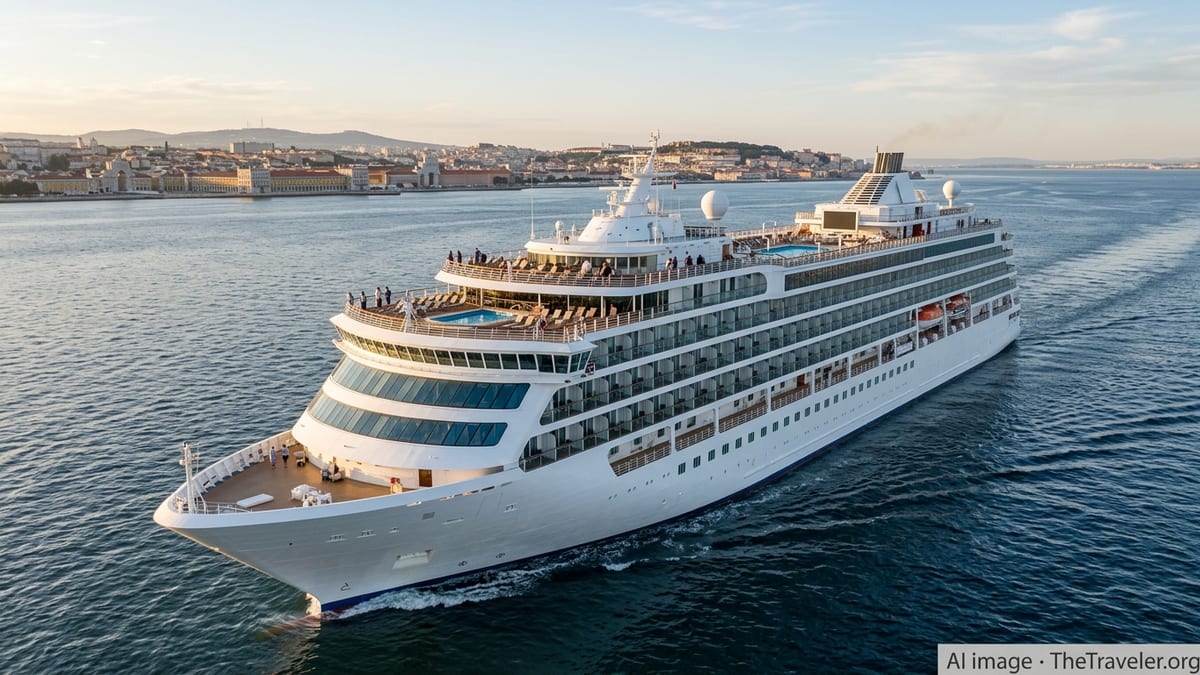
Lisbon’s New Role in the Residential Cruise Era
Publicly available information indicates that Avora Lumina, a former Regent Seven Seas vessel now being converted for residential cruising, is scheduled to enter service in January 2028 with its inaugural departure from Lisbon. The city’s deepwater port, established air links and growing profile as a lifestyle destination are positioning it as a natural staging point for this kind of long-term voyage.
Reports describe Avora Lumina as the centerpiece of Avora Residences, a brand focused on selling or granting access to private apartments at sea rather than traditional cruise cabins. Early material indicates that the ship will function more like a floating residential community than a conventional vacation ship, with owners and members able to remain on board for months or even years at a time.
Coverage from European cruise publications notes that the first itinerary is designed as a multi‑year world circuit, visiting more than 140 countries and hundreds of ports across all seven continents. By making Lisbon the starting point, planners are tying the project to a city already known for its digital nomads and long-stay visitors, extending that appeal to a maritime setting.
The choice of Lisbon also has strategic implications for tourism flows. With Avora Lumina embarking from the Portuguese capital on a recurring schedule, local businesses, port services and high-end hospitality providers could see new demand from residents embarking, disembarking or taking extended shore time between itinerary segments.
From Research Vessel to Ultra-Luxury Floating Residences
Background material on the ship shows that Avora Lumina began life as a Soviet research vessel before being transformed into an all-suite luxury ship under Regent Seven Seas in the late 1990s. Recent documentation on port authorities and industry sites confirms that the vessel has now been secured by Avora Residences under a long-term charter and purchase arrangement, clearing the way for a complete reconfiguration.
The refit is described as extensive, reshaping the 490-passenger ship for a smaller number of higher-value residences. Plans outlined in European cruise media suggest apartments with residential-style layouts, private balconies and customizable interiors, marketed as primary or secondary homes rather than temporary staterooms. Entry pricing for ownership has been reported in the mid six-figure range in US dollars, placing the product firmly in the ultra-luxury segment.
Industry reports also highlight that Avora Lumina is being prepared with polar certification, enabling itineraries to regions such as Antarctica and high-latitude passages. This combination of expedition capability and residential comfort is being framed as a differentiator in an increasingly crowded high-end cruise market.
By blending the attributes of a private yacht, boutique cruise ship and serviced residence, the project illustrates how concepts that once sat at the edges of the cruise sector are moving into the mainstream of luxury tourism planning.
Jet Skis, Submarines and the New High-Adrenaline Sea Lifestyle
Coverage from specialist travel news outlets describes Avora Lumina’s water-based amenities as a key part of its market positioning. Plans call for an onboard marina offering jet skis and a range of water toys for use in suitable ports, turning many stops into hubs for high-adrenaline activities rather than brief sightseeing calls.
In addition, Avora Lumina is expected to operate private submersible excursions, providing small-group dives beneath the surface in selected regions. Travel industry analysis suggests that these submarine operations will target everything from shallow coral systems near popular coasts to deeper sites along remote ocean routes, aligning adventure experiences with conservation-focused interpretation.
These features reflect a broader shift within luxury cruising, where guests increasingly seek active, immersive experiences rather than purely passive comfort. By incorporating jet skis and submersibles directly into a residential platform, Avora Lumina is extending this trend into the realm of long-stay, continuously voyaging ships.
Observers note that such equipment raises regulatory and environmental questions, including local permitting for personal watercraft, marine protected area rules and safety standards for submersible operations. Project information available so far emphasizes guided use, curated itineraries and partnerships intended to keep activities within accepted safety and environmental frameworks.
Continuum Membership and Partnership Models
Several recent reports describe a membership program known as Continuum, positioned as a flexible alternative to outright residence ownership on Avora Lumina. Under this model, members pay an initiation fee and annual dues in exchange for a fixed number of days on board each year, effectively turning the ship into a shared global vacation home for a limited group.
Travel trade coverage indicates that Continuum members receive bundled services at sea, including butler-supported accommodations, curated dining and wellness programming, while also tapping into a wider network of travel options on land, private yachts and aircraft. The structure is being framed as a way to lower the entry point for those who want regular access to a residential ship without committing to a full purchase.
The ship is also being linked commercially to Villa Vie Residences, another residential cruise operator. Publicly available material points to reciprocal benefits, giving residents of each line some degree of access to the other’s vessels or promotional stays. Analysts see this as a sign of emerging ecosystems within the residential cruising space, where brands coordinate to broaden appeal and share demand.
For the tourism sector, these membership and partnership frameworks could generate more predictable spending patterns. With members committed for multiple years, ports from Lisbon to remote expedition destinations may benefit from steady, repeat visitation rather than the uncertainty associated with one-off charter seasons.
Implications for Global Tourism Patterns
Industry commentary suggests that Avora Lumina’s three-year continuous itinerary, coupled with its residential and adventure features, may signal a shift in how affluent travelers interact with destinations. Longer port calls, in some cases stretching to several days, encourage deeper local engagement, from extended city stays to regional overland trips organized around the ship’s schedule.
The introduction of jet skis, submarines and other advanced amenities has the potential to reframe certain coastal regions as platforms for highly customized marine experiences, rather than merely stopovers on a linear cruise map. Ports able to support technical operations, storage and maintenance for such equipment could see new investment and job creation linked to maritime services.
At the same time, residential ships like Avora Lumina raise questions for planners about infrastructure demand, housing patterns and local integration. Long-stay residents arriving by ship rather than relocating on land may still place pressure on restaurants, cultural venues and transport systems, but in different ways from traditional tourism or expatriate inflows.
Lisbon’s role as the starting point and periodic touchstone for Avora Lumina’s world circuit will be a key case study. How the city manages port facilities, environmental safeguards and collaboration with local businesses around this new form of global mobility may offer early indications of how residential cruising, advanced onboard technology and adventure-led itineraries will shape the next chapter of international tourism.