


More news on this day
Lithuania is rapidly modernising its rail network with new digital signalling, electrification and data-driven control systems, developments that observers say are laying essential groundwork for future autonomous train operations across the Baltic region.
Get the latest news straight to your inbox!
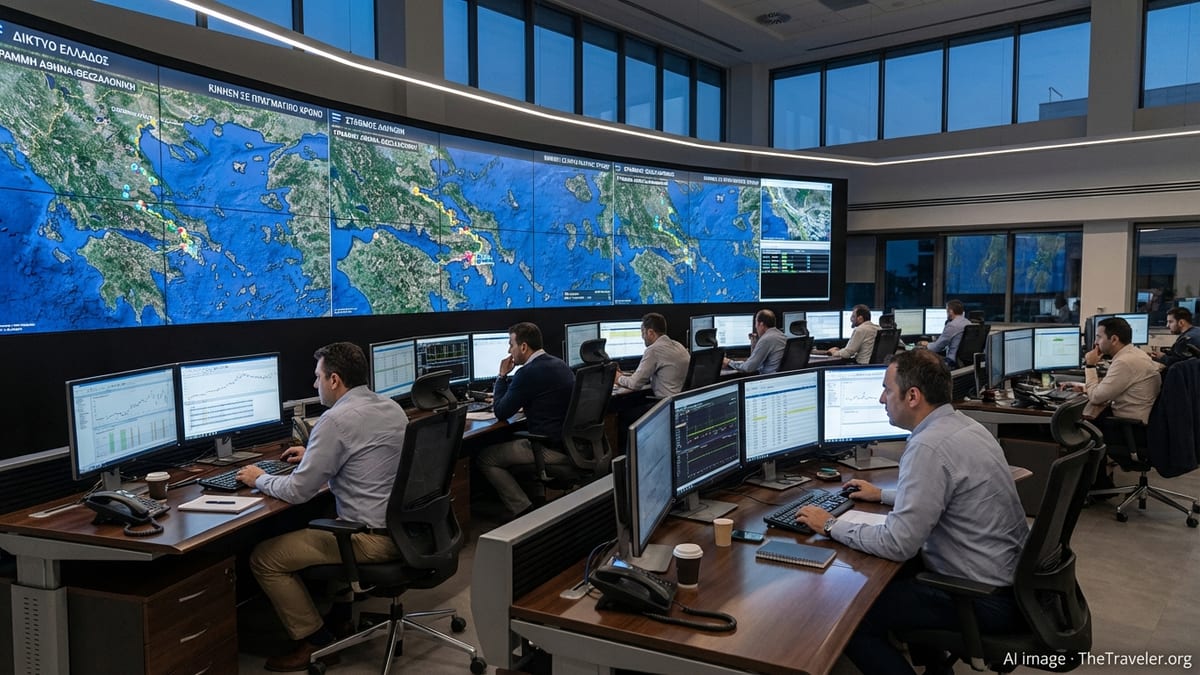
Signalling overhaul positions network for higher automation
Recent contracts on key international corridors indicate that Lithuania is shifting from conventional signalling to digital systems designed to support much higher levels of train automation in coming years. Publicly available information from the Ministry of Transport and Communications shows that LTG Infra, the state-owned infrastructure manager, has signed a major design, installation and maintenance agreement to equip the existing Rail Baltica line between the Lithuanian–Polish border and Palemonas with modern signalling and train control technology.
According to official project descriptions, the line will be equipped with the European Train Control System, part of the broader European Rail Traffic Management System framework, which replaces traditional trackside signals with continuous communication between trains and control centres. This architecture is widely described in European rail documentation as a prerequisite for progressive deployment of Automatic Train Operation, the suite of technologies that underpins semi-autonomous and ultimately driverless services on mainline rail.
Planning documents submitted to European institutions for Lithuania’s national ERTMS implementation programme indicate that the Kaunas to Polish border Rail Baltica section is being prepared for ETCS and related digital systems. Technical annexes for Rail Baltica further describe an ERTMS Level 2 configuration with the option to migrate to more advanced levels, creating a pathway toward virtual block operation and closer train spacing that are essential for fully autonomous concepts.
While passenger trains on these routes are still conventionally driven, the combination of digital signalling, high-capacity data links and centralised traffic management represents a decisive step away from analog control. Industry analyses of ERTMS deployments note that once such platforms are in place, the marginal upgrades needed to add higher grades of automation can be rolled out progressively, reducing both cost and operational risk.
Rail Baltica as a testbed for digital and automated operations
The multi-country Rail Baltica project is emerging as a focal point for advanced automation across Estonia, Latvia and Lithuania. Project material released by RB Rail, the joint venture overseeing the scheme, describes a new electrified standard-gauge corridor with modern control-command and signalling, future-proofed telecommunications and integrated traffic management designed from the outset around European interoperability standards.
Procurement documentation for Rail Baltica’s control, command and signalling subsystem outlines a broad digital scope, including ETCS, the Future Railway Mobile Communication System, centralised traffic management, cybersecurity provisions and station-level monitoring and passenger information. These elements correspond closely with the digital backbone that European research programmes identify as necessary for running automatic and eventually autonomous trains on open mainline infrastructure.
System engineering updates published by Rail Baltica highlight work on digital twins of the line, where infrastructure, energy, rolling stock and signalling are modelled together to test performance and safety scenarios before physical commissioning. Such virtual validation techniques are commonly cited in European research as a way to derisk autonomous train concepts, since they allow developers to expose algorithms and control systems to rare or complex situations that would be difficult to reproduce in real-world tests.
The long-distance, cross-border nature of Rail Baltica also makes it significant beyond the Baltic states. If the line is ultimately equipped with higher grades of automation, it could provide one of Europe’s first large-scale demonstrations of digitally controlled, semi-autonomous high-speed services operating across multiple national networks, offering a blueprint for similar projects elsewhere on the continent.
National innovation projects push on-board intelligence
Alongside infrastructure upgrades, Lithuanian rail stakeholders are experimenting with technologies that increase the intelligence of trains themselves, another key requirement for autonomous operations. Project summaries shared by the LTG Group describe trials of advanced on-board video surveillance and passenger information systems, using centralised control from the driver’s cab, GPS positioning and real-time data transfer to shore-based systems.
Innovation listings from the national rail group also refer to the use of LIDAR at level crossings to build detailed three-dimensional models of the environment and detect obstacles in real time. Although these deployments are targeted today at safety and security monitoring, similar sensor suites are widely studied in academic literature as enabling technologies for perception systems that would allow autonomous trains to recognise and react to objects on the track without human intervention.
These pilot initiatives are complemented by broader modernisation projects such as the electrification of the Vilnius to Klaipėda corridor, where recent test runs with electric rolling stock mark progress toward a more efficient and digitally managed network. Analysts note that fully electric, data-rich routes are better suited to high levels of automation, since they reduce complexity around traction and enable more precise modelling of train performance.
Together, these efforts suggest that Lithuania’s rail sector is not only updating legacy infrastructure but also actively building experience with the sensors, connectivity and data processing capabilities that will be critical when the transition toward supervised and, eventually, highly automated driving modes accelerates.
European research links Lithuania to pan-continental autonomy push
Developments in Lithuania are closely aligned with broader European initiatives that aim to move the continent’s railways toward digital and automated operations up to autonomous levels. Europe’s Rail Joint Undertaking, the main rail research partnership funded under EU programmes, is advancing a flagship project known as R2DATO that is specifically focused on developing scalable digital and automatic train operation capabilities for mainline networks.
Recent updates from Europe’s Rail describe demonstrations of Automatic Train Operation up to the highest grades of automation, combined with ETCS Level 2 signalling on real trains and dedicated test tracks. The project explores how remote driving, digital traffic management and advanced onboard systems can be integrated into existing control architectures, producing reference designs that national infrastructure managers can adapt for future rollouts.
Lithuania’s decision to equip strategic corridors with ERTMS-compatible signalling and to integrate its new Rail Baltica infrastructure into the wider European network means that the country is well positioned to benefit from such research. As common technical specifications for higher automation mature, these can be transplanted onto lines where the digital foundations are already in place, potentially shortening the time needed to move from pilot projects to limited commercial operation.
Observers point out that the Baltic region’s role as a north–south freight and passenger bridge between Northern and Central Europe adds strategic weight to this alignment. If autonomous or highly automated trains can eventually operate seamlessly along these corridors, the resulting efficiency and capacity gains could reshape long-distance flows for both goods and travellers across multiple EU member states.
Challenges ahead before fully autonomous trains arrive
Despite the rapid progress on signalling and digitalisation, fully autonomous train services in Lithuania remain a medium to long-term prospect. Technical papers on ERTMS security and automatic operation underline that current systems still face cybersecurity vulnerabilities, complex safety validation requirements and integration challenges when deployed on open networks with mixed traffic.
European standards also require exhaustive testing and certification before any move to higher grades of automation on passenger routes, particularly where trains share lines with conventional services or cross international borders. Ensuring that onboard perception systems, remote control capabilities and traffic management platforms perform reliably under extreme weather, infrastructure faults or unexpected obstacles is a continuing focus of research.
Funding and coordination present further hurdles. Rolling out ETCS and associated equipment across entire corridors demands sustained investment, while automation-specific upgrades such as enhanced onboard sensors or remote operation centres add additional cost layers. In a multi-country project like Rail Baltica, aligning technical choices, timelines and regulatory approvals among national authorities and infrastructure managers is likely to remain a complex task.
Even so, the trajectory of current projects points clearly toward higher levels of automation over the next decade. By prioritising ERTMS deployment on its key international links, investing in digital twins and intelligent on-board systems, and tying national upgrades into pan-European research, Lithuania is positioning itself as one of the frontrunners in Central and Eastern Europe in the transition toward autonomous rail operations.