


More news on this day
London North Eastern Railway is entering a pivotal phase on the East Coast Main Line, combining a transformational timetable, digital signalling upgrades and station investments to reshape long-distance rail travel between London, Yorkshire, northeast England and Scotland.
Get the latest news straight to your inbox!
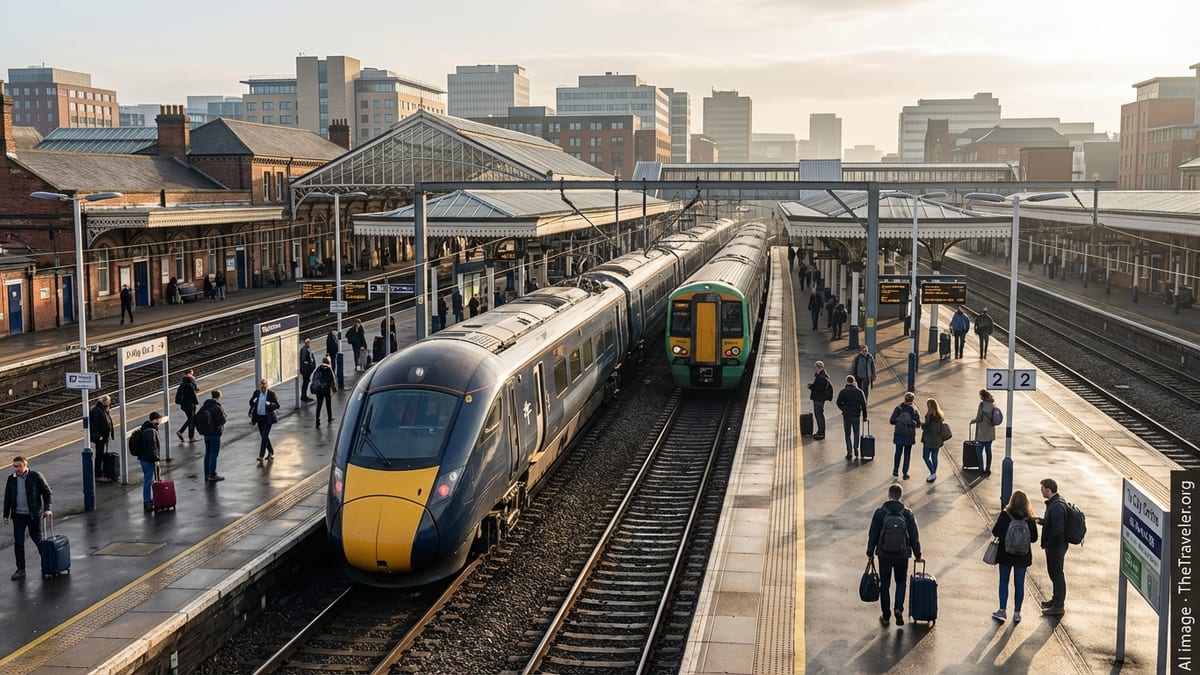
Timetable expansion boosts capacity between London and Scotland
The most visible change for passengers on London North Eastern Railway services is the step up in frequency following the introduction of a new timetable in December 2025. Publicly available information describes it as the biggest shake-up on the route in more than a decade, adding thousands of extra weekly seats and increasing the number of weekday services between London King’s Cross, the north of England and Scotland.
LNER reports that the refined timetable delivers around a 20 percent increase in its services on the East Coast Main Line, spreading departures more evenly throughout the day rather than concentrating them in traditional peak periods. This is intended to ease crowding on the busiest trains while giving leisure and business travellers greater flexibility in planning journeys.
The expanded timetable is also designed to work hand in hand with infrastructure improvements delivered over recent years, including upgraded power supplies and track layouts on key sections of the route. Government documents on the East Coast enhancement programme indicate that the aim is to enable more and faster long-distance services without eroding reliability, a challenge on infrastructure that already carries intensive intercity, regional and freight traffic.
Further timetable refinements are expected into 2026 as the wider East Coast upgrade beds in. Journey planners already reflect additional services between London and major cities such as Newcastle and Edinburgh, with industry briefings highlighting faster Anglo Scottish journey times as one of the headline benefits.
Digital signalling milestone on the East Coast Main Line
Alongside the timetable overhaul, LNER has reached a significant milestone in the rollout of digital signalling on the southern section of the East Coast Main Line. Company announcements in July 2026 report that the operator and its industry partners have successfully completed a major phase of work to equip its Azuma fleet and key parts of the route with the European Train Control System.
The digital signalling programme, often described in industry coverage as the East Coast Digital Railway, replaces traditional lineside signals with in cab systems that continuously transmit movement authorities to trains. This technology is expected to allow trains to run closer together while maintaining safety margins, supporting both higher frequencies and more consistent running times on one of Britain’s busiest intercity corridors.
Information published by Network Rail shows that the East Coast project has involved a series of weekend closures and diversions, particularly around the approaches to London. During those periods, LNER has had to reroute some services to alternative London terminals or rely on longer journey times, illustrating the short term disruption required to deliver long term capacity and reliability gains.
Officials behind the enhancement plans describe digital signalling as central to the long term future of the route, with the technology expected to be extended progressively northwards. For LNER, the recent milestone signals that its core London to Yorkshire and northeast England services are beginning to benefit from this investment, even as further work continues.
Partnership approach focuses on reliability and performance
Frequent travellers on LNER services have experienced both the benefits and the strains of running more trains on infrastructure that remains heavily used. Recent performance reports for the 2024 to 2025 period, published through official channels, show that LNER continues to achieve comparatively strong punctuality in the context of the wider long distance rail sector, although cancellations and delays linked to fleet and crew issues remain under close scrutiny.
To address these pressures, LNER and Network Rail’s eastern region have set out a joint programme under the East Coast Partnership banner for the 2026 period. Publicly available information describes objectives focused on cutting reactionary delays, improving how incidents are managed and embedding the new timetable without eroding reliability. This includes detailed work on dwell times at key stations, better management of junction conflicts and closer alignment between maintenance planning and the service pattern.
Industry updates also highlight efforts to refine rolling stock deployment, ensuring longer Azuma trains are used on the busiest flows, while still offering through services to destinations where platform lengths and infrastructure remain more constrained. Customer reports produced by LNER point to continuing investment in staff training, station staffing levels and accessibility support as part of a broader push to maintain service standards as passenger numbers recover.
National statistics on rail demand indicate that long distance operators, including LNER, are seeing passenger journeys approach or exceed pre pandemic levels on some days of the week, even as overall industry revenue remains below historic peaks. The combination of high demand, major engineering work and an expanded timetable leaves little slack in the system, reinforcing why performance management has become a central theme of LNER’s current strategy.
Station upgrades transform gateways along the route
Physical changes on the ground are also reshaping the experience of travelling with LNER. One of the most notable recent schemes is the multimillion pound expansion of Darlington station, completed in May 2026. Project partners describe the work as one of the most significant station investments on the East Coast Main Line in recent years, delivering new platforms, improved track layouts and a more spacious concourse.
The Darlington project is a key element in unlocking capacity for additional services, particularly those linking Tees Valley with London and other major cities. By adding platforms dedicated to fast intercity services and reorganising local routes, the scheme is intended to cut conflicts between stopping and non stopping trains, which can ripple across the timetable.
Elsewhere, LNER and partners continue to progress a wider package of East Coast Main Line enhancements referenced in government delivery plans. These include junction remodelling, power supply improvements and targeted works at other busy stations that act as hubs for LNER’s network, such as Newcastle and York. Each project contributes incremental capacity that, when combined, allows the operator to sustain its higher frequency service pattern.
For travellers, these station upgrades translate into more direct services, shorter interchange times and less congested platforms, particularly at peak periods and during major events. They also support the broader economic ambitions of the regions served by LNER, with local authorities often highlighting improved rail links as a foundation for growth in tourism and business investment.
Fleet, comfort and accessibility in the spotlight
LNER’s rolling stock strategy remains centred on its Azuma fleet, which operates the vast majority of services on the East Coast Main Line. Publicly accessible background information notes that these bi mode and electric multiple units were introduced to replace older High Speed Trains and most InterCity 225 sets, with the goal of delivering faster acceleration, better energy efficiency and modern on board facilities.
However, customer feedback has prompted changes. In March 2026, LNER announced that it was halfway through renewing all standard class seats across the Azuma fleet after passengers raised concerns about comfort. The refresh programme, detailed in company updates, involves new seat covers and revised cushioning aimed at improving the experience on longer journeys between London, Yorkshire, northeast England and Scotland.
Looking further ahead, rail industry sources report that LNER plans to introduce a new generation of trains, referred to in official documents as Class 897 units. These are intended to provide additional capacity and updated interiors, although disputes over aspects of proposed operation have delayed a firm introduction date. For now, attention remains on making the existing fleet work harder, supported by the digital signalling upgrades and infrastructure enhancements coming on stream.
Accessibility is another area of active development. Research published in 2026 on forecasting passenger assistance demand highlights how advanced data analysis tools are being used across LNER managed stations to better match staffing to the needs of passengers requiring help. The study reports that more accurate forecasting can significantly reduce instances where assistance is not delivered as planned, contributing to a more reliable and inclusive service.