


More news on this day
Boston Logan International Airport experienced a cascade of disruption on Monday, September 21, with more than 480 flight delays and over 70 cancellations after ground stops at New York City area airports and a regional air traffic control outage rippled through the Northeast travel network.
Get the latest news straight to your inbox!
New York disruptions ripple into Boston schedules
Publicly available data from flight tracking services indicates that Logan logged more than 480 delayed departures and arrivals on Monday, along with in the range of 70 to 80 cancellations. The figures placed Boston among the more heavily affected airports in the region, even though the most severe operational constraints initially centered on the New York City area.
According to published coverage of the incident, a technical problem at a key air traffic center serving the Northeast contributed to ground stops and flow restrictions at New York area airports including Newark Liberty, John F. Kennedy, and LaGuardia. With aircraft and crews held on the ground or diverted, schedules across one of the country’s busiest air corridors quickly fell out of alignment.
Logan’s close integration with the New York market meant that even flights without a New York origin or destination were vulnerable. When aircraft are delayed or trapped on the ground at major hubs, later segments that rely on that same equipment can depart late or be canceled entirely, a pattern reflected in the high number of timing changes in Boston throughout Monday.
By early Tuesday, tracking dashboards showed improved conditions in the New York region, but Boston passengers were still seeing some knock-on delays as airlines worked to reposition jets and crews. Reports indicated that average departure holds at Logan had eased compared with the previous day, although some routes continued to post extended waits.
How ground stops in New York choke Northeast air traffic
Ground stops are traffic management tools used to slow or temporarily halt departures bound for an affected airport. When regulators apply them to a complex as busy as the New York region, the impact tends to spread quickly, especially along the Boston to Washington corridor where short shuttle flights and dense schedules are the norm.
Published analyses of past disruptions in the Northeast show that when a single hub experiences a prolonged ground stop, nearby airports often see their own delays rise sharply as diversions arrive and departure slots are retimed. Boston’s role as the largest airport in New England and a significant reliever for New York operations makes it a frequent recipient of diverted traffic during New York slowdowns.
On Monday, the combination of New York area ground stops and a wider air traffic control issue effectively reduced capacity across shared airspace. Flights that did operate often faced extended sequencing, with holds on the ground or in the air as controllers spaced out traffic. For passengers, this translated into queues at gates, rolling delay estimates, and full rebooking desks at Logan’s terminals.
Travel industry reports note that short regional sectors are particularly vulnerable in these scenarios. Because crews on multiple quick turnarounds reach their duty time limits faster, an initial delay of an hour or two can eventually require a cancellation if rest requirements can no longer be met, further complicating recovery efforts at airports like Boston.
Existing runway work adds strain to Logan operations
The disruption arrived at a time when Logan was already operating with reduced flexibility. Information released by airport operator Massport and referenced in aviation oriented publications shows that one of the airport’s key runways has been closed since late August for roughly 75 days of safety construction.
The project includes the installation of an engineered materials arresting system, designed to slow and stop an aircraft that overruns the end of the runway. While the upgrade is focused on long term safety, taking a runway out of service during the busy late summer and early fall travel period limits the airport’s ability to absorb surges in traffic, especially when diversions arrive from other Northeast hubs.
On normal days, this reduced capacity can translate into modestly higher taxi times and occasional delays during peak hours. When a regional air traffic event funnels additional aircraft toward Boston, however, the constraints become more visible, with arriving and departing flights competing for fewer available runway slots.
Recent presentations and planning documents from Massport highlight the challenge of balancing construction schedules with operational needs. The current runway work has been timed for a traditionally less weather sensitive period, but as the latest disruption shows, air traffic control issues and downstream delays from other cities can still create pressure even in relatively calm conditions over Boston.
What travelers through Logan experienced on the ground
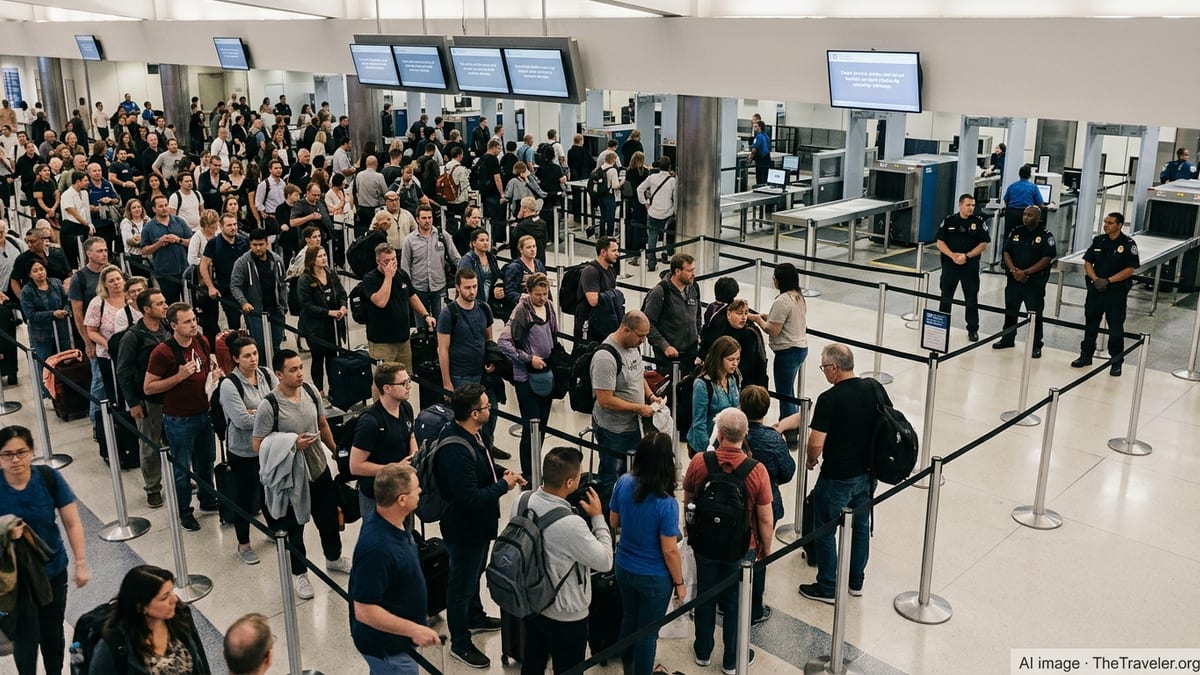
Local media reports and social media posts from passengers at Logan on Monday described crowded departure areas, long customer service lines and frequent schedule adjustments on departure boards. While many flights ultimately departed, some travelers reported spending several hours in the terminal as crews and aircraft cycled back into position.
Flight tracking summaries cited by Boston area outlets indicate that by late Monday night, Logan had tallied more than 480 delayed flights and upwards of 70 cancellations across domestic and international services. The disruption was broad based, affecting large network carriers, low cost airlines, and regional operators alike.
Publicly available airport status tools showed that average departure delays were well above typical levels through much of the afternoon and evening, occasionally approaching or exceeding an hour for some routes. Arrivals into Boston were also affected, with inbound flights from hubs to the south and west often arriving late after waiting out restrictions or congestion earlier in the day.
For some travelers, recovery stretched into Tuesday, as missed connections and crew rest requirements forced schedule adjustments. Reports from the airport on Tuesday morning indicated a steadier operation but still noted sporadic delays as airlines worked through remaining backlogs from the previous day’s ground stops.
Advice for travelers navigating Logan during regional disruptions
In the wake of Monday’s events, travel publications and aviation analysts have reiterated practical steps for passengers using Boston during periods of regional disruption. The most consistent guidance is to monitor flight status directly through the airline’s app or website, which tends to update more quickly than third party trackers when gate assignments, departure times, or rebooking options change.
Because New York related ground stops can affect Boston bound flights even when weather over Logan appears benign, travelers are encouraged to pay attention to conditions and airspace restrictions across the broader Northeast. If a connection involves a New York area airport, there is an increased risk of cascading delays, especially during late afternoon and evening peak periods.
Publicly available information from Massport emphasizes that airlines control most day to day passenger handling decisions during irregular operations, including options for rebooking and overnight accommodation. Travelers facing significant delays at Logan are typically advised to seek assistance first from their carrier’s digital channels, then from staffed service desks in the terminal if necessary.
With runway construction continuing and the busy fall travel season under way, aviation observers suggest that Boston area passengers build additional buffer time into tight connections and consider early day departures when possible. While Monday’s level of disruption remains unusual, the incident highlights how quickly conditions at Logan can change when New York airspace runs into trouble.