


More news on this day
Air travel across Europe is facing a fresh wave of disruption as London’s airports and 11 other major hubs report more than 100 cancellations and over 2,600 delays, snarling schedules for carriers and passengers across the continent.
Get the latest news straight to your inbox!
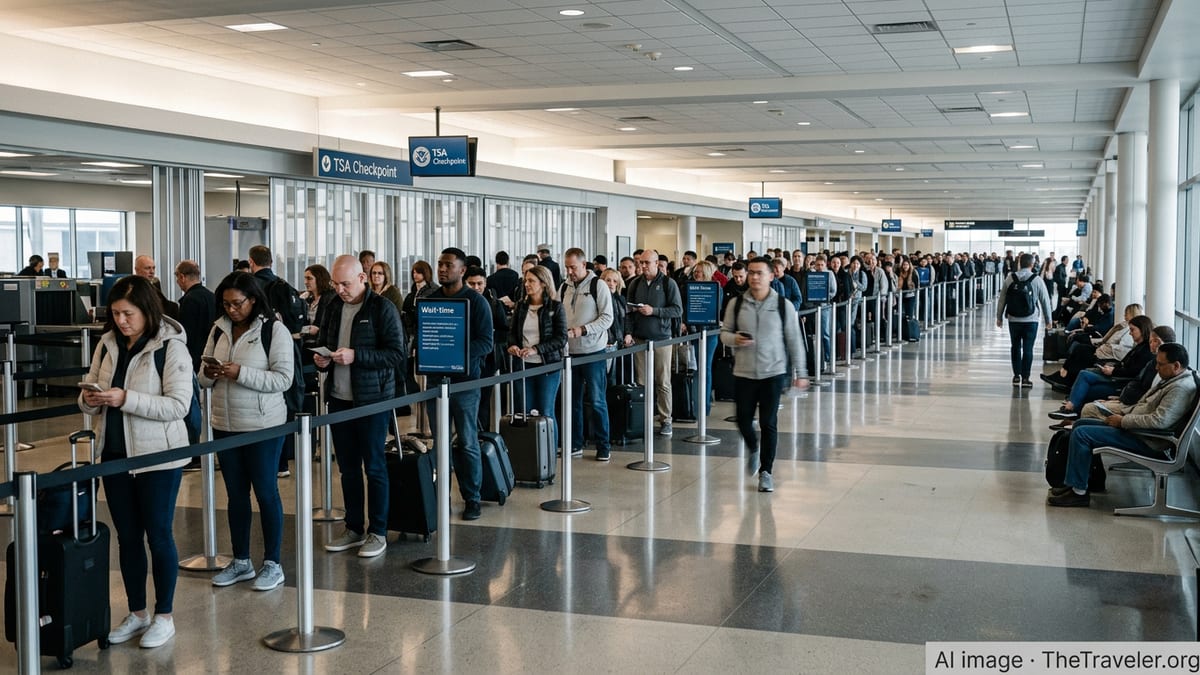
Data Shows Hundreds of Flights Affected Across Key European Hubs
Publicly available disruption trackers and regulatory statistics indicate that, over a recent 24-hour period, London’s airports and 11 other major European hubs together recorded around 105 cancellations and approximately 2,618 delayed flights. While the precise totals fluctuate by hour, aggregated figures from live tracking services show London Heathrow and London Gatwick as among the most affected, alongside Amsterdam Schiphol, Paris Charles de Gaulle, Madrid Barajas, Lisbon, Frankfurt and other large gateways in the Schengen area.
Tracking data for Europe highlights London Gatwick and London Heathrow among the top-ranked airports for arrival delays, with some hubs reporting delay rates above 30 percent on certain rotations. Separate historical data from the UK Civil Aviation Authority on air transport movements shows that London-area airports can collectively record more than 100 cancellations in a month where disruption is concentrated into a small number of intensive days, illustrating how a single spell of operational stress can account for a significant share of cancellations.
European disruption reports compiled in mid-2026 further underline how quickly problems in one part of the network spread. On several recent days, industry analysis has documented more than 1,600 flights disrupted across major European hubs, with London, Madrid and Amsterdam repeatedly featuring among the most impacted cities. Taken together, these snapshots suggest that a headline figure of roughly 105 cancellations and 2,618 delays across London and 11 other airports is consistent with current patterns of stress in the European system.
Although the number of outright cancellations remains modest compared with overall traffic volumes, the volume of delayed flights means that thousands of passengers experience missed connections, late arrivals and disrupted travel plans within a short window of time.
Operational Strains, Weather and Security Events Drive Disruption
Recent reports attribute Europe’s latest disruption to a mix of contributing factors, rather than a single trigger. Operational strains at airlines, including tight aircraft rotations and crew scheduling, continue to play a central role in knock-on delays. Live disruption indices show that even when cancellation counts are relatively low, prolonged average delays at busy hubs can push disruption scores sharply higher, reflecting the difficulty of recovering schedules once punctuality deteriorates.
Weather remains a key driver. Comparative analyses of European airports during recent cold spells have shown that London and other hubs can suffer significant cancellation spikes when snow or low temperatures combine with capacity constraints. In one example highlighted in early 2026, statistics for a particularly bad winter day showed more than 100 flights cancelled at a single airport, out of roughly 1,000 scheduled movements, underscoring how weather-exposed operations are vulnerable when contingency plans are stretched.
Security-related events have also recently magnified disruption. A widely reported security scare at Berlin Brandenburg Airport in early September 2026 led to more than 2,200 flights across Europe being affected in a single day, with knock-on consequences for London Heathrow, Brussels, Amsterdam and other hubs. Even when London is not the origin of a disruption, such incidents demonstrate how interconnected schedules are, with delays at one node quickly creating late arrivals and subsequent delays elsewhere.
Infrastructure constraints add another layer of complexity. Notices to airspace users in the United Kingdom point to ongoing stand reconfigurations at London Gatwick and other airfields, as well as temporary runway or stand closures at several airports. While these measures are usually planned in advance, any overlap with adverse weather, staffing shortages or technical issues can reduce operational resilience and amplify the scale of delays and cancellations seen in the statistics.
Airlines and Airports Face Pressure to Protect Peak Summer and Autumn Schedules
The current wave of disruption hits as airlines and airports attempt to protect busy late-summer and early-autumn schedules. Carrier timetables remain near or above pre-pandemic levels on many European routes, with high load factors driven by leisure travel and resurgent business demand. This leaves limited room to absorb unplanned outages, whether from technical problems, air traffic control restrictions or short-notice staffing gaps.
European disruption reports covering June 2026 describe how a combination of congestion, weather and operational issues led to more than 650 flights being affected on a single day at major hubs, with London Heathrow and Amsterdam Schiphol recording both cancellations and heavy delay volumes. Separate analysis of London-focused disruption in early June notes that Heathrow and Gatwick alone saw hundreds of delayed flights in one day, even with only a small number of outright cancellations, illustrating how even modest schedule shocks can cascade into widespread lateness.
For airlines, sustained delays translate into higher costs for fuel, crew repositioning and passenger care, as well as lost revenue when aircraft and staff are out of position for subsequent rotations. Carriers are reacting with a mix of proactive schedule thinning on some routes, use of larger aircraft on trunk services and more conservative turnround times at congested hubs. However, public timetables and seat maps for the coming weeks still indicate dense schedules on key London routes, suggesting that the margin for recovery after a disruption remains narrow.
Airports, for their part, are under pressure to keep security, check-in and baggage handling moving despite volatile flight timings. Experience from earlier disruption episodes in 2026 shows that when peaks of delayed arrivals coincide with scheduled departures, terminal congestion and baggage backlogs can build quickly, even if runway capacity is technically available.
What the Disruptions Mean for Passengers and Their Rights
For passengers, the immediate impact of 105 cancellations and 2,618 delays across London and 11 other European airports is felt in missed holidays, disrupted business trips and unplanned overnight stays. Consumer-rights specialists emphasise that, under European Union Regulation EC 261 and its UK equivalent, UK261, many travellers on EU- or UK-operated flights may be entitled to fixed-sum compensation if their flight is cancelled at short notice or arrives more than three hours late, provided the root cause is not classed as an extraordinary circumstance such as severe weather, air traffic control restrictions or security incidents.
Guidance summarised by passenger-advocacy organisations notes that compensation levels can reach up to 600 euros per person for long-haul flights in cases where the disruption is judged to be within the airline’s control, for example when it stems from crew or fleet planning issues. In addition, airlines are generally required to offer care and assistance, including meals, refreshments and hotel accommodation where necessary, when passengers are stranded by significant delays or cancellations.
Published case studies of recent disruption affecting London, Madrid, Amsterdam and Berlin suggest that determining the underlying cause of any individual delay can be complex. Some events, such as weather-related de-icing backlogs or airport security alerts, are typically treated as beyond the airline’s control, limiting compensation entitlements. Others, including technical faults or crew-availability problems, are more often considered within the carrier’s responsibility. Passengers are therefore advised by rights organisations to retain boarding passes, written notifications and any receipts for expenses incurred, in case they later submit a claim.
Given the current pattern of recurring disruption days across Europe’s largest hubs, analysts expect that consumer awareness of EC 261 and UK261 will continue to rise. Travel advisers recommend that passengers build additional buffer time into itineraries involving connections at major hubs, particularly London, Amsterdam, Paris and Madrid, and to monitor live flight-status information closely on the day of travel.
Prospects for Stabilisation as Autumn Approaches
Looking ahead to the remainder of September and into October 2026, aviation data suggests a mixed outlook for punctuality. On the one hand, traffic volumes typically ease slightly after the peak summer holiday period, which can provide some breathing space for airlines and airports to stabilise operations. On the other hand, autumn brings a higher risk of adverse weather across northern and western Europe, including storms and fog episodes that can reduce runway arrival rates and trigger fresh waves of delays.
European air-traffic performance reports indicate that reactionary delays remain a significant component of overall lateness, meaning that disruptions early in the day or at one major hub can continue to affect flights well into the evening and across distant parts of the network. Unless airlines build greater slack into schedules or reduce overall flying, this structural characteristic of the system is likely to persist.
Infrastructure works scheduled at several European airports, including stand reconfigurations and terminal refurbishments at London Gatwick and other UK sites, will also continue through the autumn. While these projects are designed to improve long-term capacity and passenger experience, they may constrain short-term flexibility if unplanned events coincide with work phases that remove stands, gates or taxiways from service.
For now, published disruption maps and daily performance summaries show that Europe’s aviation network remains vulnerable to clusters of cancellations and delays when multiple stress factors align. Travellers planning to pass through London and other major hubs in the coming weeks are therefore likely to face an environment where careful planning, flexible arrangements and awareness of passenger rights remain essential.