


More news on this day
A wave of street protests and sporadic riots across parts of Europe in October 2026 is prompting governments to introduce night-time curfews, reinforce police deployments and update travel advisories, forcing visitors to reassess plans for late-season city breaks.
Get the latest news straight to your inbox!
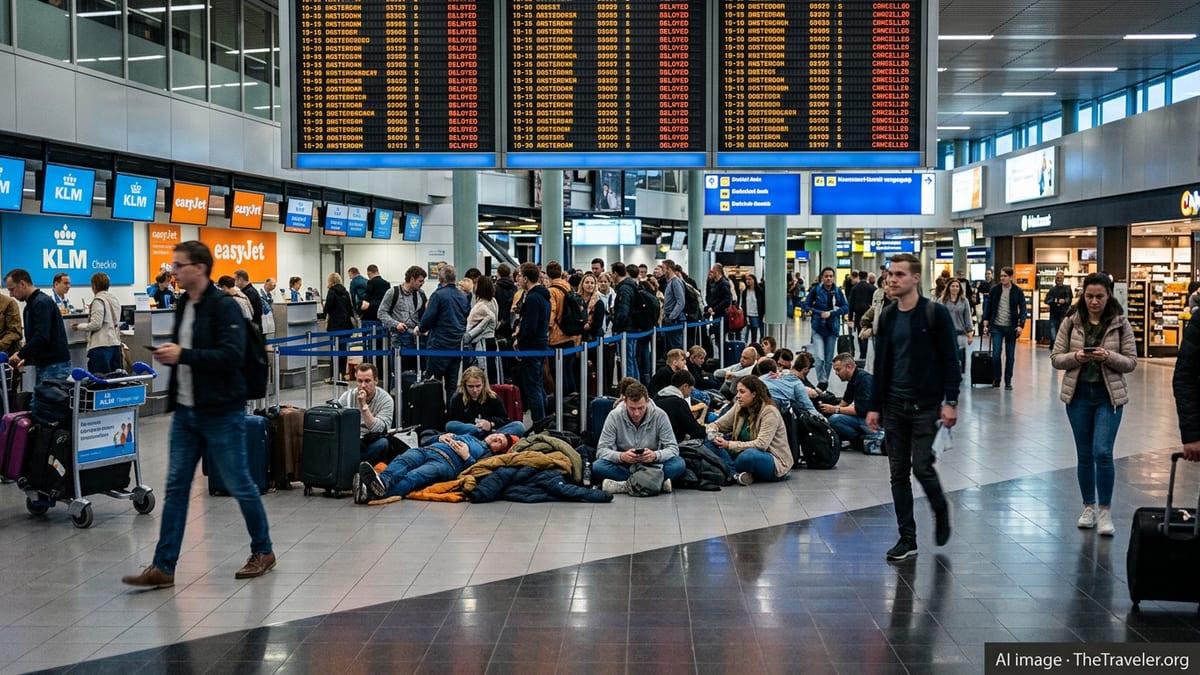
France’s targeted curfews reshape night-time city travel
France remains at the center of the current unrest, with protests over education policy, living costs and public services escalating into some of the country’s most destructive rioting in years on 17 October 2026. In response, authorities have introduced what government communications describe as partial and locally limited curfews in several major cities, including Paris, Lyon and Marseille.
In Paris, recent measures have included overnight curfews in selected districts and squares, such as areas around Place de la République and the Les Halles neighborhood, typically running from late evening, around 11 p.m., to early morning at 6 a.m. Publicly available information and on-the-ground reports indicate that in some northern municipalities, time-bound restrictions for minors have applied from 8 p.m. to 6 a.m., reflecting concern about youth participation in the clashes.
Travel advisories from countries including Canada, Australia and Ireland now explicitly reference the possibility of local curfews in France, urging travelers to monitor local announcements for the exact times and affected neighborhoods. Guidance stresses that, outside flashpoint areas, most of the country continues to operate normally, with hotels, restaurants and attractions open, but visitors may find side streets temporarily closed, metro stations shut near protest routes and increased ID checks in rail hubs.
For travelers already in France, the most immediate impact is on evening mobility. Curfews can restrict access to popular nightlife districts and complicate late-night transfers between the city center and outer-arrondissement accommodations. Visitors arriving on late flights or trains are being advised, in publicly available travel guidance, to confirm in advance whether taxis and airport shuttles are still permitted to cross curfew zones and to keep hotel confirmations and passports readily accessible if stopped at checkpoints.
Unrest spreads beyond France, with varied impact on visitors
While France has drawn the most international attention, protests linked to living costs, housing shortages and education have also spread to other European countries, including Belgium, Spain, Portugal and parts of Italy. Coverage compiled this week by international broadcasters notes that marches in cities such as Brussels, Lisbon and Barcelona have generally been peaceful, but some demonstrations have led to clashes with police and short-lived disruption in city centers.
In Belgium, student-led actions and solidarity marches have periodically affected key arteries in Brussels, with sporadic tram and bus delays around the European Quarter and central squares. Public information available on municipal channels highlights that gatherings are often preannounced, allowing local transport operators to reroute lines or add staff, but visitors can still experience longer journey times around peak demonstration hours.
Across the Iberian Peninsula, housing protests in Lisbon, Porto and several Spanish cities have focused on central plazas and government districts. According to recent news coverage, these events have not generally produced the kind of widespread property damage seen in parts of France, and no broad curfews have been announced at national level. However, individual cities have occasionally introduced temporary bans on large gatherings in specific zones, particularly following nights when protests continued late or blocked major bridges and avenues.
Publicly accessible European Union and national government guidance continues to describe most affected destinations as open and functioning, but with a heightened risk of localized disruption around protest dates. For travelers, this means that the main museums, landmarks and business districts usually remain accessible, yet day trips and guided walks may need to be rescheduled at short notice if marches are called in front of parliaments, ministries or city halls.
Travel advisories refined rather than raised to highest alert
Despite vivid footage circulating on social media, recent updates from travel-advice services in North America, Europe and the Asia-Pacific region generally stop short of classifying Western European countries as unsafe to visit. Instead, the emphasis in October 2026 revisions has shifted toward civil unrest and crowd management, highlighting the need to avoid demonstrations, monitor local media and remain flexible with itineraries.
For France, several foreign ministries now feature prominent notices explaining that large-scale demonstrations may occur with little advance warning and that localized curfews, transport interruptions and short-notice event cancellations are possible. Travelers are encouraged, in this publicly available guidance, to register contact details with their own consular services and to ensure that travel insurance policies explicitly cover trip changes linked to civil unrest.
In Germany, the Netherlands and Nordic countries, authorities have updated their advice for citizens traveling to France and other protest-affected destinations, pointing to an elevated likelihood of encountering demonstrations and a visible security presence in transport hubs. These notices typically reiterate long-standing recommendations to avoid protest areas and to follow instructions from local public-safety announcements, while affirming that essential tourism infrastructure, including airports and high-speed rail, continues to operate.
Industry-focused publications reviewed this week indicate that airlines and rail operators have so far maintained regular schedules on most cross-border routes, with adjustments concentrated on late-night departures that would arrive in the middle of curfew hours. Some carriers have introduced flexible rebooking options for passengers due to travel into city centers affected by recent rioting, allowing date changes without standard penalties when supported by documented curfew notices or confirmed event cancellations.
Nightlife, events and urban mobility face short-notice changes
For many visitors, the most tangible consequence of the unrest is the way it alters the rhythm of European city life after dark. In districts under curfew in France, terrace culture has been abruptly curtailed, with bars and cafes required to close early and outdoor seating removed well before the designated cut-off. According to local press reports, some cultural venues in Paris and Lyon have also rescheduled performances to earlier time slots to allow audiences and staff to return home before curfew begins.
In cities outside France, where no formal curfews are in place, travelers may still encounter early closures in neighborhoods that have seen repeated marches or confrontations. Municipal statements and business-association briefings suggest that some independent restaurants and small shops are choosing to shut for the evening when protests are expected nearby, citing staff safety and uncertainty around public transport.
Urban transport is another pressure point. During large demonstrations, metro stations along march routes are often closed temporarily, and surface traffic can be diverted for several hours. In Paris, information gathered from traveler reports and local advisories shows that stations near Place de la République, Bastille, Nation and other traditional gathering points can be shut with little notice, requiring riders to walk to the next open stop. Similar patterns have been noted in Brussels and Madrid, where central bus lines have been rerouted away from protest sites.
Travelers planning evening activities are being urged, in publicly accessible guidance, to build extra time into journeys, confirm last-train times on the day of travel and keep alternative routes in mind. Booking restaurants and shows within reasonable walking distance of accommodation, or in districts well away from planned march routes, can reduce the risk of being stranded if trams and metro lines are suspended for crowd-control reasons.
Practical steps for travelers monitoring a fast-moving situation
While the tone of official advice remains measured, the pace of developments since mid-October illustrates how quickly the situation can change. Curfews announced for one or two nights in selected French cities have already been extended or expanded in scope, as authorities respond to new protest calls and assess the scale of overnight damage. At the same time, periods of intense unrest have been followed by calmer days when tourists report only a heavier police presence and isolated gatherings.
Publicly available consular and tourism guidance stresses the importance of real-time information. Travelers are encouraged to check national foreign-ministry travel pages, city transport websites and reputable news outlets on the morning of travel and again before heading out in the evening. Many large European cities now provide multilingual social media feeds or alert services that share details of planned protest routes, station closures and temporary bans on public gatherings.
Accommodation choice can also influence how directly visitors experience the unrest. Hotels in business districts or near government buildings are more likely to sit along demonstration routes, while residential neighborhoods a few metro stops away often remain quiet even on protest days. Recent traveler accounts from Paris and Lyon suggest that, just a short distance from focal squares, daily life has continued with little interruption, beyond the sound of distant chanting or the sight of police convoys passing through.
For those with trips booked in the coming weeks, publicly available information from tourism boards and travel associations advises against automatic cancellation. Instead, travelers are being urged to keep plans under review, understand the specific curfew rules or protest schedules in their chosen destinations, and maintain flexible arrangements for evening activities and intercity transport. With unrest still evolving across parts of Europe, the picture for visitors is one of selective disruption rather than continent-wide shutdown, provided that travelers remain alert to the latest advisories and prepared to adjust their itineraries at short notice.