


More news on this day
Kenya’s flagship safari industry is watching bookings closely after the United States raised its travel advisory for the country to Level 3 on October 19, 2026, urging Americans to reconsider travel due to security, health and crime risks.
Get the latest news straight to your inbox!
Advisory Raised to Level 3 With Targeted Risk Areas
Publicly available information from the US Department of State shows that Kenya’s overall advisory was upgraded from Level 2 to Level 3 on October 19, 2026. The notice cites terrorism, crime, health concerns and the threat of kidnapping among the key reasons for the change. The advisory describes Level 3 as a category in which travelers are asked to reconsider trips because of serious safety and security risks.
Within the countrywide Level 3 rating, the advisory lists several locations as Level 4 “Do Not Travel” zones, including the counties along the Somalia border such as Mandera, Wajir and Garissa, as well as parts of Tana River, Lamu and areas of Kilifi north of Malindi. It also urges travelers to avoid parts of northern and northwestern Kenya, including sections of Turkana, Marsabit and West Pokot, where banditry and cross-border incursions have been reported.
The same guidance highlights specific neighborhoods in Nairobi, such as Eastleigh and Kibera, as Level 3 areas within the capital due to crime and kidnapping concerns. While most of Kenya’s main safari reserves and beach destinations are not listed in the highest-risk zones, the overall country rating now appears on the same Level 3 tier as several conflict-affected or unstable destinations, which industry observers say could influence traveler perception.
Separate travel advice from other governments, including the United Kingdom’s Foreign, Commonwealth and Development Office, continues to distinguish between high-risk border counties and popular tourist areas, advising against all or all but essential travel to some regions while allowing travel to most safari and coastal circuits. These differences in wording are being closely parsed by tour companies serving a largely international clientele.
Safari Heartlands Seek to Reassure Visitors
Kenya’s signature wildlife areas, including the Maasai Mara National Reserve, Amboseli National Park, Tsavo and Laikipia conservancies, lie far from the Somalia border and the northeastern counties singled out for Level 4 restrictions. Industry stakeholders are emphasizing that scheduled safari itineraries generally connect through Nairobi’s Jomo Kenyatta International Airport before moving directly to airstrips within these parks or to private conservancies, avoiding the frontier regions referenced in the advisory.
Tourism performance data released by Kenya’s Tourism Research Institute for 2024 indicates that the United States remains Kenya’s largest single source market, accounting for more than 12 percent of international arrivals. The same data shows international visitor numbers reaching new post-pandemic highs in 2024, with over 2.4 million international tourists and a double-digit percentage increase compared with the previous year. Those figures illustrate how dependent many lodges and tour operators are on long-haul markets such as the US.
Public comments from Kenyan tourism agencies and sector representatives in recent years have typically stressed that security around major parks and key transport corridors is tightened during periods of regional tension. In practice, safaris are usually structured around early-morning and late-afternoon game drives within tightly controlled concessions, where visitor movements are logged and guided and where private security and park rangers are visibly present.
Travel consultants based in East Africa have also long encouraged visitors to use scheduled bush flights rather than long-distance road transfers to reach parks, both to save time and to bypass any trouble spots. With the new Level 3 rating in place, industry analysts expect that operators will again highlight these routing choices to demonstrate that classic safari itineraries rarely intersect with the Level 4 areas described in security advisories.
Potential Impact on Bookings, Insurance and Pricing
The move to Level 3 is significant for the safari sector because many US-based travelers and companies use government advisories as a benchmark for travel risk. In some cases, corporate travel policies automatically restrict employee trips to destinations rated at Level 3 or above, while certain schools and universities may cancel study programs and field courses when an advisory reaches that threshold. Travel management companies are therefore reviewing how the updated classification could affect incentive travel, conferences and educational groups bound for Kenya.
Insurance implications are another major concern. Policy documents from international travel insurers often state that coverage for trip cancellation or emergency assistance can be limited or excluded if a traveler enters a country or region under a Level 3 or Level 4 advisory at the time of booking or departure. Travelers planning safaris for late 2026 and 2027 are being advised by many agencies to confirm whether medical evacuation, emergency medical treatment and cancellation benefits remain valid under the new Kenyan advisory level.
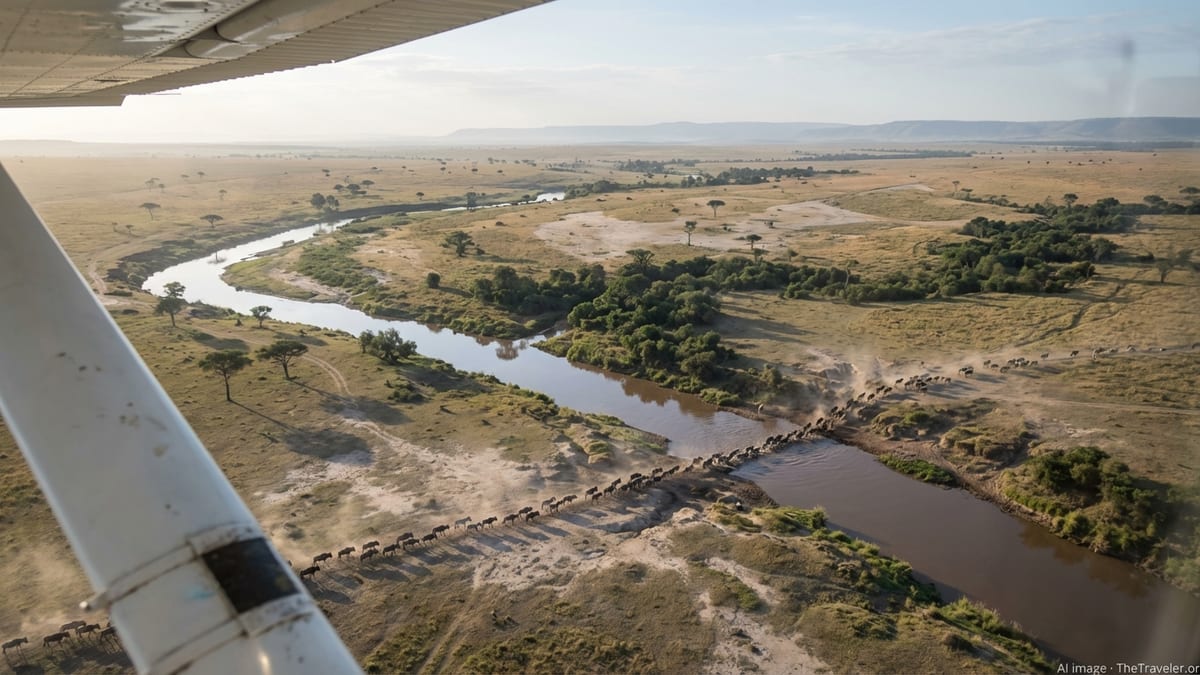
Safari operators in Kenya typically require nonrefundable deposits several months in advance, especially for peak seasons in July through October during the great wildebeest migration in the Maasai Mara. If heightened risk perceptions translate into hesitancy or last-minute cancellations from US travelers, lodges that depend heavily on this market could face pressure to adjust payment terms, offer more flexible postponement policies or introduce discounted shoulder-season rates to stabilize occupancy.
At the same time, historical tourism data from Kenya shows that the sector has recovered from earlier periods of security-related advisories, including warnings linked to past terror incidents in coastal and northeastern regions. Analysts observe that demand has often rebounded once travelers gain confidence that risks are contained to specific areas and as word of mouth from recent visitors underlines the experience in core safari destinations.
Health Concerns Add Complexity to Risk Calculations
The updated Kenya travel advisory coincides with renewed attention to health risks in the region. Recent public discussion and local media coverage have highlighted reports of Ebola Bundibugyo virus cases and related travel health notices. While such outbreaks are often geographically limited, the inclusion of health indicators in a national advisory can weigh heavily on traveler sentiment, especially in markets that are still sensitive to global health emergencies.
Information from travel health authorities indicates that travelers may be advised to take additional precautions, such as monitoring official health alerts, reviewing their vaccination history and familiarizing themselves with symptoms that require prompt medical attention. These measures are recommended alongside standard guidance for East African travel, including malaria prevention in certain regions, food and water hygiene and awareness of altitude when visiting highland destinations.
Safari properties serving international guests have, in many cases, retained enhanced hygiene and sanitation practices introduced during the COVID-19 pandemic, such as frequent cleaning of shared vehicles, availability of hand sanitizer and flexible dining arrangements. Sector observers say such measures can be helpful in reassuring guests who are weighing both security and health information before finalizing travel plans.
However, publicly available travel medicine resources emphasize that health and security profiles can vary significantly between urban centers, rural communities and remote wildlife reserves. Travelers are therefore being encouraged by tour planners to consult both national advisories and specialized medical advice rather than relying on a single source when assessing overall risk.
Regional Competition and Kenya’s Long-Term Safari Outlook
The timing of the US advisory change is sensitive for Kenya because regional competitors in the safari market, including Tanzania, Botswana and Namibia, are actively marketing themselves as stable wildlife destinations. Tanzania, for example, has itself been subject to a US Level 3 advisory in the recent past on grounds including unrest, crime and concerns affecting LGBTQ+ travelers. Nonetheless, perceptions of relative safety between neighboring countries can shift quickly and influence where first-time safari guests choose to book.
Kenya’s tourism strategy documents outline efforts to diversify beyond traditional big-five safaris, with the Kenya Tourism Board unveiling new tourism circuits and promoting coastal, cultural and adventure experiences. Government statistics show that domestic tourism and regional travel from other African countries have also grown strongly, providing a partial buffer when long-haul markets slow in response to external shocks or shifting advisories.
Economic impact assessments prepared for the tourism ministry in recent years have underscored the sector’s importance to employment and foreign exchange earnings. Before the pandemic, tourism was estimated to contribute close to a tenth of Kenya’s gross domestic product and to support well over a million direct and indirect jobs. With international arrivals surpassing pre-2020 levels in 2024, the prospect of a prolonged downturn in US demand is being taken seriously across the value chain, from airlines and safari operators to craft markets and community conservancies.
Observers note that much will depend on how long the Level 3 designation remains in place and whether subsequent updates reflect improvements in security and health indicators. In the near term, tour operators are expected to intensify communication with booked and prospective guests, emphasizing detailed itineraries, safety protocols and the geographic distance between safari heartlands and the high-risk areas cited in official notices.