


More news on this day
The United States has moved four West African countries into its strictest Level 4 “Do Not Travel” category, a shift that signals mounting concern over security, political volatility and limited emergency support for travelers across parts of the Sahel and Gulf of Guinea.
Get the latest news straight to your inbox!
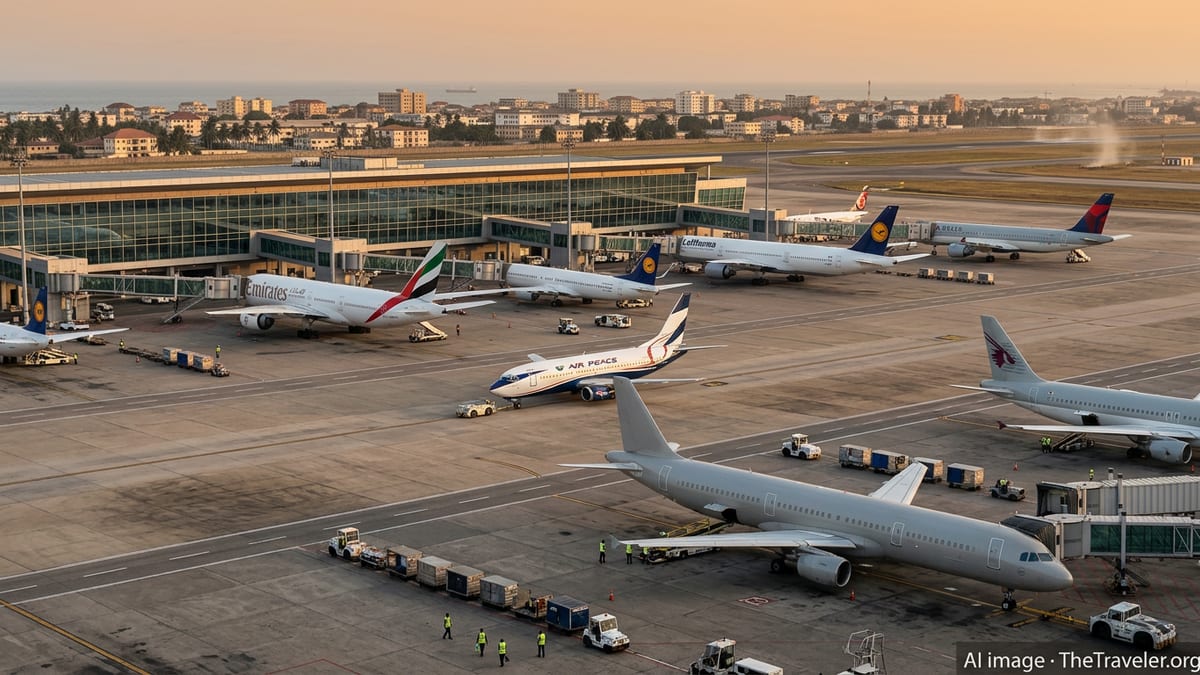
Four West African Countries Now at Highest Advisory Level
Publicly available travel-advisory data from the U.S. Department of State in October 2026 shows Burkina Faso, Mali, Niger and Guinea classified at Level 4, the government’s most severe “Do Not Travel” designation. The classification places these destinations in the same risk tier as a small group of other countries where U.S. citizens are advised to avoid all travel and to depart as soon as it is safe if already present.
The four-tier advisory system ranges from Level 1, where travelers are asked to exercise normal precautions, to Level 4, reserved for locations where the likelihood of life‑threatening risks is considered elevated and where U.S. consular support may be significantly constrained during an emergency. In these Level 4 countries, the formal guidance indicates that evacuation assistance and other crisis response measures may be severely limited or delayed.
Recent compilations of advisory data highlight that a total of 11 African states are now categorized at Level 4, underscoring how the Sahel and parts of Central and East Africa have become some of the most restricted regions in the world for U.S. travelers. Within that wider picture, the grouping of Burkina Faso, Mali, Niger and Guinea stands out for its concentration in West Africa and its mix of overlapping security and health concerns.
Key Risks Cited in West Africa’s Level 4 Designations
Information drawn from the individual advisories for Burkina Faso, Mali and Niger points to a convergence of threats, including terrorism, violent crime, kidnapping and armed conflict. In large areas of these three Sahelian states, non‑state armed groups are reported to operate with varying degrees of control, particularly outside major urban centers and along remote border regions.
Burkina Faso’s advisory, last updated in 2026, attributes the Level 4 status to ongoing extremist violence, attacks on civilian and military targets and frequent ambushes on roads connecting provincial towns. Public documents note that government forces and armed groups are engaged in active conflict across much of the country, making route planning unpredictable and limiting options for overland travel even between key cities.
Mali remains under a nationwide Level 4 advisory that was reaffirmed in mid‑2026, with official risk summaries highlighting carjackings, improvised explosive devices and attacks against peacekeepers and local security forces. Available security data for Niger similarly cites recurrent attacks and kidnappings, particularly in the Tillabéri and Diffa regions, where porous frontiers and the presence of multiple armed factions have complicated efforts to stabilize the area.
Guinea’s inclusion on the Level 4 list reflects a different but related mix of concerns. Publicly accessible guidance emphasizes episodes of political tension, sudden civil unrest and weaknesses in health infrastructure. While the country has not experienced the same scale of insurgent activity as its Sahelian neighbors, advisory language points to the risk that demonstrations or security operations can escalate quickly, as well as the challenges travelers may face in accessing reliable medical care outside a limited number of facilities.
Impact on Travel, Aviation and Humanitarian Operations
The shift to Level 4 status is expected to reshape how airlines, tour operators, non‑governmental organizations and multinational companies plan activity in the affected countries. While the U.S. travel advisories are not binding on foreign carriers or other governments, industry analysts note that they often influence corporate risk assessments, insurance underwriting and duty‑of‑care policies for staff working overseas.
Some international airlines had already reduced or suspended direct services to certain Sahelian capitals in recent years in response to security and demand factors, and the reinforced Level 4 categorization may further discourage route expansion. Humanitarian and development organizations that continue to maintain a presence in Burkina Faso, Mali, Niger and Guinea may face additional scrutiny from donors and insurers, potentially leading to stricter security protocols and higher operating costs.
For individual U.S. travelers, the practical effects can include difficulties obtaining comprehensive travel and medical evacuation insurance to Level 4 destinations, as many providers treat these locations as extreme‑risk territories. Public advisory materials also stress that, in the event of a rapid deterioration in local conditions, commercial flight options may be the only realistic way to depart and that such options can disappear with little warning.
What the Level 4 Warning Means for Americans Abroad
General guidance published by the U.S. government explains that a Level 4 advisory indicates a higher probability of life‑threatening risks and a reduced capacity for consular officials to intervene if something goes wrong. In practical terms, that means travelers should not rely on emergency evacuations, law‑enforcement support or ready access to secure transportation in Burkina Faso, Mali, Niger or Guinea.
Advisory materials encourage any U.S. citizens who nevertheless remain in Level 4 countries to prepare independent contingency plans. Such planning can include maintaining emergency funds in cash, keeping travel documents readily accessible, monitoring local news and international media for signs of rising tensions, and identifying multiple exit routes from neighborhoods, cities and the country itself.
Health considerations form a significant part of the warning as well. Across much of the Sahel and parts of coastal West Africa, published assessments highlight limited intensive‑care capacity, shortages of specialized staff and constrained access to medications. For travelers who may require ongoing treatment or who are at higher risk from infectious disease, the combination of security challenges and fragile health systems is cited as a key factor behind the Level 4 rating.
Regional Security Trends Behind the Escalating Risk
The grouping of Burkina Faso, Mali and Niger at Level 4 aligns with broader research showing that the central Sahel has become one of the fastest‑evolving conflict zones on the continent. Academic work tracking violence patterns in North and West Africa indicates that a large share of recent conflict incidents and fatalities is concentrated within these three countries, driven by a mix of jihadist insurgencies, communal disputes and criminal activity.
Security analysts also point to the ripple effects of political transitions, shifting alliances and military takeovers in several Sahelian states since 2020. These dynamics have reshaped cooperation with international partners, altered rules for foreign military deployments and, in some cases, led to reduced engagement with multilateral peace operations. The resulting uncertainty has made it more difficult to project how local conditions might change in the short term.
Guinea’s Level 4 status reflects regional volatility of a different kind, with repeated episodes of political unrest across parts of coastal West Africa contributing to periodic border closures, internet shutdowns and citywide curfews. For travelers and travel companies alike, the combination of localized conflict in the Sahel and intermittent instability along the Atlantic coast has complicated efforts to design reliable itineraries that traverse multiple West African states.