


More news on this day
Indian Railways is extending its Bharat Gaurav tourist train network with a new pilgrimage-oriented circuit that links Indore with the temple cities of Puri, Varanasi and Ayodhya, adding another long-distance spiritual itinerary to its growing portfolio of themed rail journeys.
Get the latest news straight to your inbox!
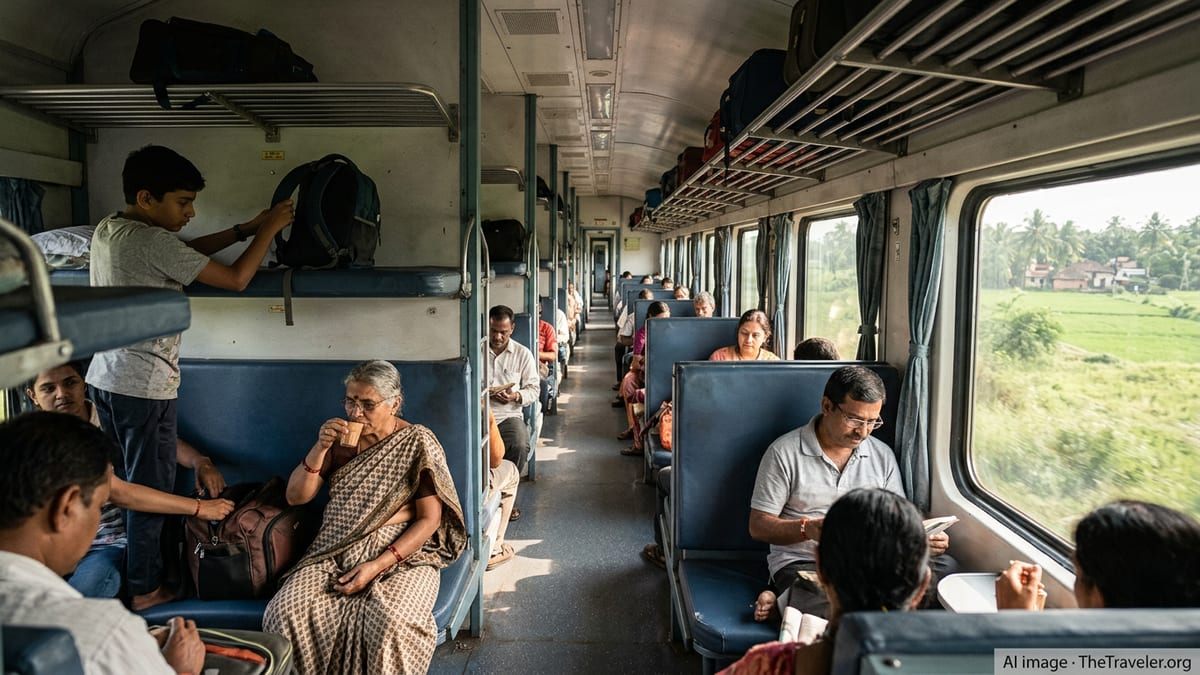
A Dedicated Pilgrimage Circuit From Central India
The latest Bharat Gaurav offering positions Indore, a major commercial hub in Madhya Pradesh, as the starting point for an extended temple circuit that reaches the eastern seaboard and the Gangetic plains. Publicly available package details circulating through rail tourism portals describe an itinerary that carries passengers from Indore to the Jagannath temple town of Puri, on to the Ganges city of Varanasi and then to Ayodhya, home to the recently inaugurated Ram temple, before returning to the origin.
The Bharat Gaurav concept, introduced by Indian Railways to showcase cultural and religious heritage through special tourist trains, has steadily added routes in recent years. Earlier itineraries combined Puri, Gangasagar, Varanasi and Ayodhya, while more recent packages highlight clusters such as Puri, Kamakhya, Gaya, Kashi and Ayodhya. The new Indore-based circuit continues this pattern of linking multiple high-demand pilgrimage destinations into a single scheduled tour.
Unlike regular express services that primarily focus on point-to-point travel, Bharat Gaurav trains are marketed as all-in-one pilgrimage experiences. They are typically operated with fixed tour codes, bundled services and pre-announced departure dates, which makes them attractive for travelers seeking a structured religious journey from cities such as Indore that are not always the starting point for conventional pilgrimage circuits.
Route Highlights: Puri, Varanasi and Ayodhya
The new Indore-origin circuit is centered on three of India’s most visited religious centers. Puri, on the Odisha coast, is renowned for the Jagannath Temple and its association with the Char Dham pilgrimage tradition. Recent Bharat Gaurav itineraries from central and western India have prominently featured Puri as a first major halt, often allowing time for temple visits and coastal excursions before trains head inland again.
From the Bay of Bengal, the route turns north and west toward Varanasi, also known as Kashi, regarded as one of the oldest continuously inhabited cities in the world and a key Hindu spiritual center. Tour schedules published for comparable Bharat Gaurav packages show full sightseeing days in Varanasi, typically including visits to the Kashi Vishwanath Temple precinct and the evening Ganga aarti on the riverfront ghats, underscoring how central the city has become to themed rail tourism.
The circuit then continues to Ayodhya in Uttar Pradesh, which has seen a marked increase in religious tourism since the consecration of the new Ram temple. Bharat Gaurav tour brochures and recent press coverage emphasize Ayodhya as a headline destination, often describing opportunities for darshan at the Ram Janmabhoomi complex and visits to other local shrines. By stitching Ayodhya into an extended itinerary that already includes Puri and Varanasi, the Indore-based train taps into a strong and growing demand for multi-stop pilgrimage journeys.
Onboard Experience and Package Inclusions
Bharat Gaurav trains are configured to function as moving tour groups rather than standard long-distance services. According to documentation for similar Indore-origin packages, coaches are typically divided into non air-conditioned sleeper, three-tier AC and two-tier AC categories, with an overall capacity running into several hundred berths. Tour prices are promoted on a per-person basis and vary according to the chosen class of travel.
Package descriptions available through rail tourism and travel platforms indicate that fares usually include onboard accommodation, most meals, road transfers by bus for local sightseeing at intermediate stops, and the services of tour escorts. Many itineraries also bundle entry-level hotel stays during longer halts at destinations such as Puri, Gaya, Varanasi and Ayodhya, effectively turning the train into the backbone of an all-inclusive circuit rather than a standalone transport option.
Recent media coverage of Bharat Gaurav offerings aimed at pilgrims from Madhya Pradesh highlights pricing strategies designed to keep the trips competitive with privately organized tours, while offering the convenience of a single booking through official tourism channels. The Indore-to-Puri–Varanasi–Ayodhya circuit follows these same contours, using packaged pricing, predefined sightseeing and tiered accommodation options to draw family groups and senior travelers who might otherwise rely on fragmented bookings.
Timings, Duration and Booking Patterns
Although exact schedules can vary between departures, Bharat Gaurav trains of this type generally operate as multi-day circuits spanning roughly 8 to 11 days, depending on the number of intermediate halts and the depth of sightseeing included. Comparable Indore-based religious tour packages list journeys of 10 nights and 11 days covering Puri, Gangasagar, Baidyanath Dham, Varanasi and Ayodhya, suggesting that the new configuration focused on Puri, Varanasi and Ayodhya will also run as a medium-length itinerary.
Departures are usually advertised several weeks to months in advance through the IRCTC tourism portal, social media channels and regional news outlets. Seats are sold on a first-come, first-served basis within each travel class, and booking windows remain open until berths are filled or the departure date nears. For other Bharat Gaurav circuits, rail tourism updates have also drawn attention to occasional seasonal runs, such as summer specials, reflecting how operators adjust capacity to match high-demand periods in the pilgrimage calendar.
In line with other Bharat Gaurav offerings, the Indore-origin train is expected to use a fixed tour code and standardized inclusions, which simplifies the booking process for travelers and agents. This template-based approach allows Indian Railways and its tourism arm to replicate popular circuits while still adding or adjusting individual destinations, such as emphasizing Puri, Varanasi and Ayodhya in response to current travel interest.
Expanding the Bharat Gaurav Network Across India
The Indore-to-Puri–Varanasi–Ayodhya route is part of a broader expansion that has seen Bharat Gaurav trains radiate outward from multiple regions, connecting clusters of pilgrimage sites into curated rail journeys. Recent itineraries have included routes from western and southern India toward Puri and Kamakhya, as well as north-oriented circuits linking Kashi and Ayodhya with other sacred centers like Prayagraj and Gaya.
Press releases and news reports tracking this growth note that the Bharat Gaurav initiative is intended to leverage India’s extensive rail network to promote domestic tourism to religious and heritage destinations. By using existing infrastructure and rolling stock configured specifically for touring, Indian Railways can reach smaller markets such as Indore while still linking passengers to some of the country’s best-known temple towns.
For travelers, the expansion translates into more origin points, itineraries and departure dates to choose from, especially for those seeking structured religious travel without the complexity of planning individual segments. With Indore now connected via a dedicated Bharat Gaurav circuit to Puri, Varanasi and Ayodhya, central India’s pilgrims gain a new rail-based option that reflects both the rising profile of these destinations and the continuing evolution of themed tourist trains in the country.
Press Information Bureau overview of Bharat Gaurav trains
NDTV Travel coverage of Bharat Gaurav pilgrimage routes
NDTV Hindi report on Puri–Kashi–Ayodhya Bharat Gaurav package