


More news on this day
Europe’s escalating security alerts over the Middle East have not stopped fare hunters in London and Paris from booking cut-price connections through Gulf hubs, even as airlines repeatedly reroute or suspend flights when tensions spike.
Get the latest news straight to your inbox!
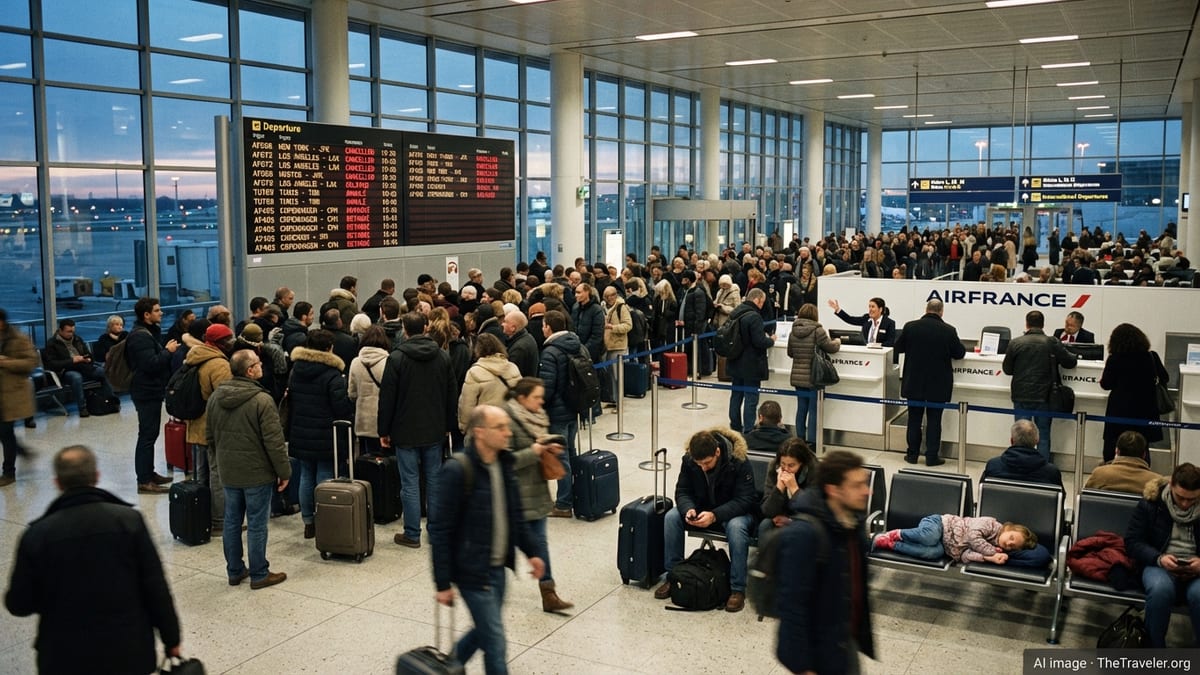
Discount Fares Keep Filling Planes Through Gulf Hubs
From Heathrow, Gatwick and Paris Charles de Gaulle, indirect itineraries via Dubai, Doha, Abu Dhabi and other Gulf hubs continue to undercut nonstops to Asia and East Africa by hundreds of pounds. Publicly available fare data on major booking platforms shows that, even in peak seasons, multi-leg journeys via the Middle East often remain the cheapest options out of London and Paris for destinations such as Bangkok, Nairobi and Sydney.
Passenger traffic figures published by leading Gulf carriers indicate only modest softening in bookings on some routes despite months of conflict-related disruption in the wider region. Reports from airline earnings updates describe resilient demand from European travelers seeking value, especially leisure passengers willing to accept longer travel times and tight connections in exchange for lower prices.
Travel industry analysts note that inflation and higher living costs across Western Europe are reinforcing this price sensitivity. With nonstops on European and Asian flag carriers often priced significantly higher, travelers departing from London and Paris appear prepared to tolerate more complex routings through the Middle East to keep overall trip costs within reach.
Search trends on major online travel agencies also suggest that filters for “cheapest” and “one stop” remain heavily used for itineraries between Western Europe and Asia or Africa. This behavior continues even after headline-making airspace closures and missile incidents lead to temporary shutdowns of airports or diversions around conflict zones.
Warnings Intensify as Conflicts Spread Across the Region
While demand persists, official risk assessments have grown steadily more severe. Over the past year, governments in the United Kingdom, France and other European states have expanded advisories covering Israel, Palestine, Iran, Lebanon and parts of neighboring countries, frequently citing the possibility of sudden escalation, missile strikes and airspace closures.
Updated guidance from the UK Foreign, Commonwealth and Development Office highlights a cluster of Gulf states where regional hostilities could quickly trigger the closure of skies or disruption at major transit hubs. The advice stresses that rapidly changing military developments can leave airlines and passengers with little notice before air routes are suspended or diverted.
Specialist risk consultancies and insurance bulletins published in early 2026 describe the overall regional risk level as high, referencing recent incidents near major hubs and periodic interceptions of missiles over or close to busy commercial corridors. Some advisories flag temporary disruptions at airports in the United Arab Emirates and Saudi Arabia, along with delays and cancellations as airlines adjust routings to keep clear of active conflict zones.
International organizations and aviation regulators have also issued or extended notices advising carriers to treat airspace over parts of Iran, Iraq, Israel and surrounding areas with extreme caution. Industry coverage notes that such warnings, while not outright bans, contribute to longer flight paths, higher fuel costs and more complicated operational planning for airlines linking Europe with Asia and Africa via the Middle East.
Airlines Walk a Tightrope Between Safety and Connectivity
For airlines, the current environment has become a continuous balancing act. Recent reporting by aviation trade outlets describes how European and Gulf carriers have repeatedly suspended flights to cities such as Tel Aviv, Beirut, Baghdad and Tehran, only to restore limited service when ceasefires or pauses in hostilities take hold.
In several instances since 2024, missile or drone attacks in and around Israel and Iran have prompted mass diversions or brief airspace closures affecting corridors that many European travelers use as transit routes. Coverage from global news agencies details how flights bound for the region have been turned back midair or rerouted around active conflict zones, extending journey times and straining airline schedules.
Operational updates released by major airlines emphasize the reliance on continuous risk assessments that combine military intelligence, regulator guidance and real-time tracking of regional developments. Carriers have reiterated that routes are adjusted or suspended when assessed risk rises beyond acceptable thresholds, even where commercial demand remains strong.
Industry analysts point out that this cautious approach significantly reduces the likelihood of a catastrophic incident for commercial aviation. However, they also note that it does not eliminate exposure to delays, missed connections and unexpected overnight stays for passengers who choose to route through sensitive areas rather than select more expensive but geographically distant options.
Travelers Face Trade-offs on Safety, Time and Cost
For passengers departing from London and Paris, the practical risks associated with transiting Middle Eastern hubs are often less about direct physical harm and more about disruption. Travel insurance providers and advisory firms warn of heightened chances of abrupt schedule changes, with connecting flights delayed or canceled when airspace restrictions or new security incidents emerge.
Publicly available policy documents from several European insurers published in recent months highlight new or expanded exclusions tied to war or acts of terrorism in specified countries. In some cases, travelers who ignore formal government advice against all or all but essential travel to certain destinations may find their cover reduced or void, potentially leaving them out of pocket for rebooking costs or unexpected hotel stays.
Consumer advocates interviewed in earlier media coverage argue that many passengers underestimate these indirect risks. A ticket that is cheaper at the point of purchase may become far more expensive in practice if re-routings, additional nights in transit and last-minute one-way fares are needed to complete a journey after a disruption.
Nevertheless, budget-conscious travelers continue to calculate that the probability of being personally caught up in a major incident remains low compared with the immediate benefit of saving several hundred pounds. This perception appears especially common among younger travelers and long-haul leisure passengers with flexible schedules and limited financial room for more expensive direct flights.
Is the Saving Still Worth It for London and Paris Travelers?
The question of whether the discounts justify the danger is increasingly complex rather than binary. Aviation safety experts quoted across industry and consumer publications generally stress that, statistically, flying remains one of the safest forms of transport, even in regions experiencing periodic conflict. Airlines have powerful incentives to keep passengers and crew away from clearly defined combat zones.
At the same time, the pattern of sudden missile salvos, airspace closures and targeted attacks on infrastructure across parts of the Middle East introduces uncertainty that is hard to quantify for individual trips. What looks like a safe routing at the time of booking from London or Paris can change within hours if tensions flare or military operations expand.
For risk-averse travelers, especially families or those on tightly timed business trips, the cumulative picture of evolving government warnings, expanded insurance exclusions and recent disruptions suggests that paying more to avoid high-risk airspace may increasingly be the rational choice. For others, particularly those for whom price is the overriding factor, the balance still tilts toward using Middle Eastern hubs while accepting the possibility of disruption as the cost of a cheaper ticket.
As regional crises evolve through 2026, the divergence between official caution and traveler behavior from cities like London and Paris is likely to remain stark. Whether that gap narrows may depend less on headline fares and more on how often visible disruptions remind passengers that the lowest price can carry hidden risks well beyond the seat map.