


More news on this day
Passengers traveling through Raleigh–Durham International Airport’s Terminal 2 are reporting unusually long waits at the security checkpoint, with early-morning and late-afternoon crowds facing extended delays as peak summer travel coincides with major construction and roadway changes at the rapidly growing hub.
Get the latest news straight to your inbox!
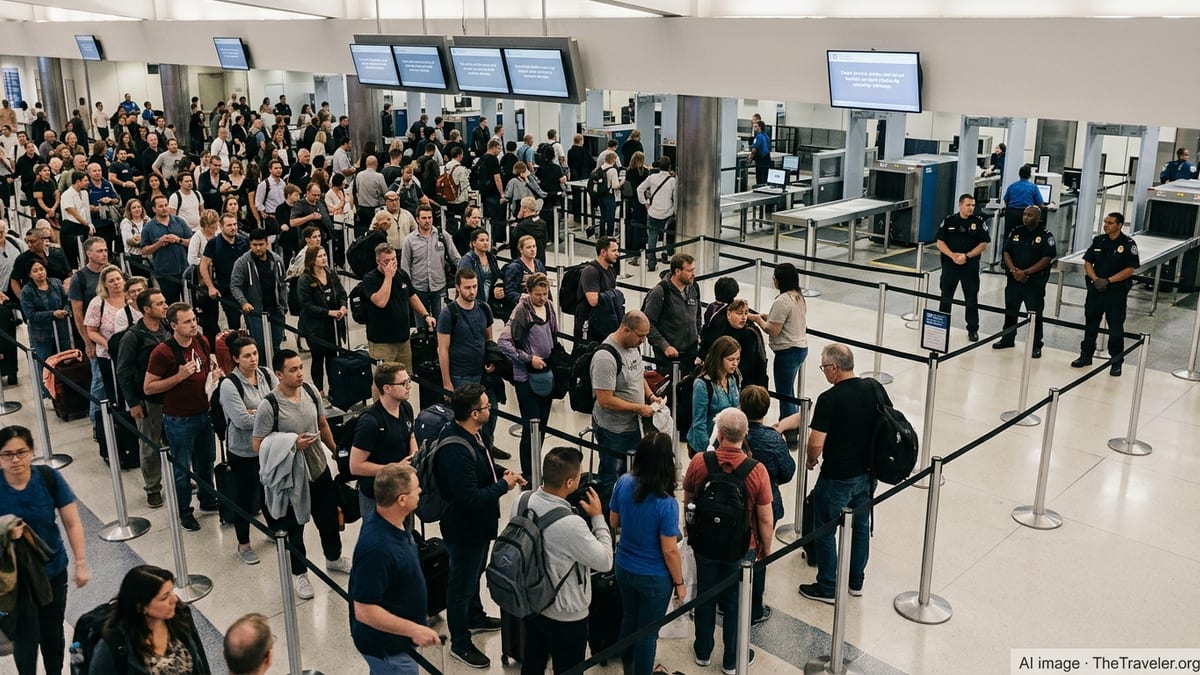
Reports of Long Lines as Peak Times Stretch Out
Social media posts and traveler reports on local forums indicate that security wait times at Terminal 2 have lengthened in recent days, particularly in the early morning between about 5 a.m. and 7 a.m. and the late afternoon period when commuter and leisure traffic overlap. Some travelers describe lines that snake well back into the ticketing hall, with waits that can approach or exceed 30 to 45 minutes during the busiest windows.
Other recent accounts describe an inconsistent experience, where some passengers clear the checkpoint in less than 10 minutes while others, arriving slightly later in the same peak window, encounter near-capacity queues. This variability is typical of high-growth airports, but it has become more visible at Raleigh–Durham as the region’s population and flight schedules continue to expand.
Publicly available wait-time trackers and third-party monitoring sites show that Terminal 2, which handles the majority of mainline domestic and international flights at the airport, tends to see sharper spikes than Terminal 1. That pattern reflects the concentration of large carriers and long-haul routes in Terminal 2, where surges of departing flights can quickly overwhelm checkpoint capacity when combined with heavy summer travel demand.
While not every traveler is encountering excessive delays, the volume of recent first-hand reports suggests that those flying during the most popular early and late travel windows should plan for a slower security experience than they may have seen in past years.
Construction and Roadway Changes Add to Passenger Pressure
The security delays are unfolding against the backdrop of a long-term expansion of Terminal 2. Public information from the airport describes a multi-year construction project that is enlarging the ticketing hall, international arrivals area and baggage systems, while ultimately adding more security lanes and circulation space on the landside of the terminal.
A temporary interior construction wall now stretches along part of the Terminal 2 ticketing hall while crews work behind it. Airport materials emphasize that all ticket counters and existing checkpoint lanes remain open, but the work limits some open space inside the building and alters familiar passenger flows. Even modest changes in circulation can slow the rate at which travelers reach security, especially when lines spill back into areas affected by construction.
On the outside, roadway improvement projects near Terminal 2 are also underway. Public advisories describe temporary curb and access changes, including periods when passengers using Terminal 2 may be dropped off at a modified location near Terminal 1 while a new departures-level bridge is built. Those adjustments can lengthen the time it takes to get from car or shuttle to the security line and can cause surges of travelers to arrive at the checkpoint in waves.
Combined, these interior and exterior works are part of a larger capital program designed to prepare Raleigh–Durham for continued passenger growth. In the near term, however, they create a more complex environment for managing crowds at security, raising the risk of bottlenecks when multiple flights depart in short succession.
Growth in Flights and Carriers Concentrated in Terminal 2
Terminal 2 serves most of the airport’s largest domestic and international airlines, including major U.S. carriers and several foreign flag carriers operating long-haul routes to Europe, Canada and Latin America. Public data on airline assignments show that the terminal handles a broad mix of business, leisure and connecting traffic, drawing passengers from across the Research Triangle and beyond.
Recent years have brought new nonstop international services and added frequencies on existing routes, with many of those flights departing from Terminal 2. As seat capacity increases and schedules become more tightly packed in the most popular time bands, the security checkpoint must process more passengers within the same windows, magnifying the effect of any operational hiccup.
Forecasting studies and planning documents released in connection with the Transform RDU capital program point to long-term passenger growth that outpaces earlier projections. The landside Terminal 2 expansion, which aims to add security lanes and more queuing space, is intended to address this demand. Until those added lanes come online, however, the existing checkpoint infrastructure continues to absorb rising volumes, leading to periodic delays that are especially visible during summer and holiday peaks.
Local traveler reports also highlight that even trusted-traveler and expedited queues can be affected when overall volume is high. While many passengers still experience shorter waits in priority lanes, congestion at screening machines or document-check stations can ripple across all queue types.
What Travelers Are Experiencing on the Ground
Recent first-hand accounts from passengers in Terminal 2 depict a wide range of experiences, underscoring that conditions can change rapidly. Some describe clearing security in five to 15 minutes when arriving outside the heaviest rush periods, while others recount missing or nearly missing flights despite arriving a full two hours before departure during early-morning peaks.
Online discussions among local travelers note that Mondays and other high-business-travel days appear particularly prone to backups, especially before 7 a.m. when multiple departures cluster. Comments also point to occasional equipment outages, weather disruptions and irregular operations that can compound security delays by pushing more passengers into the terminal at the same time.
Travelers report that lines for standard screening remain the most volatile, but that PreCheck and other expedited options are not immune during the busiest windows. Some passengers advise budgeting extra buffer time even with such programs, especially when traveling with checked bags or during major travel holidays, large regional events or periods of severe weather elsewhere in the air traffic system.
Despite these challenges, many accounts also describe periods when Terminal 2’s checkpoint is nearly empty, including late mornings and some mid-afternoon hours. That contrast suggests that timing and flight selection are playing a larger role than in the past in determining a traveler’s experience at Raleigh–Durham security.
Planning Strategies as Delays Continue
Publicly available guidance from the airport continues to recommend that passengers arrive at least two hours before domestic departures and three hours before international flights, particularly when traveling from Terminal 2. In light of recent delays, many frequent flyers are suggesting even more generous lead times if travel falls within the known peak windows.
Travelers are increasingly turning to federal tools and third-party platforms that publish estimated security wait times, along with crowd-sourced local reports, before leaving for the airport. While such tools are imperfect and can lag behind real-time conditions, they offer a general sense of whether Terminal 2 is currently clear, moderately busy or heavily backed up.
Passenger tips circulating online include checking in and paying for bags in advance when possible, consolidating carry-on items to reduce the risk of secondary screening, and using eligible trusted traveler programs to access dedicated lanes. Some travelers also suggest targeting midday departures, when schedules and anecdotal reports point to shorter lines, for those with flexibility.
As Terminal 2 construction progresses and roadway work continues, additional security lanes and more spacious queuing areas are expected to come online in future phases of the project. For now, however, travelers using Raleigh–Durham’s busiest terminal are likely to continue experiencing sporadic, and sometimes lengthy, waits at the security checkpoint, especially when flying at the most popular times of day.