


More news on this day
Flight schedules to and from Riyadh have been thrown into turmoil as five international airlines suspend services to the Saudi capital, with regional security tensions and evolving airspace restrictions prompting sweeping route cancellations and leaving passengers scrambling for alternatives.
Get the latest news straight to your inbox!
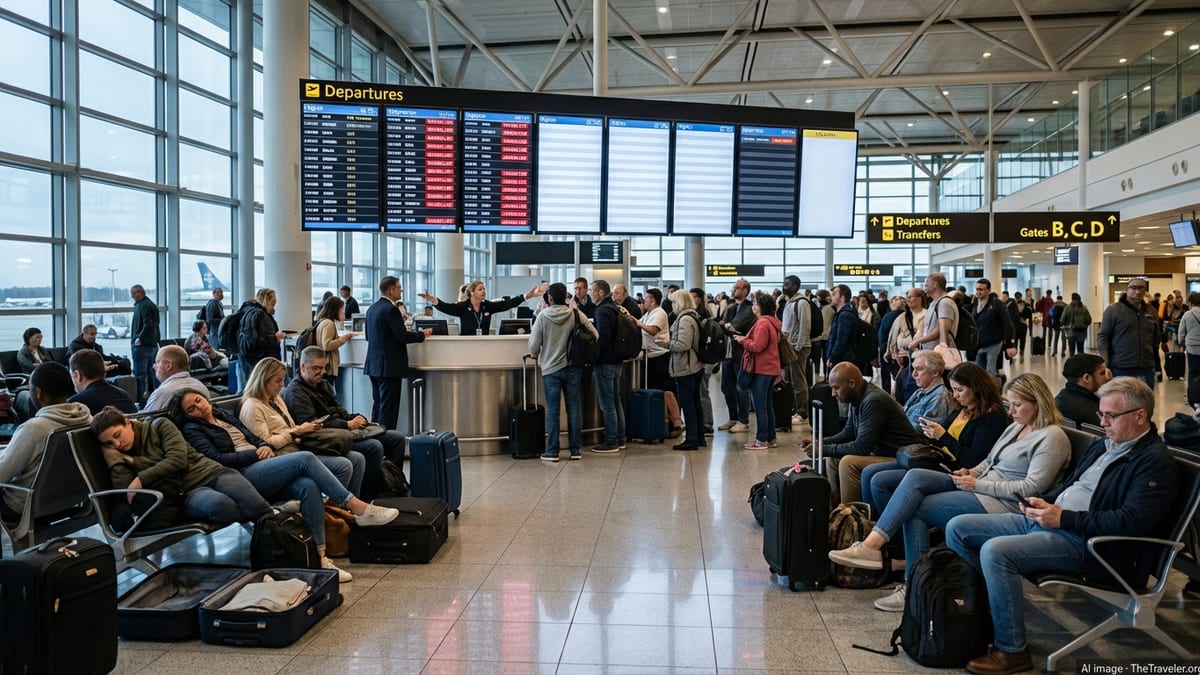
Multiple carriers halt Riyadh operations
Published coverage on Middle East aviation indicates that at least five major international airlines have now suspended flights serving Riyadh, either entirely or for extended periods, as conflict and airspace closures across the Gulf region continue to ripple through global networks.
According to international media and airline advisories, European groups such as KLM and Air France, along with several Gulf and regional competitors, have temporarily halted services on routes linking their hubs to King Khalid International Airport. The suspensions affect both direct flights to Riyadh and onward connections that rely on the Saudi capital as a transit point.
Industry updates describing the broader impact of the 2026 Iran conflict on commercial aviation suggest that these Riyadh cancellations form part of a much wider pattern of route withdrawals affecting Saudi Arabia, the United Arab Emirates, Qatar, Kuwait and Bahrain. Airlines are reported to be adapting capacity day by day as military activity periodically disrupts established air corridors.
While Saudi domestic carriers continue to operate core services, foreign airlines appear to be taking a more cautious stance, prioritising network flexibility and crew safety as the regional security picture evolves.
Security tensions and airspace closures reshape Gulf routes
Travel risk advisories current to late June 2026 describe a complex operating environment across the Gulf, with intermittent airspace restrictions, re‑routed traffic flows and selective airport disruptions. Analysts note that closures and caution zones over parts of the Gulf and Levant have forced airlines either to suspend services or accept longer and more costly flight paths.
Reports on the economic impact of the 2026 Iran war describe thousands of daily cancellations across Gulf hubs during peak periods of tension, with Saudi airports among those experiencing knock‑on disruption. Although core Saudi gateways, including Riyadh, remain operational, international carriers are understood to be adjusting schedules pre‑emptively when risk thresholds are exceeded.
Published summaries of airline responses to the conflict indicate that some European and Asian airlines have repeatedly paused flights to Riyadh and other Saudi cities, extending suspension periods as new security assessments emerge. These measures are typically framed as temporary and subject to ongoing review, but travellers are being warned that further changes at short notice remain possible.
In parallel, Gulf competitors that continue to operate are diverting aircraft around sensitive airspace, adding flight time and limiting available capacity on routes that remain open.
Passengers face cancellations, rebookings and long detours
For passengers, the decision by five airlines to suspend Riyadh services has translated into a wave of itinerary changes. Travellers connecting through European hubs have reported receiving short‑notice cancellation notices, followed by rebookings onto alternative carriers or routings that bypass Riyadh altogether.
Some long‑haul passengers are encountering multi‑stop journeys where a previous single connection via Riyadh is replaced by itineraries through Jeddah, Dubai, Doha or Istanbul, depending on which airports remain available on a given day. Travel forums and social media posts from recent weeks describe missed onward connections, extended layovers and difficulty securing seats on already crowded alternatives.
Industry bulletins emphasise that disruption is not uniform. While several foreign airlines have halted Riyadh flights, others have maintained a skeleton schedule, and Saudi carriers are still operating domestic and selected international routes. This patchwork of services has created an uneven landscape in which two passengers bound for Riyadh on the same date may experience very different levels of disruption depending on their chosen airline.
Travel management companies are advising corporate clients with business in Saudi Arabia to build additional buffer time into itineraries, avoid tight connections and prepare contingency plans in case of last‑minute schedule changes.
Saudi aviation strategy tested as Riyadh Air prepares launch
The latest wave of suspensions comes at a sensitive moment for Saudi Arabia’s aviation ambitions. The kingdom has positioned Riyadh as a future global hub, backing the rapid expansion of its existing flag carrier Saudia and preparing to introduce new national airline Riyadh Air, which aims to link the capital with more than 100 destinations across six continents.
Publicly available information about Riyadh Air’s plans highlights a strategy built on high‑frequency, long‑haul connections that depend on predictable access to regional airspace. Analysts note that the current disruption illustrates how quickly external security events can undermine hub‑and‑spoke growth models, particularly in geographically sensitive regions.
Despite the challenges, Saudi authorities have continued to invest in airport infrastructure and route development incentives designed to attract more foreign carriers in the medium term. Aviation consultants suggest that once security conditions stabilise, airlines that have suspended Riyadh flights may return, especially if demand from religious tourism, energy business travel and new leisure markets recovers as expected.
In the meantime, the temporary withdrawal of five airlines leaves a larger share of international traffic in the hands of regional competitors that are still flying, as well as Saudi carriers that can adjust quickly to shifting demand patterns.
What travellers to and from Riyadh should expect now
For travellers with upcoming journeys involving Riyadh, industry guidance stresses the importance of close monitoring. Passengers are being urged to check airline apps and booking portals frequently, as schedules that appear confirmed can still change with little warning if security conditions deteriorate or airspace restrictions tighten.
Consumer advisories on Saudi and Gulf travel recommend that passengers whose flights are cancelled first seek rebooking on the same ticket, ideally onto a partner airline or an alternative routing offered at no extra cost. Where that is not possible, travellers may be entitled to refunds or travel credits, depending on the carrier’s conditions of carriage and the jurisdiction under which the ticket was sold.
Specialists in air passenger rights note that compensation rules vary significantly between regions, and that cancellations linked to security or airspace closures may fall outside standard compensation schemes. Even so, airlines are generally expected to provide clear communication, timely rebooking options and, where applicable, basic care such as hotel accommodation and meals during extended delays.
With five airlines currently suspending services to and from Riyadh, seasoned observers of the Gulf aviation market anticipate that passengers will continue to face a fluid situation through at least the coming weeks, with any easing of disruption likely to depend on a sustained reduction in regional tensions.